Why is a mechanical vibratory sieve shaker preferred over manual sieving for hemp shiv? Ensure High-Precision PSD.
Updated 5 months ago
Mechanical vibratory sieve shakers are preferred for hemp shiv because they provide the continuous, three-dimensional vibration necessary to rotate needle-like particles through mesh openings. Unlike manual sieving, these machines standardize the process within a specific timeframe—typically 30 minutes—to prevent weight gain errors caused by atmospheric humidity and to eliminate human operational bias.
A mechanical vibratory sieve shaker transforms a subjective manual process into a standardized technical protocol. By utilizing high-frequency, multi-dimensional energy, it ensures that complex particle geometries like hemp shiv are classified with a level of repeatability and precision that human operation cannot replicate.
Overcoming the Geometric Challenges of Hemp Shiv
The Advantage of 3D Particle Rotation
Hemp shiv particles are characteristically needle-like and elongated, which makes them difficult to sieve using traditional lateral motion. A mechanical vibratory shaker provides continuous, uniform three-dimensional vibration that forces these particles to rotate and "stand up" vertically. This orientation is critical because it allows the narrowest dimension of the shiv to pass through the appropriate mesh openings.
Managing Static Electricity and Adhesion
Organic materials like hemp are highly prone to generating static electricity during the friction of the sieving process. Mechanical shakers use high-frequency, stable vibration energy to keep particles in constant motion, preventing them from clinging to the sieve walls or each other. This ensures that the final particle size distribution (PSD) reflects the true physical dimensions of the material rather than static-induced clumping.
Ensuring Data Integrity and Repeatability
Eliminating Human Operational Bias
Manual sieving is inherently inconsistent, as the force, frequency, and duration vary significantly between different operators. Mechanical equipment utilizes preset vibration frequencies and programmed settings to ensure every sample is treated identically. This level of automation is essential for generating objective, accurate, and highly reproducible data across different laboratory environments.
Standardizing Time to Control Humidity Impact
Hemp shiv is hygroscopic, meaning it readily absorbs moisture from the surrounding air, which can lead to weight gain errors during long sieving sessions. Mechanical shakers allow the multi-layer sieving process to be completed within a standardized timeframe, such as 30 minutes. By strictly controlling the duration, technicians minimize the window for environmental humidity to alter the sample's mass and compromise the results.
Understanding the Trade-offs
Equipment Costs and Maintenance
The primary drawback of mechanical vibratory shakers is the initial capital investment and the need for periodic calibration. While manual sieving requires only the sieves themselves, mechanical units involve electronic components and motors that require maintenance. However, the reduction in labor time and the increase in data accuracy generally offset these costs in professional or industrial settings.
Material Degradation Risks
High-frequency vibrations can sometimes be too aggressive for very fragile materials, leading to particle attrition where the sample breaks down into smaller pieces during the test. For hemp shiv, the vibration intensity must be carefully calibrated to ensure effective separation without physically damaging the fibers. If the amplitude is set too high, the resulting data may over-represent the "fine" fraction of the distribution.
How to Apply This to Your Project
To achieve the most accurate particle size analysis, you should select your sieving method based on your specific quality control requirements and the nature of your hemp samples.
- If your primary focus is Research and Development: Use a mechanical vibratory shaker with adjustable amplitude to find the "sweet spot" that rotates needle-like particles without causing physical degradation.
- If your primary focus is Industrial Quality Control: Prioritize a shaker with a digital timer to strictly enforce the 30-minute limit, ensuring that humidity-induced weight fluctuations do not skew your batch consistency data.
- If your primary focus is Regulatory Compliance: Invest in a standardized mechanical unit that offers high repeatability, as this provides the objective evidence required for technical audits and material certifications.
By shifting from manual methods to a mechanical vibratory system, you ensure that your hemp shiv classification is defined by physics and standardization rather than human variability.
Summary Table:
| Feature | Mechanical Vibratory Shaker | Manual Sieving |
|---|---|---|
| Particle Orientation | 3D vibration rotates needle-like shiv | Limited lateral movement only |
| Data Consistency | High; eliminates human operational bias | Low; varies by operator force/speed |
| Environmental Control | Standardized timing limits humidity impact | Longer durations lead to weight gain errors |
| Throughput | Fast multi-layer classification | Slow and labor-intensive |
| Static Management | High-frequency energy reduces adhesion | Prone to static clumping |
Optimize Your Hemp Material Analysis with Precision Equipment
Accurate particle size distribution is the foundation of quality control in hemp processing and material science. At [Brand Name], we provide complete laboratory sample preparation solutions tailored for powder processing and compaction.
From high-performance vibratory and air-jet sieve shakers equipped with precision test sieves to advanced grinding solutions like planetary ball mills, jet mills, and cryogenic grinders, our equipment ensures your samples are prepared with maximum repeatability. We also offer a full spectrum of hydraulic presses, including Cold/Warm Isostatic Presses (CIP/WIP), hot presses, and pellet presses for your material characterization needs.
Ready to standardize your laboratory workflow and eliminate human error?
Contact our technical experts today to find the perfect solution for your project!
References
- Sofiane Amziane, Mohammed Sonebi. Recommendation of the RILEM TC 236-BBM: characterisation testing of hemp shiv to determine the initial water content, water absorption, dry density, particle size distribution and thermal conductivity. DOI: 10.1617/s11527-017-1029-3
Mentioned Products
- Vibratory Sieve Shaker Electromagnetic 3D Motion Powder Particle Size Analyzer for Dry and Wet Sieving
- Laboratory Dry and Wet Three Dimensional Vibratory Sieve Shaker for Particle Analysis
- Small Laboratory Vibratory Sieve Shaker for Powder Gradation and Particle Size Analysis
- Heavy Duty Dry Three Dimensional Vibratory Sieve Shaker for Particle Separation
- Stainless Steel Laboratory Vibratory Test Sieve Shaker
People Also Ask
- How does a vibratory sieve shaker contribute to optimizing the performance of activated carbon? Enhance Adsorption Precision
- Why is a laboratory vibratory sieve shaker necessary for processing magnesium-based borate precursor powders? Boost Activity
- Why use a vibratory sieve shaker to verify coarse aggregate grading in rubberized concrete? Ensure Structural Integrity
- What function do vibratory sieve shakers and standard test sieves serve in the preparation of adsorbents? Key Guide
- What role does a vibratory sieve shaker play in the particle size analysis of ground corn products? Enhance QC Precision

Tech Team · PowderPreparation
Last updated on May 14, 2026
Related Products
Vibratory Sieve Shaker Electromagnetic 3D Motion Powder Particle Size Analyzer for Dry and Wet Sieving
Laboratory Dry and Wet Three Dimensional Vibratory Sieve Shaker for Particle Analysis
Small Laboratory Vibratory Sieve Shaker for Powder Gradation and Particle Size Analysis

Heavy Duty Dry Three Dimensional Vibratory Sieve Shaker for Particle Separation
Stainless Steel Laboratory Vibratory Test Sieve Shaker
Dry Three Dimensional Vibratory Sieve Shaker
High Frequency Cabinet Type Three-Dimensional Rotary Vibrating Sieve Shaker for Dry Sieving and Particle Classification

Small Laboratory Vibrating Sieve Shaker for Precise Particle Size Analysis

Laboratory Vibratory Test Sieve Shaker for Precision Particle Size Analysis and Powder Grading
High Frequency Wet Three-Dimensional Vibrating Sieve Shaker for Dry and Wet Particle Size Analysis
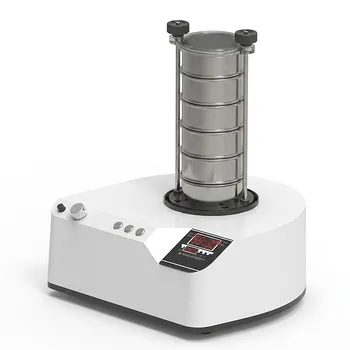
三维电磁微量振动筛分仪
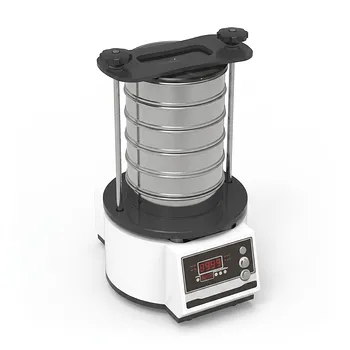
Tapping Oscillating Sieve Shaker for Dry and Wet Particle Size Analysis

Stainless Steel Rotary Vibrating Sieve High Precision Circular Vibratory Separator Industrial Powder Grading Machine Multi Layer Sifting Equipment

Three Dimensional Rotary Vibrating Sieve
Vibratory Superfine Grinder for Ultra Fine Laboratory Powder Milling
Small Vibrating Ultrafine Grinder for Traditional Chinese Medicine
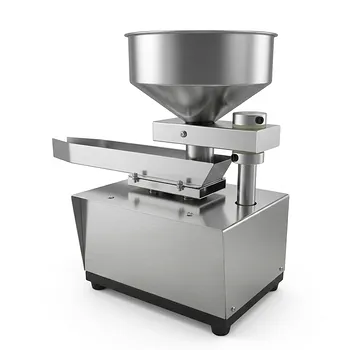
Automatic Vibrating Powder Feeder for Laboratory Material Processing Precision Vibratory Hopper Feeder for Granular and Powder Material Handling Industrial Grade Vibrating Tray Feeder for Consistent Material Sample Preparation