Why is a mechanical vibratory sieve shaker necessary after the initial crushing of glass frit? Ensure Material Precision
Updated 4 months ago
A mechanical vibratory sieve shaker is essential for transforming raw crushed glass into a standardized industrial material. It classifies irregular particles into precise, uniform size fractions through a series of controlled vibration patterns. This step is mandatory to ensure that subsequent processes—such as ball milling, sintering, or foaming—behave predictably and yield consistent results.
Beyond simple sorting, the sieve shaker establishes the "standardized material foundation" necessary to control reaction kinetics and material properties. By strictly limiting particle size ranges, researchers and manufacturers can eliminate size variation as a variable, ensuring uniform thermal and chemical performance in the final product.
Standardizing the Experimental Foundation
Eliminating Variables in Ball Milling
A sieve shaker ensures the consistency of the starting material's particle size before it ever enters a ball mill. This provides a standardized experimental basis, allowing researchers to accurately study how different grinding processes specifically affect the sintering and foaming behavior of the glass.
Achieving Precise Size Fractions
Mechanical shakers use standardized three-dimensional vibration patterns to achieve efficient and thorough particle classification. This process strictly controls the upper particle size limits (e.g., 150 μm, 75 μm, and 45 μm) using specific mesh counts like 100, 200, and 325 mesh.
Controlling Physical and Chemical Behavior
Optimizing Sintering and Foaming
Uniform particle size distribution is a critical prerequisite for ensuring that foam glass heats evenly. When particles are consistent, the internal pores are distributed uniformly, allowing for accurate control over the final product's pore structure.
Enhancing Glass Phase Formation
In composites, the fineness of the glass particles determines the efficiency of glass phase formation during sintering. Precise classification influences the densification, compressive strength, and water absorption of finished materials, such as waste glass-reinforced bricks.
Managing Pozzolanic Reactivity
By controlling the surface area through precise grading, the sieve shaker provides the data needed to study the correlation between particle size and pozzolanic reactivity. This is vital for industrial applications where the chemical activity of the glass powder is a primary performance metric.
Ensuring Structural Integrity and Process Stability
Preventing the Alkali-Silica Reaction (ASR)
Precise control of the upper size limit is critical for preventing the Alkali-Silica Reaction in concrete. Smaller, classified glass particles significantly reduce the risk of expansion and cracking, ensuring the long-term volume stability of the concrete structures.
Maintaining Process Kinetics
Consistency in particle size maintains a constant liquid-solid ratio and consistent reaction interfaces during chemical treatments. This prevents "incomplete leaching" caused by oversized particles and avoids filtration difficulties often caused by an excess of "fines" or oversized fragments.
Understanding the Trade-offs
The Limitations of Mechanical Sieving
While highly effective for classification, mechanical sieving has physical limits, such as sieve blinding, where particles become wedged in the mesh. This requires regular maintenance and careful selection of vibration intensity to ensure accuracy without damaging the sieves.
Shape vs. Size Discrepancies
Standard sieves classify based on the smallest cross-section of a particle. In glass frit, which can be acicular (needle-like), elongated particles may pass through a mesh that does not truly represent their volume, potentially affecting the precision of the surface area calculations.
How to Apply This to Your Project
Making the Right Choice for Your Goal
To maximize the utility of a mechanical vibratory sieve shaker, tailor your screening protocol to your specific industrial or experimental objective.
- If your primary focus is Experimental Reproducibility: Use a multi-layer stack of standard test sieves to eliminate size variation as a variable in flotation or leaching kinetics.
- If your primary focus is Structural Material Quality: Prioritize removing oversized particles to prevent ASR expansion and ensure consistent densification during the sintering phase.
- If your primary focus is Thermal Performance (Foam Glass): Target a tight particle size distribution to ensure uniform heat absorption and a consistent internal pore structure.
Precise particle size classification is the bridge between raw waste glass and high-performance engineered materials.
Summary Table:
| Process Phase | Function of Sieve Shaking | Impact on Final Material |
|---|---|---|
| Pre-Milling | Eliminates size variables | Standardized experimental foundation |
| Sintering/Foaming | Ensures uniform distribution | Consistent pore structure & thermal performance |
| Chemical Reaction | Manages surface area | Optimized pozzolanic reactivity & kinetics |
| Quality Control | Removes oversized particles | Prevents Alkali-Silica Reaction (ASR) & cracking |
Elevate Your Material Research with Precision Processing
Achieving consistent results in material science starts with superior sample preparation. We provide complete laboratory sample preparation solutions tailored for powder processing and compaction.
From initial reduction using our jaw and roll crushers to precise classification with our vibratory and air-jet sieve shakers, we ensure your glass frit or powder meets exact industrial standards. Our extensive line includes:
- Advanced Milling: Planetary ball mills, jet mills, and cryogenic grinders.
- Precision Sieving: Sieve shakers with a full range of test sieves and meshes.
- Compaction Excellence: A full spectrum of hydraulic presses, including Cold/Warm Isostatic Presses (CIP/WIP), hot presses, and vacuum hot presses.
Whether you are optimizing foam glass pore structures or preventing structural ASR, our equipment delivers the reliability you need.
Ready to optimize your powder processing workflow? Contact our experts today to find the perfect solution for your laboratory!
References
- Boris Agea‐Blanco, Ralf Müller. Sintering and Foaming of Barium Silicate Glass Powder Compacts. DOI: 10.3389/fmats.2016.00045
Mentioned Products
- Vibratory Sieve Shaker Electromagnetic 3D Motion Powder Particle Size Analyzer for Dry and Wet Sieving
- Laboratory Dry and Wet Three Dimensional Vibratory Sieve Shaker for Particle Analysis
- Dry Three Dimensional Vibratory Sieve Shaker
- Heavy Duty Dry Three Dimensional Vibratory Sieve Shaker for Particle Separation
- Stainless Steel Laboratory Vibratory Test Sieve Shaker
People Also Ask
- How does a vibratory sieve shaker contribute to optimizing the performance of activated carbon? Enhance Adsorption Precision
- Why is a laboratory vibratory sieve shaker necessary for processing magnesium-based borate precursor powders? Boost Activity
- Why use a vibratory sieve shaker to verify coarse aggregate grading in rubberized concrete? Ensure Structural Integrity
- What function do vibratory sieve shakers and standard test sieves serve in the preparation of adsorbents? Key Guide
- What role does a vibratory sieve shaker play in the particle size analysis of ground corn products? Enhance QC Precision

Tech Team · PowderPreparation
Last updated on Jun 03, 2026
Related Products
Vibratory Sieve Shaker Electromagnetic 3D Motion Powder Particle Size Analyzer for Dry and Wet Sieving
Laboratory Dry and Wet Three Dimensional Vibratory Sieve Shaker for Particle Analysis
Dry Three Dimensional Vibratory Sieve Shaker
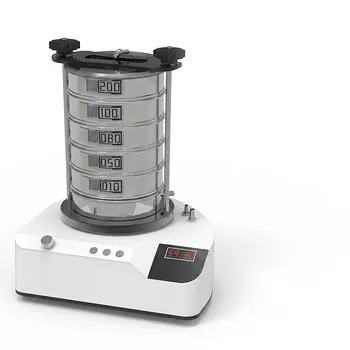
Heavy Duty Dry Three Dimensional Vibratory Sieve Shaker for Particle Separation
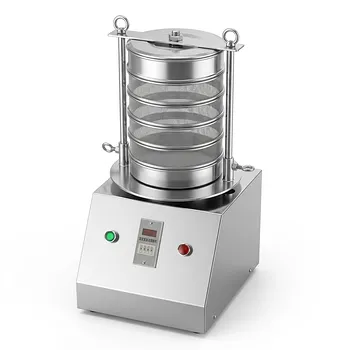
Stainless Steel Laboratory Vibratory Test Sieve Shaker
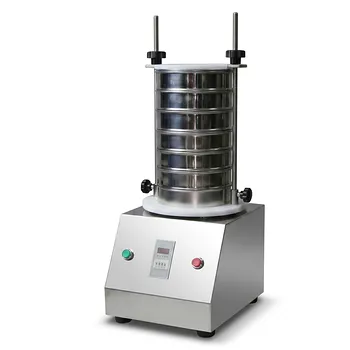
Small Laboratory Vibratory Sieve Shaker for Powder Gradation and Particle Size Analysis
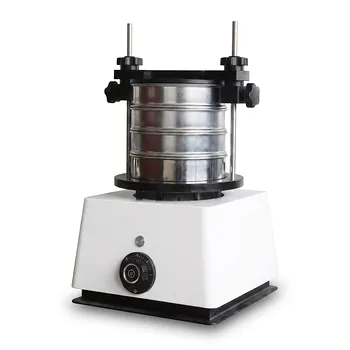
Small Laboratory Vibrating Sieve Shaker for Precise Particle Size Analysis
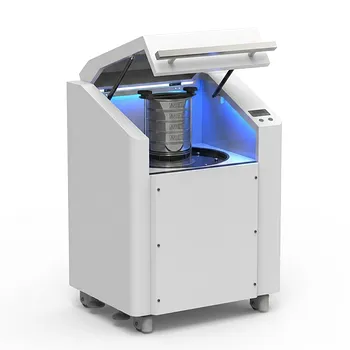
High Frequency Cabinet Type Three-Dimensional Rotary Vibrating Sieve Shaker for Dry Sieving and Particle Classification
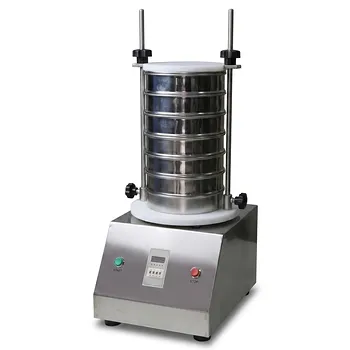
Laboratory Vibratory Test Sieve Shaker for Precision Particle Size Analysis and Powder Grading
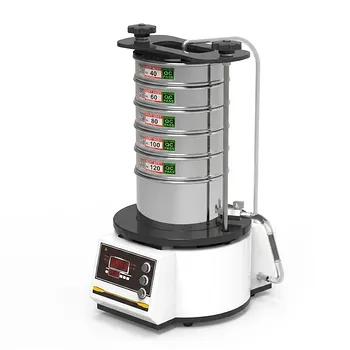
High Frequency Wet Three-Dimensional Vibrating Sieve Shaker for Dry and Wet Particle Size Analysis
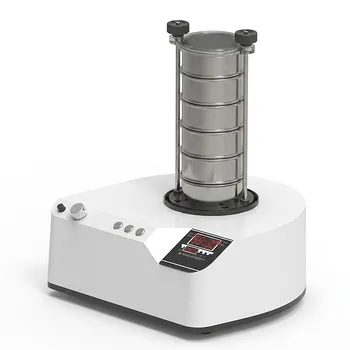
三维电磁微量振动筛分仪
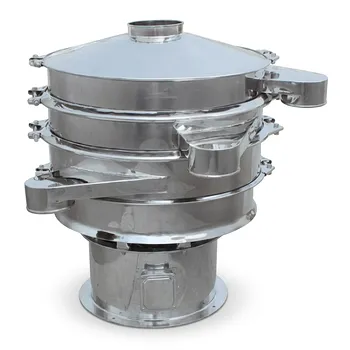
Stainless Steel Rotary Vibrating Sieve High Precision Circular Vibratory Separator Industrial Powder Grading Machine Multi Layer Sifting Equipment
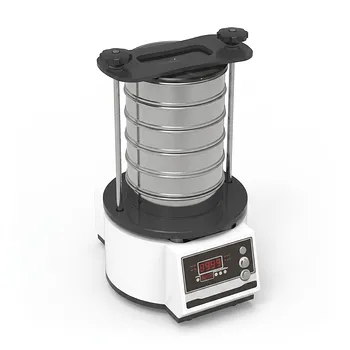
Tapping Oscillating Sieve Shaker for Dry and Wet Particle Size Analysis
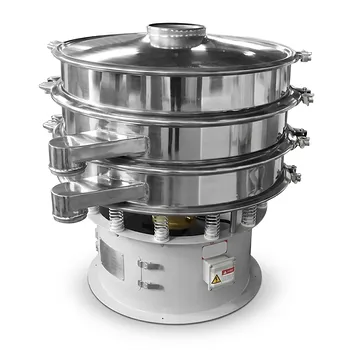
Three Dimensional Rotary Vibrating Sieve
Vibratory Superfine Grinder for Ultra Fine Laboratory Powder Milling
Automatic Vibrating Powder Feeder for Laboratory Material Processing Precision Vibratory Hopper Feeder for Granular and Powder Material Handling Industrial Grade Vibrating Tray Feeder for Consistent Material Sample Preparation
Vibratory Disc Mill for Rapid Fine Grinding and High Throughput Sample Preparation of Hard and Brittle Materials