Why is a low-speed mixer used for secondary treatment before SPS? Ensure Uniformity in Magnesium Composites
Updated 4 months ago
Using a low-speed mixer for secondary treatment is essential to eliminate powder agglomeration and restore flowability prior to Spark Plasma Sintering (SPS). This step ensures that magnesium matrix composite powders fill the sintering mold accurately and achieve a uniform density, preventing structural defects in the final material.
The primary role of a low-speed mixer is to de-agglomerate dried powders through gentle mechanical force, ensuring a macroscopically uniform dispersion without damaging the delicate morphology of the particles.
Overcoming Post-Drying Agglomeration
Restoring Powder Flowability
During the drying phase of powder preparation, individual particles often clump together to form agglomerates. These clumps hinder the powder’s ability to flow smoothly into the SPS mold, leading to uneven distribution.
Ensuring Precise Mold Filling
A low-speed mixer rotates steadily to break these bonds, returning the powder to a free-flowing state. This is critical for accurate mold filling, which directly dictates the precision and geometric integrity of the sintered part.
Impact on Sintering Density
If powders are not properly de-agglomerated, the resulting compact will have density gradients. By ensuring a uniform fill, the mixer allows the SPS process to achieve a consistent sintering density across the entire magnesium matrix.
Ensuring Macroscopic Homogeneity
Preventing Localized Defects
In magnesium matrix composites, the distribution of reinforcements must be perfectly uniform to avoid localized performance defects. Continuous, gentle stirring over an extended period—sometimes up to 12 hours—facilitates a thorough blend that prevents clusters of filler material.
Facilitating Consistent Current Flow
Spark Plasma Sintering relies on the passage of an electric current through the powder. A homogeneous matrix ensures that the electrical and thermal conductivity remains constant throughout the volume, preventing "hot spots" that could melt the magnesium matrix prematurely.
Preservation of Particle Morphology
Unlike high-energy milling, low-speed mixing provides controlled shear force. This allows for the breakdown of filler agglomerates without fracturing the particles or altering their original shape, which is vital for maintaining the intended mechanical properties of the composite.
Understanding the Trade-offs
Processing Time vs. Material Integrity
The most significant trade-off in low-speed mixing is the extended duration required to achieve homogeneity. While high-speed mixing is faster, it risks generating excessive heat or mechanical deformation that could degrade the magnesium particles.
Limits of De-agglomeration
Low-speed mixers are highly effective for "soft" agglomerates formed during drying but may struggle with harder aggregates formed by chemical bonding. In such cases, the process acts more as a blending step than a true particle-size reduction method.
Contamination Risks
Extended mixing times increase the window for potential contamination from the mixing environment or the container itself. It is vital to use high-purity media and sealed environments to protect the reactive magnesium powder from oxidation.
How to Apply This to Your Project
To achieve the best results with magnesium matrix composites, your secondary treatment strategy should align with your specific material requirements.
- If your primary focus is structural uniformity: Utilize the low-speed mixer for a minimum of 12 hours to ensure fillers are macroscopically dispersed throughout the magnesium matrix.
- If your primary focus is particle preservation: Keep the rotation speed at the lowest effective setting to prevent any mechanical damage to the particle morphology.
- If your primary focus is SPS efficiency: Prioritize the removal of all visible clumps to ensure the powder flows into the mold with maximum packing density.
By meticulously managing the de-agglomeration process, you ensure that the high-speed capabilities of SPS are matched by a high-quality, uniform starting material.
Summary Table:
| Key Benefit | Impact on SPS Process | Primary Objective |
|---|---|---|
| De-agglomeration | Restores powder flowability | Ensures precise and accurate mold filling |
| Homogeneity | Prevents localized defects | Facilitates consistent electrical/thermal flow |
| Morphology Preservation | Maintains mechanical properties | Avoids particle fracture or deformation |
| Density Control | Eliminates density gradients | Achieves uniform sintering density |
Elevate Your Material Research with Precision Sample Preparation
Achieving the perfect magnesium matrix composite requires more than just a great sintering process—it starts with meticulous powder preparation. At [Company Name], we provide complete laboratory sample preparation solutions tailored for material science.
Whether you need to eliminate soft agglomerates or achieve a perfectly homogeneous blend, our specialized equipment is designed to meet the most rigorous standards. Our extensive product line includes:
- Powder Processing: High-performance mixers, defoaming mixers, and an array of mills (planetary ball, jet, and rotor mills) to ensure optimal particle morphology.
- Classification: Sieve shakers (vibratory/air-jet) and high-precision test sieves for consistent particle size distribution.
- Advanced Compaction: A full spectrum of hydraulic presses, including Cold/Warm Isostatic Presses (CIP/WIP), vacuum hot presses, and XRF pellet presses.
Don't let powder defects compromise your sintering results. Contact our technical experts today to discover how our powder processing and compaction equipment can optimize your workflow and improve material integrity.
References
- Olugbenga Ogunbiyi, Michael O. Daramola. Empirical Prediction of Optimum Process Conditions of Spark Plasma-Sintered Magnesium Composite (AZ91D-Ni-GNPs) Using Response Surface Methodology (RSM) Approach. DOI: 10.1007/s13369-022-07012-z
Mentioned Products
- 500g Capacity Water Cooled Low Temperature Grinder with Variable Speed and Safety Cover
- High Speed Vacuum Planetary Centrifugal Mixer and Defoamer for Industrial Paste Processing
- High-Speed Simple Disperser for Efficient Mixing, Dispersion, and Emulsification
- Three-Dimensional Motion Mixer for Laboratory Powder and Granule Blending
- Inclined Mixer for Homogeneous Powder Blending and Grinding
People Also Ask
- Why is cryogenic milling using liquid nitrogen necessary during the mechanical alloying of Cu-Ta alloy powders? Key Benefits
- What is the role of a high-energy cryogenic grinder in Al-Gr nanocomposites? Optimize Refinement & Dispersion
- What is the impact of grinding time on drug-loaded powders in cryogenic grinding? Optimize Morphology & Performance
- What are the advantages of using liquid nitrogen-driven cryomilling compared to room-temperature ball milling for high-entropy alloys?
- Why is a cryogenic grinder essential for nano-encapsulated materials? Protect Integrity and Boost Remediation Success

Tech Team · PowderPreparation
Last updated on Jun 03, 2026
Related Products
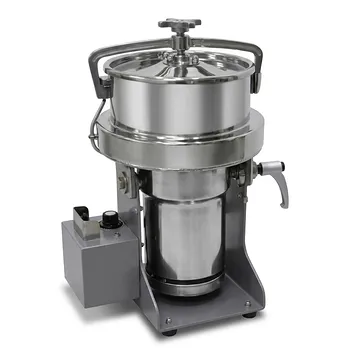
500g Capacity Water Cooled Low Temperature Grinder with Variable Speed and Safety Cover
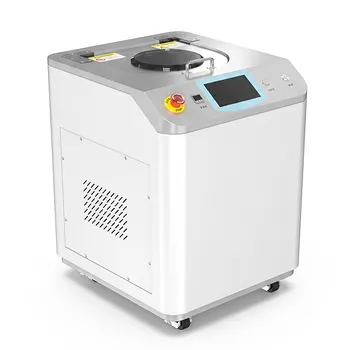
High Speed Vacuum Planetary Centrifugal Mixer and Defoamer for Industrial Paste Processing
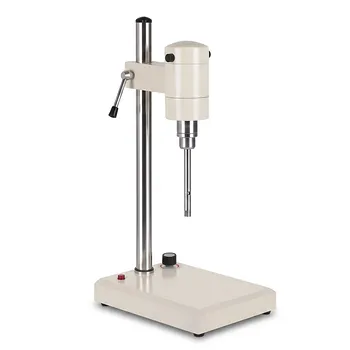
High-Speed Simple Disperser for Efficient Mixing, Dispersion, and Emulsification
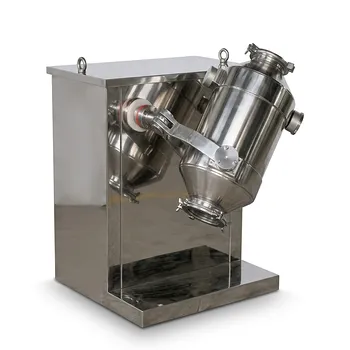
Three-Dimensional Motion Mixer for Laboratory Powder and Granule Blending
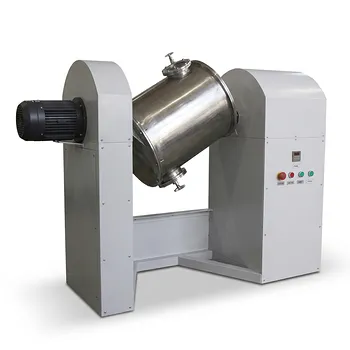
Inclined Mixer for Homogeneous Powder Blending and Grinding
非介入式材料均质机真空脱泡行星搅拌高粘度混合设备
Small High-Speed Laboratory Grinder for Rapid Sample Preparation
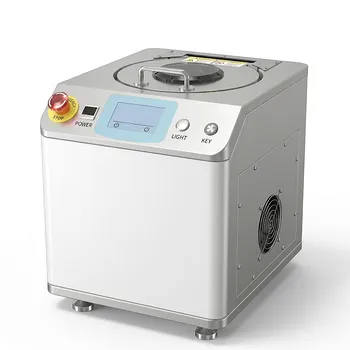
High Efficiency Vacuum Planetary Centrifugal Mixer and Defoaming Machine for Industrial Material Research and Precise Laboratory Powder Dispersion
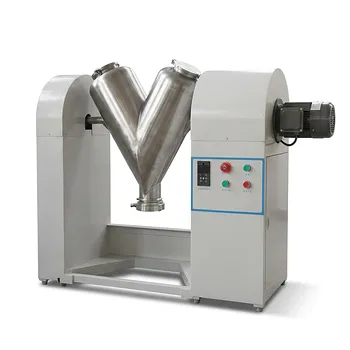
V-Type Powder Mixer for Uniform Blending of Dry Powders and Granules
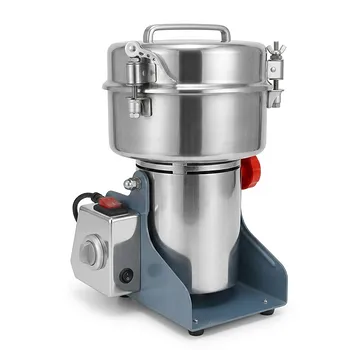
Small High-Speed Grinder for Efficient Laboratory Sample Preparation
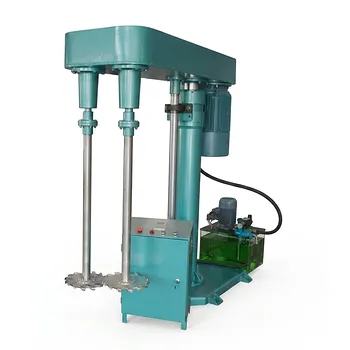
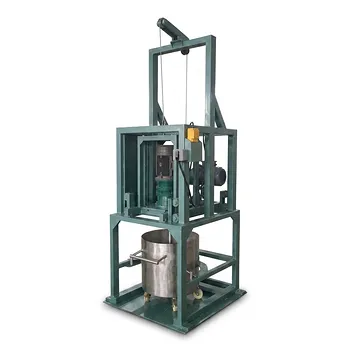
Hydraulic Double Shaft Disperser for High Viscosity Liquid Mixing and Dispersion
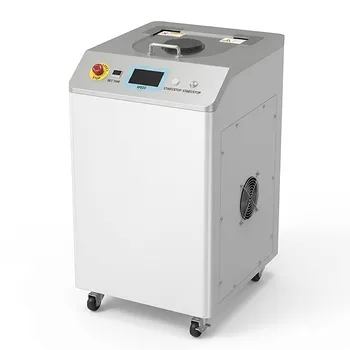
High Viscosity Planetary Centrifugal Vacuum Mixer for Material Defoaming and Uniform Mixing
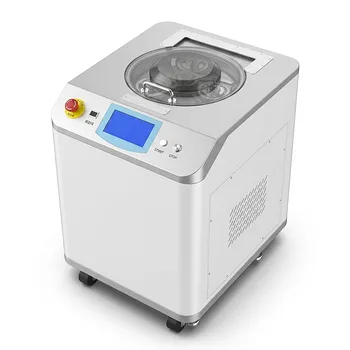
Dual Cup Vacuum Centrifugal Mixer Planetary Paste Defoaming Machine Industrial Material Processor
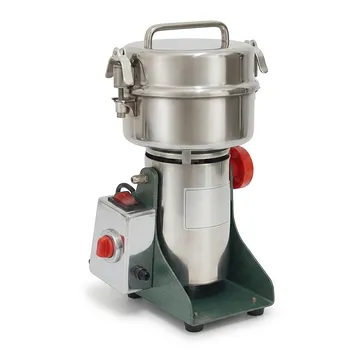
Small High Speed Grinder for Laboratory Sample Preparation
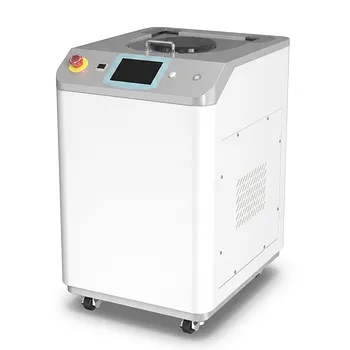
High Viscosity Planetary Centrifugal Mixing and Vacuum Defoaming Machine for Laboratory Material Preparation
Small Trace Sample High Speed Pulverizer Grinder Laboratory Powder Mill
Industrial Planetary Centrifugal Vacuum Defoaming Mixer for High Viscosity Paste and Powder Homogenization
Industrial Planetary Centrifugal Vacuum Defoaming Mixer for High Viscosity Paste and Advanced Material Science
Multi Dimensional Universal Mixer for High Uniformity Powder Blending