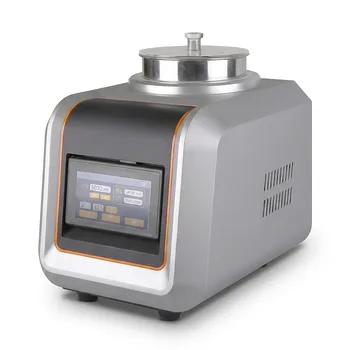
Why is a laboratory vibratory sieve shaker necessary for SiC composite preparation? Optimize Particle Size & Performance
Updated 3 months ago
The laboratory vibratory sieve shaker is indispensable for Silicon Carbide (SiC) composite preparation because it provides the precise physical classification required to isolate matrix particles into strict size ranges. This process ensures that particles are grouped into specific gradients—such as 25-50 μm or 75-100 μm—allowing researchers to control the material's microstructure. Without this step, it is impossible to accurately investigate how particle size influences the secondary phase network and the final performance of the composite.
A vibratory sieve shaker transforms bulk powders into standardized building blocks, enabling the precise engineering of SiC composites. It is the fundamental tool for ensuring experimental consistency, optimizing particle-matrix interactions, and achieving targeted material properties.
Controlling the Composite Microstructure
Defining the Secondary Phase Network
In SiC composites, the secondary phase network must be uniform and continuous to achieve high-performance results. By using a vibratory sieve shaker to isolate specific particle size ranges, researchers can control how these particles pack together. This physical classification is a critical prerequisite for understanding how matrix size dictates the distribution of the secondary phase.
Influencing Thermoelectric and Mechanical Performance
The size of the SiC matrix particles directly affects the final thermoelectric performance and mechanical properties like Young's modulus and tensile strength. Precise classification allows for the optimization of hybrid composite performance by minimizing internal stress concentrations. Without strict sizing, the data used to validate mathematical prediction models would be inconsistent and unreliable.
Achieving High-Precision Particle Separation
Mechanical Vibration and Particle Rearrangement
The shaker provides standardized vibration and impact actions that cause SiC particles to continuously rearrange and "jump" on the sieve mesh. This mechanical energy ensures that particles attempt to pass through the mesh openings in multiple orientations. This allows the particle width—the critical parameter for effective screening—to accurately match the sieve opening size.
Optimizing Specific Surface Area
Precise control of particle size via sieving allows for the adjustment of the specific surface area of the SiC reinforcement. This surface area directly impacts the interaction strength and dispersion uniformity within the matrix. A stable particle size range ensures that the material behaves predictably during downstream processes like injection molding or high-energy ball milling.
Understanding the Trade-offs and Limitations
Sieve Blinding and Mesh Wear
While highly effective, vibratory shakers can suffer from sieve blinding, where particles become lodged in the mesh openings. This reduces screening efficiency and can lead to inaccurate size grading if the equipment is not regularly maintained. Overuse or aggressive vibration can also cause mesh wear, altering the precision of the size fractions over time.
Limitations with Ultra-Fine Particles
Vibratory sieving is highly efficient for micron-grade particles but faces challenges with nano-grade reinforcements. As particle sizes decrease, electrostatic forces and agglomeration can prevent particles from passing through the mesh. In these cases, dry vibratory sieving may need to be supplemented with wet sieving or ultrasonic assistance to maintain accuracy.
How to Apply This to Your Project
When integrating a vibratory sieve shaker into your SiC composite workflow, your approach should depend on your specific research or production goals.
- If your primary focus is Thermoelectric Efficiency: Use strict classification (e.g., 25-50 μm) to ensure a highly continuous secondary phase network that optimizes electron or phonon transport.
- If your primary focus is Mechanical Strength: Focus on achieving a uniform size distribution to minimize internal stress concentrations and prevent premature structural failure.
- If your primary focus is Downstream Process Stability: Ensure your raw materials enter stages like ball milling with consistent physical specifications to maintain flow stability and predictable reaction kinetics.
By mastering the use of the laboratory vibratory sieve shaker, you ensure that your SiC composite materials are built on a foundation of precision and reproducibility.
Summary Table:
| Key Aspect | Role of Vibratory Sieve Shaker | Impact on SiC Composites |
|---|---|---|
| Microstructure | Isolates precise particle size gradients | Defines the secondary phase network uniformity |
| Performance | Optimizes specific surface area | Enhances thermoelectric and mechanical properties |
| Consistency | Standardizes mechanical vibration & impact | Ensures reliable data for mathematical prediction models |
| Processing | Enables particle rearrangement & screening | Minimizes internal stress and improves dispersion |
Elevate Your Material Research with Precision Engineering
Achieving the perfect particle size gradient is the foundation of high-performance Silicon Carbide (SiC) composites. At [Your Brand Name], we provide complete laboratory sample preparation solutions tailored for material science. Whether you are defining secondary phase networks or optimizing mechanical strength, our equipment ensures the precision your research demands.
Our specialized solutions include:
- Powder Processing: High-efficiency vibratory and air-jet sieve shakers, planetary ball mills, jet mills, and cryogenic grinders.
- Mixing & Homogenization: Advanced powder mixers and defoaming mixers for uniform dispersion.
- Compaction Excellence: A full spectrum of hydraulic presses, including Cold/Warm Isostatic Presses (CIP/WIP), vacuum hot presses, and XRF pellet presses.
Don't let inconsistent particle sizing compromise your results. Partner with the experts in powder processing and compaction.
Contact our technical team today to find the right equipment for your lab!
References
- Zeynep Sude Bulut, Salih Çağrı Özer. Improved Thermoelectric Properties of SiC Composites with Optimized TiB2 Network Structures. DOI: 10.2339/politeknik.1625094
Mentioned Products
- Vibratory Sieve Shaker Electromagnetic 3D Motion Powder Particle Size Analyzer for Dry and Wet Sieving
- Laboratory Dry and Wet Three Dimensional Vibratory Sieve Shaker for Particle Analysis
- Stainless Steel Laboratory Vibratory Test Sieve Shaker
- Heavy Duty Dry Three Dimensional Vibratory Sieve Shaker for Particle Separation
- Dry Three Dimensional Vibratory Sieve Shaker
People Also Ask
- How does a vibratory sieve shaker contribute to optimizing the performance of activated carbon? Enhance Adsorption Precision
- Why is a laboratory vibratory sieve shaker necessary for processing magnesium-based borate precursor powders? Boost Activity
- Why use a vibratory sieve shaker to verify coarse aggregate grading in rubberized concrete? Ensure Structural Integrity
- What function do vibratory sieve shakers and standard test sieves serve in the preparation of adsorbents? Key Guide
- What role does a vibratory sieve shaker play in the particle size analysis of ground corn products? Enhance QC Precision

Tech Team · PowderPreparation
Last updated on Jun 03, 2026
Related Products
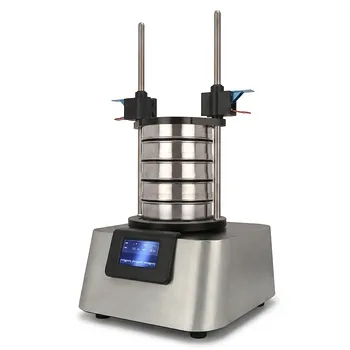
Vibratory Sieve Shaker Electromagnetic 3D Motion Powder Particle Size Analyzer for Dry and Wet Sieving
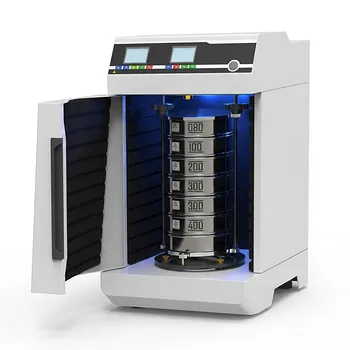
Laboratory Dry and Wet Three Dimensional Vibratory Sieve Shaker for Particle Analysis
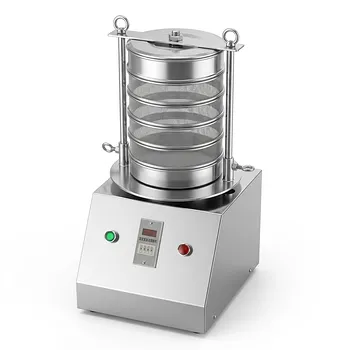
Stainless Steel Laboratory Vibratory Test Sieve Shaker
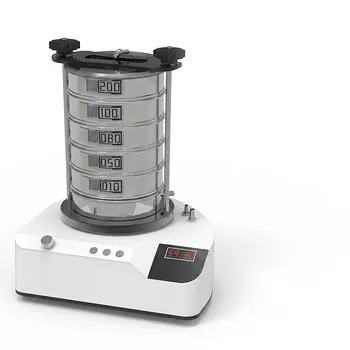
Heavy Duty Dry Three Dimensional Vibratory Sieve Shaker for Particle Separation
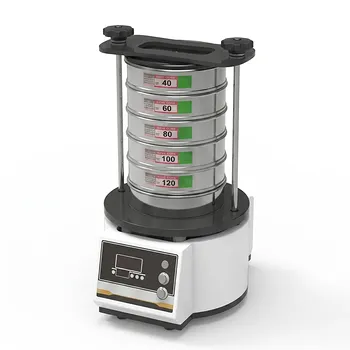
Dry Three Dimensional Vibratory Sieve Shaker
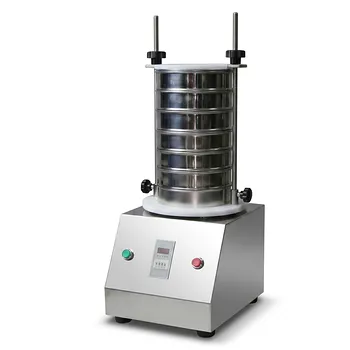
Small Laboratory Vibratory Sieve Shaker for Powder Gradation and Particle Size Analysis
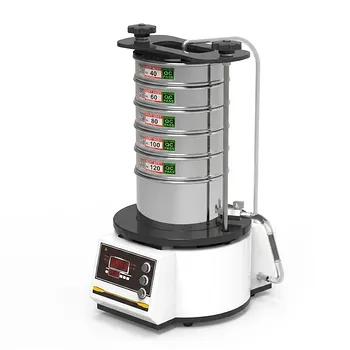
High Frequency Wet Three-Dimensional Vibrating Sieve Shaker for Dry and Wet Particle Size Analysis
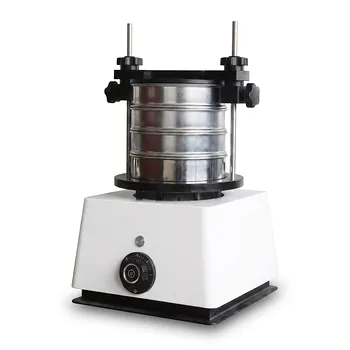
Small Laboratory Vibrating Sieve Shaker for Precise Particle Size Analysis
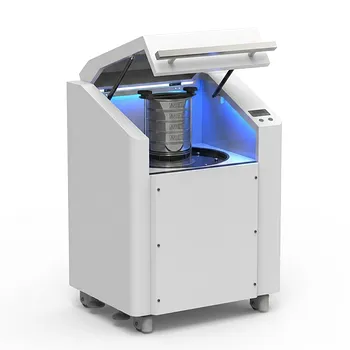
High Frequency Cabinet Type Three-Dimensional Rotary Vibrating Sieve Shaker for Dry Sieving and Particle Classification
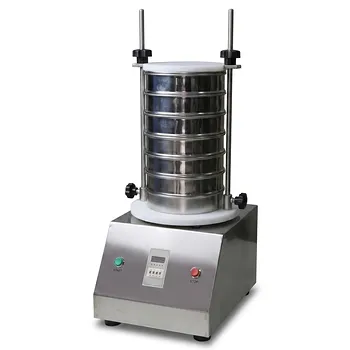
Laboratory Vibratory Test Sieve Shaker for Precision Particle Size Analysis and Powder Grading
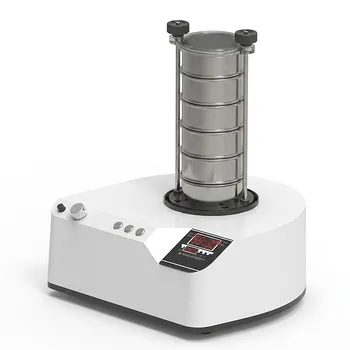
三维电磁微量振动筛分仪
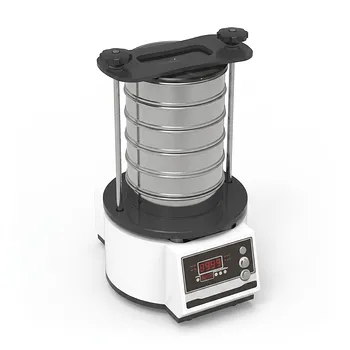
Tapping Oscillating Sieve Shaker for Dry and Wet Particle Size Analysis
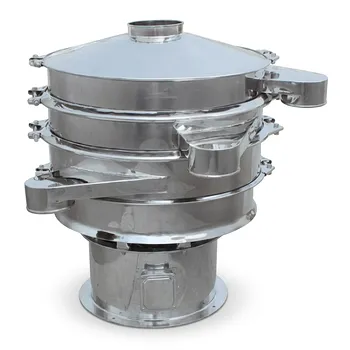
Stainless Steel Rotary Vibrating Sieve High Precision Circular Vibratory Separator Industrial Powder Grading Machine Multi Layer Sifting Equipment
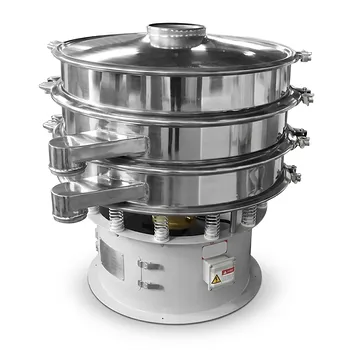
Three Dimensional Rotary Vibrating Sieve
Small Vibrating Ultrafine Grinder for Traditional Chinese Medicine
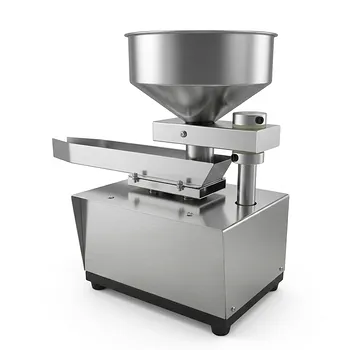
Automatic Vibrating Powder Feeder for Laboratory Material Processing Precision Vibratory Hopper Feeder for Granular and Powder Material Handling Industrial Grade Vibrating Tray Feeder for Consistent Material Sample Preparation
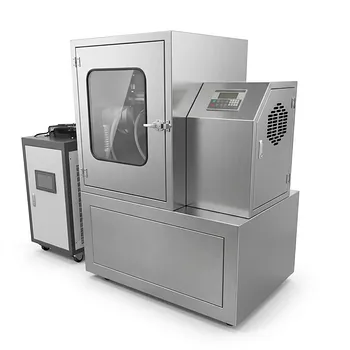
Vibratory Superfine Grinder for Ultra Fine Laboratory Powder Milling
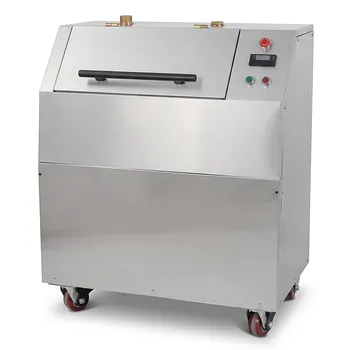
Vibratory Disc Mill for Rapid Fine Grinding and High Throughput Sample Preparation of Hard and Brittle Materials