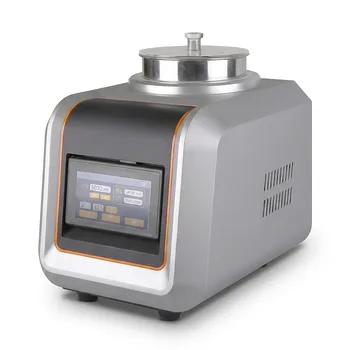
Why is a sieve shaker necessary for sawdust analysis? Optimize Grading and Density for Composite Materials
Updated 4 months ago
A laboratory vibratory sieve shaker is the critical tool for transforming raw sawdust into a standardized industrial aggregate. It provides an automated, high-efficiency method to classify particles by diameter, allowing for the precise calculation of grading coefficients. This data is essential for ensuring the sawdust functions as an effective filler to optimize the density and structural integrity of composite materials like sawdust concrete.
By replacing manual sorting with standardized mechanical vibration, a vibratory sieve shaker ensures repeatable particle size distribution data. This precision is necessary to determine the material's suitability for specific engineering applications, ranging from high-density concrete fillers to efficient biomass briquetting.
Achieving Grading Precision for Structural Integrity
Calculating Critical Engineering Coefficients
The shaker allows for the accurate calculation of the coefficient of curvature ($C_c$) and the coefficient of uniformity ($C_u$). These mathematical metrics are the industry standard for determining if an aggregate is "well-graded."
Optimizing the Concrete Matrix
In sawdust concrete, a well-graded aggregate acts as a mineral filler that fills the voids between larger particles. This optimization is vital for increasing the overall density and strength of the concrete matrix.
Identifying Particle Fractions
The mechanical process objectively separates sawdust into distinct fractions, such as oversized particles, coarse grains, and fine powders. Understanding these ratios allows engineers to adjust mix designs for better material performance.
Enhancing Experimental Repeatability and Efficiency
Standardizing Vibration Parameters
Unlike manual sieving, a vibratory shaker provides constant amplitude and uniform processing time. This mechanized control ensures high experimental repeatability, which is essential for soil science and material testing.
Effective Stratification of Aggregates
High-frequency mechanical vibrations cause particles to tumble and flow effectively through a stack of test sieves. This ensures that particles are thoroughly separated across various apertures, ranging from 10 mm down to 0.25 mm.
Improving Sieving Efficiency
Automated shaking significantly reduces the time required to process samples compared to manual methods. This efficiency allows for faster quality control and more frequent testing during industrial production.
Assessing Suitability for Biomass and Energy Conversion
Optimizing Briquetting and Densification
Particle size distribution directly influences the mechanical interlocking strength and expansion stability of molded biomass. A sieve shaker helps determine if the sawdust ratio is suitable for briquetting without the need for secondary grinding.
Verifying Combustion Fineness
For industrial boilers, the particle size dictates the heating uniformity and reaction rates of the fuel. Sieve analysis verifies if the powder meets the fineness required for efficient thermochemical conversion.
Evaluating Grinding Efficiency
By calculating the $d_{80}$ particle size, operators can evaluate the performance of grinding equipment. This data is critical for maintaining the economic viability of biomass energy production.
Understanding the Trade-offs and Limitations
Sieve Blinding and Clogging
Very fine or slightly moist sawdust particles can lead to "blinding," where the mesh openings become blocked. This can skew results toward coarser distributions if not managed with proper vibration settings or anti-clogging balls.
2D Measurement Constraints
Sieve shakers classify particles based on their smallest cross-section. For needle-like sawdust particles, this may not provide a complete picture of the particle's actual volume or surface area.
Sample Volume Sensitivity
Overloading a sieve stack can impede the "micro-throwing" motion required for stratification. To maintain accuracy, users must strictly adhere to recommended sample masses based on the sieve diameter.
Making the Right Choice for Your Goal
To maximize the value of your particle size analysis, align your sieving strategy with your specific material requirements:
- If your primary focus is structural concrete filler: Prioritize the calculation of $C_c$ and $C_u$ to ensure a "well-graded" distribution that maximizes matrix density.
- If your primary focus is biomass briquetting: Use the shaker to identify the ratio of coarse to fine particles to ensure optimal mechanical interlocking and expansion stability.
- If your primary focus is industrial combustion: Focus on the $d_{80}$ metric to verify that the sawdust powder is fine enough for rapid and uniform thermochemical reactions.
- If your primary focus is laboratory research: Leverage the mechanized control of frequency and duration to ensure the high repeatability required for published scientific data.
By utilizing a vibratory sieve shaker, you move from subjective estimation to objective, data-driven material science.
Summary Table:
| Feature/Application | Key Analysis Metric | Primary Benefit |
|---|---|---|
| Sawdust Concrete | Grading Coefficients ($C_c$, $C_u$) | Maximizes matrix density and structural strength |
| Biomass Energy | $d_{80}$ Particle Size | Ensures uniform combustion and briquetting stability |
| Material Research | Stratification Efficiency | Delivers repeatable, objective data for publication |
| Process Control | Fraction Identification | Optimizes grinding equipment and industrial efficiency |
Elevate Your Material Analysis with Precision Solutions
At [Brand Name], we provide complete laboratory sample preparation solutions tailored for material science. Whether you are analyzing particle distribution in biomass or developing high-strength composites, our equipment ensures accuracy and repeatability.
Our extensive product line includes:
- Sieve Shakers & Test Sieves: Vibratory and air-jet models for precise particle classification.
- Size Reduction: Crushers (jaw/roll), liquid nitrogen cryogenic grinders, and advanced mills (planetary ball, jet, rotor).
- Mixing & Compaction: Powder and defoaming mixers, plus a full spectrum of hydraulic presses, including Cold/Warm Isostatic Presses (CIP/WIP), hot presses, and vacuum hot presses.
Ready to optimize your laboratory workflow? Contact our experts today to find the perfect equipment for your specific application and join our global network of satisfied researchers and distributors.
References
- O.A. Ubachukwu, K.B. Nwokoukwu. Properties of eco-friendly concrete produced by partial replacement of sand with sawdust with emphasis on water-cement ratio. DOI: 10.4314/njt.v41i1.4
Mentioned Products
- Vibratory Sieve Shaker Electromagnetic 3D Motion Powder Particle Size Analyzer for Dry and Wet Sieving
- Laboratory Dry and Wet Three Dimensional Vibratory Sieve Shaker for Particle Analysis
- Stainless Steel Laboratory Vibratory Test Sieve Shaker
- Heavy Duty Dry Three Dimensional Vibratory Sieve Shaker for Particle Separation
- Dry Three Dimensional Vibratory Sieve Shaker
People Also Ask
- How does a vibratory sieve shaker contribute to optimizing the performance of activated carbon? Enhance Adsorption Precision
- Why is a laboratory vibratory sieve shaker necessary for processing magnesium-based borate precursor powders? Boost Activity
- Why use a vibratory sieve shaker to verify coarse aggregate grading in rubberized concrete? Ensure Structural Integrity
- What function do vibratory sieve shakers and standard test sieves serve in the preparation of adsorbents? Key Guide
- What role does a vibratory sieve shaker play in the particle size analysis of ground corn products? Enhance QC Precision

Tech Team · PowderPreparation
Last updated on Jun 03, 2026
Related Products

Vibratory Sieve Shaker Electromagnetic 3D Motion Powder Particle Size Analyzer for Dry and Wet Sieving
Laboratory Dry and Wet Three Dimensional Vibratory Sieve Shaker for Particle Analysis

Stainless Steel Laboratory Vibratory Test Sieve Shaker

Heavy Duty Dry Three Dimensional Vibratory Sieve Shaker for Particle Separation
Dry Three Dimensional Vibratory Sieve Shaker

Small Laboratory Vibratory Sieve Shaker for Powder Gradation and Particle Size Analysis

High Frequency Wet Three-Dimensional Vibrating Sieve Shaker for Dry and Wet Particle Size Analysis

Small Laboratory Vibrating Sieve Shaker for Precise Particle Size Analysis
High Frequency Cabinet Type Three-Dimensional Rotary Vibrating Sieve Shaker for Dry Sieving and Particle Classification

Laboratory Vibratory Test Sieve Shaker for Precision Particle Size Analysis and Powder Grading

三维电磁微量振动筛分仪
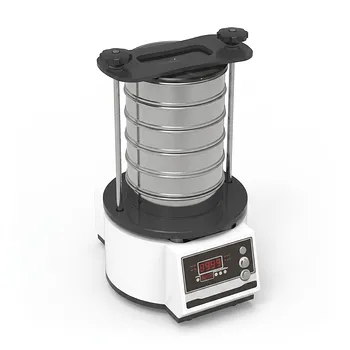
Tapping Oscillating Sieve Shaker for Dry and Wet Particle Size Analysis

Stainless Steel Rotary Vibrating Sieve High Precision Circular Vibratory Separator Industrial Powder Grading Machine Multi Layer Sifting Equipment

Three Dimensional Rotary Vibrating Sieve
Small Vibrating Ultrafine Grinder for Traditional Chinese Medicine
Automatic Vibrating Powder Feeder for Laboratory Material Processing Precision Vibratory Hopper Feeder for Granular and Powder Material Handling Industrial Grade Vibrating Tray Feeder for Consistent Material Sample Preparation
Vibratory Superfine Grinder for Ultra Fine Laboratory Powder Milling
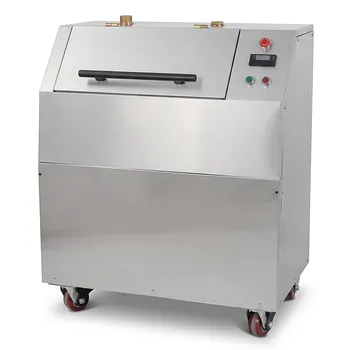
Vibratory Disc Mill for Rapid Fine Grinding and High Throughput Sample Preparation of Hard and Brittle Materials