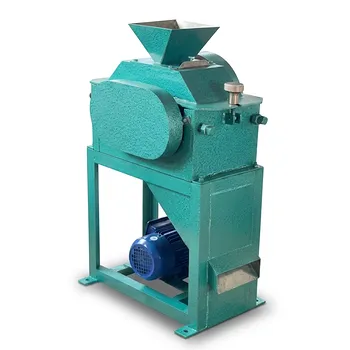
Why is a laboratory hydraulic press used to apply pressures of up to 150 MPa? Achieve High-Density Ceramic Pellets.
Updated 4 months ago
High-pressure compaction is the critical first step in ceramic fabrication, transforming loose powders into a structurally sound "green body."
Applying pressures up to 150 MPa ensures that ceramic particles are forced into a tight, interlocked arrangement while effectively expelling trapped air. This process results in a high-density pellet with the mechanical strength required for handling and the structural integrity needed to prevent cracking or excessive shrinkage during the subsequent sintering phase.
A laboratory hydraulic press provides the precise, uniform force required to maximize particle contact and minimize internal voids. This high-density foundation is essential for achieving optimal bulk density and accelerating the solid-state reactions during high-temperature processing.
The Mechanics of Powder Densification
Overcoming Friction and Particle Rearrangement
At the macroscopic level, ceramic powders are resistant to movement due to inter-particle friction. A hydraulic press applying 150 MPa provides the necessary energy to overcome this friction, forcing granulated particles to slide, rotate, and rearrange into a more efficient packing structure.
Eliminating Interstitial Air and Voids
Loose powder contains significant amounts of trapped air that can lead to internal defects. High-pressure molding effectively expels this air, reducing internal porosity and creating a dense physical foundation that is vital for the material’s final properties.
Facilitating Physical Interlocking
Under intense pressure, particles do not merely sit next to each other; they undergo localized deformation and physical interlocking. This close contact increases the surface area for bonding, which is the primary driver for mechanical stability before the pellet is even fired.
Impact on Sintering and Final Material Quality
Reducing Sintering Shrinkage and Cracking
A high-pressure environment significantly reduces the shrinkage rate during the subsequent sintering process. By achieving a high "green density" (the density before firing), the material undergoes less dimensional change, which prevents the formation of cracks and structural delamination.
Accelerating Solid-State Reaction Kinetics
High-pressure compaction brings particles into such close proximity that it facilitates faster atomic diffusion. This proximity is essential for efficient grain growth and densification, allowing the ceramic to reach high bulk densities, such as 3.86 g/cm³, more reliably.
Lowering Electrical and Ionic Impedance
For specialized applications like piezoelectric or LLTO-IL composite ceramics, high pressure is used to lower the overall impedance of the sample. By increasing the contact area between particles, the press provides the structural foundation required to obtain accurate steady-state ionic conductivity data.
Understanding the Trade-offs and Pitfalls
The Risk of Pressure Gradients
While high pressure is beneficial, it must be applied uniformly to avoid density gradients within the pellet. If pressure is not distributed evenly, the pellet may warp or shrink non-uniformly during sintering, leading to structural failure.
Preventing Capping and Delamination
Applying excessive pressure beyond the material's limit can cause "capping," where the pellet splits into layers upon being released from the mold. Precision control of the hydraulic press is necessary to balance maximum density with the elastic recovery limits of the ceramic powder.
Mold Wear and Maintenance
Operating consistently at 150 MPa puts significant stress on the stainless steel or tungsten carbide molds. Regular inspection for scratches or deformations is required, as any surface imperfection in the mold will be transferred to the pellet, potentially acting as a stress concentrator for cracks.
How to Apply This to Your Project
Selecting the Right Pressure for Your Goal
- If your primary focus is maximizing final bulk density: Use the upper end of the recommended pressure range (100–150 MPa) to ensure the highest possible green density and minimize sintering voids.
- If your primary focus is preventing thin-film delamination: Utilize a stable, slower pressure ramp-up to allow air to escape gradually, reducing the risk of internal stress and cracking.
- If your primary focus is accurate electrical characterization: Ensure constant, high-pressure contact to minimize contact resistance between powder granules and improve ionic conductivity readings.
A laboratory hydraulic press is the indispensable tool for bridging the gap between loose powder and a high-performance, dense ceramic component.
Summary Table:
| Key Mechanism | Impact on Ceramic Quality |
|---|---|
| Particle Rearrangement | Overcomes friction to create a tighter, more efficient packing structure. |
| Air & Void Elimination | Expels trapped air to reduce internal porosity and prevent structural defects. |
| Physical Interlocking | Forces particles to deform and bond, increasing mechanical green strength. |
| Sintering Optimization | Minimizes dimensional shrinkage and prevents cracking during high-temp firing. |
| Enhanced Kinetics | Accelerates atomic diffusion and grain growth for higher final bulk density. |
Elevate Your Material Research with Precision Compaction Solutions
Achieving the perfect 150 MPa compaction requires more than just force—it requires precision and reliability. At [Brand Name], we provide complete laboratory sample preparation solutions for material science, specializing in high-performance powder processing and compaction equipment.
Our extensive range is designed to meet the rigorous demands of ceramic and material engineering:
- Advanced Hydraulic Presses: From standard lab presses and XRF pellet presses to Cold/Warm Isostatic Presses (CIP/WIP) and Vacuum Hot Presses.
- Powder Processing & Milling: High-efficiency crushers, liquid nitrogen cryogenic grinders, and specialized mills (planetary ball, jet, sand, and rotor).
- Sieving & Mixing: Precision sieve shakers (vibratory/air-jet) and advanced powder or defoaming mixers.
Ready to optimize your sample preparation and ensure superior material properties? Contact our experts today to find the ideal equipment for your laboratory's specific needs.
References
- Hameed Ullah. Effect of Calcium Titanate Addition on the Phase, Microstructure, and Microwave Dielectric Properties of (Mg0.95Co0.05) (Ti0.95 Sn0.05)O3 Ceramics Calcined at 1200 °C for 5h.. DOI: 10.52783/tjjpt.v46.i01.8873
Mentioned Products
- 6-Ton Small Single-Punch Tablet Press — Laboratory Powder & Granule Tableting Equipment / Tablet Forming Machine
- 5 Ton Single Punch Tablet Press Laboratory Small Batch Production
- Manual Tablet Press with Dual Scale Pressure Gauge for Pharmaceutical Food Chemical Laboratory Sample Preparation
- 6 Ton Variable Frequency Single Punch Tablet Press
- High Shear Laboratory Emulsifier for Mixing and Homogenization
People Also Ask
- What is the function of a laboratory press in Cr-Ti alloy evaluation? Quantify Fracture Stress & Strength
- What is the function of a laboratory press in assessing the hydrophobic performance of modified vermiculite fillers?
- What is the core function of a laboratory press in the forming of ceramic filter element green bodies? Maximize Density.
- What is the function of a laboratory press in the preparation of ceramic feed rods? Master Density and Precision
- Why is vacuum sealing and flexible packaging necessary for Aluminum Titanate powders during CIP? Ensure Peak Density

Tech Team · PowderPreparation
Last updated on May 14, 2026
Related Products
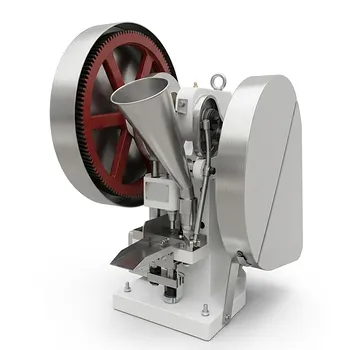
6-Ton Small Single-Punch Tablet Press — Laboratory Powder & Granule Tableting Equipment / Tablet Forming Machine
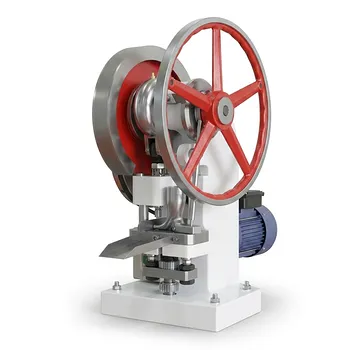
5 Ton Single Punch Tablet Press Laboratory Small Batch Production
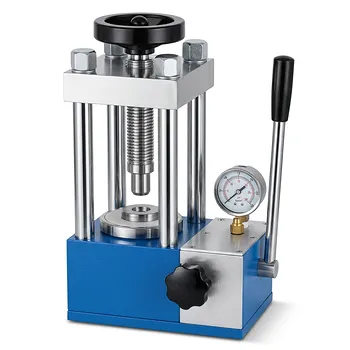
Manual Tablet Press with Dual Scale Pressure Gauge for Pharmaceutical Food Chemical Laboratory Sample Preparation
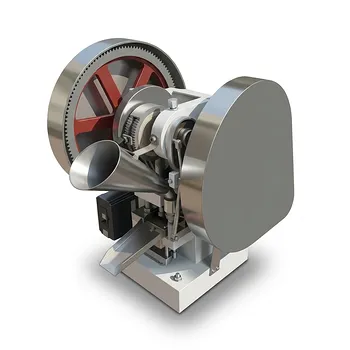
6 Ton Variable Frequency Single Punch Tablet Press
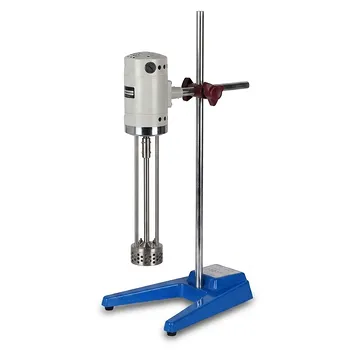
High Shear Laboratory Emulsifier for Mixing and Homogenization
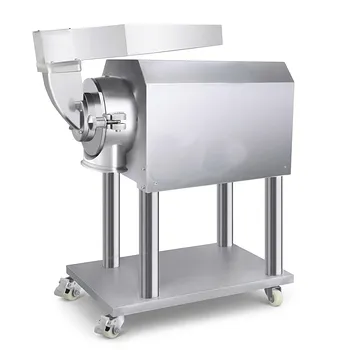
High Speed Small Laboratory Crusher for Dry Material Sample Preparation
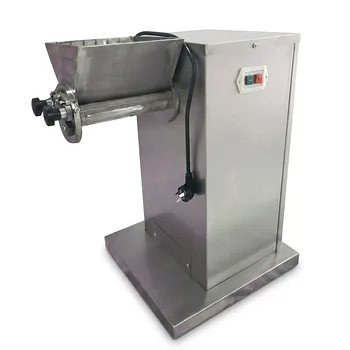
Small Laboratory Oscillating Granulator for Wet and Dry Granulation Processing
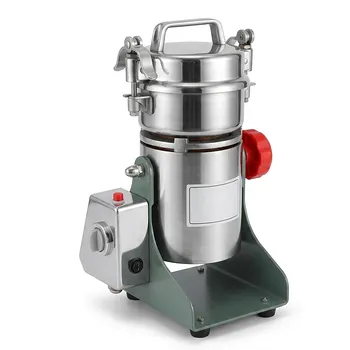
High Speed Swing Type Laboratory Pulverizer for Fine Powder Grinding and Sample Preparation
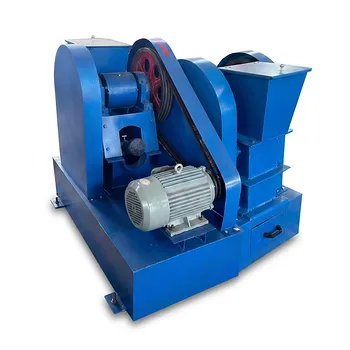
Horizontal Jaw Crusher Medium Hard Material Crushing Laboratory Sample Preparation Equipment