Why is a laboratory hydraulic press used to apply high axial pressure when pressing magnesium titanate (Mg2TiO4) green bodies?
Updated 5 months ago
The laboratory hydraulic press is the primary tool for transforming loose magnesium titanate ($Mg_2TiO_4$) powder into a structural "green body." By applying high axial pressure—frequently cited at levels such as 295 MPa or higher—the press induces plastic deformation and particle rearrangement within a mold. This process maximizes the green density of the compact, which is a prerequisite for achieving high mechanical strength and structural integrity during the subsequent sintering stage.
The use of high axial pressure serves to eliminate macroscopic voids and establish maximum contact between powder particles. This dense initial state is critical because it enables efficient atomic diffusion during sintering, ensuring the final ceramic reaches its full theoretical density and performance.
Optimizing the Green Body Microstructure
Inducing Particle Rearrangement and Deformation
The application of high axial pressure forces loose $Mg_2TiO_4$ particles to overcome surface resistance and internal friction.
Under this load, particles shift into a more efficient packing arrangement, filling the large voids that would otherwise remain in the structure.
At higher pressures, such as the 295 MPa or 620 MPa used in specialized research, the particles undergo plastic deformation, physically changing shape to fill even smaller interstitial spaces.
Enhancing Green Density and Contact Area
A higher green density significantly increases the contact area between individual magnesium titanate grains.
This increased contact is vital because it creates the pathways through which atoms migrate during the heat-treatment process.
By reducing initial porosity, the press ensures the green body has sufficient mechanical strength for handling and de-molding without fracturing or crumbling.
The Critical Link to Sintering Success
Facilitating Effective Atomic Diffusion
Sintering relies on atomic diffusion across grain boundaries to fuse particles into a solid, high-strength ceramic mass.
High axial pressure establishes the dense initial state required for this diffusion to occur rapidly and uniformly at high temperatures.
Without this initial compaction, the excessive distance between particles would result in a porous, weak ceramic with poor dielectric and mechanical properties.
Preventing Defects and Dimensional Warping
High-pressure compaction minimizes the total volume of shrinkage that occurs as the material densifies in the furnace.
By achieving a high initial packing density, the risk of severe dimensional deformation or cracking due to non-uniform contraction is greatly reduced.
This results in a finished ceramic disk that maintains its intended geometric shape and structural consistency across the entire component.
Understanding the Trade-offs and Limitations
The Risk of Elastic Recovery (Spring-back)
While high pressure is generally beneficial, exceeding the material’s elastic limit can lead to spring-back once the pressure is released.
If the internal stresses stored during pressing are too high, the green body may suffer from capping or laminations, where the compact splits into layers.
Careful control of the pressure ramp and the use of binders are often necessary to mitigate these internal stresses.
Die-Wall Friction and Density Gradients
As axial pressure increases, friction between the powder and the mold walls can become a significant factor.
This friction can lead to density gradients, where the center or bottom of the green body is less dense than the top.
To solve this, researchers often use lubricants or double-action pressing to ensure the magnesium titanate reaches a uniform density throughout its volume.
Making the Right Choice for Your Goal
- If your primary focus is maximum mechanical strength: Apply pressures toward the higher end of the spectrum (e.g., 295–620 MPa) to ensure total particle deformation and maximum grain contact.
- If your primary focus is avoiding structural laminations: Use a moderate pressure (e.g., 50–100 MPa) combined with a phenolic resin or binder to maintain integrity without over-stressing the compact.
- If your primary focus is precise dimensional control: Prioritize high initial green density to minimize sintering shrinkage and reduce the risk of warping during the final firing.
High-pressure axial compaction is the foundational step that dictates the ultimate density, strength, and reliability of magnesium titanate ceramics.
Summary Table:
| Process Mechanism | Role in Mg2TiO4 Pressing | Impact on Final Ceramic |
|---|---|---|
| Particle Rearrangement | Eliminates macroscopic voids under high axial load. | High initial green density and structural uniformity. |
| Plastic Deformation | Forces particles to fill interstitial spaces. | Maximized grain contact for efficient atomic diffusion. |
| Sintering Facilitation | Establishes dense pathways for atom migration. | Achievement of full theoretical density and strength. |
| Defect Mitigation | Minimizes volume shrinkage during heat treatment. | Prevention of dimensional warping and thermal cracking. |
Precision Compaction Solutions for Advanced Material Science
Achieving the perfect $Mg_2TiO_4$ green body requires more than just force—it requires precision. We provide complete laboratory sample preparation solutions designed to meet the rigorous demands of material science research. Our extensive line of hydraulic presses includes standard lab presses, XRF pellet presses, and specialized Cold/Warm Isostatic Presses (CIP/WIP) or vacuum hot presses, ensuring you achieve maximum green density with minimal defects.
Beyond compaction, we support your entire workflow with:
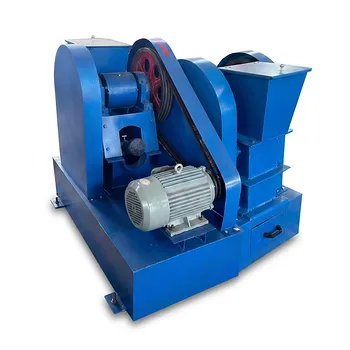
- Size Reduction: Jaw/roll crushers and liquid nitrogen cryogenic grinders.
- Advanced Milling: Planetary ball, jet, and rotor mills for fine powder processing.
- Sieving & Mixing: Sieve shakers and high-efficiency powder or defoaming mixers.
Ready to elevate your ceramic sintering results? Contact our experts today to find the ideal equipment for your laboratory's specific needs!
References
- Nathália Lima Lins, S.S. Pedro. Comparação entre métodos de síntese para obtenção do Titanato de Magnésio puro e contendo Cromo Trivalente. DOI: 10.29327/1340957.677722
Mentioned Products
- 6-Ton Small Single-Punch Tablet Press — Laboratory Powder & Granule Tableting Equipment / Tablet Forming Machine
- 5 Ton Single Punch Tablet Press Laboratory Small Batch Production
- Manual Tablet Press with Dual Scale Pressure Gauge for Pharmaceutical Food Chemical Laboratory Sample Preparation
- 6 Ton Variable Frequency Single Punch Tablet Press
- High Shear Laboratory Emulsifier for Mixing and Homogenization
People Also Ask
- What is the function of a laboratory press in Cr-Ti alloy evaluation? Quantify Fracture Stress & Strength
- What is the function of a laboratory press in assessing the hydrophobic performance of modified vermiculite fillers?
- What is the core function of a laboratory press in the forming of ceramic filter element green bodies? Maximize Density.
- What is the function of a laboratory press in the preparation of ceramic feed rods? Master Density and Precision
- Why is vacuum sealing and flexible packaging necessary for Aluminum Titanate powders during CIP? Ensure Peak Density

Tech Team · PowderPreparation
Last updated on May 14, 2026
Related Products
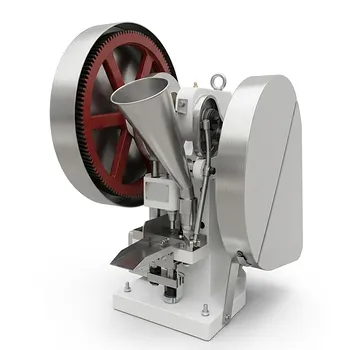
6-Ton Small Single-Punch Tablet Press — Laboratory Powder & Granule Tableting Equipment / Tablet Forming Machine
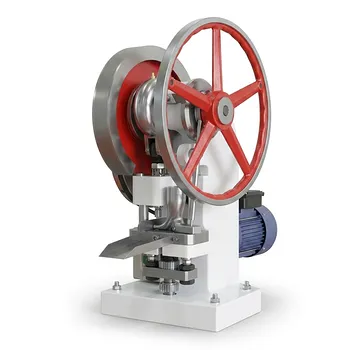
5 Ton Single Punch Tablet Press Laboratory Small Batch Production
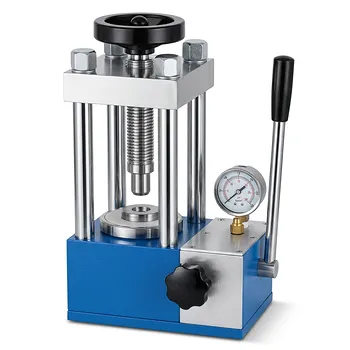
Manual Tablet Press with Dual Scale Pressure Gauge for Pharmaceutical Food Chemical Laboratory Sample Preparation
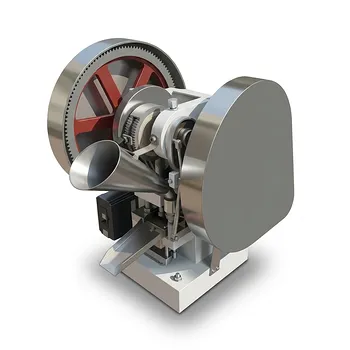
6 Ton Variable Frequency Single Punch Tablet Press
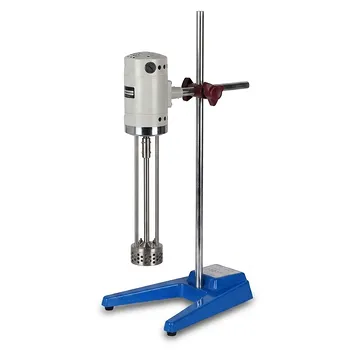
High Shear Laboratory Emulsifier for Mixing and Homogenization
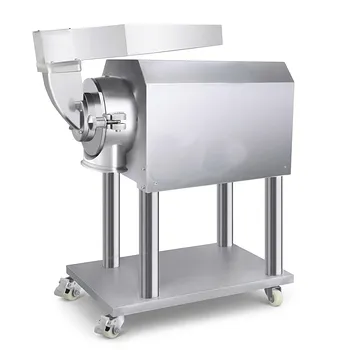
High Speed Small Laboratory Crusher for Dry Material Sample Preparation
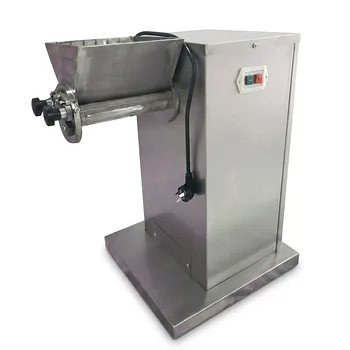
Small Laboratory Oscillating Granulator for Wet and Dry Granulation Processing
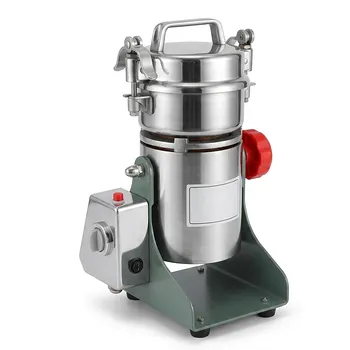
High Speed Swing Type Laboratory Pulverizer for Fine Powder Grinding and Sample Preparation