Why is a laboratory hydraulic press used at 75 MPa for the compaction of ceramic green bodies? Optimize Green Strength.
Updated 4 months ago
The use of 75 MPa in a laboratory hydraulic press is a calculated balance between achieving mechanical stability and maintaining the necessary internal structure for sintering. This specific pressure level provides the force required to overcome internal friction between ceramic particles, forcing them into a compact arrangement known as a "green body." By applying 75 MPa, researchers ensure the sample has sufficient green strength to be handled and demolded without cracking while optimizing the contact points needed for high-temperature reactions.
The 75 MPa setting acts as a critical threshold that stabilizes the ceramic powder into a coherent shape by eliminating air pockets and increasing particle contact. This pressure level maximizes the density of the green body without compromising the porosity required for gas discharge during the subsequent sintering process.
The Mechanics of Powder Transformation
The primary role of the hydraulic press is to transform loose, mixed powder into a solid, manageable geometry through uniaxial pressure.
Overcoming Inter-particle Friction
Powder particles naturally resist movement due to surface friction and irregular shapes. Uniaxial pressure at 75 MPa provides the mechanical energy necessary to overcome this resistance, forcing particles to slide and rearrange into a tighter configuration.
Eliminating Voids and Trapped Air
Loose powder contains significant amounts of trapped air that can cause structural failure during heating. The high-pressure load effectively expels air and reduces internal porosity, creating a dense foundation for the ceramic.
Establishing Geometric Dimensions
The press, used in conjunction with precision stainless steel molds, defines the macro-geometric dimensions of the sample. Whether forming 4x4x60 mm bars or cylindrical discs, the constant pressure ensures the sample meets exact specifications for testing.
Ensuring Structural Integrity for Handling
Before a ceramic is fired, it must survive the "green" state, where it is held together only by mechanical interlocking and weak physical bonds.
Maximizing Green Strength
A pressure of 75 MPa is selected to provide the sample with enough mechanical integrity to survive the demolding process. This prevents the compact from chipping, crumbling, or collapsing when it is removed from the steel mold.
Reducing Density Gradients
Precise pressure control is essential for creating a uniform internal structure. Maintaining a constant load helps eliminate density gradients, which are areas of varying tightness that could lead to warping or cracking during the high-temperature firing stage.
Balancing Strength and Porosity
While density is important, 75 MPa preserves a specific level of initial porosity. This remaining pore network is vital because it provides gas discharge channels for any binders or impurities that must escape during the initial stages of synthesis.
Optimizing Sintering and Chemical Reactions
The compaction process is not just about shape; it is the fundamental step that dictates how the material will behave in the furnace.
Enhancing Solid-State Kinetics
By forcing particles into close contact, the hydraulic press increases the number of contact points between grains. This is critical for solid-phase reactions, as it creates the heat transfer paths necessary for the combustion wave or sintering process to propagate.
Regulating Sintering Shrinkage
A green body compacted at 75 MPa typically reaches a relative density of approximately 55%. This predictable density allows researchers to accurately calculate and control the amount of shrinkage that will occur as the particles fuse together at high temperatures.
Improving Final Dielectric Strength
For functional ceramics, the reduction of internal voids during the pressing stage directly correlates to the final density of the finished part. This uniformity is essential for achieving high dielectric strength and consistent physical properties across the entire sample.
Understanding the Trade-offs
Applying the correct pressure is a delicate operation where "more" is not always "better."
The Danger of Over-Pressurization
Exceeding the required pressure can lead to lamination cracks or "springback," where the elastic energy stored in the particles causes the compact to expand and fracture upon release. If the pressure is too high, the lack of porosity may also trap gases during sintering, leading to internal bloating or explosions.
The Risk of Under-Pressurization
Using pressure significantly lower than 75 MPa may result in a green body that is too fragile to handle. Furthermore, insufficient particle contact will slow down reaction kinetics, leading to incomplete sintering and a porous, weak final product.
Applying Compaction Pressure to Your Project
Choosing the right pressure depends on your specific material properties and your final production goals.
- If your primary focus is mechanical handling and demolding: Maintain the 75 MPa setting to ensure the green strength is sufficient to prevent chipping during the transition from the mold to the furnace.
- If your primary focus is rapid sintering or solid-state reactions: Use the 75 MPa threshold to maximize particle contact area, which significantly enhances the speed and efficiency of grain growth.
- If your primary focus is preventing deformation in complex shapes: Ensure the hydraulic press provides a constant, uniaxial load to minimize density gradients that cause warping during shrinkage.
By mastering the precise application of pressure, you create the structural and chemical foundation necessary for high-performance ceramic materials.
Summary Table:
| Key Factor | Role of 75 MPa Compaction Pressure |
|---|---|
| Green Strength | Ensures mechanical stability for demolding and handling without cracking. |
| Internal Porosity | Preserves essential gas discharge channels for the sintering stage. |
| Particle Contact | Maximizes contact points to accelerate solid-state chemical reactions. |
| Density Uniformity | Minimizes density gradients to prevent warping during high-temp firing. |
| Dimensional Control | Maintains precise geometric specs (e.g., 4x4x60 mm) using steel molds. |
| Relative Density | Achieves a stable ~55% density for predictable sintering shrinkage. |
Elevate Your Material Research with Precision Compaction
Achieve superior structural integrity for your ceramic samples with our complete laboratory sample preparation solutions. At the heart of material science, we specialize in high-performance powder processing and compaction equipment designed for precision and reliability.
Whether you are managing initial powder preparation with our crushers (jaw/roll), cryogenic grinders, and planetary ball mills, or requiring precise particle distribution with our vibratory sieve shakers, we provide the tools necessary for success. To achieve the perfect 75 MPa compaction discussed above, we manufacture a full spectrum of hydraulic presses, including:
- Cold/Warm Isostatic Presses (CIP/WIP) for uniform multi-directional density.
- Standard Lab & XRF Pellet Presses for rapid, consistent sampling.
- Vacuum Hot Presses for advanced sintering and compaction in controlled environments.
Ready to eliminate density gradients and optimize your green body strength? Contact our technical team today to find the perfect equipment configuration for your specific material needs.
References
- F. Zenikheri, Noureddine Karboua. Elaboration of porous gehlenite and anorthite based ceramics using low price raw materials. DOI: 10.1590/0366-69132016623632005
Mentioned Products
- 6-Ton Small Single-Punch Tablet Press — Laboratory Powder & Granule Tableting Equipment / Tablet Forming Machine
- 5 Ton Single Punch Tablet Press Laboratory Small Batch Production
- Manual Tablet Press with Dual Scale Pressure Gauge for Pharmaceutical Food Chemical Laboratory Sample Preparation
- 6 Ton Variable Frequency Single Punch Tablet Press
- High Shear Laboratory Emulsifier for Mixing and Homogenization
People Also Ask
- What is the function of a laboratory press in Cr-Ti alloy evaluation? Quantify Fracture Stress & Strength
- What is the function of a laboratory press in assessing the hydrophobic performance of modified vermiculite fillers?
- What is the core function of a laboratory press in the forming of ceramic filter element green bodies? Maximize Density.
- What is the function of a laboratory press in the preparation of ceramic feed rods? Master Density and Precision
- Why is vacuum sealing and flexible packaging necessary for Aluminum Titanate powders during CIP? Ensure Peak Density

Tech Team · PowderPreparation
Last updated on May 14, 2026
Related Products
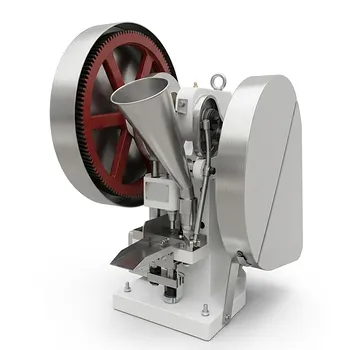
6-Ton Small Single-Punch Tablet Press — Laboratory Powder & Granule Tableting Equipment / Tablet Forming Machine
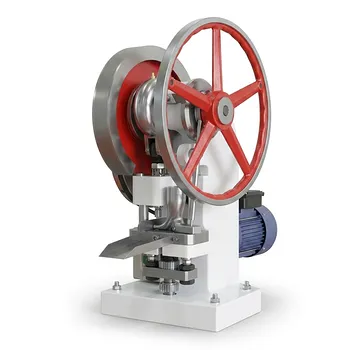
5 Ton Single Punch Tablet Press Laboratory Small Batch Production
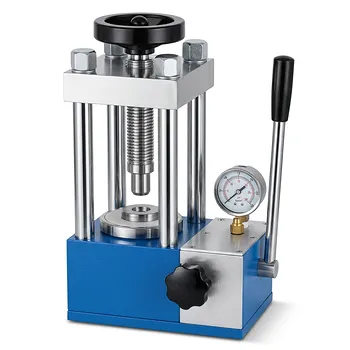
Manual Tablet Press with Dual Scale Pressure Gauge for Pharmaceutical Food Chemical Laboratory Sample Preparation
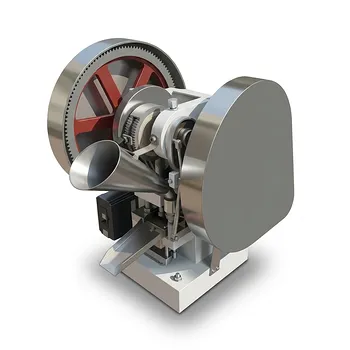
6 Ton Variable Frequency Single Punch Tablet Press
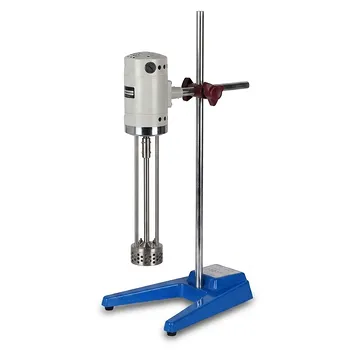
High Shear Laboratory Emulsifier for Mixing and Homogenization
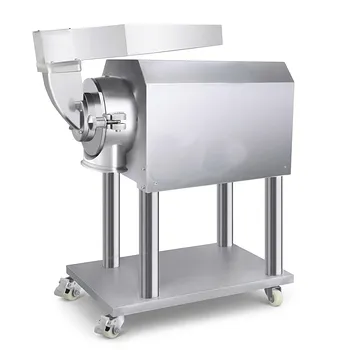
High Speed Small Laboratory Crusher for Dry Material Sample Preparation
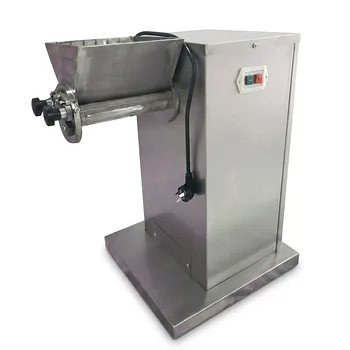
Small Laboratory Oscillating Granulator for Wet and Dry Granulation Processing
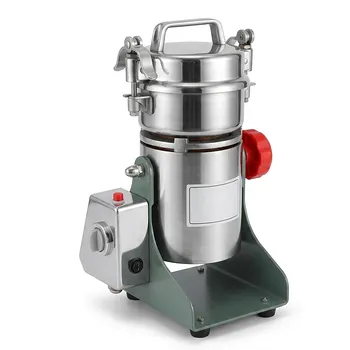
High Speed Swing Type Laboratory Pulverizer for Fine Powder Grinding and Sample Preparation
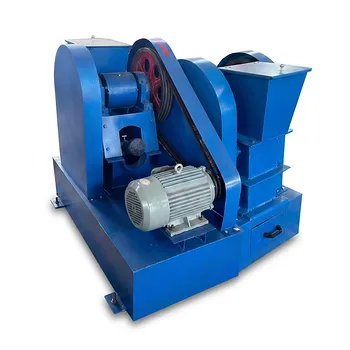
Horizontal Jaw Crusher Medium Hard Material Crushing Laboratory Sample Preparation Equipment