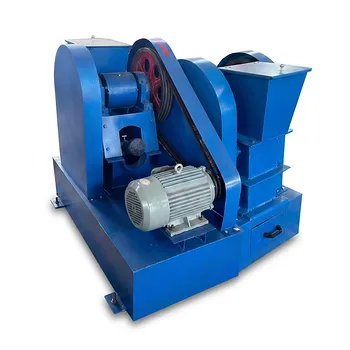
Why is a laboratory hydraulic press required for treating hard carbon electrodes? Enhance Battery Performance
Updated 5 months ago
The laboratory hydraulic press is the critical tool for densifying electrode coatings to ensure electrochemical efficiency. By applying precise, uniform pressure to dried hard carbon sheets, the press reduces contact resistance between active material particles and the current collector. This compaction process is essential for creating a robust electronic conduction network and maximizing the volumetric energy density of the sodium-ion battery.
Core Takeaway: A laboratory hydraulic press transforms loose electrode coatings into high-performance components by optimizing particle-to-particle contact and mechanical adhesion. This structural densification is the foundation for low internal resistance and superior charge-discharge stability.
The Role of Physical Compaction in Electrochemical Performance
Reducing Contact Resistance
The primary function of the hydraulic press is to eliminate microscopic gaps between the hard carbon particles and the conductive agent. By forcing these components together under high pressure, such as 4.7 tons/cm², the device minimizes the ohmic resistance within the electrode layer.
Lower contact resistance translates directly to reduced heat generation during battery operation. This ensures that electrons move efficiently through the anode, which is vital for maintaining high-rate cycling performance in sodium-ion cells.
Enhancing Adhesion to the Current Collector
Mechanical adhesion is a common failure point in battery electrodes, where active material can delaminate from the copper or aluminum foil. The hydraulic press applies specific, stable pressure that embeds the active material more securely onto the current collector.
This strengthened bond prevents the electrode from peeling or cracking during the mechanical stresses of cell assembly. It also ensures a continuous pathway for electronic conduction throughout the life of the battery.
Optimizing Structural Integrity and Energy Density
Increasing Volumetric Energy Density
Hard carbon electrodes often possess high porosity after the initial coating and drying process. The hydraulic press increases the compaction density of the electrode layer, allowing more active material to fit within the same physical volume.
This densification is crucial for meeting the energy requirements of modern applications. By reducing the thickness of the electrode while maintaining the mass of the active material, the volumetric energy density of the entire battery is significantly improved.
Managing Electrolyte Infiltration
While compaction is necessary, it must be balanced to maintain effective electrolyte infiltration. The hydraulic press helps eliminate "oversized pores" that lead to unnecessary electrolyte loss and poor coulombic efficiency.
A controlled pressing process ensures that the remaining pore structure is uniform and optimized. This allows the liquid electrolyte to wet the hard carbon particles effectively, facilitating rapid sodium-ion transport.
Precision in Experimental Methodology
Ensuring Data Accuracy for CV and EIS
For researchers, the hydraulic press provides the physical foundation for obtaining accurate electrochemical data. Consistent electrode thickness and density are required to produce reliable results in Cyclic Voltammetry (CV) and Electrochemical Impedance Spectroscopy (EIS).
Without the uniform pressure of a hydraulic press, variations in electrode porosity would lead to inconsistent surface reaction data. This consistency is essential for isolating the true electrochemical behavior of the hard carbon material.
Compensating for Volume Expansion
Sodium-ion active materials undergo volume changes during charge and discharge cycles. Pre-compacting the electrode with a hydraulic press creates a stable internal arrangement that can better distribute the stresses of expansion.
This structural preparation helps the electrode maintain its integrity over hundreds of cycles. It prevents the gradual "crumbling" of the electronic network that often occurs in poorly compacted electrodes.
Understanding the Trade-offs
The Risk of Over-Compaction
Excessive pressure can lead to over-compaction, where the porosity of the electrode is reduced to the point that electrolyte cannot penetrate the layer. This "clogging" effect significantly hinders ion transport and can lead to rapid capacity fade.
Pressure Uniformity Challenges
If the hydraulic press plates are not perfectly parallel or clean, the resulting electrode will have uneven density. This creates "hot spots" of high current density during battery operation, which can trigger localized degradation and shorten the battery's lifespan.
How to Apply This to Your Project
Recommendations for Success
- If your primary focus is maximizing energy density: Prioritize high-pressure compaction to achieve the highest possible packing density without compromising mechanical integrity.
- If your primary focus is high-rate performance: Use moderate pressure to reduce contact resistance while preserving a highly interconnected pore network for rapid electrolyte access.
- If your primary focus is research consistency: Utilize a high-precision hydraulic press with digital pressure readouts to ensure every electrode in your study is identical.
- If your primary focus is solid-state assembly: Apply extreme pressures (e.g., 375 MPa) to eliminate voids and establish continuous ion transport channels between the electrode and solid electrolyte.
The precise application of pressure via a laboratory hydraulic press is the definitive step in moving from a raw material coating to a functional, high-efficiency battery electrode.
Summary Table:
| Key Function | Physical Effect | Battery Performance Benefit |
|---|---|---|
| Densification | Reduces microscopic gaps between particles | Higher volumetric energy density |
| Compaction | Minimizes internal ohmic resistance | Improved high-rate cycling & lower heat |
| Pressure Bonding | Strengthens adhesion to current collector | Prevents delamination & mechanical failure |
| Pore Optimization | Balances electrolyte infiltration | Enhanced ion transport & coulombic efficiency |
Elevate Your Battery Research with Precision Compaction Solutions
Achieving the perfect electrode structure requires more than just pressure—it requires extreme precision and uniformity. KINTEK provides complete laboratory sample preparation solutions for material science, specializing in high-performance powder processing and compaction equipment.
Whether you are developing next-generation sodium-ion batteries or advanced ceramics, our extensive line of hydraulic presses—including Cold/Warm Isostatic Presses (CIP/WIP), standard lab presses, and vacuum hot presses—ensures your electrodes meet the rigorous standards for density and conductivity.
Complement your workflow with our full spectrum of equipment:
- Powder Processing: Planetary ball mills, jet mills, and cryogenic grinders.
- Classification: Vibratory and air-jet sieve shakers.
- Mixing: High-efficiency powder and defoaming mixers.
Ready to optimize your electronic conduction networks and maximize energy density? Contact our technical team today to discuss the ideal configuration for your laboratory.
References
- Sonya Harizanova, Mariya Kalapsazova. The Beneficial Impact of Mineral Content in Spent-Coffee-Ground-Derived Hard Carbon on Sodium-Ion Storage. DOI: 10.3390/ma17051016
Mentioned Products
- 6-Ton Small Single-Punch Tablet Press — Laboratory Powder & Granule Tableting Equipment / Tablet Forming Machine
- 5 Ton Single Punch Tablet Press Laboratory Small Batch Production
- Manual Tablet Press with Dual Scale Pressure Gauge for Pharmaceutical Food Chemical Laboratory Sample Preparation
- 6 Ton Variable Frequency Single Punch Tablet Press
- High Shear Laboratory Emulsifier for Mixing and Homogenization
People Also Ask
- What is the function of a laboratory press in Cr-Ti alloy evaluation? Quantify Fracture Stress & Strength
- What is the function of a laboratory press in assessing the hydrophobic performance of modified vermiculite fillers?
- What is the core function of a laboratory press in the forming of ceramic filter element green bodies? Maximize Density.
- What is the function of a laboratory press in the preparation of ceramic feed rods? Master Density and Precision
- Why is vacuum sealing and flexible packaging necessary for Aluminum Titanate powders during CIP? Ensure Peak Density

Tech Team · PowderPreparation
Last updated on May 14, 2026
Related Products
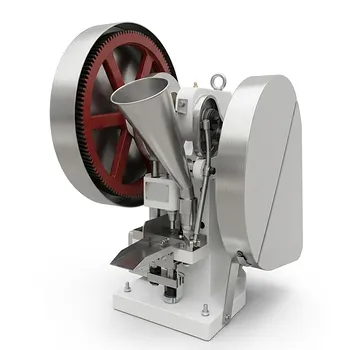
6-Ton Small Single-Punch Tablet Press — Laboratory Powder & Granule Tableting Equipment / Tablet Forming Machine
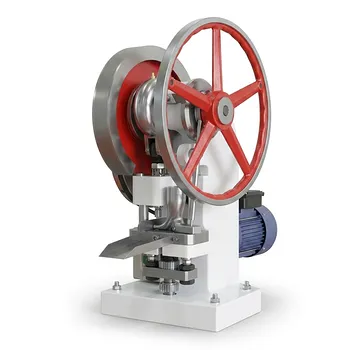
5 Ton Single Punch Tablet Press Laboratory Small Batch Production
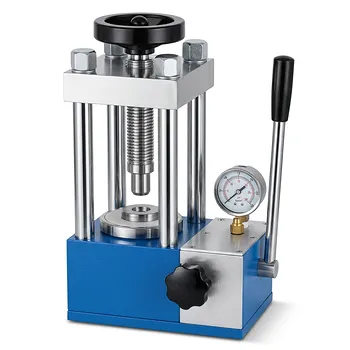
Manual Tablet Press with Dual Scale Pressure Gauge for Pharmaceutical Food Chemical Laboratory Sample Preparation
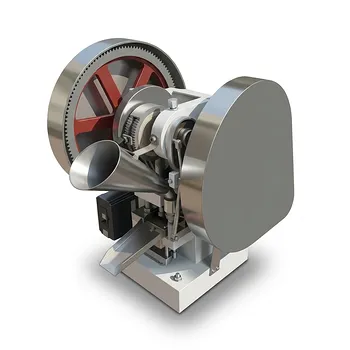
6 Ton Variable Frequency Single Punch Tablet Press
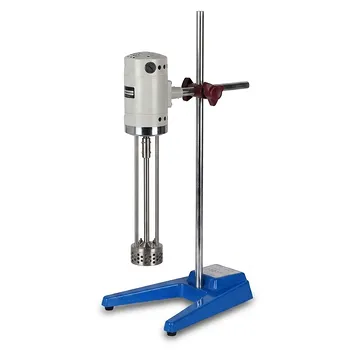
High Shear Laboratory Emulsifier for Mixing and Homogenization
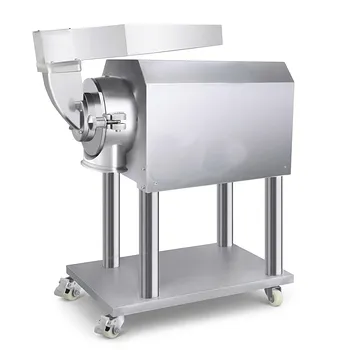
High Speed Small Laboratory Crusher for Dry Material Sample Preparation
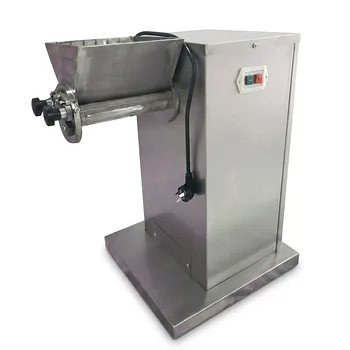
Small Laboratory Oscillating Granulator for Wet and Dry Granulation Processing
High Speed Swing Type Laboratory Pulverizer for Fine Powder Grinding and Sample Preparation