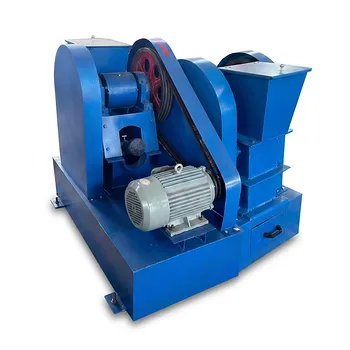
Why is a laboratory hydraulic press required for XRF and FTIR? Ensure Peak Analytical Accuracy & Sample Uniformity
Updated 4 months ago
Standardized sample preparation is the cornerstone of analytical accuracy. A laboratory hydraulic press is essential because it compresses raw powders into dense, flat pellets, eliminating physical inconsistencies like air voids and surface roughness. This process ensures that X-rays or infrared beams interact with the sample uniformly, which is required to produce the high-resolution, repeatable data needed for precise chemical identification.
By transforming loose powder into a solid, uniform pellet, a hydraulic press removes variables such as porosity and scattering errors. This creates the optimal physical environment for XRF and FTIR equipment to deliver accurate and high-quality results.
The Role of Compaction in X-ray Fluorescence (XRF)
Minimizing Surface Scattering and Roughness
Raw powders are inherently irregular, which causes X-rays to scatter unpredictably upon contact. A hydraulic press applies high axial pressure to create a perfectly smooth, flat surface.
This smoothness ensures that the geometric relationship between the X-ray source and the sample is consistent. This consistency is a technical prerequisite for obtaining high-precision elemental analysis.
Eliminating Porosity and Matrix Effects
Loose powder contains air gaps and internal voids that interfere with X-ray excitation and reception. The pelletizing process removes these voids, resulting in a uniform density throughout the sample.
By standardizing the density, you eliminate "matrix effects" that can lead to false readings. This allows for the accurate quantitative analysis of both major elements and minor trace components.
Optimizing Particle Size and Distribution
For effective pressing, powders are typically ground to a fineness of less than 75 micrometers. A hydraulic press ensures that these fine particles—often mixed with binders like cellulose—are fused into a stable cylindrical form.
This physical molding ensures that the distribution of elements is even across the entire surface. This uniformity is vital for identifying concentrations of specialized materials, such as rare-earth dopants.
Achieving Spectral Clarity in FTIR
Creating Infrared Transparency with KBr
In FTIR analysis, samples are often mixed with Potassium Bromide (KBr), a material that is transparent to infrared light. A hydraulic press applies several tons of pressure to this mixture to create a thin, transparent disc.
This high pressure excludes air and achieves dense bonding between the particles. Without this compaction, the sample would remain opaque, preventing the infrared beam from passing through.
Enhancing the Signal-to-Noise Ratio
A well-pressed pellet ensures uniform beam penetration through the sample material. This results in clear spectra with a high signal-to-noise ratio, which is essential for identifying specific functional groups.
By reducing infrared light scattering, the press allows researchers to see "structural fingerprints." This is critical for observing complex chemical changes, such as the conversion of units within a glass network.
Identifying Active Sites and Coordination States
For powder catalysts, the pelletizing process eliminates the background noise caused by uneven packing. This allows for the precise identification of surface acid-base active sites.
Clearer spectral signals enable researchers to determine the coordination states of metal components. Without the density provided by a hydraulic press, these subtle chemical details would be lost in the signal noise.
Understanding the Trade-offs and Pitfalls
Pressure Sensitivity and Sample Integrity
Applying too much pressure can sometimes alter the crystalline structure of sensitive microcrystal powders. Conversely, insufficient pressure results in "cloudy" pellets that scatter light and yield poor FTIR data.
Finding the correct tonnage is a balancing act between achieving mechanical stability and maintaining the chemical integrity of the sample.
Binder Interference and Contamination
While binders like cellulose or wax help hold XRF pellets together, they can introduce dilution effects. These must be carefully accounted for during the quantitative calculation phase.
Additionally, any contamination within the pellet die or the press can lead to false positives in the analysis. Cleanliness and the use of high-purity additives are mandatory for reliable results.
How to Apply This to Your Analytical Workflow
Effective sample preparation depends on matching your pressing technique to your specific analytical goal.
- If your primary focus is XRF elemental quantification: Use high pressure and a binder to create a dense, smooth-surfaced pellet that minimizes X-ray scattering and matrix effects.
- If your primary focus is FTIR functional group identification: Mix your sample with KBr and apply enough pressure to achieve a glass-like transparency for optimal beam penetration.
- If your primary focus is analyzing sensitive catalysts: Carefully calibrate your press to ensure high density without crushing the active surface sites or altering coordination states.
Mastering the use of the laboratory hydraulic press transforms unpredictable powders into standardized, high-performance analytical tools.
Summary Table:
| Feature | XRF Analysis Benefit | FTIR Spectroscopy Benefit |
|---|---|---|
| High-Pressure Compaction | Eliminates air voids & matrix effects | Achieves KBr transparency for beam path |
| Surface Smoothing | Minimizes X-ray scattering | Reduces infrared light scattering |
| Density Standardization | Ensures high-precision quantification | Improves signal-to-noise ratio |
| Physical Integrity | Prevents sample fallout during testing | Allows for structural fingerprinting |
Elevate Your Analytical Precision with Professional Sample Prep
High-quality XRF and FTIR results begin with flawless sample preparation. We provide complete laboratory sample preparation solutions tailored for material science, specializing in the full lifecycle of powder processing and compaction.
Our extensive equipment line includes:
- Size Reduction: Jaw/roll crushers, liquid nitrogen cryogenic grinders, and high-energy mills (planetary, jet, disc, and rotor).
- Classification & Mixing: Vibratory/air-jet sieve shakers and advanced powder/defoaming mixers.
- Advanced Compaction: A full spectrum of hydraulic presses, including specialized XRF pellet presses, Cold/Warm Isostatic Presses (CIP/WIP), standard lab presses, and vacuum hot presses.
Whether you are a researcher needing precise chemical identification or a distributor looking for reliable OEM/ODM support and certified equipment, we bring the expertise to optimize your workflow.
Contact our experts today to find the perfect pressing solution for your lab!
References
- Damilola A. Ogundare, Ayodeji Theophilus Akinbuluma. Predictive Modelling and Functional Group of Clay Soil Treated with Steel Slag and Calcium Carbide Residue. DOI: 10.4314/njtd.v21i3.2715
Mentioned Products
- 6-Ton Small Single-Punch Tablet Press — Laboratory Powder & Granule Tableting Equipment / Tablet Forming Machine
- 5 Ton Single Punch Tablet Press Laboratory Small Batch Production
- Manual Tablet Press with Dual Scale Pressure Gauge for Pharmaceutical Food Chemical Laboratory Sample Preparation
- 6 Ton Variable Frequency Single Punch Tablet Press
- High Shear Laboratory Emulsifier for Mixing and Homogenization
People Also Ask
- What is the function of a laboratory press in Cr-Ti alloy evaluation? Quantify Fracture Stress & Strength
- What is the function of a laboratory press in assessing the hydrophobic performance of modified vermiculite fillers?
- What is the core function of a laboratory press in the forming of ceramic filter element green bodies? Maximize Density.
- What is the function of a laboratory press in the preparation of ceramic feed rods? Master Density and Precision
- Why is vacuum sealing and flexible packaging necessary for Aluminum Titanate powders during CIP? Ensure Peak Density

Tech Team · PowderPreparation
Last updated on Jun 03, 2026
Related Products
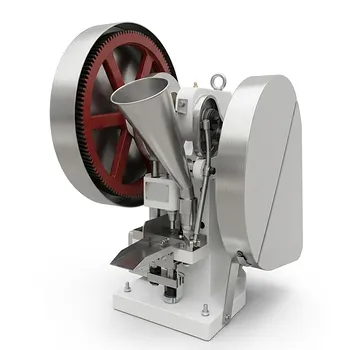
6-Ton Small Single-Punch Tablet Press — Laboratory Powder & Granule Tableting Equipment / Tablet Forming Machine
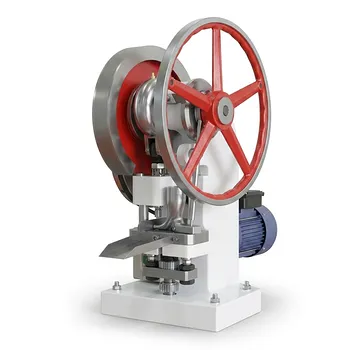
5 Ton Single Punch Tablet Press Laboratory Small Batch Production
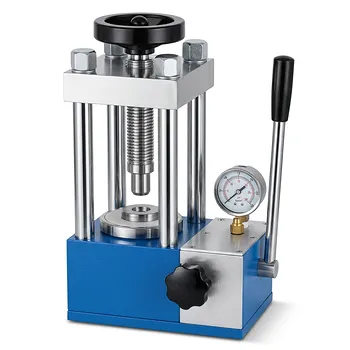
Manual Tablet Press with Dual Scale Pressure Gauge for Pharmaceutical Food Chemical Laboratory Sample Preparation
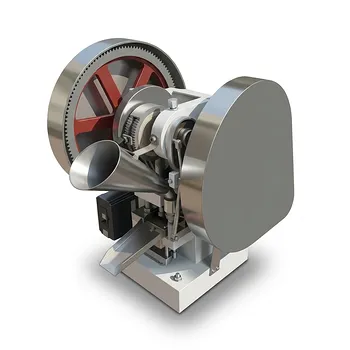
6 Ton Variable Frequency Single Punch Tablet Press
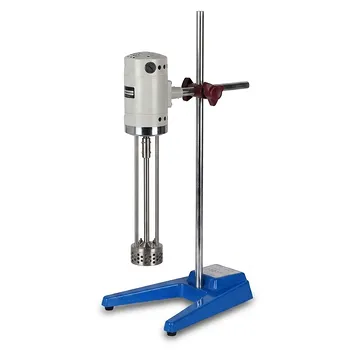
High Shear Laboratory Emulsifier for Mixing and Homogenization
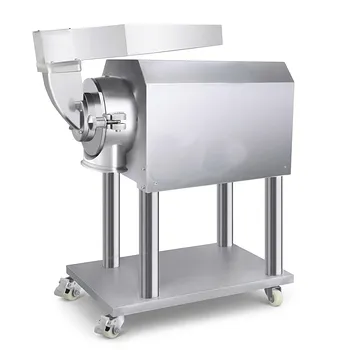
High Speed Small Laboratory Crusher for Dry Material Sample Preparation
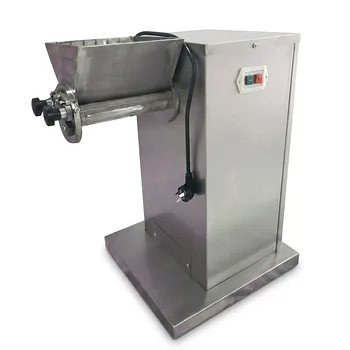
Small Laboratory Oscillating Granulator for Wet and Dry Granulation Processing
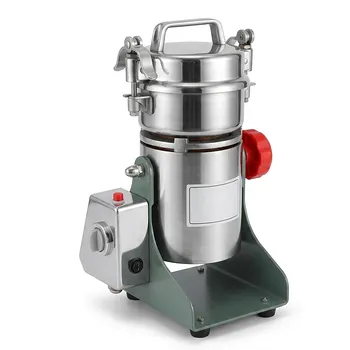
High Speed Swing Type Laboratory Pulverizer for Fine Powder Grinding and Sample Preparation