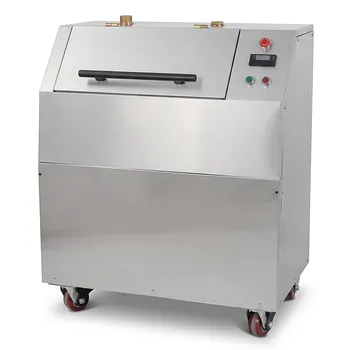
Why is a laboratory-grade vibratory sieve shaker used in rice husk ash extraction? Ensure Uniformity and Reactivity.
Updated 4 months ago
In rice husk ash (RHA) processing, a laboratory-grade vibratory sieve shaker is used to achieve extreme particle size uniformity and material homogeneity. This precise mechanical separation is critical for stabilizing the specific surface area of the ash, which directly impacts chemical reactivity. By controlling the particle size distribution, researchers can ensure predictable dissolution rates and repeatable experimental outcomes.
The central takeaway: A vibratory sieve shaker is the primary tool for eliminating particle size variability, which is the single most important factor in determining the chemical reactivity, structural integrity, and microstructural uniformity of RHA-based materials.
The Science of Reactivity and Chemical Stability
Optimizing Silicon Dissolution
Achieving high homogeneity ensures that the contact area between the RHA powder and liquid solvents remains stable. In processes involving potassium hydroxide (KOH), consistent particle sizes allow for a controllable silicon dissolution rate. Without this uniformity, the reproducibility of experimental data is significantly compromised.
Maximizing Specific Surface Area
Using fine meshes, such as 150µm or 200 mesh (75 micron), increases the total fineness of the ash. This significantly expands the specific surface area, which promotes more uniform physical filling and chemical reactions when combined with other materials like clay or cement.
Enhancing Structural and Mechanical Integrity
Eliminating Structural Weak Points
Mechanical vibration through multi-layer sieves effectively removes coarse, unburned, or non-uniformly ground particles. In concrete and mineral admixtures, these large particles often act as structural defects. Removing them ensures consistent anti-shrinkage performance and higher overall density.
Controlling Pore Distribution in Ceramics
For porous ceramic production, the shaker classifies RHA into specific ranges, such as 125 µm to 250 µm. The precise control of these particles determines the size and distribution of internal pores. This has a decisive impact on the physical and mechanical properties of the final ceramic material.
Optimizing Composite Microstructures
Improving Interfacial Bonding Strength
In aluminum alloy or polymer composites, extracting fine particles with an average diameter of 6.0 µm is essential. Precise particle control ensures a higher specific surface area within the matrix. This leads to improved interfacial bonding strength and prevents the formation of weak zones.
Preventing Particle Agglomeration
Accurate control of the reinforcement phase is critical for ensuring microstructural uniformity. By removing inconsistent particle sizes, the shaker helps prevent particle agglomeration. This ensures that the reinforcement is distributed evenly, enhancing the final mechanical properties of the composite.
Understanding the Trade-offs
Equipment Limitations and Blinding
While vibratory sievers are precise, they are susceptible to screen blinding, where fine particles clog the mesh. This can lead to inaccurate grading if the equipment is not maintained or if the vibration frequency is incorrectly set.
Processing Time vs. Accuracy
Achieving ultra-fine distributions requires longer processing times, which may increase the risk of particle attrition. Over-vibration can inadvertently break down fragile ash particles further, slightly altering the intended particle size distribution and leading to inconsistent results.
Applying This to Your Project
Recommendations for Implementation
- If your primary focus is chemical extraction (e.g., Silicate production): Prioritize the shaker’s ability to maximize specific surface area to ensure rapid and uniform chemical dissolution.
- If your primary focus is structural reinforcement (e.g., Concrete or Ceramics): Use the shaker primarily to remove large impurities and unburned carbon to prevent internal structural weak points.
- If your primary focus is high-performance composites: Invest in high-precision, multi-layer sieving to achieve a narrow particle size range, which is vital for preventing agglomeration in metal or polymer matrices.
By standardizing the mechanical grading process, you transform rice husk ash from a variable agricultural byproduct into a high-performance, predictable industrial raw material.
Summary Table:
| Application Area | Primary Benefit | Recommended Particle Size/Mesh |
|---|---|---|
| Chemical Extraction | Optimizes silicon dissolution & surface area | 75µm (200 mesh) to 150µm |
| Structural Admixtures | Eliminates weak points & coarse impurities | Removal of particles >250µm |
| Porous Ceramics | Controls pore size and distribution | 125µm to 250µm range |
| Advanced Composites | Prevents agglomeration; improves bonding | Average diameter ~6.0µm |
Elevate Your Material Research with Precise Powder Solutions
At KinTek, we provide complete laboratory sample preparation solutions tailored for advanced material science. Whether you are extracting high-purity silicates from rice husk ash or developing high-performance composites, our specialized equipment ensures the repeatability and precision your research demands.
Our extensive product line includes:
- Powder Processing: Vibratory and air-jet sieve shakers, planetary ball mills, jet mills, and disc mills for achieving exact particle size distributions.
- Compaction & Synthesis: A full spectrum of hydraulic presses, including Cold/Warm Isostatic Presses (CIP/WIP), vacuum hot presses, and XRF pellet presses.
- Sample Preparation: Heavy-duty jaw crushers, cryogenic grinders, and high-efficiency powder mixers.
Ready to optimize your RHA processing workflow? Contact our technical experts today to find the perfect equipment configuration for your laboratory.
References
- Riza Wirawan, Andralisa Febriani. Characteristic of Silica Level (SiO3) Resulted from the Extraction of Rice Husk Ash with KOH Solvent towards the Amount of Heating Time. DOI: 10.14419/ijet.v7i3.36.29095
Mentioned Products
- Vibratory Sieve Shaker Electromagnetic 3D Motion Powder Particle Size Analyzer for Dry and Wet Sieving
- Laboratory Dry and Wet Three Dimensional Vibratory Sieve Shaker for Particle Analysis
- Dry Three Dimensional Vibratory Sieve Shaker
- Stainless Steel Laboratory Vibratory Test Sieve Shaker
- Heavy Duty Dry Three Dimensional Vibratory Sieve Shaker for Particle Separation
People Also Ask
- How does a vibratory sieve shaker contribute to optimizing the performance of activated carbon? Enhance Adsorption Precision
- Why is a laboratory vibratory sieve shaker necessary for processing magnesium-based borate precursor powders? Boost Activity
- Why use a vibratory sieve shaker to verify coarse aggregate grading in rubberized concrete? Ensure Structural Integrity
- What function do vibratory sieve shakers and standard test sieves serve in the preparation of adsorbents? Key Guide
- What role does a vibratory sieve shaker play in the particle size analysis of ground corn products? Enhance QC Precision

Tech Team · PowderPreparation
Last updated on Jun 03, 2026
Related Products
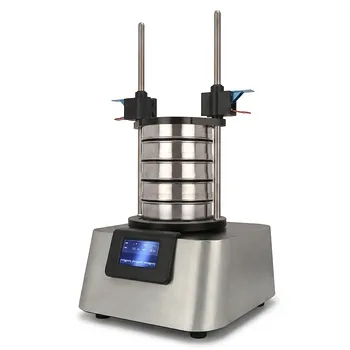
Vibratory Sieve Shaker Electromagnetic 3D Motion Powder Particle Size Analyzer for Dry and Wet Sieving
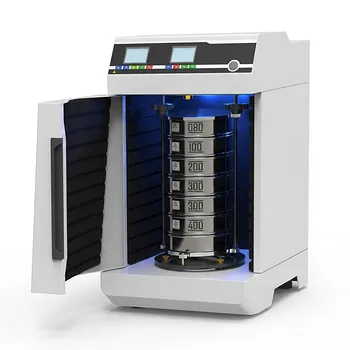
Laboratory Dry and Wet Three Dimensional Vibratory Sieve Shaker for Particle Analysis
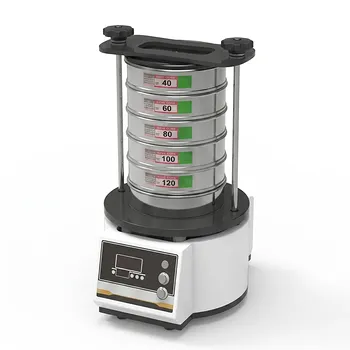
Dry Three Dimensional Vibratory Sieve Shaker
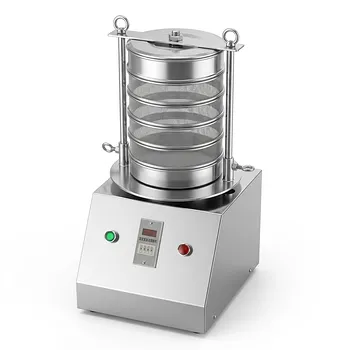
Stainless Steel Laboratory Vibratory Test Sieve Shaker
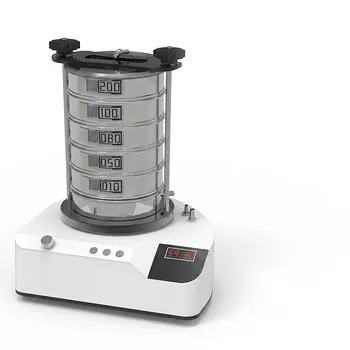
Heavy Duty Dry Three Dimensional Vibratory Sieve Shaker for Particle Separation
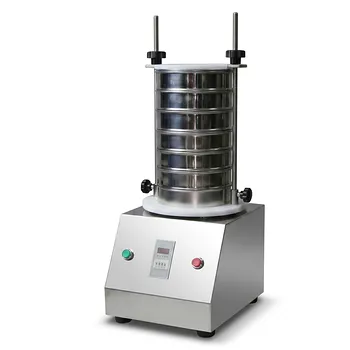
Small Laboratory Vibratory Sieve Shaker for Powder Gradation and Particle Size Analysis
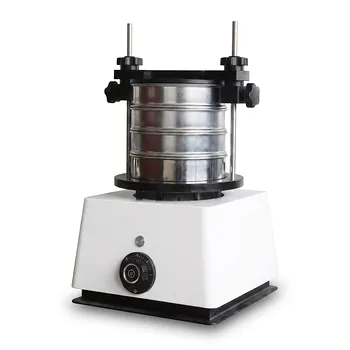
Small Laboratory Vibrating Sieve Shaker for Precise Particle Size Analysis
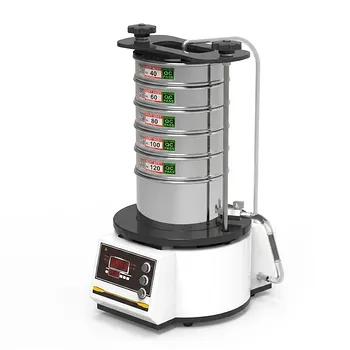
High Frequency Wet Three-Dimensional Vibrating Sieve Shaker for Dry and Wet Particle Size Analysis
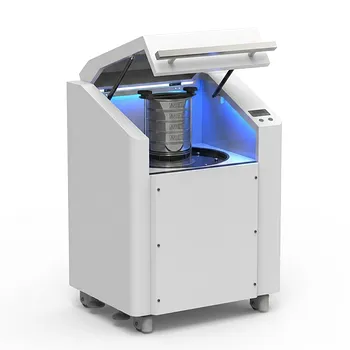
High Frequency Cabinet Type Three-Dimensional Rotary Vibrating Sieve Shaker for Dry Sieving and Particle Classification
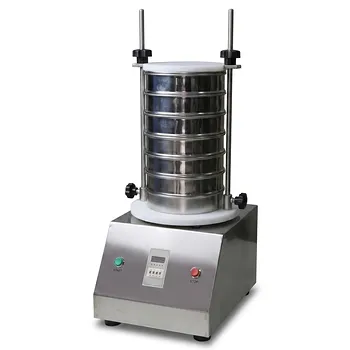
Laboratory Vibratory Test Sieve Shaker for Precision Particle Size Analysis and Powder Grading
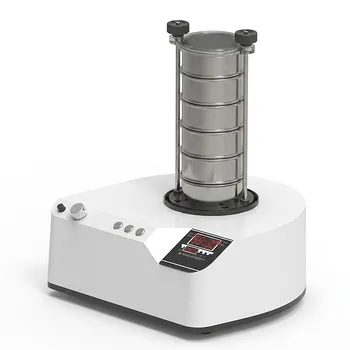
三维电磁微量振动筛分仪

Stainless Steel Rotary Vibrating Sieve High Precision Circular Vibratory Separator Industrial Powder Grading Machine Multi Layer Sifting Equipment
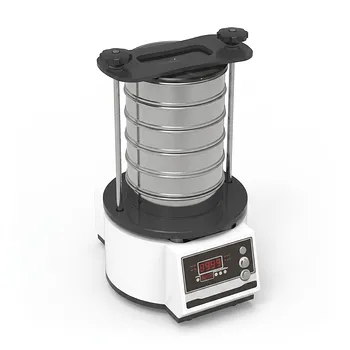
Tapping Oscillating Sieve Shaker for Dry and Wet Particle Size Analysis
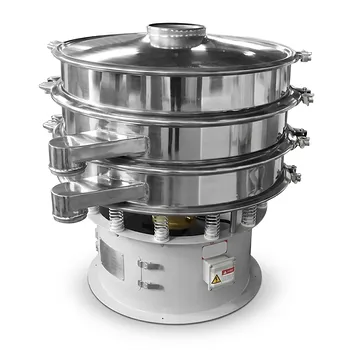
Three Dimensional Rotary Vibrating Sieve
Vibratory Superfine Grinder for Ultra Fine Laboratory Powder Milling
Small Vibrating Ultrafine Grinder for Traditional Chinese Medicine
Automatic Vibrating Powder Feeder for Laboratory Material Processing Precision Vibratory Hopper Feeder for Granular and Powder Material Handling Industrial Grade Vibrating Tray Feeder for Consistent Material Sample Preparation