Why is a jet mill used for the co-milling of inhalable Itraconazole microparticles? Optimize Pulmonary Drug Delivery
Updated 5 months ago
Jet milling is the critical technology for inhalable Itraconazole because it achieves the precise micron-scale particle size required for lung delivery while simultaneously engineering the particle surface. By utilizing supersonic airflows, the mill induces high-energy collisions that reduce particles to the 0.5 to 5-micrometer range and mechanically coat them with L-Leucine to ensure they can be effectively aerosolized.
Jet milling serves a dual purpose in pulmonary drug delivery: it provides the high shear forces necessary for uniform micronization and facilitates the physical coating of excipients. This co-milling process is essential for transforming cohesive Itraconazole into a dispersible, aerodynamically efficient powder.
The Mechanics of Precision Micronization
Achieving the Inhalable Range
Pulmonary delivery requires a specific aerodynamic diameter, typically between 0.5 and 5 micrometers, to reach the deep lung. Jet mills use high-velocity air streams to cause particles to collide with each other, rather than against the mill walls. This autogenous milling process ensures that Itraconazole is reduced to the ideal size for bypassing the upper airways and settling in the alveolar region.
Minimizing Thermal Degradation
Unlike mechanical impact mills, jet mills provide a cooling effect as the compressed gas expands within the grinding chamber. This temperature control is vital for maintaining the chemical stability of Itraconazole during the high-energy milling process. The lack of moving parts also reduces the risk of product contamination from equipment wear.
Surface Engineering via Co-Milling
The Role of L-Leucine Coating
Itraconazole microparticles are naturally cohesive, which often leads to poor flow and low delivery efficiency. During the co-milling process, the high shear forces of the jet mill facilitate the physical coating of L-Leucine onto the drug particle surfaces. This coating acts as a lubricant and a moisture barrier, significantly improving the powder dispersibility required for dry powder inhalers (DPIs).
Enhancing Aerodynamic Performance
The L-Leucine layer reduces the van der Waals forces between particles, preventing them from clumping together. By lowering the surface energy, co-milling ensures that the microparticles separate easily when the patient inhales. This results in a higher Fine Particle Fraction (FPF), meaning more of the drug actually reaches the therapeutic site in the lungs.
Understanding the Trade-offs
Yield and Scalability Challenges
One primary drawback of jet milling is the potential for low material yield, particularly during early-stage development with small batch sizes. Fine particles can become trapped in the filter bags or adhere to the internal geometry of the vortex finder and grinding chamber. Optimizing the air-to-solid ratio is necessary to balance throughput with the desired particle size distribution.
Surface Disorder and Amorphization
The high-energy collisions inherent in jet milling can sometimes disrupt the crystalline structure of the drug's surface. This can create amorphous regions that are more prone to absorbing moisture and may lead to recrystallization over time. Careful monitoring of the milling parameters is required to ensure the physical stability of the Itraconazole microparticles during storage.
How to Apply This to Your Formulation Project
When implementing jet milling for Itraconazole co-milling, your parameters should align with your specific delivery goals.
- If your primary focus is maximizing lung deposition: Prioritize higher grinding pressures to ensure the particle size distribution stays consistently below 3 micrometers.
- If your primary focus is improving powder flow: Optimize the concentration of L-Leucine during the co-milling phase to ensure uniform surface coverage.
- If your primary focus is long-term stability: Conduct post-milling conditioning or "aging" to allow any induced amorphous content to stabilize before final packaging.
By integrating size reduction and surface modification into a single step, jet milling provides the most efficient pathway to high-performance inhalable Itraconazole.
Summary Table:
| Feature | Benefit for Itraconazole | Therapeutic Outcome |
|---|---|---|
| Micronization | Reduces particles to 0.5–5 μm | Deep lung/alveolar deposition |
| Surface Engineering | Coats drug with L-Leucine lubricant | Enhanced dispersibility & higher FPF |
| Thermal Stability | Cooling effect via gas expansion | Prevents drug degradation during milling |
| Autogenous Milling | Particles collide with each other | High purity with zero metal contamination |
Elevate Your Material Research with Precision Powder Solutions
Achieving the perfect particle size and surface chemistry is critical for advanced pharmaceutical and material science applications. At [Company Name], we provide complete laboratory sample preparation solutions, specializing in high-performance powder processing and compaction equipment.
Whether you are developing inhalable microparticles or advanced ceramics, our extensive line includes:
- Advanced Milling: Precision Jet Mills, Planetary Ball Mills, and Liquid Nitrogen Cryogenic Grinders.
- Sizing & Mixing: Vibratory Sieve Shakers, Air-Jet Sieves, and high-efficiency Powder Mixers.
- Compaction Excellence: A full spectrum of Hydraulic Presses, including Cold/Warm Isostatic Presses (CIP/WIP), Hot Presses, and Vacuum Hot Presses.
Ready to optimize your formulation efficiency? Contact our technical experts today to find the ideal equipment for your specific material challenges.
References
- Jin-Hyuk Jeong, Chun‐Woong Park. Preparation and Evaluation of Inhalable Microparticles with Improved Aerodynamic Performance and Dispersibility Using L-Leucine and Hot-Melt Extrusion. DOI: 10.3390/pharmaceutics16060784
Mentioned Products
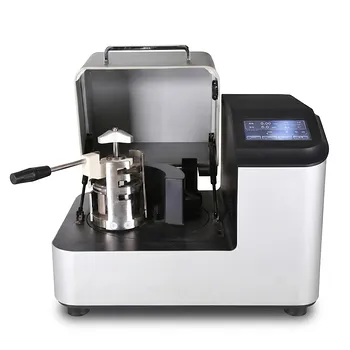
- Benchtop Micro Air Jet Mill for Ultrafine Grinding of High Value Powders
- Laboratory Classification Jet Mill for Ultrafine Powder Grinding
- Water Cooled Pulse Jet Ultra Fine Pulverizer for Continuous Grinding
- Small Airflow Ultra-Fine Grinder for Laboratory Sample Preparation
- Water Cooled Pulse Jet Ultrafine Grinder
People Also Ask
- How does an air-jet mill enhance the performance of Mo2N when used as an electrocatalyst? Optimize Electrode Efficiency
- Why is secondary jet milling necessary for products processed through HME? Achieve Precision for Inhalation Delivery
- What are the advantages of a jet mill vs. a ball mill for high-purity ceramics? Achieve superior purity and precision.
- What are the advantages of using a jet mill compared to a ball mill for Sm-Co magnets? Purity vs. Performance
- How does a laboratory jet mill function in the processing of crude char into rCB? Master High-Purity Particle Refinement

Tech Team · PowderPreparation
Last updated on May 14, 2026
Related Products
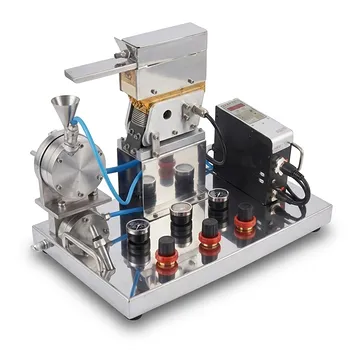
Benchtop Micro Air Jet Mill for Ultrafine Grinding of High Value Powders
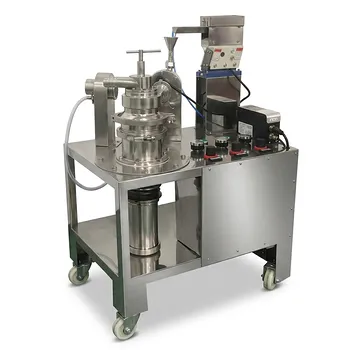
Laboratory Classification Jet Mill for Ultrafine Powder Grinding
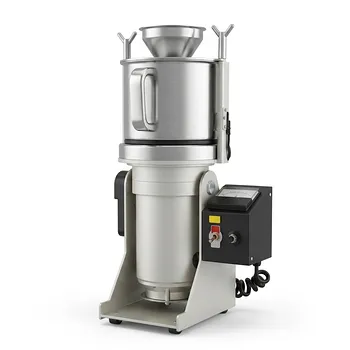
Water Cooled Pulse Jet Ultra Fine Pulverizer for Continuous Grinding
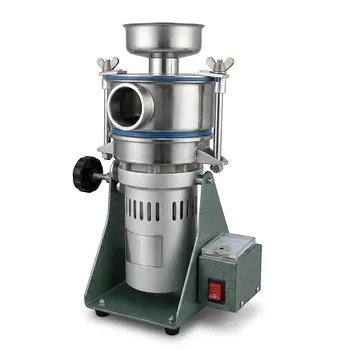
Small Airflow Ultra-Fine Grinder for Laboratory Sample Preparation
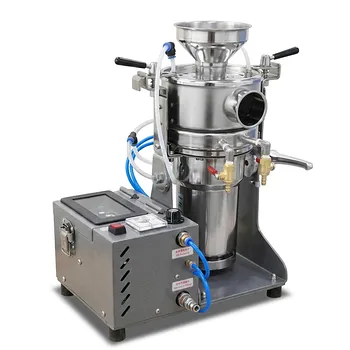
Water Cooled Pulse Jet Ultrafine Grinder
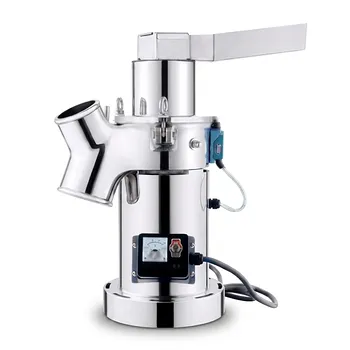
Airflow Ultrafine Pulverizer for Laboratory Ultra-fine Grinding
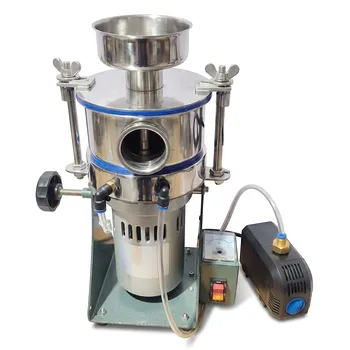
Water Cooled Airflow Ultra Fine Grinder for Low Temperature Material Processing
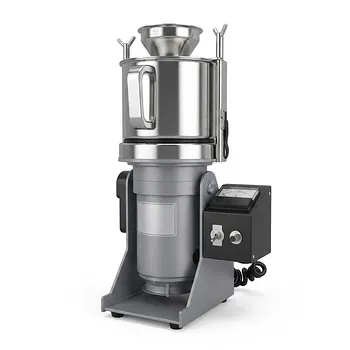
High Speed Air Induced Ultrafine Pulverizer Laboratory Superfine Powder Mill for Pharmaceutical and Material Science Sample Preparation
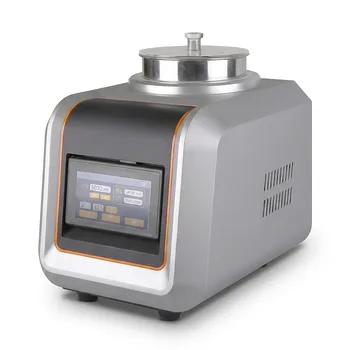
Laboratory Air Jet Sieving Machine for Fine Powder Particle Size Analysis and Deagglomeration
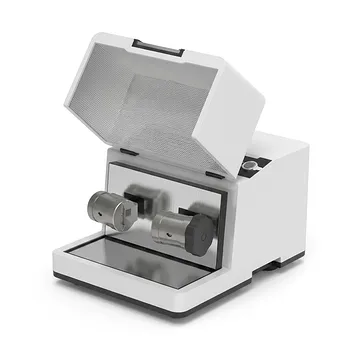
Heating Temperature Controlled High Energy Vibratory Ball Mill
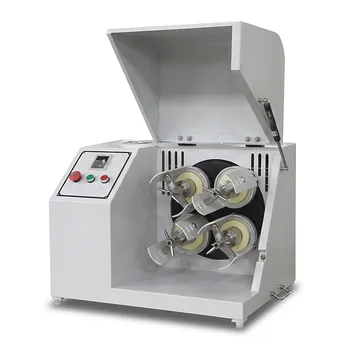
Horizontal Light Duty Planetary Ball Mill for Laboratory Sample Preparation
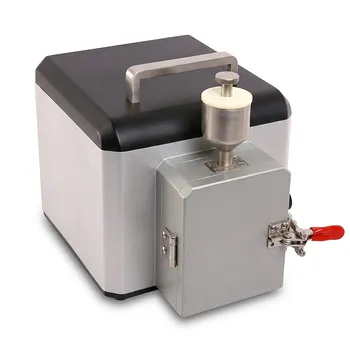
Portable Cutting Mill for Laboratory Sample Preparation and RoHS WEEE Compliance Testing
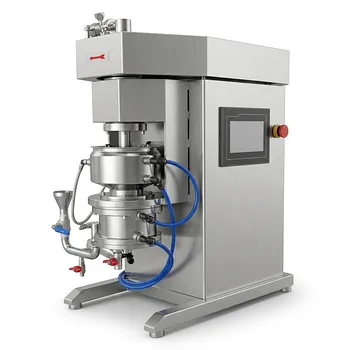
Small Ceramic Structure Laboratory Sand Mill Nanoscale Grinding Dispersion Equipment Seal-less Screen-less Design
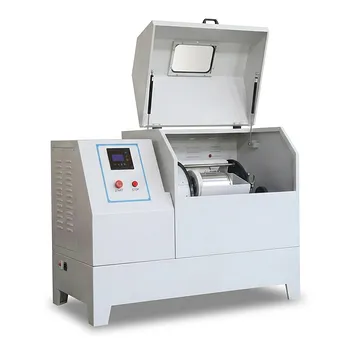
Heavy Duty Horizontal Planetary Ball Mill for Efficient Industrial Grinding and Sample Preparation
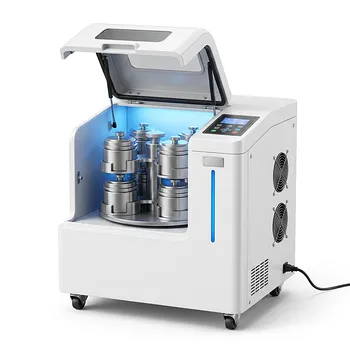
High Energy Omnidirectional Planetary Ball Mill 20L

High Energy Omnidirectional Planetary Ball Mill 16L
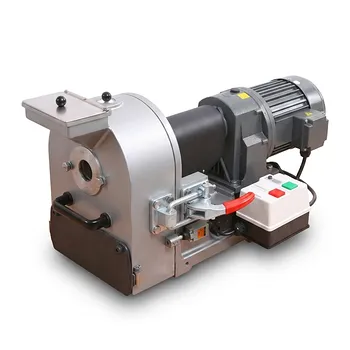
Laboratory Disc Mill for Fine Sample Preparation of Hard and Brittle Materials
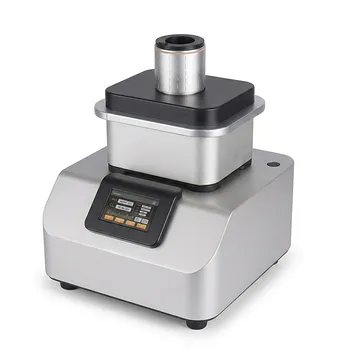
Ultra Centrifugal Mill High Speed Laboratory Grinder for Fibrous and Brittle Sample Preparation
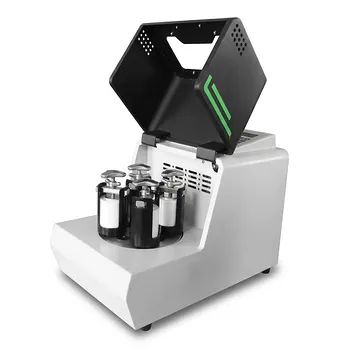
Miniature Planetary Ball Mill with Vacuum Grinding and High Efficiency for Laboratory Sample Preparation