Why is a high-speed planetary ball mill required for MgH2-EEWNi? Optimize Core-Shell Hydrogen Storage Structures
Updated 5 months ago
A high-speed planetary ball mill is essential for preparing $MgH_2$-EEWNi composites because it provides the intense mechanical energy required to construct a core-shell structure. This specific milling process ensures a uniform distribution of nano-nickel powder on the surface of magnesium hydride particles, inducing significant microscopic strain and structural defects that effectively lower the activation energy for hydrogen desorption.
The planetary ball mill acts as a high-energy reactor that transforms the composite's microstructure through intense impact and shear forces. By achieving atomic-level catalyst distribution and nanoscale refinement, it solves the fundamental problem of sluggish hydrogen diffusion and high stable-phase temperatures in pure $MgH_2$.
The Mechanics of High-Energy Co-Milling
Multi-Dimensional Force Generation
Unlike traditional horizontal mills, a planetary ball mill utilizes the simultaneous revolution and rotation of milling jars. This dual-motion creates multi-dimensional centrifugal forces that subject the material to high-frequency impacts, intense friction, and shear.
Constructing the Core-Shell Architecture
The high-speed environment is necessary to achieve a uniform loading of the EEWNi (nano-nickel) catalyst onto the $MgH_2$ matrix. This process facilitates the formation of a core-shell structure, where the nickel serves as a reactive "skin" that promotes surface-level chemical reactions.
Achieving Atomic-Level Mixing
The energy density of a planetary mill is significantly higher than that of standard equipment, allowing for mechanical alloying. This ensures that catalysts are not just physically mixed but are deeply compounded into the matrix at the atomic level.
Enhancing Hydrogen Kinetics through Microstructural Change
Nanocrystallization and Particle Refinement
The continuous cycles of fracturing and cold welding during high-speed milling refine the magnesium hydride powder to the nanoscale. This refinement drastically shortens the diffusion paths that hydrogen atoms must travel during absorption and desorption.
Creation of High-Density Defects
The intense mechanical forces introduce a high density of dislocations, grain boundaries, and lattice defects. These structural anomalies serve as rapid transport channels and active sites for the dissociation of hydrogen molecules.
Reduction of Activation Energy
By inducing microscopic strain and increasing the reactive specific surface area, the milling process lowers the energy barrier for dehydrogenation. This results in a substantial reduction in the temperature required to release stored hydrogen.
Understanding the Trade-offs and Risks
Potential for Contamination
The high-energy nature of planetary milling increases the risk of impurity introduction from the grinding balls and jar walls. Over-milling or using inappropriate materials (like standard steel for sensitive alloys) can lead to iron or chrome contamination, which may alter the intended thermodynamic properties.
Thermal Management Challenges
High-speed rotation generates significant frictional heat, which can cause the magnesium hydride to prematurely decompose or lead to unwanted grain growth. Cooling intervals or specialized atmosphere-controlled jars are often required to maintain the nanoscale structure.
Energy Consumption and Scaling
While highly effective at the laboratory scale, high-speed planetary milling is energy-intensive. Scaling this process for industrial-level hydrogen storage requires balancing the performance gains of the nanostructure against the high operational costs of mechanical alloying.
How to Optimize the Co-Milling Process
Successful preparation of $MgH_2$-EEWNi depends on aligning your milling parameters with your specific performance targets.
- If your primary focus is lowering desorption temperature: Prioritize higher rotational speeds and longer milling times to maximize lattice defects and grain refinement, which directly reduces activation energy.
- If your primary focus is cycle stability: Use a moderate ball-to-powder ratio and controlled milling intervals to prevent excessive grain growth and maintain the integrity of the core-shell structure over time.
- If your primary focus is material purity: Utilize high-strength ceramic milling media (like zirconia) to minimize metallic contamination that can occur during high-intensity impact cycles.
The high-speed planetary ball mill is the definitive tool for overriding the natural kinetic limitations of magnesium hydride through precise, high-energy microstructural engineering.
Summary Table:
| Key Milling Mechanism | Impact on MgH2-EEWNi Composite | Performance Benefit |
|---|---|---|
| High-Energy Impact | Nanoscale refinement & particle fracturing | Shorter hydrogen diffusion paths |
| Core-Shell Construction | Uniform coating of EEWNi on MgH2 matrix | Enhanced surface-level chemical reactions |
| Mechanical Alloying | Atomic-level catalyst distribution | Superior kinetic performance |
| Lattice Defect Creation | High-density dislocations & grain boundaries | Lower hydrogen desorption temperature |
Elevate Your Material Research with Precision Powder Processing
To achieve the complex core-shell structures and nanocrystallization required for advanced hydrogen storage materials, you need equipment that delivers consistent, high-energy performance.
We provide complete laboratory sample preparation solutions tailored for material science. From specialized planetary ball mills, jet mills, and cryogenic grinders for superior refinement to a full spectrum of hydraulic presses (including CIP, WIP, and vacuum hot presses) for high-density compaction, our equipment is designed to solve the challenges of sluggish kinetics and material contamination.
Ready to optimize your MgH2 composites or powder metallurgy workflows?
Contact Our Technical Experts Today to find the perfect equipment for your lab’s specific requirements.
References
- Viktor N. Kudiiarov, Parvizi Ibrohim Khomidzoda. The Defect Structure Evolution in MgH2-EEWNi Composites in Hydrogen Sorption–Desorption Processes. DOI: 10.3390/met15010072
Mentioned Products
- Vertical Production Planetary Ball Mill for High Throughput Powder Processing
- Planetary Ball Mill 12L
- High Energy Planetary Ball Mill for Nano Scale Grinding and Mechanical Alloying
- High Energy Omnidirectional Planetary Ball Mill 16L
- High Energy Omnidirectional Planetary Ball Mill 20L
People Also Ask
- What is the function of a high-performance planetary ball mill in AMZ laminates? Master Ceramic Homogenization.
- What is the role of a planetary ball mill in Al–Si3N4 nanocomposite prep? Achieve Uniform Homogenization
- What is the function of a planetary ball mill in lanthanum hexaaluminate synthesis? Master Micron-Level Homogenization
- What role does a planetary ball mill play in the synthesis of Er-doped PMN-PT ceramics? Enhancing Homogeneity & Purity
- What are the advantages of using a planetary ball mill for the fine grinding of barium silicate glass powder? Peak Results

Tech Team · PowderPreparation
Last updated on May 14, 2026
Related Products
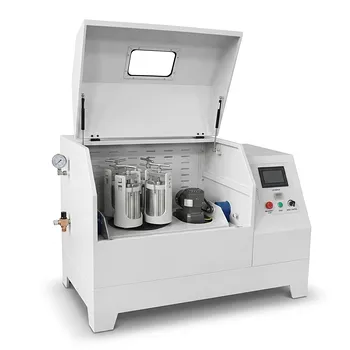
Vertical Production Planetary Ball Mill for High Throughput Powder Processing
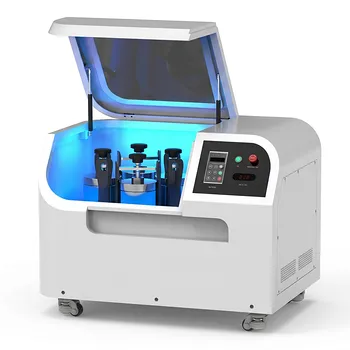
Planetary Ball Mill 12L

High Energy Planetary Ball Mill for Nano Scale Grinding and Mechanical Alloying
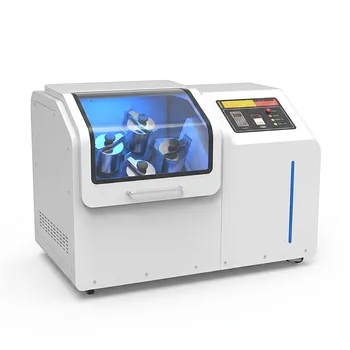
High Energy Omnidirectional Planetary Ball Mill 16L

High Energy Omnidirectional Planetary Ball Mill 20L

High Energy Laboratory Planetary Ball Mill for Nano Grinding and Colloidal Mixing of Hard and Brittle Materials
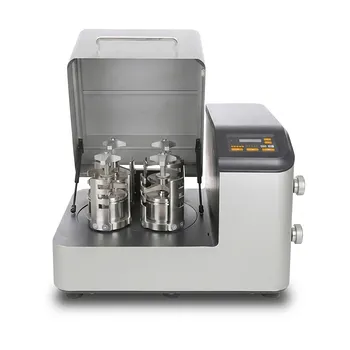
High Energy Planetary Ball Mill for Nano Scale Grinding and Colloidal Mixing in Material Science Research

High Energy Laboratory Planetary Ball Mill for Nano Grinding and Material Science Sample Preparation

Miniature Planetary Ball Mill with Vacuum Grinding and High Efficiency for Laboratory Sample Preparation

Dual Station Planetary Ball Mill 24L

Vertical Square Planetary Ball Mill for Laboratory Sample Preparation and Nanoscale Grinding

8L Planetary Ball Mill for Laboratory Grinding and Sample Preparation
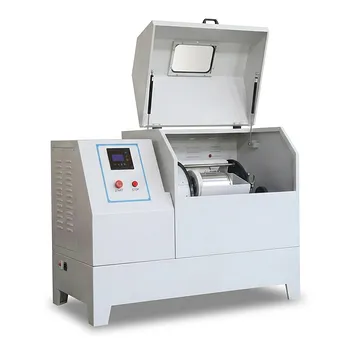
Heavy Duty Horizontal Planetary Ball Mill for Efficient Industrial Grinding and Sample Preparation
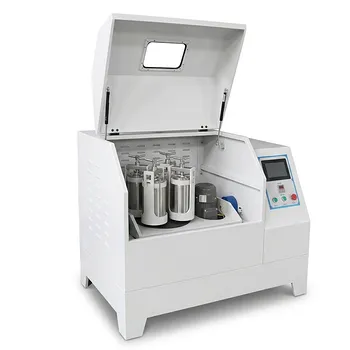
360° Rotating Omnidirectional Laboratory Planetary Ball Mill for Homogeneous Ultra-Fine Grinding and Mixing

Vertical Semi Circular Planetary Ball Mill for Laboratory Precision Grinding

Multi-Platform Nanoscale High-Energy Vibratory Ball Mill

Horizontal Light Duty Planetary Ball Mill for Laboratory Sample Preparation

Single Tank High Energy Vibratory Ball Mill for Laboratory Grinding and Mixing

High Speed Vibratory Disc Mill for Spectral Analysis Sample Preparation and Rapid Powder Grinding