Why is a high-pressure laboratory press required for Al–Si3N4 pre-forming? Ensure High Density & Sintering Success
Updated 4 months ago
The requirement for a high-pressure laboratory press in the pre-forming of Al–Si3N4 nanocomposites stems from the need to transform loose powder into a dense, structurally sound "green billet" before the final sintering stage. This process applies significant mechanical loads—often reaching 50 tons or pressures ranging from 200 MPa to several GPa—to increase packing density, overcome internal particle friction, and create the physical contact necessary for atomic diffusion.
Core Takeaway: A high-pressure press is the critical bridge between loose powder and a solid composite; it eliminates voids and establishes mechanical interlocking, which ensures the final sintered part achieves maximum density and structural integrity.
Overcoming Physical Barriers to Densification
Eliminating Internal Friction and Voids
Loose aluminum and silicon nitride powders possess significant internal friction, particularly when dealing with flake-shaped aluminum particles. High pressure is essential to overcome this resistance and force the particles to rearrange into a more compact configuration. By doing so, the press eliminates the substantial pore volume—which can account for up to 40% of the initial powder volume—that would otherwise lead to structural defects.
Inducing Plastic Deformation
Beyond simple rearrangement, high-pressure loads cause plastic deformation of the metal matrix. This deformation allows the softer aluminum particles to flow into the gaps around the harder silicon nitride reinforcements. This creates a dense disk-shaped specimen or billet with a significantly higher relative density than gravity-fed powder.
Establishing the Foundation for Sintering
Promoting Mechanical Interlocking
The mechanical force of the press creates mechanical interlocking between the Al and Si3N4 particles. This interlocking provides the "green" (unsintered) compact with sufficient structural strength to be handled, moved, or measured without crumbling. Without this initial strength, the sample would lack the geometric stability required for the subsequent heat treatment or secondary thermoforming.
Creating Diffusion Pathways
For solid-state atomic diffusion to occur during microwave sintering, particles must be in intimate, tight contact. The laboratory press ensures a tight contact interface that facilitates the movement of atoms across particle boundaries. This contact is the fundamental prerequisite for interfacial bonding, which ultimately dictates the mechanical properties of the finished nanocomposite.
Managing Dimensional Integrity
Reducing Volume Shrinkage
Pre-forming the powder into a high-density green body significantly reduces volume shrinkage during the subsequent sintering process. By achieving high initial packing density, the amount of structural contraction that occurs in the furnace is minimized. This is vital for maintaining dimensional accuracy and ensuring the final product meets specific geometric tolerances.
Ensuring Consistency and Uniformity
The use of precision steel or stainless steel dies in a controlled hydraulic press allows for precisely controlled pressure. This uniformity ensures that the density is consistent throughout the entire billet. Consistent green density prevents warped parts and internal stresses that can lead to cracking during high-temperature sintering.
Understanding the Trade-offs and Pitfalls
Pressure Limits and Material Damage
While high pressure is necessary, exceeding the material's limits can lead to capping or lamination, where the green compact splits into layers upon release from the die. If the pressure is too high for the specific mold design, it can cause excessive wear on precision steel dies or lead to "die wall friction" that creates uneven density gradients.
The Complexity of Nanoparticle Agglomeration
In nanocomposites, nanoparticles have a high tendency to clump together. If the pressing process is not preceded by thorough mixing, high pressure may simply solidify agglomerates rather than dispersing them. This results in a composite with localized weak spots despite having a high overall density.
How to Apply This to Your Project
Choosing the Right Pressure Strategy
Selecting the appropriate pressure and pre-forming method depends entirely on your material goals and subsequent processing steps.
- If your primary focus is maximum final density: Utilize pressures in the higher range (0.7 GPa to 2 GPa) to eliminate as much void space as possible before sintering begins.
- If your primary focus is dimensional precision: Prioritize a steady, continuous pressure (e.g., 200–300 MPa) to ensure uniform packing and predictable shrinkage during the cooling phase.
- If your primary focus is mechanical property assessment: Use a hydraulic press to create stable, disk-shaped pellets that can withstand the localized stresses of microhardness or microstructure analysis.
The high-pressure press is the indispensable architect of the composite's microstructure, setting the stage for all subsequent thermal and mechanical successes.
Summary Table:
| Key Requirement | Physical Impact on Powder | Benefit to Final Composite |
|---|---|---|
| Void Elimination | Overcomes internal friction and pore volume | Prevents structural defects and porosity |
| Plastic Deformation | Forces Al matrix to flow around Si3N4 | Achievement of high relative density |
| Mechanical Interlocking | Creates a stable "green billet" | Ensures geometric stability for handling |
| Diffusion Pathways | Establishes tight atomic contact | Facilitates bonding during microwave sintering |
| Shrinkage Management | Increases initial packing density | Minimizes volume contraction and warping |
Elevate Your Material Research with Precision Compaction
Achieving the perfect Al–Si3N4 nanocomposite requires more than just high pressure—it requires precision and reliability. We provide complete laboratory sample preparation solutions tailored for material science, specializing in high-performance powder processing and compaction equipment.
Our extensive product line includes:
- Hydraulic Presses: Cold/Warm Isostatic Presses (CIP/WIP), standard lab presses, XRF pellet presses, and vacuum hot presses.
- Milling & Grinding: Planetary ball mills, jet mills, and liquid nitrogen cryogenic grinders.
- Preparation Tools: Crushers, sieve shakers, and advanced powder/defoaming mixers.
Whether you are aiming for maximum densification or dimensional precision, our equipment ensures consistent, high-quality results for your research and production. Contact our experts today to find the ideal solution for your laboratory needs!
References
- Penchal Reddy Matli, Manoj Gupta. Improved properties of Al–Si<sub>3</sub>N<sub>4</sub> nanocomposites fabricated through a microwave sintering and hot extrusion process. DOI: 10.1039/c7ra04148a
Mentioned Products
- Manual Tablet Press with Dual Scale Pressure Gauge for Pharmaceutical Food Chemical Laboratory Sample Preparation
- 6-Ton Small Single-Punch Tablet Press — Laboratory Powder & Granule Tableting Equipment / Tablet Forming Machine
- 5 Ton Single Punch Tablet Press Laboratory Small Batch Production
- 6 Ton Variable Frequency Single Punch Tablet Press
- Air Guided Ultrafine Pulverizer High Speed Laboratory Powder Grinder for Chemical and Material Processing
People Also Ask
- What is the function of a laboratory press in Cr-Ti alloy evaluation? Quantify Fracture Stress & Strength
- What is the function of a laboratory press in assessing the hydrophobic performance of modified vermiculite fillers?
- What is the core function of a laboratory press in the forming of ceramic filter element green bodies? Maximize Density.
- What is the function of a laboratory press in the preparation of ceramic feed rods? Master Density and Precision
- Why is vacuum sealing and flexible packaging necessary for Aluminum Titanate powders during CIP? Ensure Peak Density

Tech Team · PowderPreparation
Last updated on Jun 03, 2026
Related Products
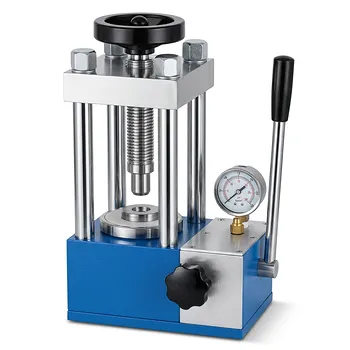
Manual Tablet Press with Dual Scale Pressure Gauge for Pharmaceutical Food Chemical Laboratory Sample Preparation
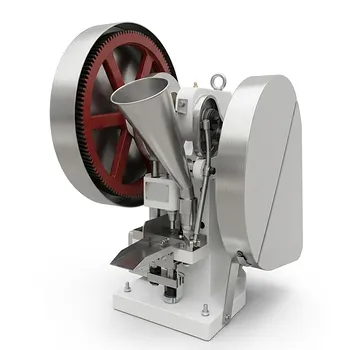
6-Ton Small Single-Punch Tablet Press — Laboratory Powder & Granule Tableting Equipment / Tablet Forming Machine
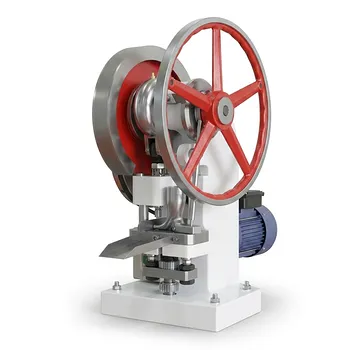
5 Ton Single Punch Tablet Press Laboratory Small Batch Production
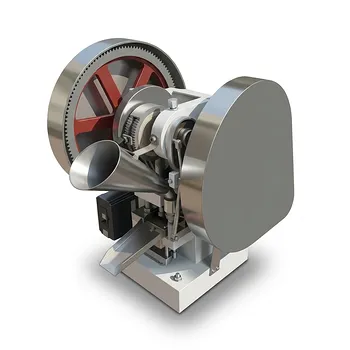
6 Ton Variable Frequency Single Punch Tablet Press
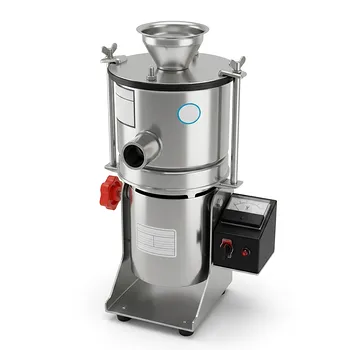
Air Guided Ultrafine Pulverizer High Speed Laboratory Powder Grinder for Chemical and Material Processing
Multifunctional High Efficiency High Speed Laboratory Grinder
Small High-Speed Laboratory Grinder for Rapid Sample Preparation
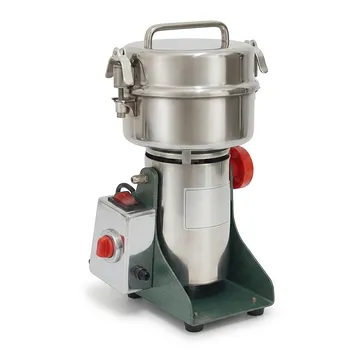
Small High Speed Grinder for Laboratory Sample Preparation
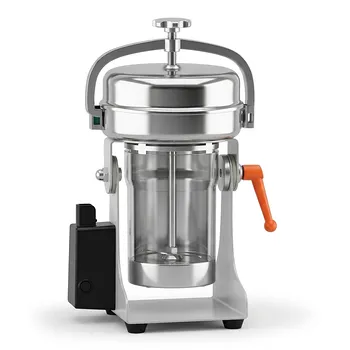
High Efficiency High Speed Grinder 2200W 25000 RPM Laboratory Sample Preparation
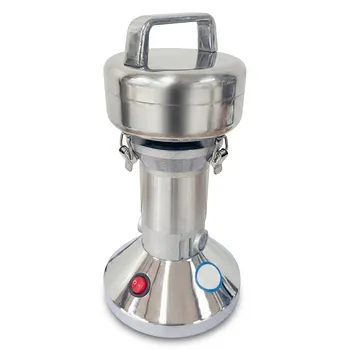
Small Trace Sample High Speed Pulverizer Grinder Laboratory Powder Mill
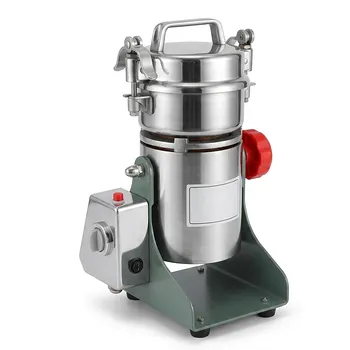
High Speed Swing Type Laboratory Pulverizer for Fine Powder Grinding and Sample Preparation
Industrial Knife Mill for Food and Biological Sample Preparation High Speed Laboratory Homogenizer
High Efficiency High Speed Grinder Laboratory Mill 1300W 25000rpm
Small High-Speed Laboratory Grinder for Powder Processing
Small High-Speed Grinder for Efficient Laboratory Sample Preparation
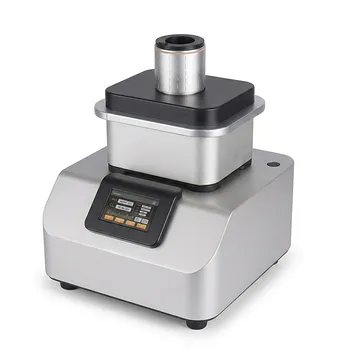
Ultra Centrifugal Mill High Speed Laboratory Grinder for Fibrous and Brittle Sample Preparation
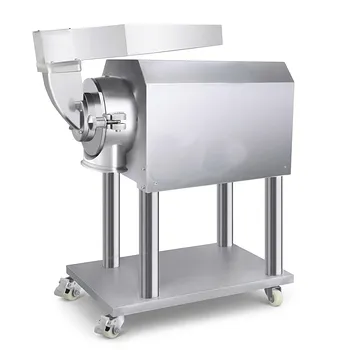
High Speed Small Laboratory Crusher for Dry Material Sample Preparation
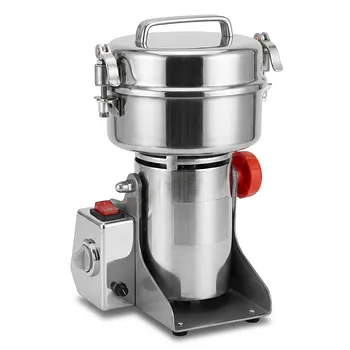
High Speed Laboratory Powder Grinder Small Batch Sample Preparation Mill
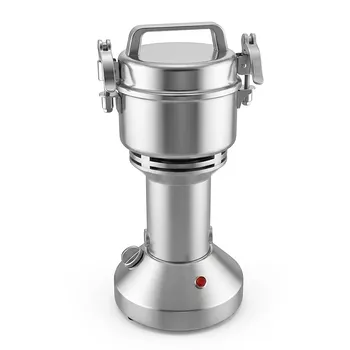
Small High Speed Upright Grinder for Laboratory Sample Preparation