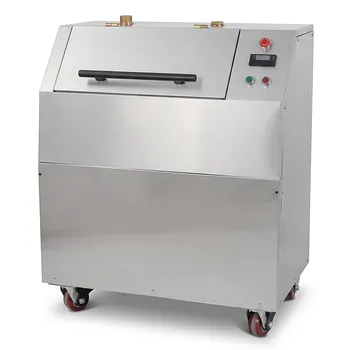
Why is a high-precision vibratory sieve shaker used for olive pomace? Optimize Biomass PSD and Industrial Efficiency
Updated 4 months ago
A high-precision vibratory sieve shaker is the critical tool for olive pomace analysis because it provides the standardized, mechanical force necessary to accurately fractionate biomass into distinct size categories. This equipment allows researchers and operators to quantitatively measure how processes like drying affect particle morphology—such as a reduction in average diameter from 3.5mm to 3.25mm—which is essential for optimizing dust control and industrial collection efficiency.
The use of high-precision vibratory sieving transforms olive pomace from a bulk waste product into a predictable raw material by providing the exact particle size distribution (PSD) data needed to optimize thermal reactions, component fractionation, and mechanical durability in end-products.
Evaluating Morphological Changes and Industrial Efficiency
Quantifying the Impact of Drying Processes
Olive pomace undergoes significant physical changes during processing, particularly during dehydration. A high-precision shaker allows for the quantitative evaluation of how these drying processes affect the physical morphology of the particles.
By measuring minute shifts in average particle diameter, operators can track the shrinkage or fragmentation of the material. This precision ensures that the data accurately reflects the real-world state of the biomass after heat exposure.
Optimizing Dust Control and Collection
The data obtained from precise sieving is essential for the performance of cyclone separators and other dust control equipment. Accurate PSD analysis helps in calculating the optimal collection efficiency for specific machinery.
Minimizing the emission of fine dust is a primary goal in pomace processing. High-precision sieving identifies the concentration of fine particulates, allowing for adjustments that protect air quality and prevent material loss.
Facilitating Dry Component Fractionation
Separating Pulp from Pit Fragments
Olive pomace is a heterogeneous mixture of pulp and woody stone residues. The vibratory shaker utilizes multi-dimensional high-frequency vibrations to sort these particles based on their geometric size and shape.
This process enables component enrichment, where under-size material (rich in high-nutrient pulp) is separated from over-size material (lignin-rich pit fragments). This separation is the foundation for specialized utilization, such as animal feed or high-energy fuel.
Enhancing Thermochemical Reaction Rates
In biomass reactors, particle size directly influences flowability and heating uniformity. Standardized sieving ensures that the material fed into a reactor has a consistent surface-area-to-volume ratio.
Consistent particle sizes lead to predictable reaction rates and more efficient energy conversion. Without high-precision sorting, non-uniform particles can cause "cold spots" or incomplete combustion within the reactor.
Improving Structural Integrity and Product Quality
Optimizing Briquetting and Pelletizing
For the production of biomass pellets, particle size is the core variable for packing density and interlocking forces. Precise classification allows for the recombination of materials into specific ratios, such as mixing fine powders with medium particles.
This controlled distribution ensures optimal inter-particle bonding within the mold. The result is a finished product with significantly higher mechanical durability and resistance to breakage during transport.
Standardization and Repeatability
Mechanical vibration eliminates the human error and inconsistency associated with manual sorting. By controlling vibration time and amplitude, the process becomes mechanized and repeatable across different batches.
This standardization allows for the accurate calculation of cumulative weight percentages. These figures are used to generate distribution curves that reflect the uniformity and sorting degree of the granular material.
Understanding the Trade-offs
Equipment Calibration vs. Throughput
While high-precision shakers offer extreme accuracy, they require careful calibration of vibration amplitude and duration. If the amplitude is too high, fragile olive stone residues may undergo secondary breakage, skewing the results toward finer particles.
Sieve Blinding and Maintenance
Fine, oily residues from olive pulp can lead to sieve blinding, where particles clog the mesh openings. This requires specialized cleaning and the use of sieving aids (such as balls or rings) to maintain accuracy, adding a layer of maintenance complexity.
Sample Representative Limits
The precision of the shaker is only as good as the sampling technique. Because olive pomace is naturally non-uniform, a sample that is too small or poorly mixed will not yield a distribution curve that accurately represents the entire bulk volume.
Applying PSD Data to Your Process Goals
To maximize the value of your particle size distribution analysis, your approach should align with your primary operational objective.
- If your primary focus is Environmental Compliance: Use the shaker to identify the "fine fraction" (sub-0.1mm) to calibrate cyclone separators and minimize fugitive dust emissions.
- If your primary focus is Bioenergy Production: Prioritize generating a d50 value (average particle size) to ensure uniform heating and consistent reaction rates in thermochemical reactors.
- If your primary focus is High-Value Fractionation: Utilize the shaker to isolate the nutrient-rich pulp from the woody pits, allowing for the separate sale or processing of these distinct components.
- If your primary focus is Pellet Manufacturing: Use precise classification to create a "graded" particle mix that optimizes packing density and increases the mechanical strength of the final briquette.
The high-precision vibratory sieve shaker is the bridge between raw biomass waste and a high-performance industrial feedstock.
Summary Table:
| Application Category | Key Benefit for Olive Pomace | Industrial Outcome |
|---|---|---|
| Drying Evaluation | Quantifies morphological shrinkage | Optimized dehydration protocols |
| Dust Management | Identifies fine fraction (sub-0.1mm) | Higher cyclone collection efficiency |
| Fractionation | Separates pulp from stone fragments | High-value nutrient & fuel recovery |
| Bioenergy | Standardizes surface-area-to-volume | Predictable thermochemical reaction rates |
| Pelletizing | Optimizes particle packing density | Superior mechanical durability & strength |
Elevate Your Material Analysis with Precision Equipment
Achieving accurate particle size distribution is critical for transforming biomass like olive pomace into high-value feedstock. At [Insert Brand Name], we provide complete laboratory sample preparation solutions for material science, specializing in high-performance powder processing and compaction equipment.
Our extensive product lines are designed to meet the most demanding research and industrial standards:
- Sieving & Particle Analysis: Vibratory and air-jet sieve shakers with a full range of precision test sieves.
- Milling & Grinding: Planetary ball mills, jet mills, cryogenic grinders (liquid nitrogen), and jaw/roll crushers.
- Mixing Solutions: High-efficiency powder mixers and vacuum defoaming mixers.
- Compaction Equipment: A full spectrum of hydraulic presses, including Cold/Warm Isostatic Presses (CIP/WIP), XRF pellet presses, and vacuum hot presses.
Whether you are optimizing biomass fractionation or developing advanced materials, our expertise ensures your lab achieves repeatable, high-precision results. Contact us today to discuss your specific application and find the perfect equipment solution!
References
- Andreas Christofi, Maria Loizidou. The Impact of Drying and Storage on the Characteristics of Two-Phase Olive Pomace. DOI: 10.3390/su16031116
Mentioned Products
- Vibratory Sieve Shaker Electromagnetic 3D Motion Powder Particle Size Analyzer for Dry and Wet Sieving
- Laboratory Dry and Wet Three Dimensional Vibratory Sieve Shaker for Particle Analysis
- Dry Three Dimensional Vibratory Sieve Shaker
- Stainless Steel Laboratory Vibratory Test Sieve Shaker
- Heavy Duty Dry Three Dimensional Vibratory Sieve Shaker for Particle Separation
People Also Ask
- How does a vibratory sieve shaker contribute to optimizing the performance of activated carbon? Enhance Adsorption Precision
- Why is a laboratory vibratory sieve shaker necessary for processing magnesium-based borate precursor powders? Boost Activity
- Why use a vibratory sieve shaker to verify coarse aggregate grading in rubberized concrete? Ensure Structural Integrity
- What function do vibratory sieve shakers and standard test sieves serve in the preparation of adsorbents? Key Guide
- What role does a vibratory sieve shaker play in the particle size analysis of ground corn products? Enhance QC Precision

Tech Team · PowderPreparation
Last updated on Jun 03, 2026
Related Products
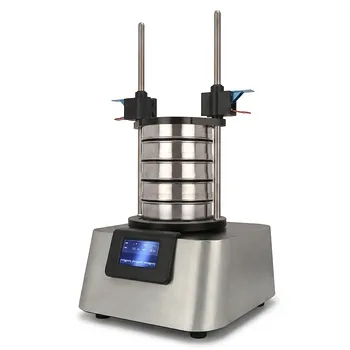
Vibratory Sieve Shaker Electromagnetic 3D Motion Powder Particle Size Analyzer for Dry and Wet Sieving
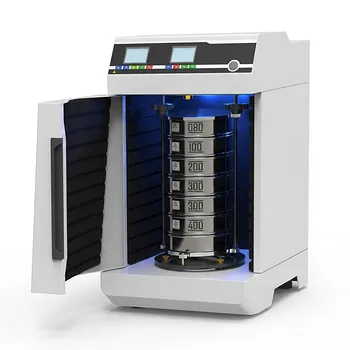
Laboratory Dry and Wet Three Dimensional Vibratory Sieve Shaker for Particle Analysis
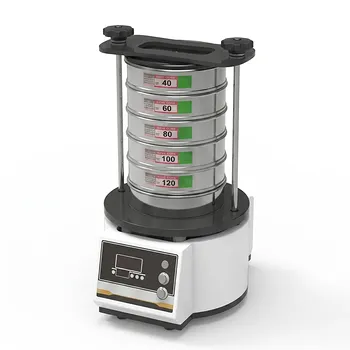
Dry Three Dimensional Vibratory Sieve Shaker
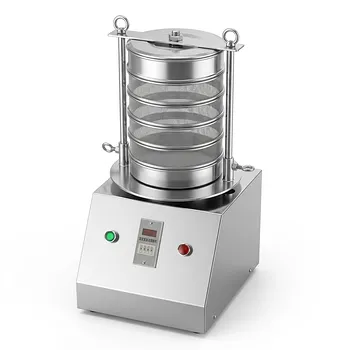
Stainless Steel Laboratory Vibratory Test Sieve Shaker
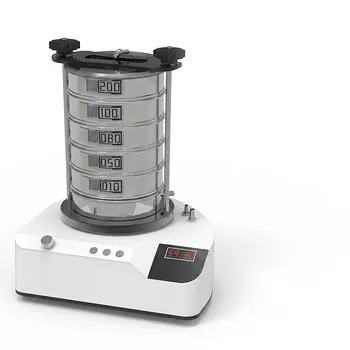
Heavy Duty Dry Three Dimensional Vibratory Sieve Shaker for Particle Separation
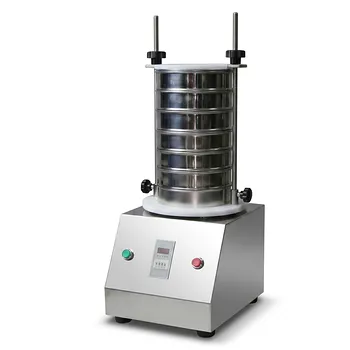
Small Laboratory Vibratory Sieve Shaker for Powder Gradation and Particle Size Analysis
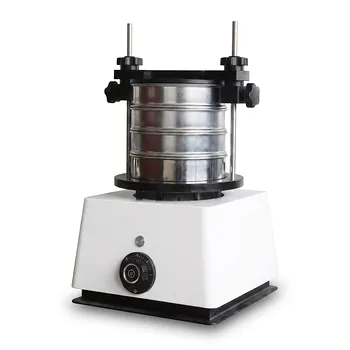
Small Laboratory Vibrating Sieve Shaker for Precise Particle Size Analysis
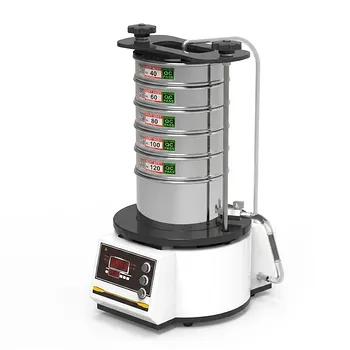
High Frequency Wet Three-Dimensional Vibrating Sieve Shaker for Dry and Wet Particle Size Analysis
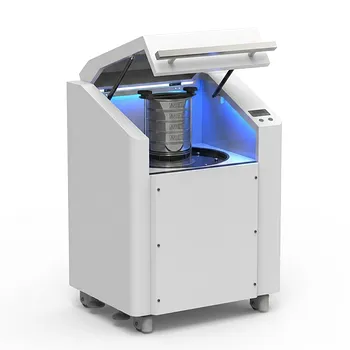
High Frequency Cabinet Type Three-Dimensional Rotary Vibrating Sieve Shaker for Dry Sieving and Particle Classification
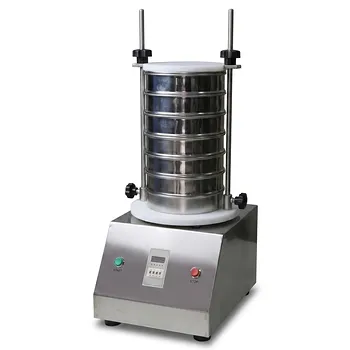
Laboratory Vibratory Test Sieve Shaker for Precision Particle Size Analysis and Powder Grading
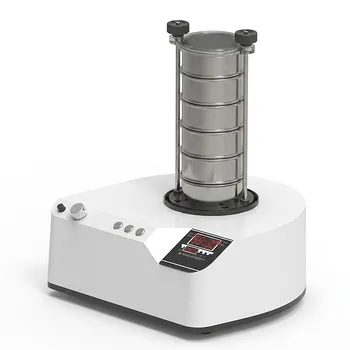
三维电磁微量振动筛分仪
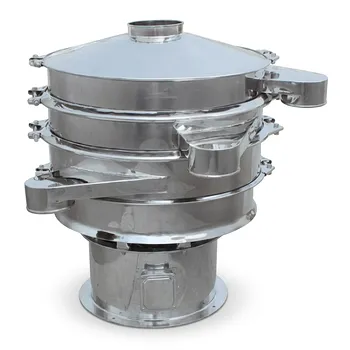
Stainless Steel Rotary Vibrating Sieve High Precision Circular Vibratory Separator Industrial Powder Grading Machine Multi Layer Sifting Equipment
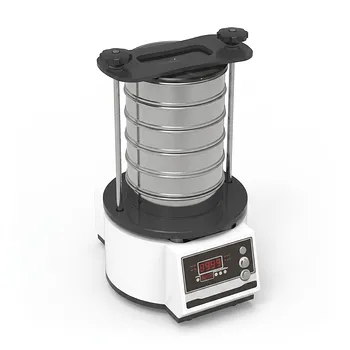
Tapping Oscillating Sieve Shaker for Dry and Wet Particle Size Analysis
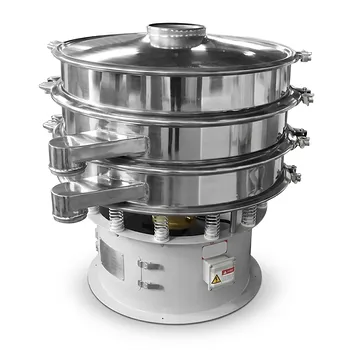
Three Dimensional Rotary Vibrating Sieve
Vibratory Superfine Grinder for Ultra Fine Laboratory Powder Milling
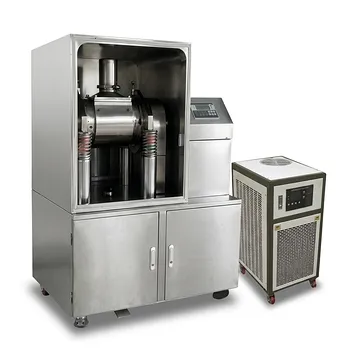
Small Vibrating Ultrafine Grinder for Traditional Chinese Medicine
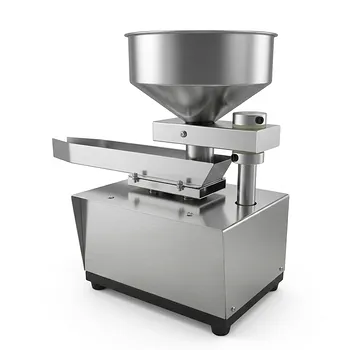
Automatic Vibrating Powder Feeder for Laboratory Material Processing Precision Vibratory Hopper Feeder for Granular and Powder Material Handling Industrial Grade Vibrating Tray Feeder for Consistent Material Sample Preparation