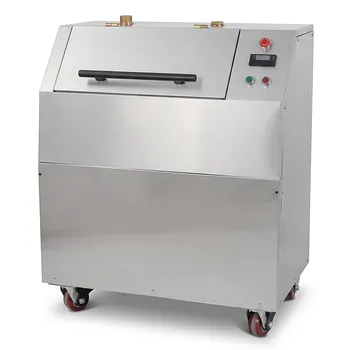
How do an automatic vibratory sieve shaker and standard sieves assist in controlling CRSS particle size? Enhance Quality
Updated 5 months ago
The integration of an automatic vibratory sieve shaker with standard sieves enables the precise classification of Carbonized Rubber Seed Shell (CRSS) powder by enforcing a strict upper size limit. By utilizing a 150 μm mesh, the system ensures that no oversized particles remain in the filler, directly preventing stress concentration and facilitating uniform dispersion within rubber adhesives.
The primary role of automated sieving in CRSS production is to standardize the physical characteristics of the filler, transforming raw pulverized waste into a high-performance additive through precise mechanical interception and consistent vibration parameters.
Mechanical Precision and Standardization
Automated Vibration vs. Manual Sieving
Automatic shakers utilize standardized mechanical vibration frequencies and preset time controls to drive the powder through the mesh. This eliminates human error and ensures that every batch of CRSS is subjected to the same energy distribution, resulting in a predictable particle size distribution (PSD).
Physical Interception through Mesh Apertures
Standard sieves act as a definitive gatekeeper for quality control. By using a 150 μm mesh, the process effectively removes "unqualified" particles that are too large to integrate properly into the rubber matrix.
Consistency in Multi-Stage Grading
For more complex applications, shakers can hold a stack of sieves with varying apertures. This allows for the separation of CRSS into specific "grit sizes," which is essential for maintaining consistent material flow and predictable mechanical performance in the final product.
Enhancing Filler-Matrix Interaction
Preventing Stress Concentration
Large, irregular particles often act as internal failure points within a composite. By restricting CRSS particles to a maximum size of 150 μm, the material avoids localized weak spots that typically lead to premature cracking or structural failure.
Optimizing Dispersion and Surface Area
Uniformly sized particles disperse more effectively throughout the rubber adhesive. This uniformity increases the specific surface area available for interfacial bonding, which is the primary driver of the filler's reinforcing capability.
Eliminating Analysis Deviations
Standardized sieving ensures that samples used for performance testing are highly consistent. This eliminates deviations in experimental results that usually arise from uneven particle distribution, allowing for more accurate data on the filler's impact on the rubber's properties.
Understanding the Trade-offs
The Risk of Agglomeration
While smaller particles generally improve bonding, excessively fine powders (often below 75 μm) are prone to agglomeration. If the sieving process is too restrictive, these clusters can form, essentially acting like a single large particle and negating the benefits of the fine grind.
Mesh Blinding and Maintenance
High-precision sieving requires constant monitoring of the sieve screens. "Blinding"—where particles become lodged in the mesh—can reduce the accuracy of the classification and slow down production throughput if the equipment is not maintained properly.
Energy Consumption and Material Loss
Achieving extreme precision in particle size involves longer vibration times and may result in a higher percentage of "rejected" oversized material. This requires a balance between the desired mechanical performance of the CRSS and the economic costs of processing.
Making the Right Choice for Your Project
The effectiveness of CRSS as a filler depends entirely on how well its particle size is controlled during the final processing stage.
- If your primary focus is maximizing mechanical strength: Ensure the 150 μm threshold is strictly enforced to prevent the stress concentration issues associated with oversized particles.
- If your primary focus is production consistency: Utilize an automatic vibratory shaker with preset frequency controls to remove operator variability and ensure batch-to-batch uniformity.
- If your primary focus is optimizing interfacial bonding: Consider using finer standard sieves (such as 75 μm) to increase the specific surface area, provided you have a strategy to manage particle clumping.
Precise particle size control through automated sieving is the fundamental step that turns raw carbonized waste into a reliable technical filler for high-performance adhesives.
Summary Table:
| Feature | Role in CRSS Processing | Impact on Material Performance |
|---|---|---|
| Mechanical Vibration | Provides consistent energy distribution | Ensures a predictable particle size distribution (PSD) |
| 150 μm Mesh Limit | Removes oversized "unqualified" particles | Prevents stress concentration and premature cracking |
| Automated Timing | Eliminates manual operator variability | Guarantees batch-to-batch uniformity and standardization |
| Multi-Stage Stacking | Separates powder into specific grit sizes | Optimizes interfacial bonding and surface area for dispersion |
| Physical Interception | Acts as a definitive quality gatekeeper | Eliminates analysis deviations in experimental testing |
Elevate Your Material Science with Precision Powder Solutions
Achieving the perfect particle size for Carbonized Rubber Seed Shell (CRSS) fillers requires more than just basic equipment—it requires precision. At our core, we provide complete laboratory sample preparation solutions designed for material science excellence.
Whether you are refining bio-waste or developing high-performance composites, our specialized equipment ensures your success:
- Size Reduction: High-performance crushers (jaw/roll), liquid nitrogen cryogenic grinders, and advanced mills (planetary ball, jet, and rotor).
- Precision Classification: Professional vibratory and air-jet sieve shakers with a full range of standardized test sieves to eliminate oversized particles.
- Mixing & Homogenization: Industrial-grade powder and defoaming mixers for uniform filler dispersion.
- Advanced Compaction: A full spectrum of hydraulic presses, including Cold/Warm Isostatic Presses (CIP/WIP), vacuum hot presses, and XRF pellet presses.
Ready to optimize your powder processing workflow? Contact us today to discuss how our specialized equipment can enhance your laboratory's efficiency and material performance!
References
- Munirah Onn, Zafryll Amir Zulkifly. Performance evaluation of carbonized rubber seed shell (CRSS) filler as reinforcer in rubber binder. DOI: 10.11113/mjfas.v14n3.1098
Mentioned Products
- Vibratory Sieve Shaker Electromagnetic 3D Motion Powder Particle Size Analyzer for Dry and Wet Sieving
- Laboratory Dry and Wet Three Dimensional Vibratory Sieve Shaker for Particle Analysis
- Dry Three Dimensional Vibratory Sieve Shaker
- Stainless Steel Laboratory Vibratory Test Sieve Shaker
- Heavy Duty Dry Three Dimensional Vibratory Sieve Shaker for Particle Separation
People Also Ask
- How does a vibratory sieve shaker contribute to optimizing the performance of activated carbon? Enhance Adsorption Precision
- Why is a laboratory vibratory sieve shaker necessary for processing magnesium-based borate precursor powders? Boost Activity
- Why use a vibratory sieve shaker to verify coarse aggregate grading in rubberized concrete? Ensure Structural Integrity
- What function do vibratory sieve shakers and standard test sieves serve in the preparation of adsorbents? Key Guide
- What role does a vibratory sieve shaker play in the particle size analysis of ground corn products? Enhance QC Precision

Tech Team · PowderPreparation
Last updated on May 14, 2026
Related Products
Vibratory Sieve Shaker Electromagnetic 3D Motion Powder Particle Size Analyzer for Dry and Wet Sieving
Laboratory Dry and Wet Three Dimensional Vibratory Sieve Shaker for Particle Analysis
Dry Three Dimensional Vibratory Sieve Shaker
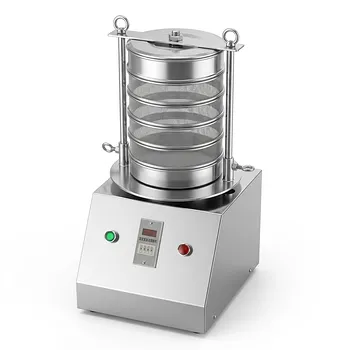
Stainless Steel Laboratory Vibratory Test Sieve Shaker
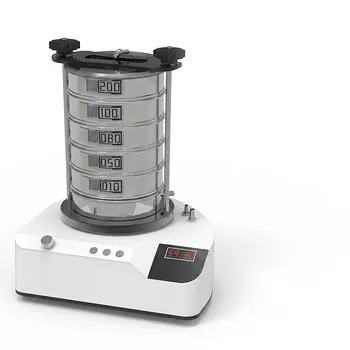
Heavy Duty Dry Three Dimensional Vibratory Sieve Shaker for Particle Separation
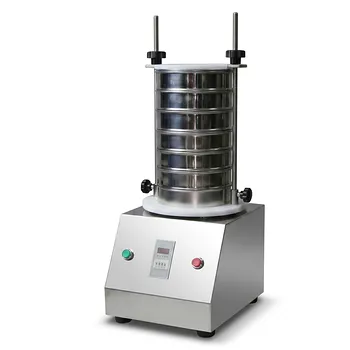
Small Laboratory Vibratory Sieve Shaker for Powder Gradation and Particle Size Analysis
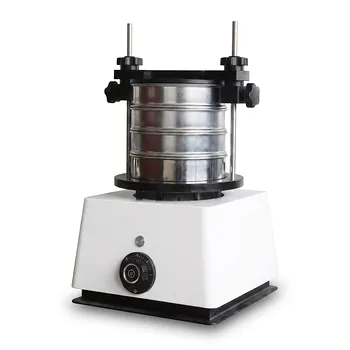
Small Laboratory Vibrating Sieve Shaker for Precise Particle Size Analysis
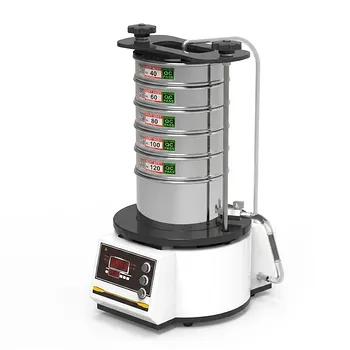
High Frequency Wet Three-Dimensional Vibrating Sieve Shaker for Dry and Wet Particle Size Analysis
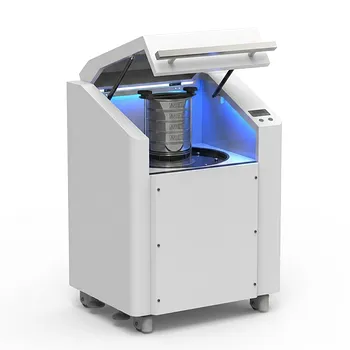
High Frequency Cabinet Type Three-Dimensional Rotary Vibrating Sieve Shaker for Dry Sieving and Particle Classification
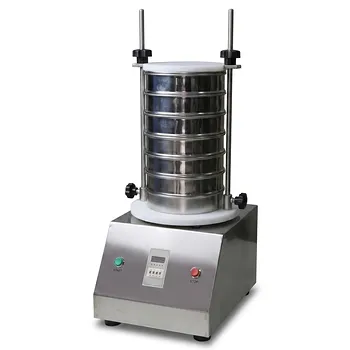
Laboratory Vibratory Test Sieve Shaker for Precision Particle Size Analysis and Powder Grading
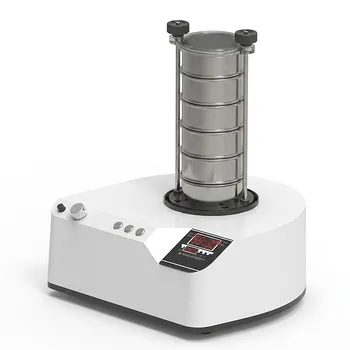
三维电磁微量振动筛分仪
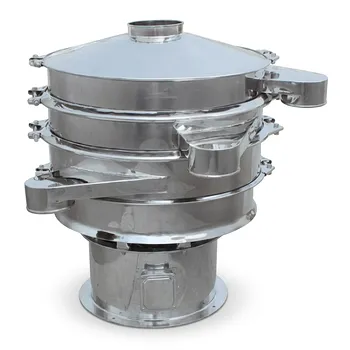
Stainless Steel Rotary Vibrating Sieve High Precision Circular Vibratory Separator Industrial Powder Grading Machine Multi Layer Sifting Equipment
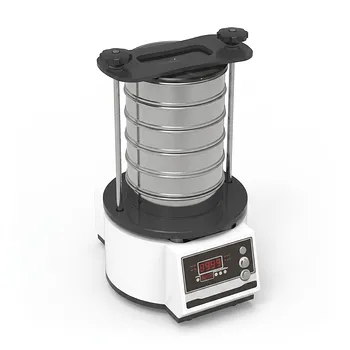
Tapping Oscillating Sieve Shaker for Dry and Wet Particle Size Analysis
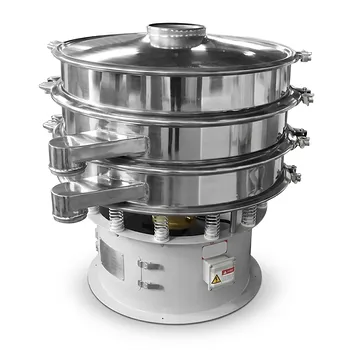
Three Dimensional Rotary Vibrating Sieve
Vibratory Superfine Grinder for Ultra Fine Laboratory Powder Milling
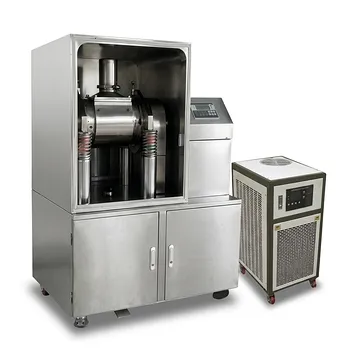
Small Vibrating Ultrafine Grinder for Traditional Chinese Medicine
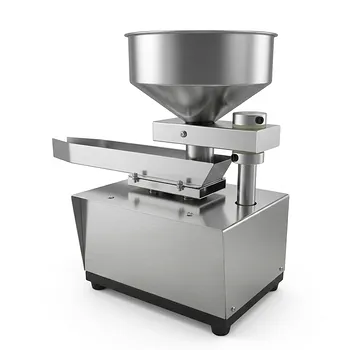
Automatic Vibrating Powder Feeder for Laboratory Material Processing Precision Vibratory Hopper Feeder for Granular and Powder Material Handling Industrial Grade Vibrating Tray Feeder for Consistent Material Sample Preparation