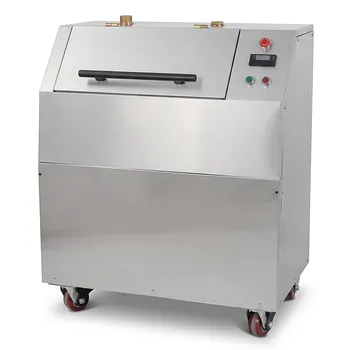
Why is a high-precision vibratory sieve shaker necessary for processing pyrolytic carbonized powders? Ensure uniformity
Updated 4 months ago
Precision particle size control is the cornerstone of high-performance carbon processing. For pyrolytic carbonized powders, a high-precision vibratory sieve shaker is necessary to isolate specific particle dimensions, such as 0.5mm, to ensure consistency in the final material. This rigorous classification eliminates variables in experimental repeatability and allows researchers to accurately measure how particle concentrations affect the structural integrity of composite matrices.
A high-precision vibratory sieve shaker transforms raw, crushed carbon into a uniform feedstock by enforcing a narrow particle size distribution. This control is critical for optimizing heat transfer during pyrolysis, ensuring mechanical strength in composites, and maintaining stable reaction kinetics.
Optimizing Material Performance and Consistency
Maximizing Stress Transfer in Composites
High-precision sieving ensures that carbonized particles are distributed uniformly within an epoxy resin matrix. When particle sizes are inconsistent, the material develops structural defects that hinder the efficient transfer of stress. By isolating a specific size range, such as powders less than 500 µm, manufacturers can minimize these flaws and optimize the composite’s overall strength.
Ensuring Experimental Repeatability
In a research environment, the ability to replicate results is paramount. Precise classification allows for a "clean" investigation into how different concentrations of carbon affect properties like Young’s modulus and tensile strength. Without a narrow particle size distribution, the uncertain effects of size variance can obscure the actual performance of the chemical additives.
Morphology and Upgrade Potential
The physical morphology of the char recovered from pyrolysis directly influences its storage stability and future utility. Using a vibratory shaker with apertures ranging from 10 mm down to 0.125 mm allows for a detailed analysis of this morphology. This data is essential for determining if the char can be upgraded into high-value macroporous materials.
Maintaining Thermal and Chemical Process Stability
Eliminating Heat Transfer Gradients
During the pyrolysis reaction in a fixed-bed reactor, uniform particle size is required to prevent heat transfer gradients. Large, oversized particles often suffer from incomplete carbonization because heat cannot reach the core efficiently. Conversely, undersized "fines" can cause excessive pressure drops within the reactor, leading to unstable product yields.
Regulating Reaction Kinetics
Consistency in particle size ensures that heat conduction and decomposition rates remain uniform during heat treatment. This prevents quality inconsistency in the final hard carbon product. When particles are uniform, they react at the same rate, ensuring the entire batch meets the same performance specifications.
Maintaining Fluidization Quality
In biomass fast pyrolysis, the sieve shaker ensures the feedstock falls within a strict range, such as 0.6–1 mm. This specific sizing is critical for maintaining fluidization quality within a fluidized bed reactor. Proper sizing prevents oversized particles from sinking and undersized particles from being prematurely swept away by the gas stream.
Potential Challenges and Trade-offs
The Risk of Particle Degradation
While high-precision vibration is necessary for separation, excessive mechanical energy can be counterproductive. Carbonized powders are often brittle; prolonged or overly aggressive shaking can cause particle attrition, where particles break down into smaller fragments during the sieving process itself. This can lead to an inaccurate representation of the original particle size distribution.
Sieve Blinding and Maintenance
Fine carbon powders are prone to sieve blinding, where particles become wedged in the mesh openings. This reduces the effective screening area and compromises precision. Maintaining high-precision standards requires specialized cleaning cycles and potentially the use of ultrasonic debinding attachments to ensure the mesh remains clear.
Implementing Sieve Shakers for Your Specific Application
Making the Right Choice for Your Goal
To achieve the best results with pyrolytic carbonized powders, your approach to sieving should align with your end-use requirements:
- If your primary focus is Composite Manufacturing: Prioritize isolating particles under 500 µm to ensure uniform distribution and minimize structural defects in epoxy matrices.
- If your primary focus is Reactor Efficiency: Use the shaker to eliminate both oversized and undersized particles to prevent heat gradients and pressure drops during pyrolysis.
- If your primary focus is Material Research: Invest in a shaker with a wide range of standard test sieves to accurately map the correlation between particle size and mechanical properties like tensile strength.
Precise particle classification is the vital link between raw carbonized waste and high-value, predictable engineering materials.
Summary Table:
| Key Benefit | Impact on Pyrolytic Carbon Processing |
|---|---|
| Particle Size Control | Maximizes stress transfer in epoxy resins and prevents structural defects. |
| Experimental Repeatability | Eliminates variables to accurately measure Young’s modulus and tensile strength. |
| Thermal Stability | Prevents heat transfer gradients and ensures uniform carbonization in reactors. |
| Reaction Kinetics | Maintains consistent decomposition rates for stable hard carbon product quality. |
| Fluidization Quality | Ensures optimal feedstock range (0.6–1 mm) for stable fluidized bed reactions. |
Optimize Your Material Science Research Today
Achieve ultimate precision in your carbon powder processing with our complete laboratory sample preparation solutions. We specialize in high-performance powder processing and compaction equipment tailored for advanced material research and industrial applications.
Our comprehensive product line includes:
- Sieving & Milling: High-precision vibratory and air-jet sieve shakers, planetary ball mills, jet mills, and liquid nitrogen cryogenic grinders for ultrafine results.
- Compaction & Pressing: A full spectrum of hydraulic presses, including Cold/Warm Isostatic Presses (CIP/WIP), vacuum hot presses, and XRF pellet presses.
- Crushing & Mixing: Jaw/roll crushers and high-efficiency powder or defoaming mixers to ensure feedstock uniformity.
Whether you are refining pyrolytic carbon or developing high-strength composites, our equipment provides the accuracy and repeatability your work demands.
Contact our experts now to find your custom solution!
References
- Agata Wieczorska, Grzegorz Hajdukiewicz. Analysis of the Tensile Properties of Composite Material Added Carbonisate Based on the Change of Strain Dynamics. DOI: 10.3390/ma17246219
Mentioned Products
- Vibratory Sieve Shaker Electromagnetic 3D Motion Powder Particle Size Analyzer for Dry and Wet Sieving
- Laboratory Dry and Wet Three Dimensional Vibratory Sieve Shaker for Particle Analysis
- Dry Three Dimensional Vibratory Sieve Shaker
- Stainless Steel Laboratory Vibratory Test Sieve Shaker
- Heavy Duty Dry Three Dimensional Vibratory Sieve Shaker for Particle Separation
People Also Ask
- How does a vibratory sieve shaker contribute to optimizing the performance of activated carbon? Enhance Adsorption Precision
- Why is a laboratory vibratory sieve shaker necessary for processing magnesium-based borate precursor powders? Boost Activity
- Why use a vibratory sieve shaker to verify coarse aggregate grading in rubberized concrete? Ensure Structural Integrity
- What function do vibratory sieve shakers and standard test sieves serve in the preparation of adsorbents? Key Guide
- What role does a vibratory sieve shaker play in the particle size analysis of ground corn products? Enhance QC Precision

Tech Team · PowderPreparation
Last updated on Jun 03, 2026
Related Products
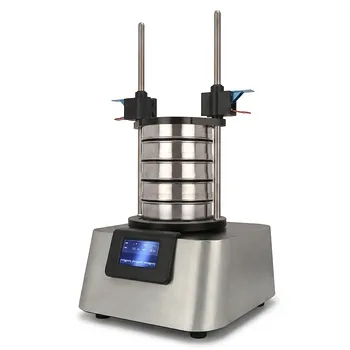
Vibratory Sieve Shaker Electromagnetic 3D Motion Powder Particle Size Analyzer for Dry and Wet Sieving
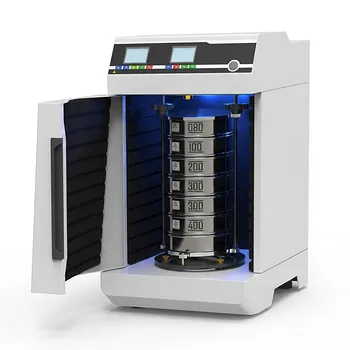
Laboratory Dry and Wet Three Dimensional Vibratory Sieve Shaker for Particle Analysis
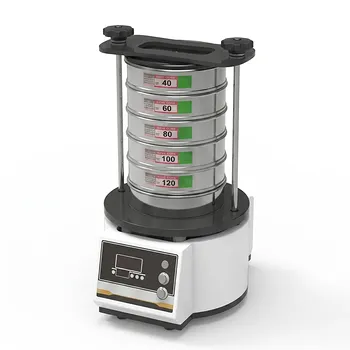
Dry Three Dimensional Vibratory Sieve Shaker
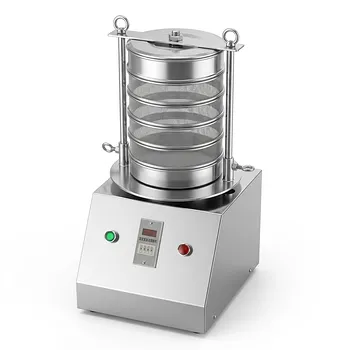
Stainless Steel Laboratory Vibratory Test Sieve Shaker
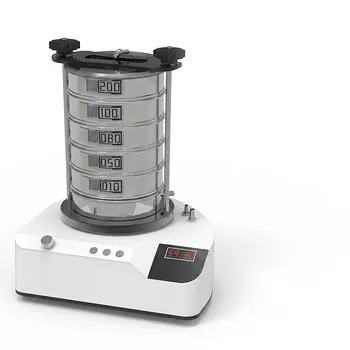
Heavy Duty Dry Three Dimensional Vibratory Sieve Shaker for Particle Separation
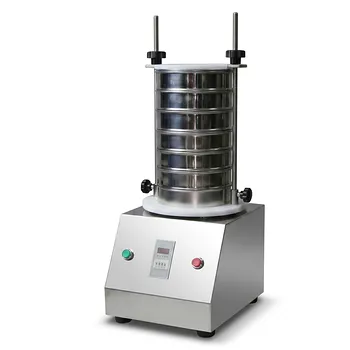
Small Laboratory Vibratory Sieve Shaker for Powder Gradation and Particle Size Analysis
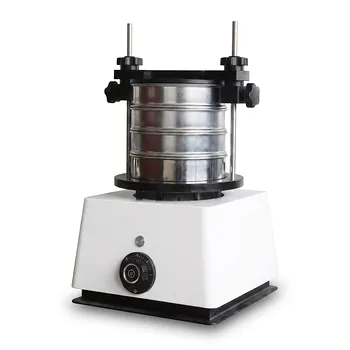
Small Laboratory Vibrating Sieve Shaker for Precise Particle Size Analysis
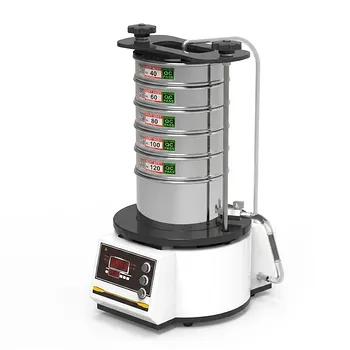
High Frequency Wet Three-Dimensional Vibrating Sieve Shaker for Dry and Wet Particle Size Analysis
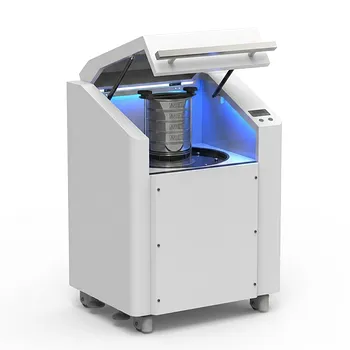
High Frequency Cabinet Type Three-Dimensional Rotary Vibrating Sieve Shaker for Dry Sieving and Particle Classification
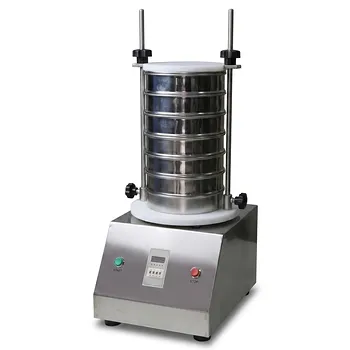
Laboratory Vibratory Test Sieve Shaker for Precision Particle Size Analysis and Powder Grading
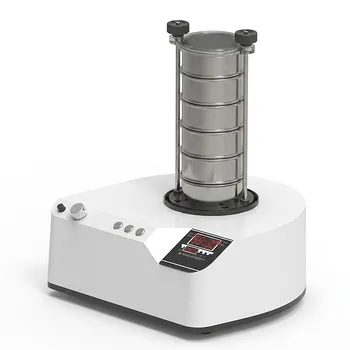
三维电磁微量振动筛分仪
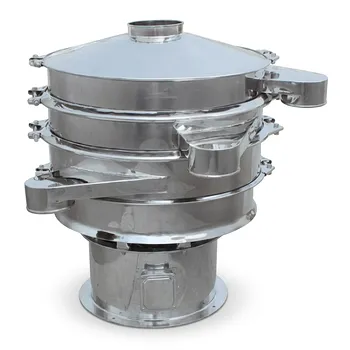
Stainless Steel Rotary Vibrating Sieve High Precision Circular Vibratory Separator Industrial Powder Grading Machine Multi Layer Sifting Equipment
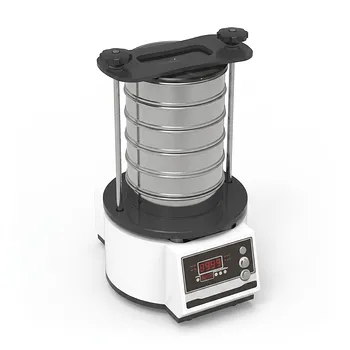
Tapping Oscillating Sieve Shaker for Dry and Wet Particle Size Analysis
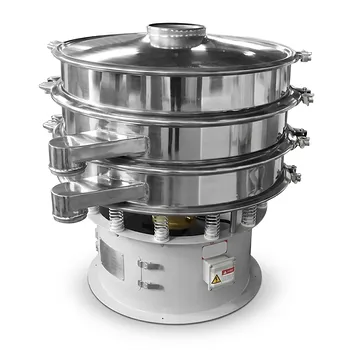
Three Dimensional Rotary Vibrating Sieve
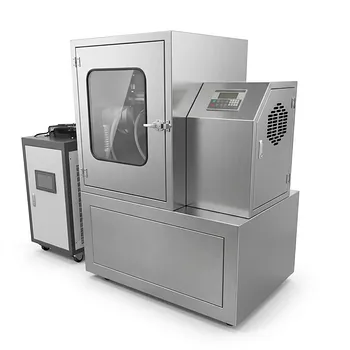
Vibratory Superfine Grinder for Ultra Fine Laboratory Powder Milling
Small Vibrating Ultrafine Grinder for Traditional Chinese Medicine
Automatic Vibrating Powder Feeder for Laboratory Material Processing Precision Vibratory Hopper Feeder for Granular and Powder Material Handling Industrial Grade Vibrating Tray Feeder for Consistent Material Sample Preparation