Why is a high-precision vibratory sieve shaker with 63 μm mesh essential for clay? Optimize Reactivity & Integrity
Updated 4 months ago
Precision in clay characterization is non-negotiable. A high-precision vibratory sieve shaker equipped with a 63 μm mesh is essential because it isolates the specific "fine" fraction of clay required to maximize chemical reactivity and ensure a uniform microstructure. By strictly controlling material fineness at this threshold, you guarantee that the powder used for calcination or sintering possesses the specific surface area necessary for consistent, high-performance results.
A 63 μm mesh acts as a critical quality gate, ensuring that only particles with sufficient specific surface area are used to drive chemical reactions. This precision is vital for transforming raw clay into high-performance supplementary cementitious materials (SCMs) or dense, defect-free ceramic components.
The Impact of the 63 μm Threshold on Chemical Reactivity
Maximizing Specific Surface Area
Clay particles must be sufficiently fine to interact effectively during chemical processes. A 63 μm mesh ensures that the resulting powder has a high specific surface area, which is the primary driver for chemical kinetics in clay-based materials.
Accelerating the Pozzolanic Reaction
In the context of supplementary cementitious materials (SCMs), particle fineness is a direct predictor of performance. Particles that pass through a 63 μm mesh react more rapidly with calcium hydroxide, accelerating the pozzolanic reaction that gives concrete its strength and durability.
Consistency in Calcination
Using a consistent particle size ensures that heat is distributed evenly during the calcination process. If particles are too large, the core of the grain may remain unreacted, leading to chemical inhomogeneity and reduced reactivity in the final product.
Achieving Microstructural Integrity and Density
Eliminating Coarse Impurities
A 63 μm mesh serves as a filter to remove oversized grains or impurities that survive the initial grinding process. These coarse particles can act as stress concentrators, leading to microscopic defects or cracks in sintered ceramic bodies.
Optimizing Packing Density
In ceramic and concrete production, "fines" are required to fill the voids between larger aggregates. By isolating the fraction below 63 μm, you can achieve a higher packing density, which results in a lower-porosity microstructure and improved mechanical strength.
Controlling Rheological Properties
The particle size distribution (PSD) influenced by the 63 μm limit dictates how clay slurries flow. Precise classification allows for the control of viscosity and workability, which are critical for casting, pressing, or 3D-printing applications.
The Technical Necessity of Vibratory Motion
Multi-Dimensional Mechanical Forces
Unlike manual sieving, a vibratory shaker employs multi-dimensional forces to move particles across the mesh surface. This ensures that every particle has multiple opportunities to present its smallest dimension to the 63 μm aperture, maximizing the accuracy of the separation.
Preventing Mesh Blinding
Fine meshes like the 63 μm are highly susceptible to blinding, where particles become lodged in the openings. High-frequency vibration keeps the particles in motion, effectively "self-cleaning" the sieve and maintaining a high throughput during the characterization process.
Standardizing Particle Size Distribution (PSD)
A vibratory shaker provides the repeatability required for scientific and industrial standards. It allows researchers to calculate the P80 index and verify if the grinding process has reached the optimal range for downstream applications like flotation or sintering.
Understanding the Trade-offs
Equipment Maintenance and Mesh Wear
Fine meshes are delicate and can be easily damaged by aggressive cleaning or oversized, heavy samples. Regular calibration and careful handling are required to ensure the 63 μm aperture remains within tolerance over time.
Processing Time vs. Accuracy
While vibratory shakers are efficient, reaching "end-point" sieving for very fine clays can be time-consuming. There is always a trade-off between the duration of the vibration cycle and the absolute precision of the particle separation.
Sample Volume Limits
High-precision shakers are typically designed for analytical scales rather than mass production. Overloading the sieve with too much material can lead to cushioning, where fine particles are trapped on top of a thick layer of powder and never reach the 63 μm mesh.
How to Apply This to Your Project
Making the Right Choice for Your Goal
- If your primary focus is Supplementary Cementitious Materials (SCMs): Use the 63 μm sieve to verify that your clay has reached the fineness required to optimize the pozzolanic reaction and concrete strength.
- If your primary focus is High-Strength Ceramics: Utilize the vibratory shaker to remove all particles above 63 μm to prevent internal stress concentrations and ensure a dense, low-porosity final product.
- If your primary focus is Milling Process Optimization: Use the 63 μm mesh as a benchmark to calculate the P80 index and evaluate the efficiency of your ball mill or grinding aids.
- If your primary focus is Material Characterization: Combine the 63 μm sieve with a full stack of standard sieves to generate a complete particle size distribution (PSD) curve for detailed rheological analysis.
By integrating a high-precision vibratory shaker into your workflow, you move from guesswork to a standardized, data-driven approach to clay characterization.
Summary Table:
| Key Feature | Benefit for Clay Characterization | Impact on Final Material |
|---|---|---|
| 63 μm Mesh Threshold | Maximizes specific surface area | Accelerates pozzolanic reactions in SCMs |
| Vibratory Motion | Prevents mesh blinding & ensures accuracy | Consistent particle size distribution (PSD) |
| Coarse Removal | Eliminates impurities and oversized grains | Prevents stress concentrators & micro-cracks |
| Fines Isolation | Optimizes particle packing density | Enhances mechanical strength and lowers porosity |
| Controlled PSD | Regulates viscosity and workability | Superior rheological properties for 3D printing/casting |
Elevate Your Material Characterization with Precision Solutions
Achieving the perfect particle size is the foundation of high-performance material science. At Our Laboratory Solutions, we provide a complete ecosystem for sample preparation, ensuring your clay and powder characterization meets the highest industrial standards.
Our specialized equipment range includes:
- Powder Processing: High-precision vibratory and air-jet sieve shakers, planetary ball mills, jet mills, and disc mills for reaching the critical 63 μm threshold.
- Compaction & Sintering: A full spectrum of hydraulic presses, including Cold/Warm Isostatic Presses (CIP/WIP), vacuum hot presses, and XRF pellet presses for defect-free components.
- Sample Preparation: Heavy-duty jaw/roll crushers and cryogenic grinders for consistent feedstock.
Whether you are optimizing pozzolanic reactions for SCMs or engineering high-density ceramics, our expertise in powder processing and compaction equipment ensures your success.
Contact us today to find the ideal solution for your laboratory!
References
- Dilami Diana Babakoua, Gado Tchangbédji. Characterization and Pozzolanic Reactivity of Two Togolese Clays for Use as Supplementary Cementitious Materials. DOI: 10.4236/msce.2025.139003
Mentioned Products
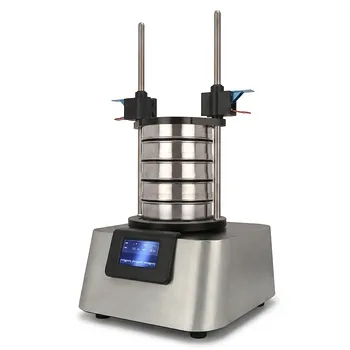
- Vibratory Sieve Shaker Electromagnetic 3D Motion Powder Particle Size Analyzer for Dry and Wet Sieving
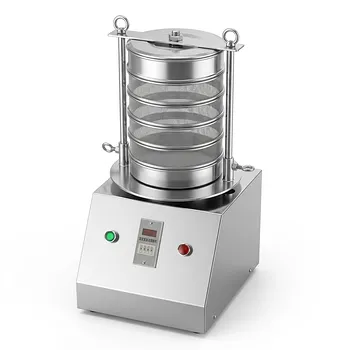
- Stainless Steel Laboratory Vibratory Test Sieve Shaker
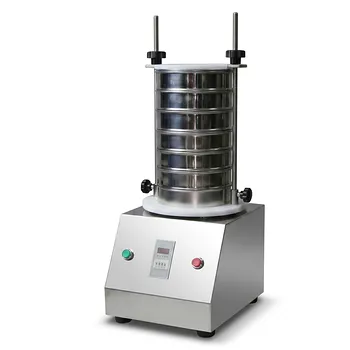
- Small Laboratory Vibratory Sieve Shaker for Powder Gradation and Particle Size Analysis
- Laboratory Dry and Wet Three Dimensional Vibratory Sieve Shaker for Particle Analysis
- Dry Three Dimensional Vibratory Sieve Shaker
People Also Ask
- How does a vibratory sieve shaker contribute to optimizing the performance of activated carbon? Enhance Adsorption Precision
- Why is a laboratory vibratory sieve shaker necessary for processing magnesium-based borate precursor powders? Boost Activity
- Why use a vibratory sieve shaker to verify coarse aggregate grading in rubberized concrete? Ensure Structural Integrity
- What function do vibratory sieve shakers and standard test sieves serve in the preparation of adsorbents? Key Guide
- What role does a vibratory sieve shaker play in the particle size analysis of ground corn products? Enhance QC Precision

Tech Team · PowderPreparation
Last updated on Jun 03, 2026
Related Products
Vibratory Sieve Shaker Electromagnetic 3D Motion Powder Particle Size Analyzer for Dry and Wet Sieving
Stainless Steel Laboratory Vibratory Test Sieve Shaker
Small Laboratory Vibratory Sieve Shaker for Powder Gradation and Particle Size Analysis
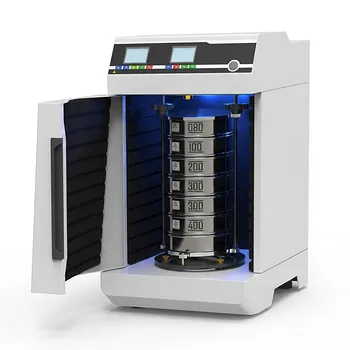
Laboratory Dry and Wet Three Dimensional Vibratory Sieve Shaker for Particle Analysis
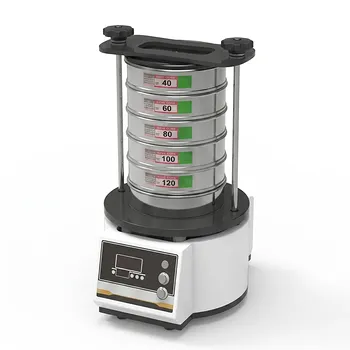
Dry Three Dimensional Vibratory Sieve Shaker

Heavy Duty Dry Three Dimensional Vibratory Sieve Shaker for Particle Separation

Small Laboratory Vibrating Sieve Shaker for Precise Particle Size Analysis

Laboratory Vibratory Test Sieve Shaker for Precision Particle Size Analysis and Powder Grading
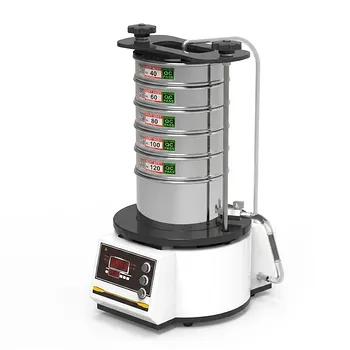
High Frequency Wet Three-Dimensional Vibrating Sieve Shaker for Dry and Wet Particle Size Analysis
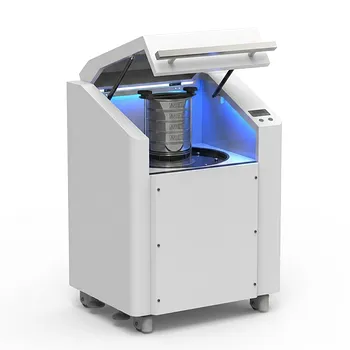
High Frequency Cabinet Type Three-Dimensional Rotary Vibrating Sieve Shaker for Dry Sieving and Particle Classification
三维电磁微量振动筛分仪

Stainless Steel Rotary Vibrating Sieve High Precision Circular Vibratory Separator Industrial Powder Grading Machine Multi Layer Sifting Equipment

Three Dimensional Rotary Vibrating Sieve
Tapping Oscillating Sieve Shaker for Dry and Wet Particle Size Analysis