Why is a high-precision lab hydraulic press necessary for Co-Al powder? Ensure Density Uniformity & Atomic Diffusion
Updated 5 months ago
The necessity of a high-precision laboratory hydraulic press for Co-Al powder compacts lies in its ability to dictate the thermodynamic and structural success of the material. It provides constant, uniform axial pressure to create green bodies with specific packing densities and minimal internal gradients. This precision ensures tight contact between cobalt and aluminum particles, which is the fundamental physical prerequisite for solid-solid atomic diffusion and the prevention of structural failure during subsequent thermal processing.
High-precision compaction is the critical link between raw mixed powder and a viable reactive material. By ensuring uniform density and atomic-level contact, the press enables stable thermal reactions and prevents the structural defects that typically lead to sample failure.
The Physics of Powder Consolidation
Achieving Optimal Packing Density
A high-precision press applies controlled axial pressure to cause the rearrangement and plastic flow of mechanically alloyed powder particles. This process forces the cobalt and aluminum particles into the highest possible packing density within the mold.
High precision ensures that the target density is reached repeatably, which is essential for consistent experimental results. Without this control, the material's inherent properties can be masked by inconsistencies in sample preparation.
Facilitating Solid-Solid Atomic Diffusion
For Co-Al mixed powders, the solid-solid atomic diffusion required for a thermal explosion reaction depends entirely on the proximity of the particles. The press provides the necessary force to ensure tight, uniform contact across the entire green body.
This intimate contact minimizes internal porosity, which is vital for efficient heat conduction once the reaction is initiated. Proper conduction ensures the stable propagation of the reaction wave throughout the material.
Structural Integrity and Defect Prevention
Eliminating Internal Density Gradients
One of the primary roles of high-precision equipment is the elimination of internal density gradients. When pressure is applied non-uniformly, different zones of the green body reach different levels of compaction.
These gradients are the leading cause of non-uniform shrinkage during the sintering process. By maintaining constant pressure, the press ensures the final product does not deform or crack as it undergoes high-temperature transformations.
Managing Mechanical Interlock and Porosity
Precise pressure control allows for the formation of a strong mechanical interlock between particles. This bonding force is what maintains the "green" shape before the material is fully sintered.
If the pressure is too low, the green body may collapse or develop severe cracks due to insufficient bonding. Conversely, high-precision control prevents the over-compaction that can lead to internal residual stresses.
Understanding the Trade-offs and Risks
The Risk of Pressure Imbalance
Inadequate pressure leads to high initial porosity, which disrupts the thermal kinetics of the Co-Al reaction and results in a fragile green body. This often leads to a "crumbling" effect where the sample cannot be handled or processed.
The Danger of Excessive Force
While high density is generally preferred, excessive pressure can lead to the fracture of reinforcement particles or the trapping of internal gases. High-precision presses mitigate this risk by allowing the user to find the "sweet spot" where density is maximized without damaging the material's microstructure.
Handling Sluggish Diffusion
In complex alloy systems, sluggish diffusion effects require extreme uniformity in the green body to ensure a successful reaction. A high-precision press is the only way to achieve the level of consistency needed to overcome these kinetic barriers.
Making the Right Choice for Your Goal
To achieve the best results with Co-Al mixed powders, your compaction strategy must align with your final material requirements.
- If your primary focus is thermal explosion stability: Prioritize a press that can maintain constant pressure to ensure maximum particle-to-particle contact for atomic diffusion.
- If your primary focus is geometric precision: Select a press with precision-engineered molds to eliminate density gradients and prevent non-uniform shrinkage during sintering.
- If your primary focus is microstructural integrity: Use controlled pressure holding to eliminate internal residual stresses and prevent the fracture of delicate alloy particles.
By mastering the precision of the compaction stage, you ensure that the subsequent heating and sintering phases reflect the material's true potential rather than the flaws of its preparation.
Summary Table:
| Key Factor | Role in Co-Al Compaction | Risk of Inadequate Precision |
|---|---|---|
| Packing Density | Enables solid-solid atomic diffusion | High porosity and sluggish reaction kinetics |
| Pressure Uniformity | Eliminates internal density gradients | Non-uniform shrinkage and sintering cracks |
| Axial Control | Facilitates particle rearrangement | Structural failure or mechanical instability |
| Stress Management | Prevents fracture of alloy particles | Internal residual stresses and gas trapping |
Elevate Your Material Research with Precision Compaction
Achieving the perfect green body requires more than just force—it requires precision. At [Company Name], we provide complete laboratory sample preparation solutions for material science, specializing in advanced powder processing and compaction equipment.
Whether you are working with Co-Al mixed powders or complex alloys, our extensive range of hydraulic presses—including Cold/Warm Isostatic Presses (CIP/WIP), standard lab presses, XRF pellet presses, hot presses, and vacuum hot presses—ensures uniform density and structural integrity every time.
Beyond compaction, we support your entire workflow with:
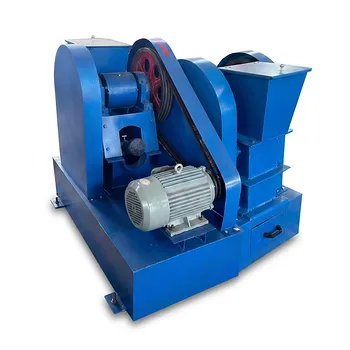
- Size Reduction: Jaw/roll crushers and liquid nitrogen cryogenic grinders.
- Milling & Mixing: Planetary ball, jet, and rotor mills; powder and defoaming mixers.
- Analysis Prep: Sieve shakers and vibratory test sieves.
Don't let inconsistent sample preparation compromise your data. Contact our experts today to find the ideal solution for your laboratory's specific needs!
References
- Junhua Zhang, Xueqin Kang. Microstructure and antioxidation performance of porous Co–Al intermetallics synthesized by thermal explosion reaction under 1 °C/min heating rate. DOI: 10.1038/s41598-025-07525-1
Mentioned Products
- 6-Ton Small Single-Punch Tablet Press — Laboratory Powder & Granule Tableting Equipment / Tablet Forming Machine
- 5 Ton Single Punch Tablet Press Laboratory Small Batch Production
- Manual Tablet Press with Dual Scale Pressure Gauge for Pharmaceutical Food Chemical Laboratory Sample Preparation
- 6 Ton Variable Frequency Single Punch Tablet Press
- High Shear Laboratory Emulsifier for Mixing and Homogenization
People Also Ask
- What is the function of a laboratory press in Cr-Ti alloy evaluation? Quantify Fracture Stress & Strength
- What is the function of a laboratory press in assessing the hydrophobic performance of modified vermiculite fillers?
- What is the core function of a laboratory press in the forming of ceramic filter element green bodies? Maximize Density.
- What is the function of a laboratory press in the preparation of ceramic feed rods? Master Density and Precision
- Why is vacuum sealing and flexible packaging necessary for Aluminum Titanate powders during CIP? Ensure Peak Density

Tech Team · PowderPreparation
Last updated on May 14, 2026
Related Products
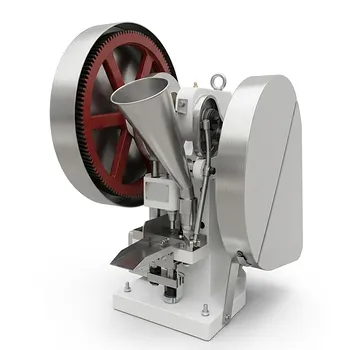
6-Ton Small Single-Punch Tablet Press — Laboratory Powder & Granule Tableting Equipment / Tablet Forming Machine
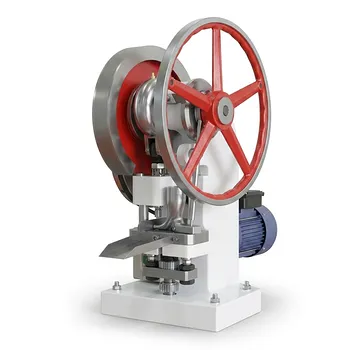
5 Ton Single Punch Tablet Press Laboratory Small Batch Production
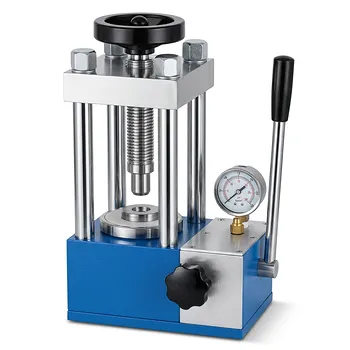
Manual Tablet Press with Dual Scale Pressure Gauge for Pharmaceutical Food Chemical Laboratory Sample Preparation
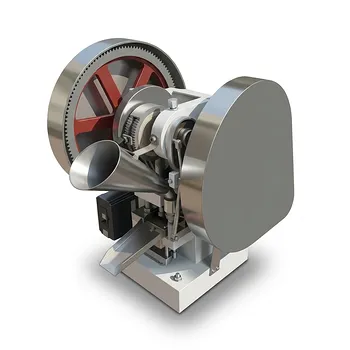
6 Ton Variable Frequency Single Punch Tablet Press
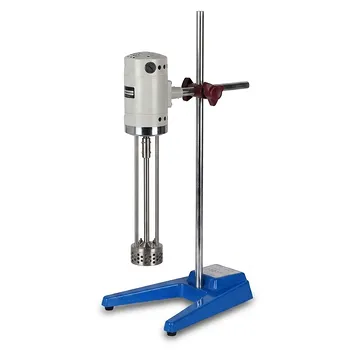
High Shear Laboratory Emulsifier for Mixing and Homogenization
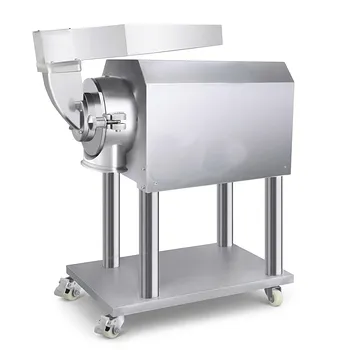
High Speed Small Laboratory Crusher for Dry Material Sample Preparation
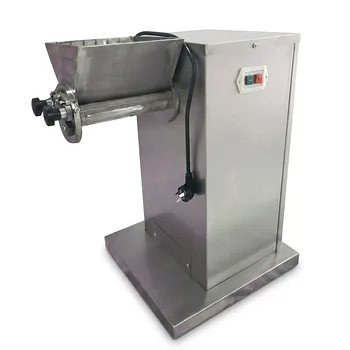
Small Laboratory Oscillating Granulator for Wet and Dry Granulation Processing
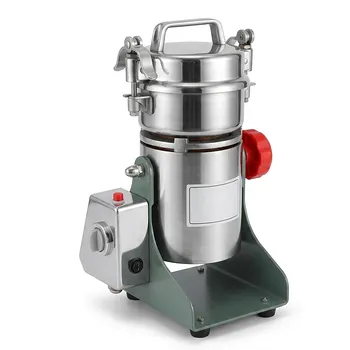
High Speed Swing Type Laboratory Pulverizer for Fine Powder Grinding and Sample Preparation