Why use a 300μm vibratory sieve shaker for plant ash? Maximize Pozzolanic Reactivity and Strength
Updated 5 months ago
The primary reason for using a 300-micrometer mesh in plant aggregate ash processing is to ensure the material meets the threshold for pozzolanic activity. This specific sizing removes coarse impurities and incompletely burned residues that compromise the chemical integrity of the ash. By isolating particles below this dimension, the ash can effectively participate in the chemical reactions required to strengthen concrete and refine its internal microstructure.
Core Takeaway: A high-precision vibratory shaker is essential for plant aggregate ash because it provides the standardized, repeatable mechanical energy needed to isolate particles under 300 micrometers. This specific size fraction is the scientific "tipping point" where ash transforms from a waste byproduct into a chemically active reinforcement material.
Optimizing Pozzolanic Reactivity
The 300 Micrometer Threshold
According to pozzolanic activity theory, ash particles must be smaller than 300 micrometers to effectively react within a cementitious matrix. Particles exceeding this size often act as inert fillers rather than chemical catalysts.
By using a 300-micrometer mesh, processors ensure that the resulting fine powder can enhance the material's microstructure. This leads to a more durable and chemically stable final product in construction applications.
Removal of Coarse Impurities
Plant aggregate ash often contains incompletely burned residues and organic impurities that are naturally larger than the desired fine ash. Multi-stage screening starting from 20 mm down to the micro-scale effectively strips these contaminants away.
Removing these coarse elements is critical for maintaining the purity of the ash. This ensures that the reinforcement material does not introduce weak points or "voids" into the concrete or alloy matrix.
Mechanical Superiority of Vibratory Screening
Consistency and Repeatability
An automatic vibratory sieve shaker provides standardized mechanical power that manual shaking cannot match. By maintaining a constant frequency—typically between 200 to 250 rpm—the equipment ensures the results are scientifically repeatable.
This consistency is vital for calculating the Fineness Modulus (FM) and determining the Particle Size Distribution (PSD). Accurate data allow engineers to verify if the grinding process has reached the optimal range for the intended application.
Protecting Material Integrity
Vibratory motion allows aggregate particles to bounce and penetrate the sieve layers naturally. Unlike manual rubbing, which can physically destroy fragile aggregates, the vibratory method preserves the natural shape and structure of the particles.
This "gentle" yet high-energy separation ensures that the physical properties of the plant ash remain intact. Preserving the aggregate structure is essential for maintaining predictable bonding strengths in composite materials.
Improving Microstructure and Bonding
Increasing Specific Surface Area
Finer particles have a significantly higher specific surface area relative to their volume. When plant ash is screened to a precise micro-scale, this increased surface area improves the interfacial bonding strength within the matrix.
This leads to a more uniform distribution of particles, which is critical for high-performance materials like aluminum alloy composites or high-strength concrete.
Optimizing Packing Density
Strictly controlling the grading curve of the aggregates allows for maximum packing density. When fine ash fills the microscopic gaps between larger aggregates, it creates a "dense filling" effect.
This physical optimization limits thermal shrinkage and protects the microstructural integrity of the material, especially in high-temperature environments.
Common Pitfalls and Trade-offs
The Risk of Oversized Particles
If the screening process fails and oversized particles remain, the liquid-solid ratio during chemical processing becomes inconsistent. These larger particles may lead to incomplete leaching or chemical reactions, leaving unreacted cores that weaken the material.
Challenges with Excessive Fineness
While fineness is generally preferred for reactivity, excessively fine particles can create subsequent filtration difficulties. In some metallurgical or chemical processes, "over-grinding" leads to a sludge-like consistency that is difficult to manage.
Limitations of Manual Screening
Relying on manual labor for micro-mesh screening often results in clogged sieves and inaccurate grading. Without the high-precision vibration of a machine, particles smaller than 300 micrometers often get "trapped" on the mesh, leading to significant material waste.
How to Apply This to Your Project
Selecting the Right Approach
- If your primary focus is Concrete Strength: Prioritize the 300-micrometer screening to ensure maximum pozzolanic reactivity and microstructure refinement.
- If your primary focus is Composite Reinforcement: Target even finer fractions (such as 6.0 µm) to increase specific surface area and improve interfacial bonding.
- If your primary focus is Process Stability: Use automated vibratory shakers to maintain a consistent Particle Size Distribution, which prevents issues with leaching and liquid-solid ratios.
- If your primary focus is Quality Control: Utilize the shaker to calculate the P80 index and Fineness Modulus to verify the efficiency of your grinding equipment.
By mastering the precision of vibratory screening, you transform raw plant aggregate ash into a high-value, high-performance engineering material.
Summary Table:
| Feature | Specification | Impact on Plant Ash Processing |
|---|---|---|
| Mesh Size | 300 Micrometers | Ensures particles reach the pozzolanic activity threshold. |
| Motion Type | Vibratory (200-250 rpm) | Preserves fragile aggregate structure and prevents clogging. |
| Operation | High-Precision Automatic | Guarantees repeatable Particle Size Distribution (PSD). |
| Primary Goal | Impurity Removal | Eliminates unburned residues that weaken concrete matrices. |
| Key Outcome | Increased Surface Area | Enhances interfacial bonding strength in composite materials. |
Elevate Your Material Science Research with Precision Sample Preparation
Achieving the perfect 300-micrometer fraction for plant aggregate ash requires standardized, repeatable mechanical energy. At Our Laboratory Solutions, we provide complete sample preparation equipment designed for the rigorous demands of material science and powder processing.
Our extensive product line includes:
- Sieving Excellence: Vibratory and air-jet sieve shakers with high-precision meshes.
- Advanced Milling: Planetary ball mills, jet mills, and cryogenic grinders for sub-micron fineness.
- Compaction Power: A full spectrum of hydraulic presses, including Cold/Warm Isostatic Presses (CIP/WIP), vacuum hot presses, and XRF pellet presses.
- Processing Tools: Jaw crushers, powder mixers, and defoaming mixers.
Transform your raw byproducts into high-value engineering materials. Contact our technical experts today to find the ideal solution for your laboratory!
References
- Adrian Alexandru Şerbănoiu, Bogdan Vasile Șerbănoiu. Corn Cob Ash versus Sunflower Stalk Ash, Two Sustainable Raw Materials in an Analysis of Their Effects on the Concrete Properties. DOI: 10.3390/ma15030868
Mentioned Products
- Vibratory Sieve Shaker Electromagnetic 3D Motion Powder Particle Size Analyzer for Dry and Wet Sieving
- Dry Three Dimensional Vibratory Sieve Shaker
- Small Laboratory Vibratory Sieve Shaker for Powder Gradation and Particle Size Analysis
- Stainless Steel Laboratory Vibratory Test Sieve Shaker
- Laboratory Vibratory Test Sieve Shaker for Precision Particle Size Analysis and Powder Grading
People Also Ask
- How does a vibratory sieve shaker contribute to optimizing the performance of activated carbon? Enhance Adsorption Precision
- Why is a laboratory vibratory sieve shaker necessary for processing magnesium-based borate precursor powders? Boost Activity
- Why use a vibratory sieve shaker to verify coarse aggregate grading in rubberized concrete? Ensure Structural Integrity
- What function do vibratory sieve shakers and standard test sieves serve in the preparation of adsorbents? Key Guide
- What role does a vibratory sieve shaker play in the particle size analysis of ground corn products? Enhance QC Precision

Tech Team · PowderPreparation
Last updated on May 14, 2026
Related Products
Vibratory Sieve Shaker Electromagnetic 3D Motion Powder Particle Size Analyzer for Dry and Wet Sieving
Dry Three Dimensional Vibratory Sieve Shaker
Small Laboratory Vibratory Sieve Shaker for Powder Gradation and Particle Size Analysis
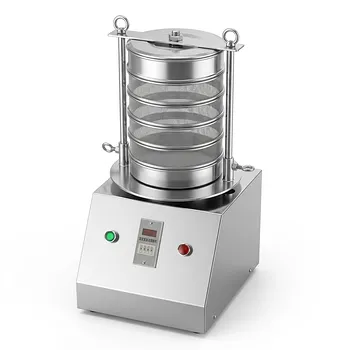
Stainless Steel Laboratory Vibratory Test Sieve Shaker
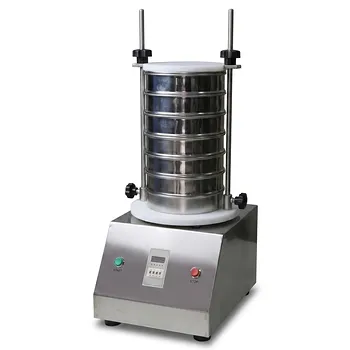
Laboratory Vibratory Test Sieve Shaker for Precision Particle Size Analysis and Powder Grading
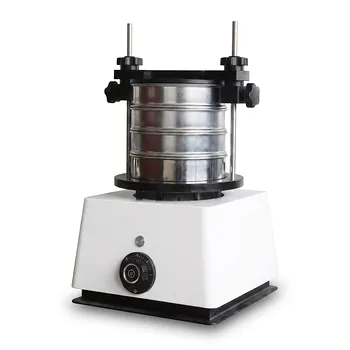
Small Laboratory Vibrating Sieve Shaker for Precise Particle Size Analysis
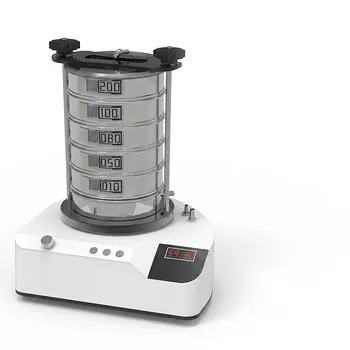
Heavy Duty Dry Three Dimensional Vibratory Sieve Shaker for Particle Separation
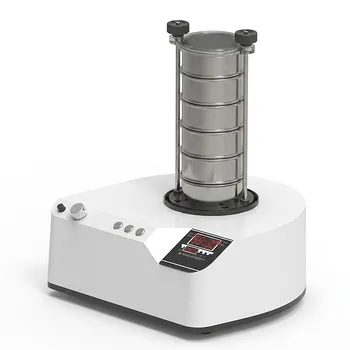
三维电磁微量振动筛分仪
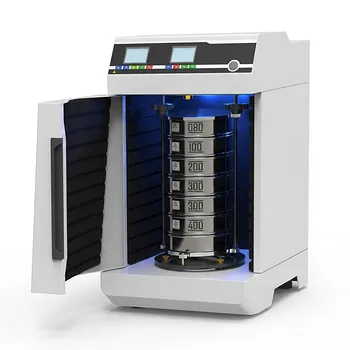
Laboratory Dry and Wet Three Dimensional Vibratory Sieve Shaker for Particle Analysis
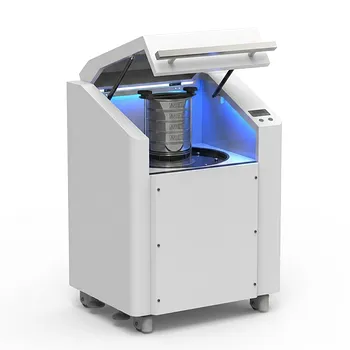
High Frequency Cabinet Type Three-Dimensional Rotary Vibrating Sieve Shaker for Dry Sieving and Particle Classification
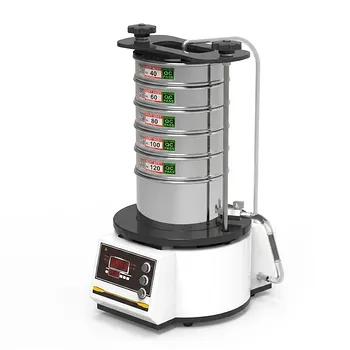
High Frequency Wet Three-Dimensional Vibrating Sieve Shaker for Dry and Wet Particle Size Analysis
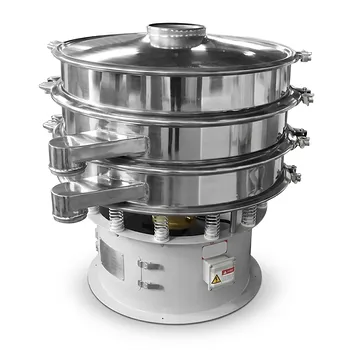
Three Dimensional Rotary Vibrating Sieve
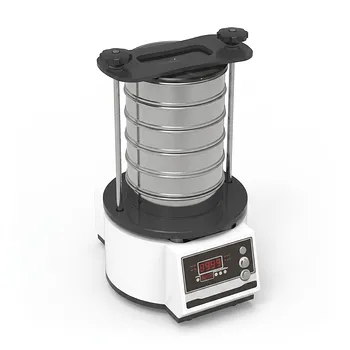
Tapping Oscillating Sieve Shaker for Dry and Wet Particle Size Analysis
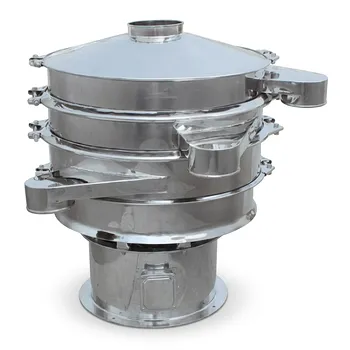
Stainless Steel Rotary Vibrating Sieve High Precision Circular Vibratory Separator Industrial Powder Grading Machine Multi Layer Sifting Equipment
Vibratory Superfine Grinder for Ultra Fine Laboratory Powder Milling
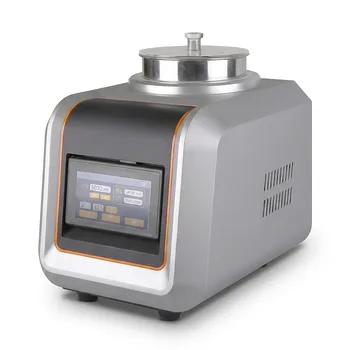
Laboratory Air Jet Sieving Machine for Fine Powder Particle Size Analysis and Deagglomeration
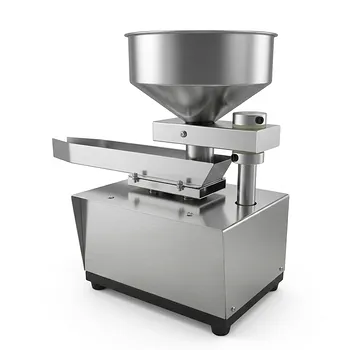
Automatic Vibrating Powder Feeder for Laboratory Material Processing Precision Vibratory Hopper Feeder for Granular and Powder Material Handling Industrial Grade Vibrating Tray Feeder for Consistent Material Sample Preparation
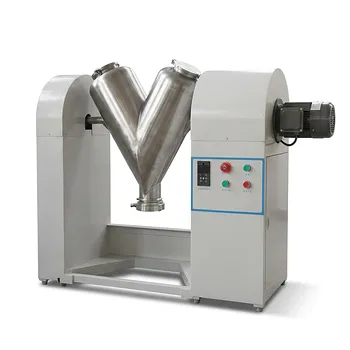
V-Type Powder Mixer for Uniform Blending of Dry Powders and Granules