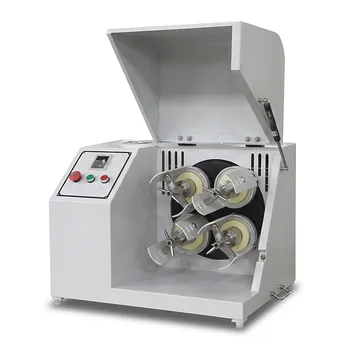
Why is a high-energy planetary ball mill with zirconia grinding media necessary for refining LSM particles? Key Guide
Updated 5 months ago
Refining LSM particles requires a high-energy planetary ball mill and zirconia media to achieve sub-micron scales while preventing contamination.
This specific combination is essential because sintered La0.7Sr0.3MnO3 (LSM) is an exceptionally hard ceramic that resists standard grinding methods. By utilizing powerful centrifugal impact and shear forces, the mill can reduce bulk material to approximately 1 μm, while the high wear resistance of zirconia ensures the electrode material's chemical purity remains intact for critical applications like fuel cell production.
To achieve the high performance required for electrode materials, LSM must be refined to a sub-micron scale without the introduction of metallic or alumina impurities. A high-energy planetary mill provides the necessary kinetic energy to fracture hard ceramic blocks, while zirconia media offers the durability to maintain strict chemical integrity.
The Mechanics of Particle Refinement
Harnessing Centrifugal and Impact Forces
A high-energy planetary ball mill operates through the simultaneous revolution and rotation of the grinding jars. This motion generates intense centrifugal forces that propel the grinding media with high kinetic energy.
The resulting impact and shear forces are significantly more powerful than those found in traditional vibratory or tumbling mills. This energy is necessary to overcome the lattice energy of sintered ceramic materials.
Breaking Down Hard Ceramic Blocks
LSM is typically synthesized through solid-state reactions that result in hard, dense ceramic blocks or large agglomerates. These structures must be pulverized to increase their specific surface area.
The high-energy environment ensures that these blocks are crushed efficiently. Without this intensity, the material would remain too coarse for effective thin-film deposition or sintering.
The Critical Role of Zirconia Media
Superior Hardness and Density
Zirconia (YTZ) grinding balls are selected for their extreme hardness and high density. These properties allow the media to transfer maximum kinetic energy to the LSM particles during every collision.
Using 2 mm diameter zirconia balls provides a high frequency of contact points. This ensures a uniform particle size distribution and allows the system to reach the sub-micron level (~1 μm) in a shorter timeframe.
Preserving Chemical and Electrical Purity
LSM is highly sensitive to impurities, which can degrade its electrical conductivity and catalytic activity. Traditional metal or alumina media wear down quickly, leaching contaminants into the powder.
Zirconia exhibits an exceptionally low wear rate and high chemical inertness. This prevents the introduction of foreign debris, ensuring the refined LSM maintains its intended electrochemical properties.
Strategic Benefits for LSM Applications
Achieving Sub-Micron Precision
For electrode materials, the median particle size (d50) directly impacts the active surface area available for electrochemical reactions. A planetary mill allows for precise control over this size range.
Refining particles to approximately 1 μm ensures that the LSM can be processed into high-quality inks or slurries. This leads to more uniform and higher-performing electrode layers.
Enhancing Sintering Activity
Extremely fine particles possess high surface energy, which acts as a driving force during the sintering process. This facilitates faster mass migration and lower sintering temperatures.
By refining LSM to sub-micron levels, manufacturers can achieve high-density ceramics with low porosity. This is critical for maintaining structural integrity and long-term stability in solid oxide fuel cells (SOFCs).
Understanding the Trade-offs
Heat Generation and Management
The high kinetic energy of planetary milling generates significant frictional heat. If not managed through wet grinding or intermittent milling cycles, this heat can potentially alter the phase purity of the LSM.
Cost and Media Maintenance
Zirconia media and containers are significantly more expensive than hardened steel or alumina alternatives. However, their longevity and purity benefits typically outweigh the initial capital expenditure in high-precision technical applications.
How to Apply This to Your Project
Understanding the requirements for LSM refinement is the first step toward optimizing your material processing workflow.
- If your primary focus is maximizing electrochemical performance: Prioritize the use of high-purity YTZ zirconia media to eliminate any risk of metallic contamination.
- If your primary focus is rapid size reduction: Use high-speed planetary milling with a higher media-to-powder ratio to increase collision frequency.
- If your primary focus is manufacturing scalability: Implement wet grinding techniques to prevent particle re-agglomeration and improve the efficiency of the milling cycle.
By aligning your milling parameters with the inherent hardness of LSM, you ensure a consistent, high-purity material ready for advanced technical applications.
Summary Table:
| Component | Key Mechanism | Benefit for LSM Processing |
|---|---|---|
| Planetary Ball Mill | High-energy impact & shear | Efficiently fractures hard, sintered ceramic blocks |
| Zirconia Media | Extreme hardness & density | Maximizes energy transfer with minimal wear |
| YTZ Material | Chemical inertness | Prevents metallic or alumina contamination |
| Wet Grinding | Thermal management | Prevents re-agglomeration & phase changes |
| Final Powder | Sub-micron refinement | Enhances sintering activity & surface area |
Achieve Superior Material Purity and Precision
Refining hard ceramics like LSM to sub-micron scales requires specialized equipment that balances high kinetic energy with strict contamination control. [Brand Name] provides complete laboratory sample preparation solutions for material science, specializing in advanced powder processing and compaction equipment.
Our extensive product lines are designed to optimize your workflow:
- Milling & Grinding: High-energy planetary ball mills, jet mills, sand/bead mills, and liquid nitrogen cryogenic grinders.
- Crushing & Sizing: Jaw/roll crushers and vibratory/air-jet sieve shakers with precision meshes.
- Mixing: High-performance powder mixers and defoaming mixers.
- Compaction: A full spectrum of hydraulic presses, including Cold/Warm Isostatic Presses (CIP/WIP), XRF pellet presses, and vacuum hot presses.
Whether you are developing solid oxide fuel cells or high-performance ceramics, we have the expertise to help you maintain strict chemical integrity. Contact our experts today to find the ideal solution for your laboratory requirements!
References
- 直登 染谷. CeO 2 /La 0.7 Sr 0.3 MnO 3 ヘテロ凝集体からの多孔質電極の作製と YSZ 電解質/電極界面抵抗に及ぼす熱処理の影響. DOI: 10.15002/00013661
Mentioned Products
- High Energy Planetary Ball Mill for Nano Scale Grinding and Mechanical Alloying
- High Energy Laboratory Planetary Ball Mill for Nano Grinding and Material Science Sample Preparation
- High Energy Laboratory Planetary Ball Mill for Nano Grinding and Colloidal Mixing of Hard and Brittle Materials
- High Energy Omnidirectional Planetary Ball Mill 16L
- High Energy Omnidirectional Planetary Ball Mill 20L
People Also Ask
- Why is a high-energy planetary ball mill used for nano-milling As4Se3? Achieve Expert Structural Transformation
- What role do high-energy planetary ball mills play in FDM composite filament preparation? Optimize Material Performance
- What is the role of a high-energy planetary ball mill in the exfoliation of modified WSe2? Achieve Nano-Precision
- What is the function of a planetary ball mill in glass-ceramic sintering? Optimize Reactivity and Uniformity
- What is the role of a high-energy planetary ball mill in the preparation of high-performance nano-ceramics? Key Guide

Tech Team · PowderPreparation
Last updated on May 14, 2026
Related Products
High Energy Planetary Ball Mill for Nano Scale Grinding and Mechanical Alloying
High Energy Laboratory Planetary Ball Mill for Nano Grinding and Material Science Sample Preparation
High Energy Laboratory Planetary Ball Mill for Nano Grinding and Colloidal Mixing of Hard and Brittle Materials
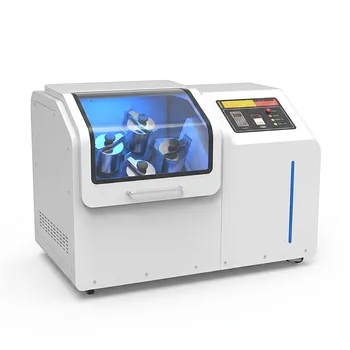
High Energy Omnidirectional Planetary Ball Mill 16L
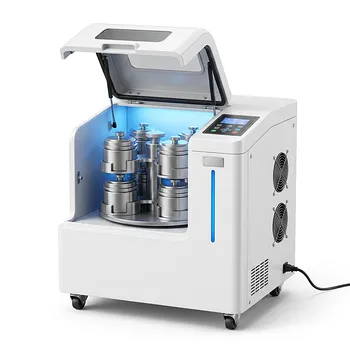
High Energy Omnidirectional Planetary Ball Mill 20L
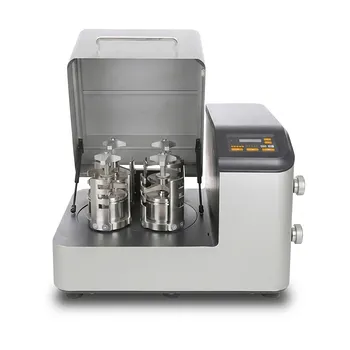
High Energy Planetary Ball Mill for Nano Scale Grinding and Colloidal Mixing in Material Science Research
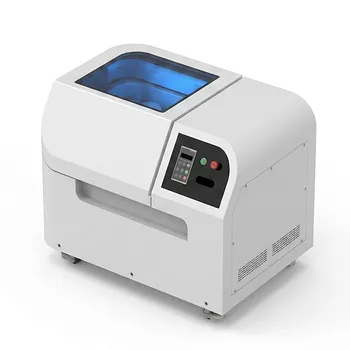
8L Planetary Ball Mill for Laboratory Grinding and Sample Preparation
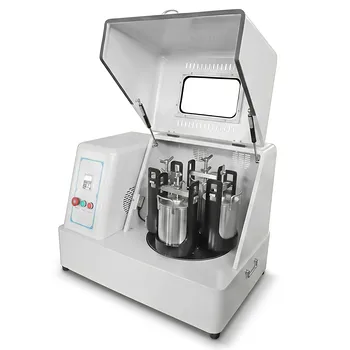
Vertical Square Planetary Ball Mill for Laboratory Sample Preparation and Nanoscale Grinding
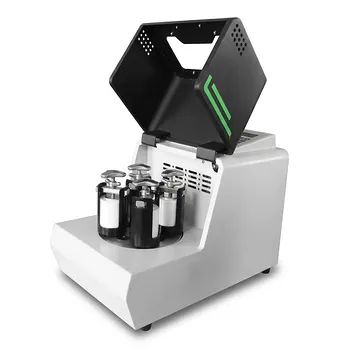
Miniature Planetary Ball Mill with Vacuum Grinding and High Efficiency for Laboratory Sample Preparation
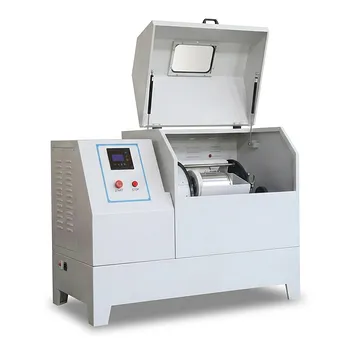
Heavy Duty Horizontal Planetary Ball Mill for Efficient Industrial Grinding and Sample Preparation
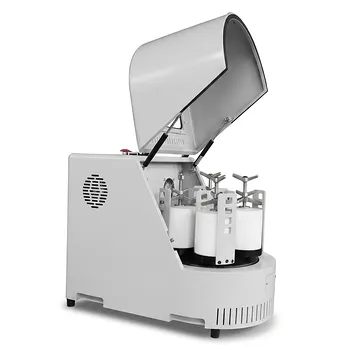
Vertical Semi Circular Planetary Ball Mill for Laboratory Precision Grinding
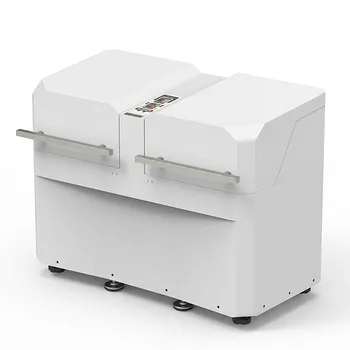
Dual Station Planetary Ball Mill 24L

360° Rotating Omnidirectional Laboratory Planetary Ball Mill for Homogeneous Ultra-Fine Grinding and Mixing
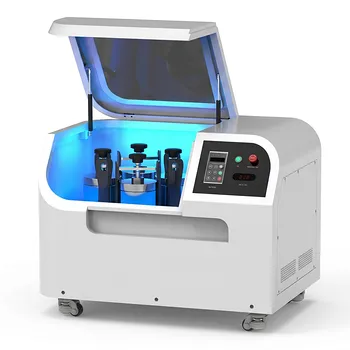
Planetary Ball Mill 12L
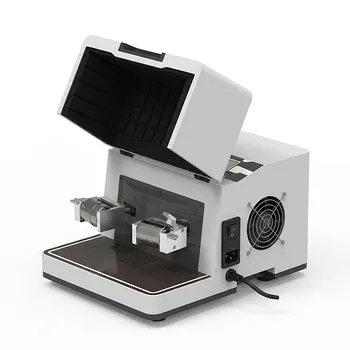
High Energy Hybrid Vibratory Ball Mill for Grinding Mixing and Cell Disruption

Vertical Production Planetary Ball Mill for High Throughput Powder Processing
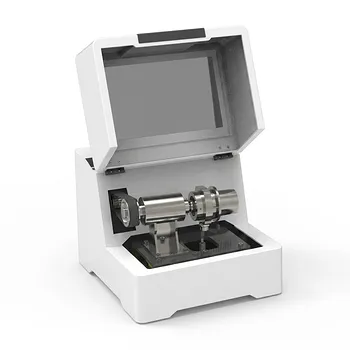
Single Tank High Energy Vibratory Ball Mill for Laboratory Grinding and Mixing
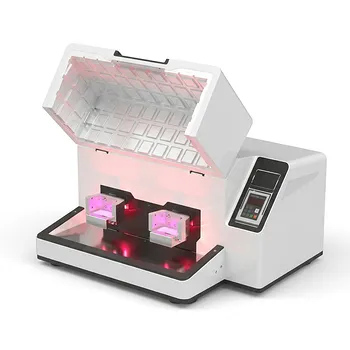
Nano High Energy Vibratory Ball Mill with Heating and Temperature Control
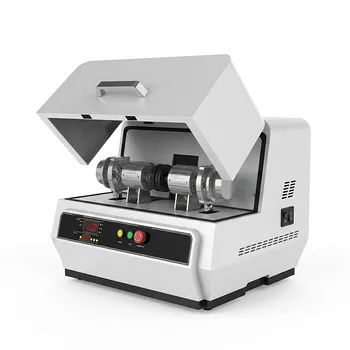
Dual Jar High Energy Vibratory Ball Mill