Why is a high-efficiency vibratory sieve shaker used in soil aggregate fractionation? Ensure Scientific Accuracy
Updated 4 months ago
Precision in soil aggregate fractionation is impossible without standardized mechanical force. A high-efficiency vibratory sieve shaker is used to automate the separation of soil into specific particle size ranges—such as macroaggregates and microaggregates—by applying consistent vibration frequencies and durations. This automation ensures the scientific accuracy and reproducibility of data, which is essential for calculating critical soil health indices like the Mean Weight Diameter (MWD).
The vibratory sieve shaker transforms soil fractionation from a subjective manual task into a standardized scientific process. It protects the physical integrity of soil structures while ensuring that data across different experimental groups is directly comparable and mathematically sound.
Standardizing the Physics of Separation
Consistent Mechanical Energy
Manual sieving relies on human effort, which is inherently inconsistent and leads to high margins of error. A vibratory shaker provides standardized and repeatable mechanical power, often operating at specific frequencies (e.g., 50 Hz) and precise amplitudes.
This consistency ensures that every sample in a study is treated with the exact same amount of energy. By eliminating the random variables of manual shaking, researchers can confidently compare particle size distributions across different treatment groups.
Three-Dimensional Movement
High-efficiency shakers utilize three-dimensional vibratory force to move soil samples. This 3D motion ensures that soil particles "jump" sufficiently on the sieve mesh, allowing them to find and pass through the corresponding apertures effectively.
This movement prevents the mesh from clogging, a common issue in manual sieving. It allows for high-precision separation of grades ranging from large macroaggregates down to microaggregates smaller than 63μm.
Protecting Sample Integrity and Accuracy
Minimizing Physical Destruction
Soil aggregates are fragile structures that can be easily broken by the physical rubbing or aggressive handling often associated with manual methods. The vibratory shaker is designed to be gentle yet efficient.
The equipment encourages soil samples to delaminate along their natural structural planes. This preserves the original state of the aggregates, ensuring the resulting data reflects the soil's true physical properties rather than damage caused by the experiment itself.
High-Resolution Fractionation
Accurate research requires separating soil into specific, narrow ranges, such as 1–2mm, 250μm–1mm, and 63–250μm. The shaker drives multiple layers of precision test sieves simultaneously to achieve this high-resolution grading.
This automated stacking process allows for the precise determination of mass proportions for each size class. These measurements are the foundation for evaluating how different tillage or land-management practices impact soil structure.
Quantitative Foundations for Soil Research
Calculating Mean Weight Diameter (MWD)
One of the primary goals of aggregate fractionation is to calculate the Mean Weight Diameter (MWD). This index is a mathematical representation of the overall soil structure and its resistance to erosion.
Because the vibratory shaker provides precise mass data for each fraction, the resulting MWD calculations are highly reliable. This allows scientists to quantify how different environmental factors physically damage or improve the soil.
Efficiency for High Volumes
In large-scale environmental studies, processing hundreds of samples manually is both time-prohibitive and prone to fatigue-related errors. The vibratory shaker significantly reduces screening time while maintaining consistency.
This efficiency allows for the standardization of soil particle gradation analysis across massive datasets. It ensures that the first sample of the day is processed with the same rigor as the last.
Understanding the Trade-offs
The Risk of Over-Sieving
While automation provides consistency, setting the vibration duration for too long can eventually lead to the physical breakdown of fragile aggregates. Researchers must determine the optimal duration to achieve separation without inducing mechanical wear.
Equipment Calibration Requirements
The accuracy of the results is entirely dependent on the integrity of the sieve mesh and the shaker's calibration. Dented or worn sieves, or a shaker with inconsistent amplitude, can lead to systematic errors that compromise the entire dataset.
Sample Volume Constraints
Overloading a sieve stack can impede the "jumping" motion of the particles, leading to poor separation. Users must strictly adhere to sample weight limits to ensure that every particle has a fair opportunity to interact with the sieve apertures.
How to Apply This to Your Project
Selecting the Right Approach
- If your primary focus is scientific reproducibility: Use a vibratory shaker with programmable frequency and duration to ensure every trial is identical.
- If your primary focus is aggregate health (MWD): Prioritize lower amplitudes and 3D vibration patterns to prevent the artificial destruction of natural soil structures.
- If your primary focus is high-throughput environmental sampling: Utilize automated sieve stacks to process large volumes quickly while maintaining standardized grading curves.
By replacing manual effort with standardized mechanical vibration, you ensure that your soil data is a true reflection of environmental conditions rather than experimental variability.
Summary Table:
| Feature | Benefit for Soil Fractionation |
|---|---|
| 3D Vibratory Force | Ensures high-precision grading and prevents mesh clogging. |
| Standardized Amplitude | Eliminates manual error for consistent, repeatable mechanical energy. |
| Multi-Layer Stacking | Enables high-resolution separation of macro and microaggregates. |
| Gentle Delamination | Preserves fragile soil structures and physical integrity. |
| Automated Timing | Optimizes screening duration to prevent over-sieving and wear. |
Optimize Your Soil Research with Precision Engineering
Achieving repeatable results in soil aggregate fractionation requires equipment designed for accuracy and durability. At our core, we provide complete laboratory sample preparation solutions for material science, specializing in high-performance powder processing and compaction equipment.
Our extensive product range includes:
- Sieve Shakers & Sieves: Professional vibratory and air-jet sieve shakers with a wide variety of test sieves and meshes.
- Milling & Grinding: Planetary ball mills, jet mills, disc mills, rotor mills, and liquid nitrogen cryogenic grinders.
- Crushing & Mixing: Jaw/roll crushers, powder mixers, and high-efficiency defoaming mixers.
- Hydraulic Presses: A full spectrum including Cold/Warm Isostatic Presses (CIP/WIP), standard lab presses, and vacuum hot presses.
Whether you are calculating MWD for environmental studies or processing advanced materials, our equipment delivers the reliability you need. Contact us today to discuss your specific application and find the perfect solution for your laboratory.
References
- Abiodun Ojo Olakayode, Fatai Oladapo Tijani. Agricultural Land-Use Effects on Soil Cation Exchange Capacity, Organic Carbon and Total Nitrogen in Soil Aggregate Sized Fractions in Ile-Ife, Nigeria. DOI: 10.5281/zenodo.4738482
Mentioned Products
- Vibratory Sieve Shaker Electromagnetic 3D Motion Powder Particle Size Analyzer for Dry and Wet Sieving
- Laboratory Dry and Wet Three Dimensional Vibratory Sieve Shaker for Particle Analysis
- Stainless Steel Laboratory Vibratory Test Sieve Shaker
- Heavy Duty Dry Three Dimensional Vibratory Sieve Shaker for Particle Separation
- Dry Three Dimensional Vibratory Sieve Shaker
People Also Ask
- How does a vibratory sieve shaker contribute to optimizing the performance of activated carbon? Enhance Adsorption Precision
- Why is a laboratory vibratory sieve shaker necessary for processing magnesium-based borate precursor powders? Boost Activity
- Why use a vibratory sieve shaker to verify coarse aggregate grading in rubberized concrete? Ensure Structural Integrity
- What function do vibratory sieve shakers and standard test sieves serve in the preparation of adsorbents? Key Guide
- What role does a vibratory sieve shaker play in the particle size analysis of ground corn products? Enhance QC Precision

Tech Team · PowderPreparation
Last updated on Jun 03, 2026
Related Products
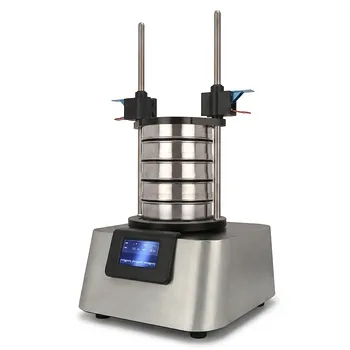
Vibratory Sieve Shaker Electromagnetic 3D Motion Powder Particle Size Analyzer for Dry and Wet Sieving
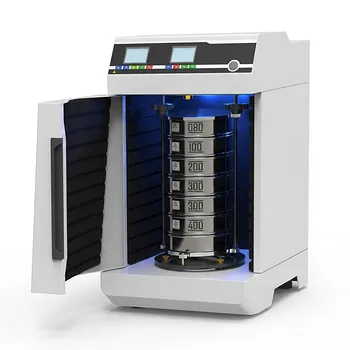
Laboratory Dry and Wet Three Dimensional Vibratory Sieve Shaker for Particle Analysis
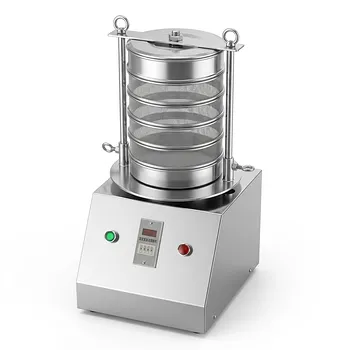
Stainless Steel Laboratory Vibratory Test Sieve Shaker

Heavy Duty Dry Three Dimensional Vibratory Sieve Shaker for Particle Separation
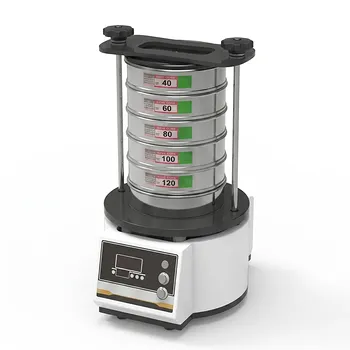
Dry Three Dimensional Vibratory Sieve Shaker
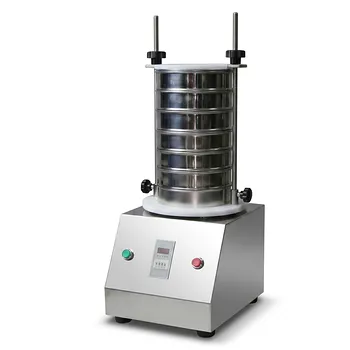
Small Laboratory Vibratory Sieve Shaker for Powder Gradation and Particle Size Analysis
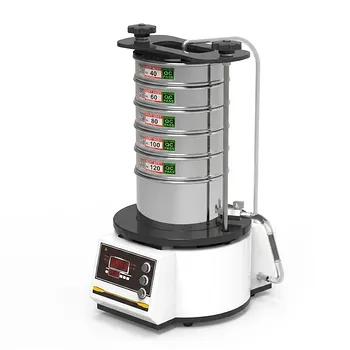
High Frequency Wet Three-Dimensional Vibrating Sieve Shaker for Dry and Wet Particle Size Analysis

Small Laboratory Vibrating Sieve Shaker for Precise Particle Size Analysis
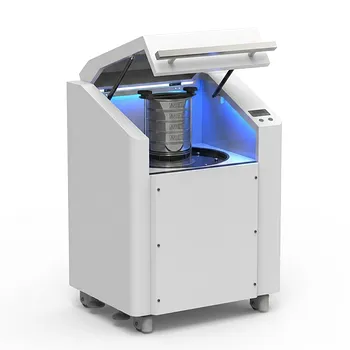
High Frequency Cabinet Type Three-Dimensional Rotary Vibrating Sieve Shaker for Dry Sieving and Particle Classification

Laboratory Vibratory Test Sieve Shaker for Precision Particle Size Analysis and Powder Grading
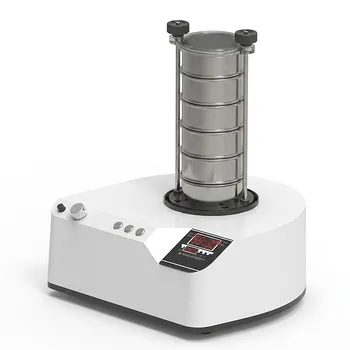
三维电磁微量振动筛分仪
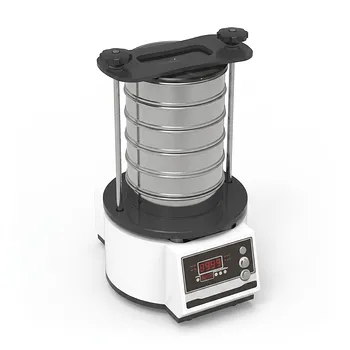
Tapping Oscillating Sieve Shaker for Dry and Wet Particle Size Analysis

Stainless Steel Rotary Vibrating Sieve High Precision Circular Vibratory Separator Industrial Powder Grading Machine Multi Layer Sifting Equipment

Three Dimensional Rotary Vibrating Sieve
Small Vibrating Ultrafine Grinder for Traditional Chinese Medicine
Automatic Vibrating Powder Feeder for Laboratory Material Processing Precision Vibratory Hopper Feeder for Granular and Powder Material Handling Industrial Grade Vibrating Tray Feeder for Consistent Material Sample Preparation
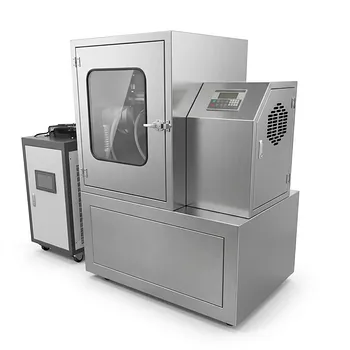
Vibratory Superfine Grinder for Ultra Fine Laboratory Powder Milling
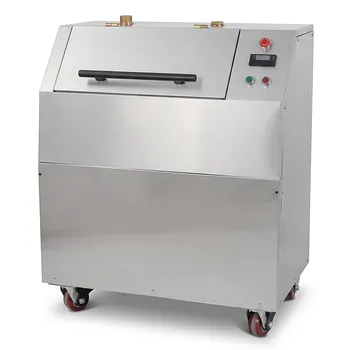
Vibratory Disc Mill for Rapid Fine Grinding and High Throughput Sample Preparation of Hard and Brittle Materials