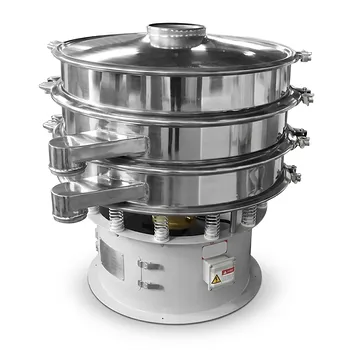
Why is a dual vibration motor configuration recommended for precision sieving? Enhance Particle Movement & Accuracy.
Updated 4 months ago
The dual vibration motor configuration is the industry standard for precision sieving because it maximizes particle acceleration and creates multi-dimensional movement patterns. This setup forces fine powders to move both vertically and horizontally, significantly increasing the frequency of contact between the particles and the sieve mesh. Consequently, this configuration reduces sieving residence time and prevents the agglomeration of fine particles, ensuring a highly accurate and repeatable classification process.
A dual vibration motor setup optimizes particle kinematics by providing uniform energy distribution across the sieve surface. This multi-axial motion is essential for overcoming the cohesive forces of fine powders, ensuring that every particle has the maximum opportunity to pass through the mesh openings.
Enhancing Particle Kinematics for Maximum Efficiency
The Advantage of Multi-Axial Movement
In a dual-motor configuration, motors are typically arranged at specific angles to generate complex vibration vectors. Unlike single-motor systems that may only provide vertical displacement, dual motors cause particles to jump vertically and move horizontally across the sieve surface.
This combined motion is critical for fine powders, as it prevents the material from simply "bouncing" in place. By encouraging horizontal travel, the system ensures that particles are constantly redistributed across the entire sieve surface, utilizing the full available mesh area.
Maximizing Average Acceleration
Precision sieving relies on the ability to overcome the surface tension and static charges often found in fine powders. Dual motors significantly increase the average maximum acceleration compared to single-motor setups.
Higher acceleration provides the energy necessary for particles to break away from one another and the sieve walls. This energy is particularly vital in low-gravity environments or specialized lab conditions where natural settling is inhibited.
Managing Fine Powder Challenges
Preventing Particle Agglomeration
Fine powders are prone to agglomeration, where small particles clump together to form larger masses that cannot pass through the mesh. The intense, high-frequency vibration of a dual-motor system provides the mechanical energy required to shear these clusters apart.
By maintaining particles in a discrete state, the equipment ensures that the particle size distribution remains narrow and accurate. This is essential for applications like stir casting, where oversized agglomerates could cause internal stress concentration in composite materials.
Reducing Sieving Residence Time
Efficiency in a laboratory setting is measured by how quickly a representative sample can be processed without sacrificing accuracy. The increased contact frequency between particles and the sieve openings effectively shortens residence time.
Faster processing reduces the window for environmental factors, such as humidity, to affect the powder’s characteristics. This results in a more reliable calculation of the Fineness Modulus (FM) and other critical quality metrics.
Ensuring Experimental Reproducibility
Uniform Energy Distribution
A primary challenge in manual or single-motor sieving is the "dead zone" where vibration energy is insufficient to move particles. High-precision dual-motor shakers provide constant and uniform mechanical vibration energy across every square millimeter of the test sieve.
This uniformity ensures that results are not dependent on where the powder was initially placed on the mesh. For researchers, this means that experiments can be repeated with high consistency, eliminating particle size variance as a potential error source.
Impact on Chemical and Physical Properties
Strict particle size classification ensures that raw materials maintain a consistent surface-area-to-volume ratio. This consistency is vital for controlling chemical reaction rates and ensuring the structural integrity of the final product.
By using dual motors to achieve a precise cut-off at specific mesh sizes (such as 73 micrometers), engineers can guarantee that the reinforcement phases in materials are distributed evenly. This leads to more predictable performance in high-stress industrial applications.
Understanding the Trade-offs
Mechanical Complexity and Synchronization
The most significant trade-off for a dual-motor system is the requirement for precise synchronization. If the motors are not perfectly phased, they can create destructive interference, leading to uneven "rattling" rather than productive vibration.
Maintenance and Calibration Requirements
Dual-motor systems involve more moving parts and electronic controls than simpler alternatives. This necessitates a more rigorous calibration schedule to ensure the vibration vectors remain optimal for high-precision grading results.
How to Apply This to Your Project
Making the Right Choice for Your Goal
To determine if a dual-motor configuration is necessary for your specific application, consider the following recommendations:
- If your primary focus is high-volume repeatability: A dual-motor vibratory shaker is essential to ensure that automated results are more accurate and consistent than manual shaking.
- If your primary focus is preventing material defects: Use a dual-motor setup to eliminate agglomerates that could cause internal stress or uneven distribution in composite materials.
- If your primary focus is rapid chemical analysis: Opt for dual-motor configurations to shorten residence time and maintain a narrow particle size distribution for predictable reaction rates.
By leveraging the multi-axial acceleration of a dual-motor system, you ensure that your particle classification is a controlled, scientific process rather than a variable in your experiment.
Summary Table:
| Feature | Single Motor Configuration | Dual Motor Configuration |
|---|---|---|
| Movement Pattern | Primarily vertical displacement | Multi-axial (Vertical + Horizontal) |
| Particle Acceleration | Moderate | Maximum average acceleration |
| Surface Utilization | Potential 'dead zones' | Uniform energy across entire mesh |
| Agglomeration Control | Limited shearing force | High-frequency shearing of clusters |
| Sieving Efficiency | Longer residence time | Rapid processing & higher throughput |
| Consistency | Variable based on placement | High experimental reproducibility |
Optimize Your Material Analysis with Expert Solutions
Precision sieving is the foundation of quality material science. Providing complete laboratory sample preparation solutions, we specialize in high-performance powder processing and compaction equipment designed to eliminate variables in your experiments.
Our extensive product lines include:
- Sieve Shakers & Meshes: High-precision vibratory and air-jet sieve shakers.
- Milling & Grinding: Planetary ball mills, jet mills, and liquid nitrogen cryogenic grinders.
- Powder Processing: Advanced powder mixers and defoaming mixers.
- Compaction Equipment: A full spectrum of hydraulic presses, including Cold/Warm Isostatic Presses (CIP/WIP), XRF pellet presses, and vacuum hot presses.
Don't let particle agglomeration or inconsistent vibration compromise your research outcomes. Contact our specialists today to discuss how our specialized solutions can enhance your laboratory's efficiency and accuracy!
References
- Gunter H. Just, Katherine Smith. Development and test of a Lunar Excavation and Size Separation System (LES<sup>3</sup>) for the LUVMI‐X rover platform. DOI: 10.1002/rob.22050
Mentioned Products
- Vibratory Sieve Shaker Electromagnetic 3D Motion Powder Particle Size Analyzer for Dry and Wet Sieving
- Dry Three Dimensional Vibratory Sieve Shaker
- Small Laboratory Vibratory Sieve Shaker for Powder Gradation and Particle Size Analysis
- Stainless Steel Laboratory Vibratory Test Sieve Shaker
- Heavy Duty Dry Three Dimensional Vibratory Sieve Shaker for Particle Separation
People Also Ask
- How does a vibratory sieve shaker contribute to optimizing the performance of activated carbon? Enhance Adsorption Precision
- Why is a laboratory vibratory sieve shaker necessary for processing magnesium-based borate precursor powders? Boost Activity
- Why use a vibratory sieve shaker to verify coarse aggregate grading in rubberized concrete? Ensure Structural Integrity
- What function do vibratory sieve shakers and standard test sieves serve in the preparation of adsorbents? Key Guide
- What role does a vibratory sieve shaker play in the particle size analysis of ground corn products? Enhance QC Precision

Tech Team · PowderPreparation
Last updated on Jun 03, 2026
Related Products
Vibratory Sieve Shaker Electromagnetic 3D Motion Powder Particle Size Analyzer for Dry and Wet Sieving
Dry Three Dimensional Vibratory Sieve Shaker
Small Laboratory Vibratory Sieve Shaker for Powder Gradation and Particle Size Analysis
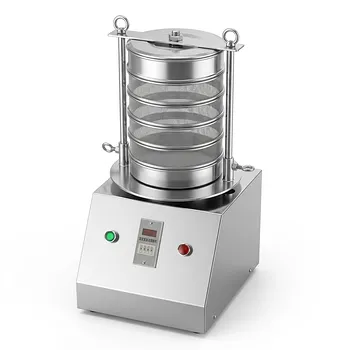
Stainless Steel Laboratory Vibratory Test Sieve Shaker
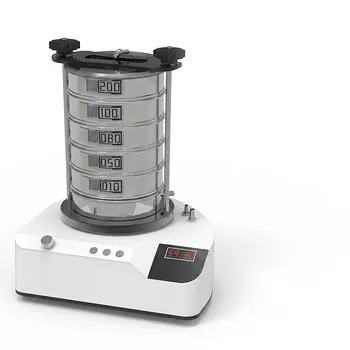
Heavy Duty Dry Three Dimensional Vibratory Sieve Shaker for Particle Separation
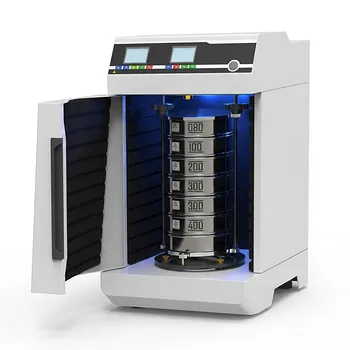
Laboratory Dry and Wet Three Dimensional Vibratory Sieve Shaker for Particle Analysis
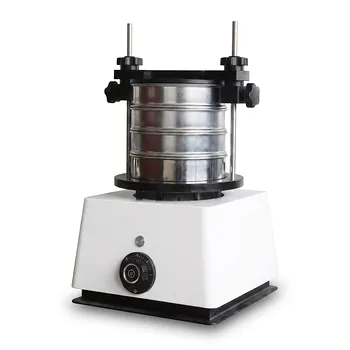
Small Laboratory Vibrating Sieve Shaker for Precise Particle Size Analysis
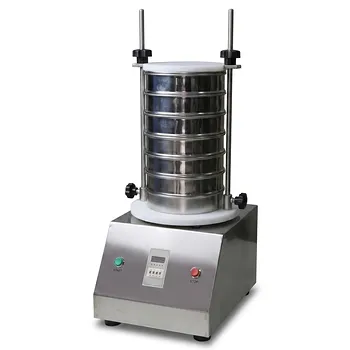
Laboratory Vibratory Test Sieve Shaker for Precision Particle Size Analysis and Powder Grading
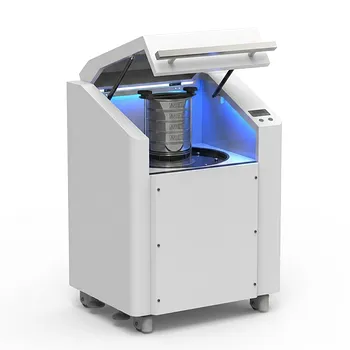
High Frequency Cabinet Type Three-Dimensional Rotary Vibrating Sieve Shaker for Dry Sieving and Particle Classification
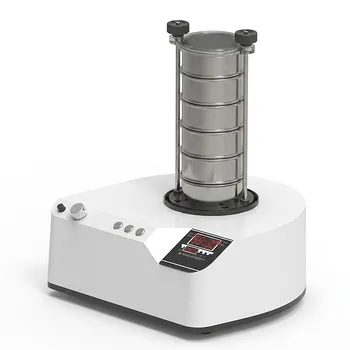
三维电磁微量振动筛分仪
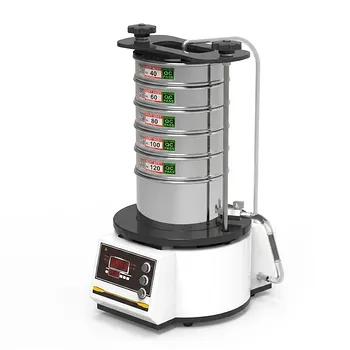
High Frequency Wet Three-Dimensional Vibrating Sieve Shaker for Dry and Wet Particle Size Analysis
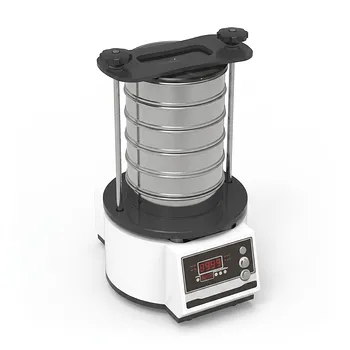
Tapping Oscillating Sieve Shaker for Dry and Wet Particle Size Analysis
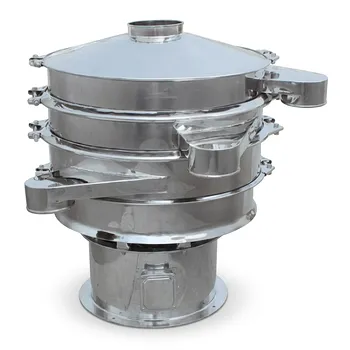
Stainless Steel Rotary Vibrating Sieve High Precision Circular Vibratory Separator Industrial Powder Grading Machine Multi Layer Sifting Equipment