Why is a cold-press pressure-holding process required for WPC? Ensure Dimensional Stability & Strength
Updated 4 months ago
The cold-press pressure-holding stage is a critical stabilization phase in WPC production. This process allows the molded composite to cool to room temperature under constant pressure, which effectively neutralizes the accumulation of thermal stress within the polymer matrix. Without this step, the rapid transition from a molten to a solid state would cause the boards to warp, shrink, or lose their structural integrity.
Core Takeaway: Cold pressing is required to manage the physics of polymer solidification; it "locks in" the material's dimensions and mechanical bonds by inhibiting the release of internal stresses that occur during the cooling transition.
Managing Thermal Stress and Dimensional Stability
Neutralizing Internal Stress Concentration
As the polymer matrix—such as HDPE or Polypropylene—cools from a molten state, it naturally undergoes thermal shrinkage. If this shrinkage occurs freely without external pressure, it generates internal stress concentrations that lead to warping and twisting.
Holding the material under pressure during the cooling stage ensures that these stresses are inhibited. This results in a final product that maintains superior surface flatness and remains true to its molded dimensions.
Maintaining Geometric Precision
For specialized applications, such as 3mm thin plates, even minor thermal fluctuations can ruin the specimen's geometry. A secondary load, often around 30 kN, is applied during cold pressing to maintain the flatness of the board.
This constant pressure prevents the material from "rebounding" or deforming as the polymer chains settle into their final arrangement. This ensures that the geometric accuracy required for professional-grade construction materials is met consistently.
Optimizing Material Microstructure
Stabilizing Mechanical Interlocking
The strength of Wood Plastic Composites relies on the mechanical interlocking structure between the wood particles and the plastic matrix. During hot pressing, the plastic melts and encapsulates the wood fibers; however, this bond is fragile until the plastic fully solidifies.
The cold-press stage ensures this interlocking structure remains stable during the critical cooling window. By preventing movement during solidification, the process maximizes the interfacial adhesion between the organic and inorganic components.
Controlling Crystallization Kinetics
Modern presses with controllable cooling functions allow for precise regulation of the cooling rate, often around 20°C per minute. Because many WPCs use nano-fillers as nucleating agents, the rate of cooling directly impacts how crystal nuclei form and grow.
Controlled cooling under pressure refines the internal microstructure, improving the material’s heat distortion temperature and melting stability. This level of control ensures the final board achieves its peak Modulus of Rupture (MOR) and density.
Understanding the Trade-offs
Cycle Time vs. Structural Quality
The primary trade-off in the cold-press stage is between production throughput and material quality. While a cold-press step typically lasts about 5 minutes, skipping or shortening this window to increase speed significantly increases the risk of post-production warping.
Decompression and Gas Discharge
If the transition from hot to cold pressing is not managed correctly, residual moisture or gases from resin curing can become trapped. It is often necessary to implement short stress release or decompression intervals (e.g., 30 seconds) during the hot-to-cold transition.
Failing to vent these gases can lead to internal bubbles or pore defects. These microscopic voids compromise the continuity of the board's microstructure and can lead to premature failure under load.
Implementing Effective Cold-Pressing Protocols
How to Apply This to Your Project
To achieve the best results, your cooling protocol should be tailored to the specific polymer matrix and board thickness you are utilizing.
- If your primary focus is Dimensional Stability: Ensure the cold-press duration is long enough for the core of the board to reach room temperature before the pressure is released.
- If your primary focus is Microstructural Integrity: Use a press with controllable cooling rates to optimize the crystallization of the polymer and prevent grain defects.
- If your primary focus is Surface Quality: Implement a decompression venting stage before the final cold-press to eliminate internal gas pockets and bubbles.
By strictly adhering to a pressure-holding cooling stage, you transform a potentially volatile polymer blend into a stable, high-performance composite engineered for longevity.
Summary Table:
| Key Aspect | Function during Cooling | Impact on WPC Quality |
|---|---|---|
| Thermal Stress | Neutralizes internal stress concentrations | Prevents warping, twisting, and shrinking |
| Geometry | Maintains constant load (e.g., 30 kN) | Ensures surface flatness and dimensional precision |
| Microstructure | Stabilizes mechanical interlocking | Maximizes interfacial adhesion between wood and plastic |
| Crystallization | Controls cooling rates (e.g., 20°C/min) | Improves Modulus of Rupture (MOR) and density |
| Gas Discharge | Short decompression intervals | Eliminates internal bubbles and pore defects |
Elevate Your Composite Research with Precision Compaction
Achieving the perfect Wood Plastic Composite requires rigorous control over heating and cooling cycles. At [Your Brand Name], we provide complete laboratory sample preparation solutions tailored for material science.
Our extensive range of equipment includes:
- Advanced Hydraulic Presses: Cold/Warm Isostatic Presses (CIP/WIP), vacuum hot presses, and standard lab presses designed for precise pressure holding.
- Powder Processing: High-efficiency crushers (jaw/roll), planetary ball mills, jet mills, and rotor mills.
- Material Analysis Preparation: Sieve shakers, XRF pellet presses, and high-performance powder/defoaming mixers.
Whether you are managing thermal stress in WPCs or developing new powdered materials, our equipment delivers the reliability and accuracy your research demands. Contact us today to find the ideal solution for your lab!
References
- Khandkar‐Siddikur Rahman, Md. Obaidullah Hannan. Properties of flat-pressed wood plastic composites as a function of particle size and mixing ratio. DOI: 10.1007/s10086-018-1702-3
Mentioned Products
- Water Cooled Graduated Continuous Feed Pulverizer for Industrial Powder Processing and Laboratory Material Preparation
- Water Cooled Continuous Feed Pulverizer Laboratory Grade Herb and Material Grinding System
- 6 Ton Variable Frequency Single Punch Tablet Press
- Water Cooled Airflow Ultra Fine Grinder for Low Temperature Material Processing
- Water Cooled Pulse Jet Ultrafine Grinder
People Also Ask
- What purpose does a manual hydraulic press serve in the molding of ceramic water filters? Optimize Density & Porosity
- What are the technical advantages of using a vacuum hot press furnace for Si3N4/BN ceramics? Achieve 99%+ Density
- What are the advantages of using a vacuum hot press furnace? Superior Density and Strength for SiCp/Al Composites
- What is the primary function of a vacuum hot press furnace in B4C-SiC-TiC-TiB2 synthesis? Maximize Density & Purity
- Why are perforated metal frames and venting liners required in hot pressing bio-based particleboard? Manage Steam Pressure

Tech Team · PowderPreparation
Last updated on Jun 03, 2026
Related Products
Water Cooled Graduated Continuous Feed Pulverizer for Industrial Powder Processing and Laboratory Material Preparation
Water Cooled Continuous Feed Pulverizer Laboratory Grade Herb and Material Grinding System
6 Ton Variable Frequency Single Punch Tablet Press
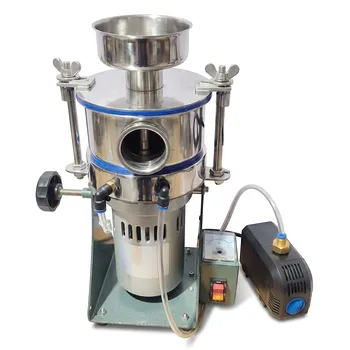
Water Cooled Airflow Ultra Fine Grinder for Low Temperature Material Processing
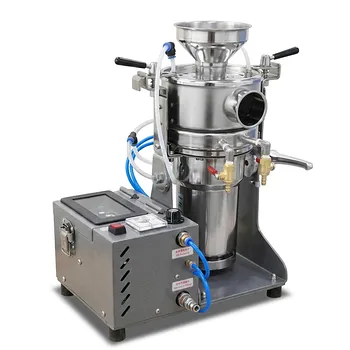
Water Cooled Pulse Jet Ultrafine Grinder
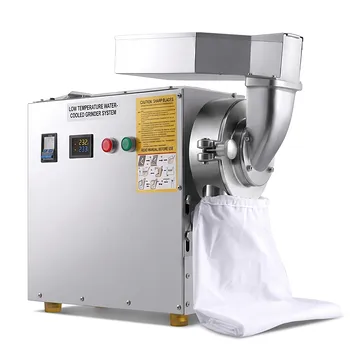
Low Temperature Water Cooled Continuous Feed Grinder Two Stage Coarse and Fine Grinding System
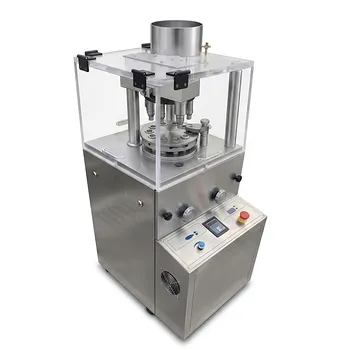
Enhanced 9 Punch Rotary Tablet Press for Powder Compaction
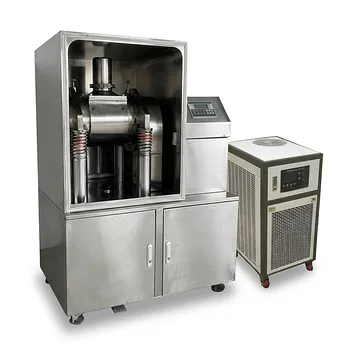
Water Cooled Cryogenic Ultra Fine Cell Wall Breaking Mill
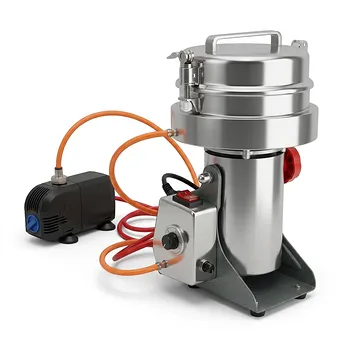
Water Cooled High Speed Grinder with Cryogenic Option for Laboratory Sample Preparation
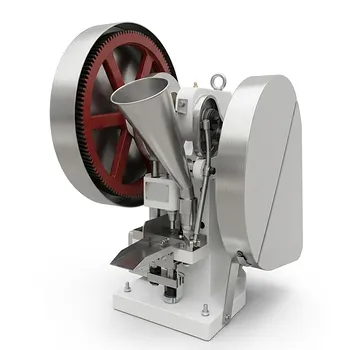
6-Ton Small Single-Punch Tablet Press — Laboratory Powder & Granule Tableting Equipment / Tablet Forming Machine
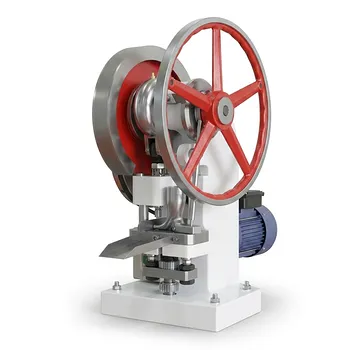
5 Ton Single Punch Tablet Press Laboratory Small Batch Production
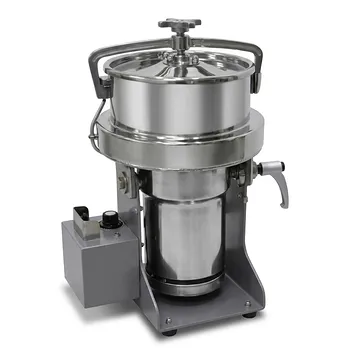
500g Capacity Water Cooled Low Temperature Grinder with Variable Speed and Safety Cover
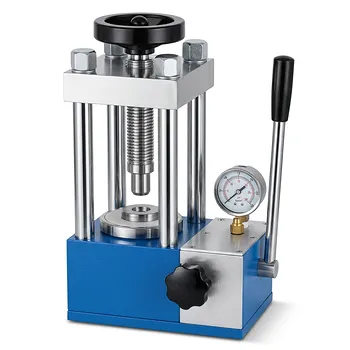
Manual Tablet Press with Dual Scale Pressure Gauge for Pharmaceutical Food Chemical Laboratory Sample Preparation
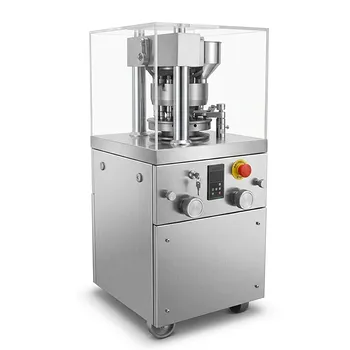
Ordinary Type Rotary Tablet Press for Pharmaceutical Chemical Food Electronic Industries
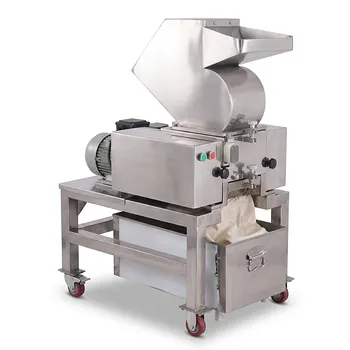
Stainless Steel Coarse Crusher for Pharmaceutical Food and Plastic Material Processing