Why is a centrifugal mixer used for degassing CNF dispersions? Achieve High Transparency & Void-Free Nanopaper
Updated 5 months ago
Degassing Cellulose Nanofiber (CNF) dispersions with a centrifugal mixer is essential to eliminate microbubbles that would otherwise cause structural voids and light scattering in the final product. Without this step, trapped air remains inside the film as moisture evaporates during drying, leading to visible defects and a significant loss of optical transparency. By using centrifugal force, manufacturers ensure the dispersion is perfectly homogenous and air-free before it transitions into a solid nanopaper.
Core Takeaway: Centrifugal mixers utilize powerful revolution and rotation forces to purge microbubbles from high-viscosity CNF slurries, a process critical for preventing internal voids and ensuring the high transparency and mechanical reliability of the finished nanopaper.
The Challenge of High-Viscosity Dispersions
Why Bubbles Become Trapped
As the concentration of cellulose nanofibers increases, the viscosity of the dispersion rises significantly. This thick environment makes it nearly impossible for microscopic air bubbles to escape naturally through buoyancy.
The Impact of Evaporation
During the drying process, water leaves the CNF suspension, causing the fibers to consolidate. If air bubbles are present, they do not disappear; instead, they leave behind permanent voids that compromise the film's density.
Consequences for Optical Clarity
Transparent nanopaper relies on a dense, uniform microstructure to allow light to pass through without interference. Trapped bubbles act as scattering centers, which increases optical haze and turns a clear film into a cloudy or opaque material.
The Mechanics of Centrifugal Degassing
Simultaneous Revolution and Rotation
A planetary centrifugal mixer operates by spinning the material container in two directions at once. This dual-action motion generates powerful shear forces and centrifugal pressure that force air bubbles to the surface of the viscous liquid.
Bladeless Homogenization
Unlike traditional stirring, centrifugal mixers often operate without blades. This is critical for CNFs because it allows for high-energy mixing and de-foaming without damaging the high aspect ratio of the delicate nanofibers.
The Role of Vacuum Integration
Advanced centrifugal mixers often incorporate a vacuum function. This further assists the degassing process by lowering the boiling point of trapped air, causing microbubbles to expand and erupt more easily from the thick slurry.
Understanding the Trade-offs
Heat Generation
The high-speed rotation required for effective degassing can generate frictional heat within the dispersion. If not monitored, excessive heat can potentially alter the chemical properties or stability of certain CNF additives.
Processing Time vs. Energy
While these mixers are incredibly fast—often achieving results in minutes—they require significant energy compared to simple gravity-fed degassing. Finding the balance between "speed to degas" and "energy efficiency" is a common operational hurdle.
Equipment Sensitivity
Planetary mixers are precision instruments that require careful balancing of the load. Improperly balanced containers can lead to mechanical wear or inconsistent degassing results across different batches.
How to Apply This to Your Project
When preparing CNF dispersions for transparent nanopaper, your choice of degassing parameters will determine the quality of your final film.
- If your primary focus is Maximum Transparency: Utilize a centrifugal mixer with an integrated vacuum to ensure even the smallest microbubbles are removed, minimizing light scattering.
- If your primary focus is Structural Integrity: Prioritize bladeless centrifugal mixing to preserve the high aspect ratio of the nanofibers, which is responsible for the paper's mechanical strength.
- If your primary focus is Processing High-Viscosity Slurries: Increase the revolution speed gradually to prevent air entrapment while ensuring the shear forces are sufficient to homogenize the thick material.
Mastering the degassing phase is the most critical step in transforming a cloudy CNF suspension into a high-performance, optically clear nanopaper.
Summary Table:
| Feature/Challenge | Centrifugal Mixer Solution | Impact on Nanopaper |
|---|---|---|
| High Viscosity | Dual-action revolution & rotation | Uniform, homogenous dispersion |
| Trapped Microbubbles | Vacuum-integrated degassing | Eliminates light scattering (high clarity) |
| Fiber Protection | Bladeless, shear-force processing | Maintains high aspect ratio & strength |
| Processing Speed | Rapid high-energy homogenization | Improved efficiency & batch consistency |
Elevate Your Material Research with Professional Degassing Solutions
Achieving peak optical transparency in Cellulose Nanofiber (CNF) nanopaper starts with superior degassing. We specialize in providing complete laboratory sample preparation solutions for material science, focusing on high-performance powder mixers and defoaming mixers designed to eliminate microbubbles in high-viscosity dispersions without compromising delicate fiber integrity.
Beyond mixing, our expertise covers the full spectrum of material processing:
- Advanced Milling: Planetary ball mills, jet mills, and cryogenic grinders for precise particle size control.
- Sample Preparation: A full range of hydraulic presses, including XRF pellet presses and Cold/Warm Isostatic Presses (CIP/WIP).
- Thermal Consolidation: Vacuum hot presses and standard lab presses for high-density material fabrication.
Eliminate structural defects and enhance your final product quality. Contact our technical experts today to find the ideal equipment for your laboratory's powder processing and compaction needs.
References
- Chenyang Li, Masaya Nogi. High-Speed Fabrication of Clear Transparent Cellulose Nanopaper by Applying Humidity-Controlled Multi-Stage Drying Method. DOI: 10.3390/nano10112194
Mentioned Products
- High Viscosity Planetary Centrifugal Vacuum Mixer for Material Defoaming and Uniform Mixing
- Dual Cup Vacuum Centrifugal Mixer Planetary Paste Defoaming Machine Industrial Material Processor
- Industrial Planetary Centrifugal Vacuum Defoaming Mixer for High Viscosity Paste and Powder Homogenization
- High Efficiency Vacuum Planetary Centrifugal Mixer and Defoaming Machine for Industrial Material Research and Precise Laboratory Powder Dispersion
- High Speed Vacuum Planetary Centrifugal Mixer and Defoamer for Industrial Paste Processing
People Also Ask
- What core functions does a planetary centrifugal mixer perform? Optimize Hard Carbon Anode Slurry & Degassing
- Why is a planetary centrifugal mixer recommended for geopolymer slurries? Achieve high-shear, air-free homogenization.
- Why is a planetary centrifugal mixer utilized for wood powder and HPMC? Achieve uniform dispersion & rapid defoaming.
- How does a planetary centrifugal mixer address key challenges in Tyr-CDs@EVA optical films? Ensure Optical Clarity.
- What is the role of a planetary centrifugal mixer in UHTC slurry preparation? Achieve Void-Free, High-Viscosity Mixing

Tech Team · PowderPreparation
Last updated on May 14, 2026
Related Products
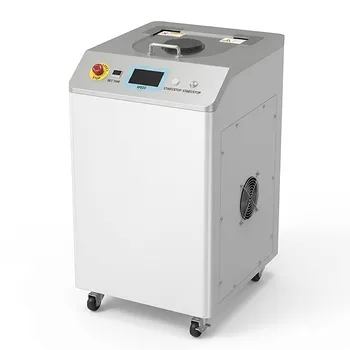
High Viscosity Planetary Centrifugal Vacuum Mixer for Material Defoaming and Uniform Mixing
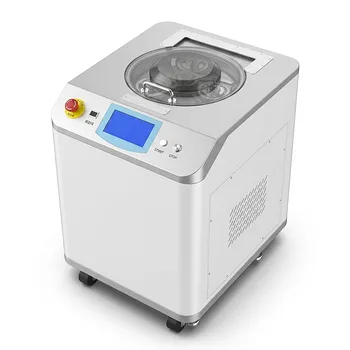
Dual Cup Vacuum Centrifugal Mixer Planetary Paste Defoaming Machine Industrial Material Processor
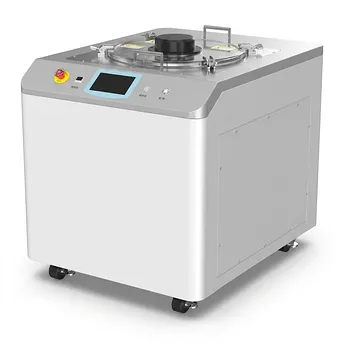
Industrial Planetary Centrifugal Vacuum Defoaming Mixer for High Viscosity Paste and Powder Homogenization
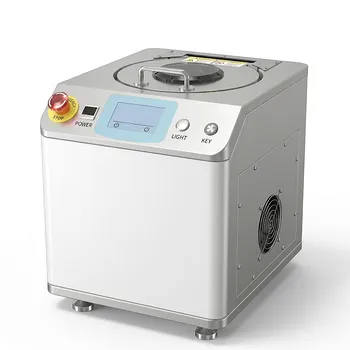
High Efficiency Vacuum Planetary Centrifugal Mixer and Defoaming Machine for Industrial Material Research and Precise Laboratory Powder Dispersion
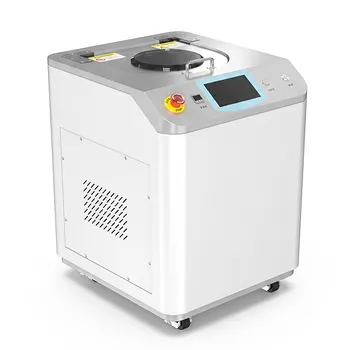
High Speed Vacuum Planetary Centrifugal Mixer and Defoamer for Industrial Paste Processing
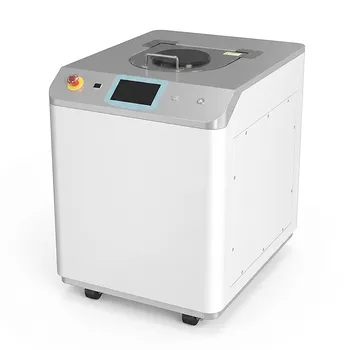
Industrial Planetary Centrifugal Vacuum Defoaming Mixer for High Viscosity Paste and Advanced Material Science
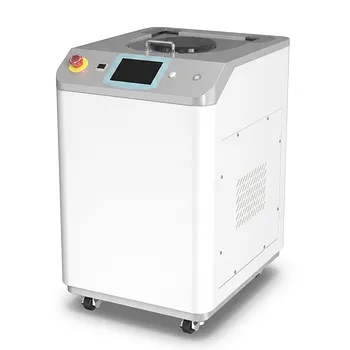
High Viscosity Planetary Centrifugal Mixing and Vacuum Defoaming Machine for Laboratory Material Preparation
Ultra Centrifugal Mill High Speed Laboratory Grinder for Fibrous and Brittle Sample Preparation
非介入式材料均质机真空脱泡行星搅拌高粘度混合设备
Ultra Centrifugal Mill for Rapid Laboratory Sample Preparation and Fine Powder Grinding
Inclined Mixer for Homogeneous Powder Blending and Grinding
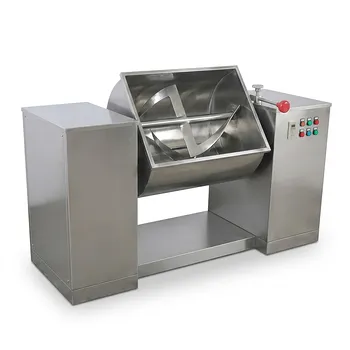
Horizontal Trough Mixer for Uniform Powder and Paste Blending
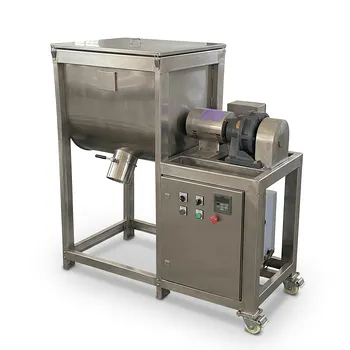
Horizontal Ribbon Mixer for Dry Powder and Slurry Blending
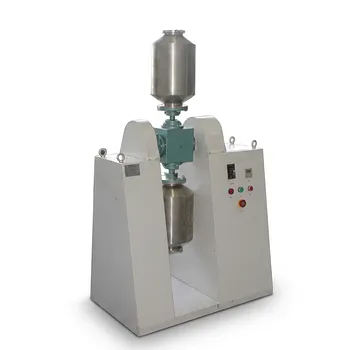
Multi Dimensional Universal Mixer for High Uniformity Powder Blending
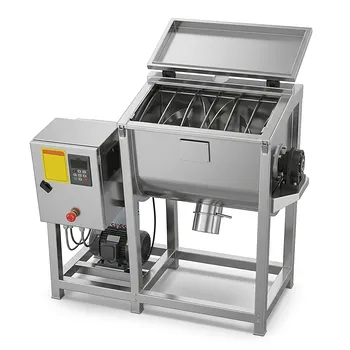
Horizontal Ribbon Mixer for Uniform Powder and Slurry Mixing
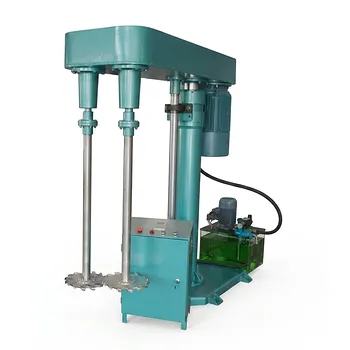
Hydraulic Double Shaft Disperser for High Viscosity Liquid Mixing and Dispersion
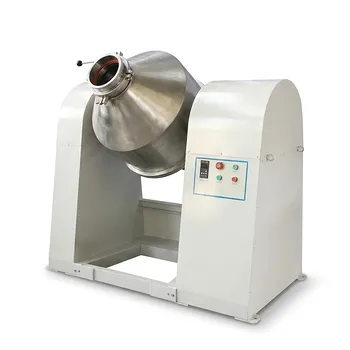
Industrial Double Cone Mixer for Powder Blending and Homogeneous Mixing
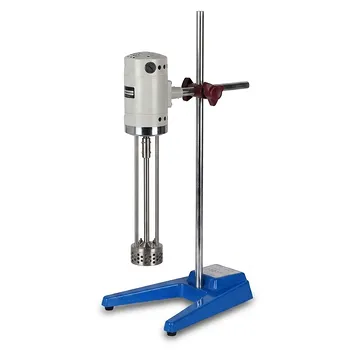
High Shear Laboratory Emulsifier for Mixing and Homogenization
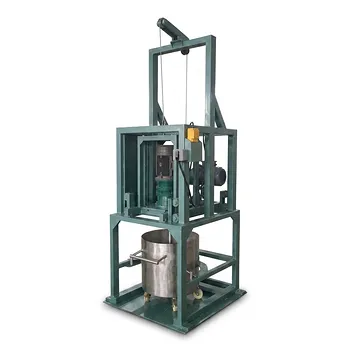
High-Speed Simple Disperser for Efficient Mixing, Dispersion, and Emulsification