Why is a centrifugal mixer required for oil-based CPC? Achieve Perfect Homogenization & Bubble-Free Medical Pastes
Updated 5 months ago
A centrifugal mixer is essential for oil-based Calcium Phosphate Cement (CPC) because it generates the intense shear and centrifugal forces required to homogenize dense powders within a viscous oil phase. By operating at high speeds, typically around 2000 rpm, these mixers achieve a level of uniformity that manual or low-speed methods cannot replicate. This high-efficiency process is critical for eliminating air bubbles and ensuring the resulting paste possesses the precise self-setting properties and clinical handling characteristics required for medical applications.
The centrifugal mixer is a non-negotiable tool for oil-based CPC preparation because it simultaneously achieves molecular-level homogenization and degassing. This dual action ensures the cement remains clinically viable, structurally sound, and free of performance-limiting defects.
The Mechanics of High-Efficiency Mixing
Overcoming Phase Resistance with Shear Force
Oil-based CPCs consist of Tetracalcium Phosphate (TTCP) and Dicalcium Phosphate Anhydrous (DCPA) powders mixed with an oil-phase surfactant. The high viscosity of the oil phase resists traditional mixing, requiring the intense shear action of a centrifugal mixer to break down powder agglomerates. This ensures that every powder particle is uniformly coated by the oil-surfactant mixture.
The Advantage of Blade-Free Homogenization
Unlike traditional mixers, planetary centrifugal mixers often operate without blades, utilizing the dual rotation and revolution of the container itself. This mechanism prevents material from sticking to blades and reduces component segregation. The result is a highly uniform sample foundation that is critical for studying the microstructural evolution of the cement.
Achieving Rapid Uniformity
The high rotational speeds allow for the complete blending of components in a very short timeframe. Rapid mixing is essential to maintain the stability of the formulation before any premature chemical interactions occur. This speed also increases laboratory throughput while maintaining a level of reproducibility that manual mixing lacks.
Ensuring Structural Integrity and Performance
Elimination of Micro-bubbles and Porosity
As the mixer rotates, centrifugal forces push the dense paste outward, effectively removing air bubbles generated during the initial powder-liquid contact. Eliminating these micro-bubbles is vital, as internal voids act as stress concentrators that can lead to mechanical failure. This process results in a high-density paste that provides a defect-free structural foundation.
Optimization of Clinical Handling
The uniformity achieved through centrifugal mixing directly impacts the clinical handling characteristics of the CPC paste. A well-mixed, homogenous paste flows smoothly through delivery systems and remains stable during application. This consistency ensures that the surgeon can predict the material's behavior during injection or molding.
Preservation of Self-Setting Properties
The chemical reaction that allows CPC to set depends on the intimate contact between the different phosphate phases. Centrifugal mixing ensures a highly uniform dispersion of sub-micron powders, which promotes predictable dissolution and precipitation. Without this level of mixing, the self-setting properties may become inconsistent, leading to delayed or incomplete hardening.
Understanding the Trade-offs
Heat Generation and Thermal Sensitivity
The high-intensity shear force required for mixing can generate significant friction-induced heat. In some formulations, excessive heat may trigger premature reactions or degrade sensitive surfactants. It is often necessary to monitor mixing times or use cooling cycles to maintain the integrity of the oil-based carrier.
Equipment and Consumable Costs
Planetary centrifugal mixers are sophisticated instruments that require a higher initial investment compared to standard mechanical stirrers. They also require specific, balanced containers to operate safely at high RPMs. While these costs are higher, they are generally justified by the superior quality and consistency of the medical-grade cement produced.
Applying This to Your Project
Recommendations Based on Your Objectives
Selecting the right mixing parameters is essential for achieving the desired paste characteristics for your specific application.
- If your primary focus is maximizing mechanical strength: Prioritize higher speeds and longer degassing cycles to ensure the absolute removal of all micro-bubbles and internal voids.
- If your primary focus is clinical injectability: Focus on achieving a perfect dispersion of surfactants at moderate speeds to ensure the paste maintains a stable, low-friction consistency.
- If your primary focus is working with heat-sensitive additives: Utilize intermittent mixing cycles (pulse mixing) to allow for heat dissipation while still achieving high levels of shear.
The use of a centrifugal mixer transforms a disparate mixture of powder and oil into a sophisticated, high-performance biomaterial ready for clinical use.
Summary Table:
| Key Feature | Benefit for Oil-based CPC Preparation |
|---|---|
| High Shear Force | Breaks down powder agglomerates within viscous oil phases for total uniformity. |
| Centrifugal Degassing | Removes micro-bubbles and internal porosity to prevent mechanical failure. |
| Blade-Free Mixing | Eliminates material loss on blades and prevents component segregation. |
| High-Speed Rotation | Ensures rapid homogenization before premature chemical interactions occur. |
| Uniform Dispersion | Optimizes self-setting properties and ensures predictable clinical handling. |
Elevate Your Biomaterial Research with Our Precision Solutions
Achieving the perfect oil-based Calcium Phosphate Cement (CPC) paste requires more than just high-quality ingredients; it requires the right equipment to ensure structural integrity and clinical success. We provide complete laboratory sample preparation solutions tailored for material science, specializing in advanced powder processing and compaction equipment.
Our extensive product range supports every stage of your workflow:
- Homogenization & Degassing: High-performance planetary centrifugal mixers (defoaming mixers) and powder mixers designed for viscous pastes.
- Size Reduction: Precision crushers (jaw/roll), liquid nitrogen cryogenic grinders, and a variety of mills (planetary ball, jet, sand/bead, disc, rotor).
- Compaction & Pressing: A full spectrum of hydraulic presses, including Cold/Warm Isostatic Presses (CIP/WIP), standard lab presses, XRF pellet presses, and vacuum hot presses.
- Classification: Sieve shakers (vibratory/air-jet) with high-precision test sieves and meshes.
Whether your goal is maximizing mechanical strength or optimizing injectability, our specialized equipment ensures reproducibility and superior material performance.
Ready to enhance your lab's efficiency? Contact us today to find the ideal equipment for your specific application!
References
- Andreas Fuchs, Uwe Gbureck. Composite grafts made of polycaprolactone fiber mats and oil-based calcium phosphate cement pastes for the reconstruction of cranial and maxillofacial defects. DOI: 10.1007/s00784-023-04932-4
Mentioned Products
- High Viscosity Planetary Centrifugal Vacuum Mixer for Material Defoaming and Uniform Mixing
- Dual Cup Vacuum Centrifugal Mixer Planetary Paste Defoaming Machine Industrial Material Processor
- Industrial Planetary Centrifugal Vacuum Defoaming Mixer for High Viscosity Paste and Powder Homogenization
- High Efficiency Vacuum Planetary Centrifugal Mixer and Defoaming Machine for Industrial Material Research and Precise Laboratory Powder Dispersion
- High Speed Vacuum Planetary Centrifugal Mixer and Defoamer for Industrial Paste Processing
People Also Ask
- What core functions does a planetary centrifugal mixer perform? Optimize Hard Carbon Anode Slurry & Degassing
- Why is a planetary centrifugal mixer recommended for geopolymer slurries? Achieve high-shear, air-free homogenization.
- Why is a planetary centrifugal mixer utilized for wood powder and HPMC? Achieve uniform dispersion & rapid defoaming.
- How does a planetary centrifugal mixer address key challenges in Tyr-CDs@EVA optical films? Ensure Optical Clarity.
- What is the role of a planetary centrifugal mixer in UHTC slurry preparation? Achieve Void-Free, High-Viscosity Mixing

Tech Team · PowderPreparation
Last updated on May 14, 2026
Related Products
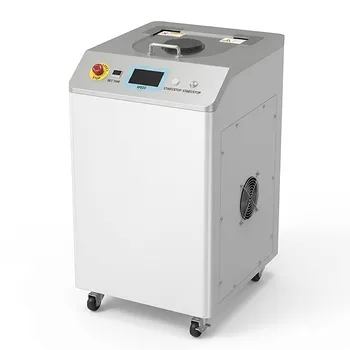
High Viscosity Planetary Centrifugal Vacuum Mixer for Material Defoaming and Uniform Mixing
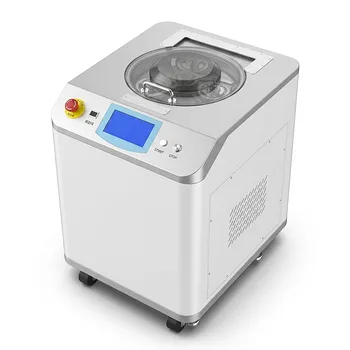
Dual Cup Vacuum Centrifugal Mixer Planetary Paste Defoaming Machine Industrial Material Processor
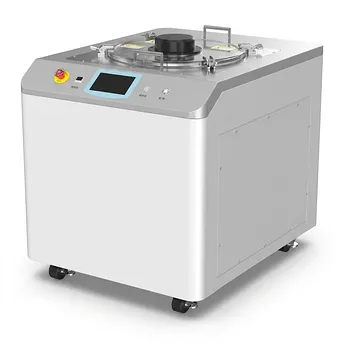
Industrial Planetary Centrifugal Vacuum Defoaming Mixer for High Viscosity Paste and Powder Homogenization
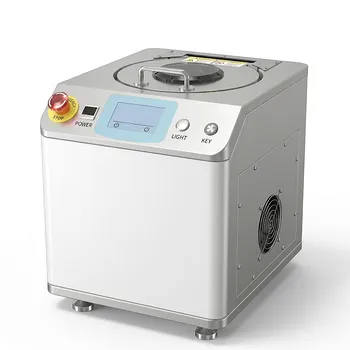
High Efficiency Vacuum Planetary Centrifugal Mixer and Defoaming Machine for Industrial Material Research and Precise Laboratory Powder Dispersion
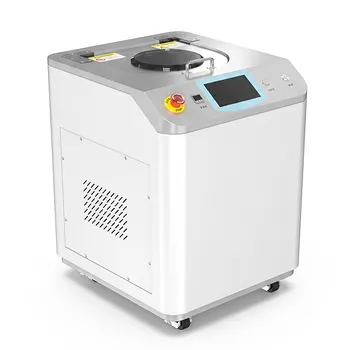
High Speed Vacuum Planetary Centrifugal Mixer and Defoamer for Industrial Paste Processing
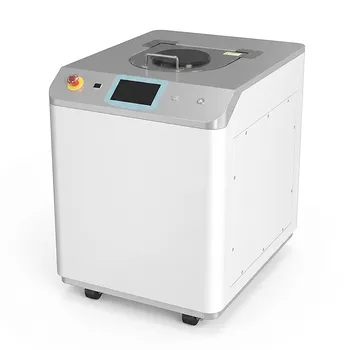
Industrial Planetary Centrifugal Vacuum Defoaming Mixer for High Viscosity Paste and Advanced Material Science
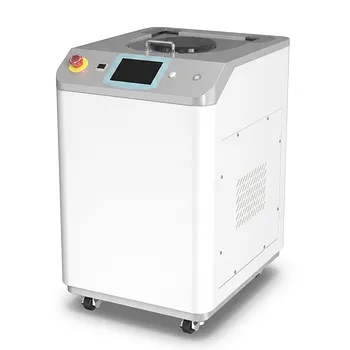
High Viscosity Planetary Centrifugal Mixing and Vacuum Defoaming Machine for Laboratory Material Preparation
Ultra Centrifugal Mill High Speed Laboratory Grinder for Fibrous and Brittle Sample Preparation
非介入式材料均质机真空脱泡行星搅拌高粘度混合设备
Ultra Centrifugal Mill for Rapid Laboratory Sample Preparation and Fine Powder Grinding
Inclined Mixer for Homogeneous Powder Blending and Grinding
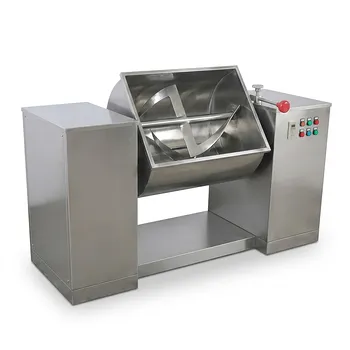
Horizontal Trough Mixer for Uniform Powder and Paste Blending
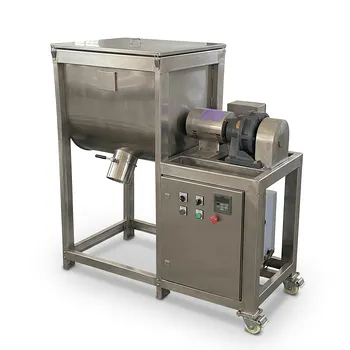
Horizontal Ribbon Mixer for Dry Powder and Slurry Blending
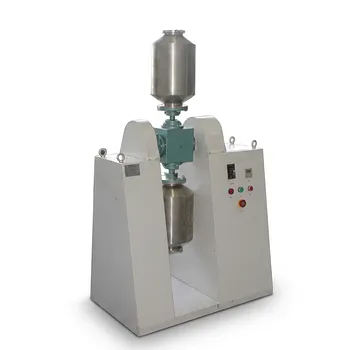
Multi Dimensional Universal Mixer for High Uniformity Powder Blending
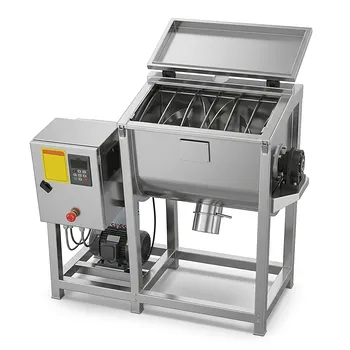
Horizontal Ribbon Mixer for Uniform Powder and Slurry Mixing
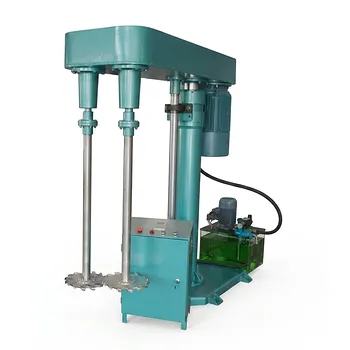
Hydraulic Double Shaft Disperser for High Viscosity Liquid Mixing and Dispersion
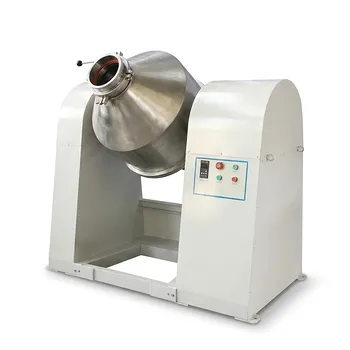
Industrial Double Cone Mixer for Powder Blending and Homogeneous Mixing
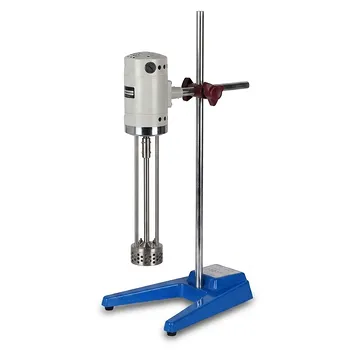
High Shear Laboratory Emulsifier for Mixing and Homogenization
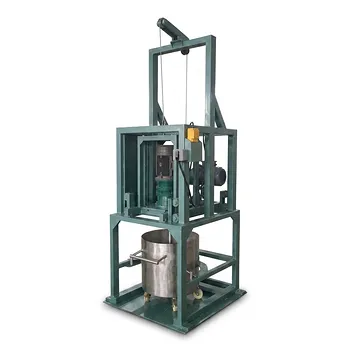
High-Speed Simple Disperser for Efficient Mixing, Dispersion, and Emulsification