Why is a 150nm standard sieve essential in the production of ultra-fine nano-powders from calcined shells?
Updated 5 months ago
The 150nm standard sieve is the critical gatekeeper for ensuring that calcined shell ash achieves a true nanometer-scale particle size. By strictly controlling this dimension, the sieve maximizes the material's specific surface area, which exponentially increases its chemical reactivity. This refinement is essential for promoting the formation of calcium silicate hydrate (C-S-H) gel, the primary binder responsible for strength and durability in high-performance concrete.
The use of a 150nm sieve transforms raw calcined shells into a high-activity nano-powder by ensuring precise particle grading. This uniformity is the fundamental driver behind enhanced chemical hydration and superior material density.
The Impact of Particle Size on Chemical Activity
Maximizing Specific Surface Area
Reducing calcined shell particles to the 150nm range dramatically increases the total surface area available for chemical interaction. This increased exposure allows the powder to react more aggressively when introduced to water and cementitious materials.
Accelerating the Hydration Reaction
In concrete applications, these ultra-fine particles act as catalytic sites for the hydration process. This acceleration leads to a faster and more complete transition of raw materials into the structural matrix.
Promoting C-S-H Gel Formation
The primary goal of using nano-powders is the production of calcium silicate hydrate (C-S-H) gel. Precise filtration ensures the particles are small enough to facilitate the dense, interconnected molecular structure required for high-strength bonds.
Ensuring Material Uniformity and Performance
Eliminating Signal Scattering and Variance
Consistency in particle size is vital for the repeatability of analytical results, such as those found in XRD or EDS testing. When particles are uniform, data accurately reflects the material’s composition without interference from size-based signal scattering.
Improving Pozzolanic Efficiency
For materials intended as active pozzolanic agents, a 150nm threshold ensures the powder is in a sufficiently dispersed state. This allows the shell ash to fill microscopic voids, significantly improving the long-term density and structural integrity of the final product.
Optimizing Flowability and Distribution
Uniformity achieved through precise sieving prevents agglomeration, where particles clump together. This ensures the powder spreads evenly during manufacturing processes, maintaining a consistent high-solid loading in various slurries or mixtures.
Understanding the Trade-offs
Precision vs. Processing Throughput
Achieving a 150nm grade requires specialized equipment and significantly more time than standard micrometer-scale sieving. High-precision filtration often results in lower production volumes, necessitating a balance between extreme quality and industrial scale.
The Risk of Mesh Clogging and Maintenance
Ultra-fine sieves are highly susceptible to blinding or clogging, where fine particles lodge in the openings. Maintaining the integrity of a 150nm sieve requires rigorous cleaning protocols and frequent calibration to prevent grading errors.
Energy Demands of Pulverization
To reach a state where a 150nm sieve is effective, the initial calcination and pulverization stages must be highly intensive. The energy costs associated with grinding materials down to the nanometer level must be justified by the performance gains in the end product.
How to Apply This to Your Production
Making the Right Choice for Your Goal
- If your primary focus is Maximum Structural Strength: Prioritize the 150nm filtration to ensure the highest possible density and C-S-H gel formation in your concrete matrix.
- If your primary focus is Analytical Accuracy: Use the 150nm standard to eliminate particle size variables, ensuring your XRD and EDS data remains consistent across different batches.
- If your primary focus is Manufacturing Efficiency: Evaluate if a slightly larger micron-scale sieve (e.g., 150µm) meets your flowability needs, as this will significantly increase your production throughput.
Precise 150nm grading is the definitive factor in turning inert calcined shells into a highly reactive, high-value nano-powder.
Summary Table:
| Key Benefit | Technical Impact | Why it Matters |
|---|---|---|
| High Surface Area | Increases chemical exposure | Boosts reaction speed & reactivity |
| C-S-H Gel Promotion | Facilitates dense molecular bonding | Enhances structural strength & durability |
| Material Uniformity | Eliminates particle size variance | Ensures repeatable analytical results (XRD/EDS) |
| Agglomeration Control | Prevents clumping | Improves powder flowability & distribution |
| Pozzolanic Efficiency | Fills microscopic voids | Optimizes long-term density of final products |
Elevate Your Nano-Powder Processing Today
Achieving precise 150nm particle grading requires more than just a sieve; it demands a complete, integrated approach to sample preparation. At [Company Name], we provide end-to-end laboratory solutions for material science, specializing in high-performance powder processing and compaction equipment.
Whether you are refining calcined shells or developing advanced ceramics, our expertise helps you achieve superior uniformity and reactivity. Our extensive product line includes:
- Size Reduction: Jaw/roll crushers and specialized mills (planetary ball, jet, sand/bead, disc, and rotor mills).
- Fine Classification: Vibratory and air-jet sieve shakers with high-precision test sieves and meshes.
- Sample Compaction: A full spectrum of hydraulic presses, including Cold/Warm Isostatic Presses (CIP/WIP), hot presses, and vacuum hot presses.
- Mixing: Advanced powder and defoaming mixers for consistent slurry preparation.
Ready to optimize your material density and analytical accuracy?
Contact our specialists today to find the perfect equipment configuration for your research or production needs!
References
- Chidobere Nwa-David. The Behaviour of Concrete Made with Nanosized Periwinkle Shell Ash as Partial Replacement of Cement Under Varying Curing Conditions with Emphasis on Its Compressive Strength. DOI: 10.5281/zenodo.8301486
Mentioned Products
- 150x250mm Custom Laboratory Jaw Crusher for Coal Ore Mineral Crushing
- 150x250mm Laboratory Jaw Crusher for Medium Hard Material Crushing and Sample Preparation
- Small Laboratory Jaw Crusher 150x200mm Feed Opening for Sample Preparation and Medium Fine Crushing
- 三维电磁微量振动筛分仪
- Stainless Steel Rotary Vibrating Sieve High Precision Circular Vibratory Separator Industrial Powder Grading Machine Multi Layer Sifting Equipment
People Also Ask
- What is the primary function of a laboratory jaw crusher? Master Initial Hard Rock Ore Preparation & Feed Sizing
- What is the role of a laboratory jaw crusher in the initial preparation of silicate-type low-grade copper ore?
- What is the primary role of a laboratory jaw crusher in the initial stages of tin and tantalum ore reprocessing? Explained
- What is the primary function of a laboratory jaw crusher when processing low-grade copper ore? Expert Guide
- What is the primary function of a laboratory jaw crusher in the pretreatment process of galena ore? Initial Prep Guide

Tech Team · PowderPreparation
Last updated on May 14, 2026
Related Products
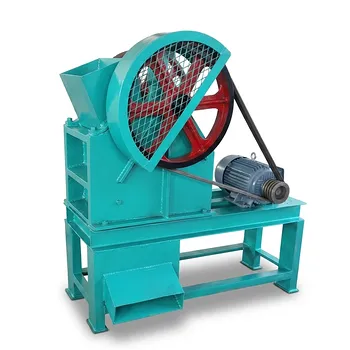
150x250mm Custom Laboratory Jaw Crusher for Coal Ore Mineral Crushing
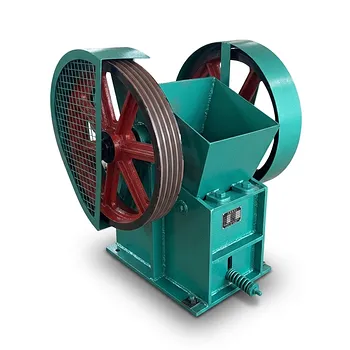
150x250mm Laboratory Jaw Crusher for Medium Hard Material Crushing and Sample Preparation
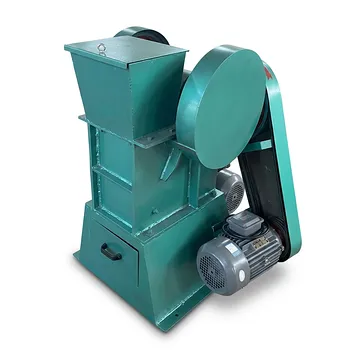
Small Laboratory Jaw Crusher 150x200mm Feed Opening for Sample Preparation and Medium Fine Crushing
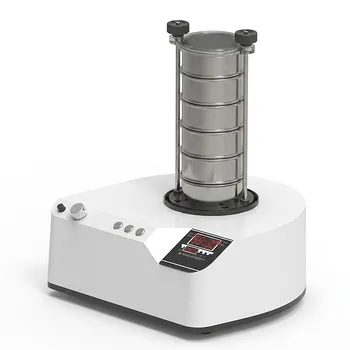
三维电磁微量振动筛分仪
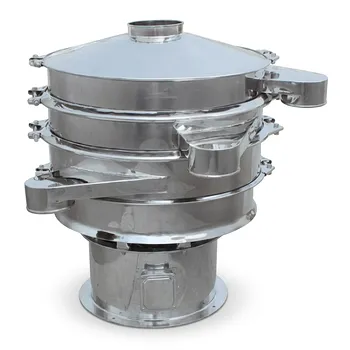
Stainless Steel Rotary Vibrating Sieve High Precision Circular Vibratory Separator Industrial Powder Grading Machine Multi Layer Sifting Equipment
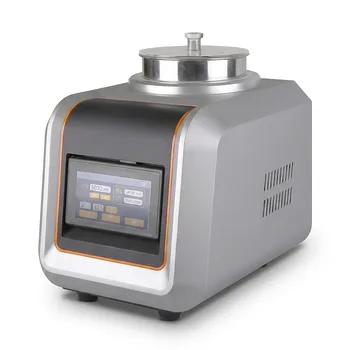
Laboratory Air Jet Sieving Machine for Fine Powder Particle Size Analysis and Deagglomeration
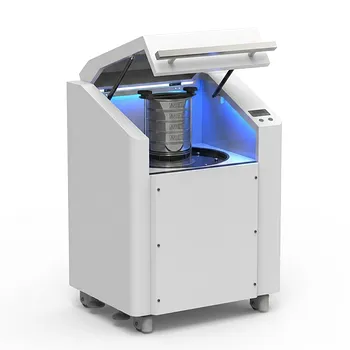
High Frequency Cabinet Type Three-Dimensional Rotary Vibrating Sieve Shaker for Dry Sieving and Particle Classification
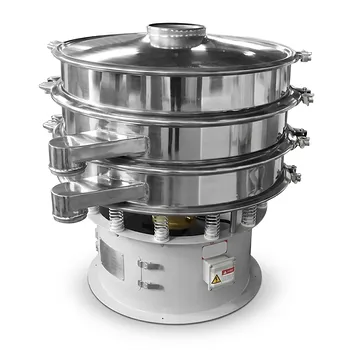
Three Dimensional Rotary Vibrating Sieve

Small Laboratory Vibratory Sieve Shaker for Powder Gradation and Particle Size Analysis
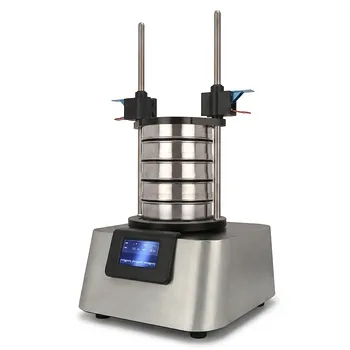
Vibratory Sieve Shaker Electromagnetic 3D Motion Powder Particle Size Analyzer for Dry and Wet Sieving
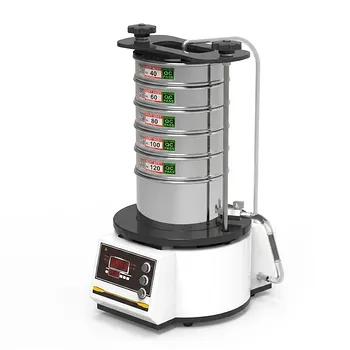
High Frequency Wet Three-Dimensional Vibrating Sieve Shaker for Dry and Wet Particle Size Analysis
