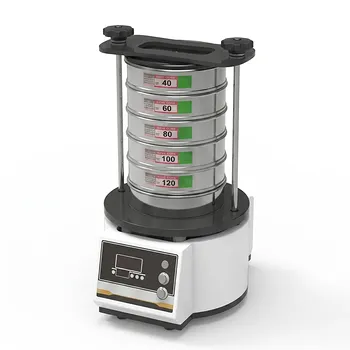
Why is a 100 μm standard sieve used for PHBH powder? Ensure Superior Uniformity & Flowability for SLS
Updated 4 months ago
Ensuring precise powder bed uniformity for additive manufacturing.
The primary reason for using a 100 μm standard sieve after processing PHBH (polyhydroxyalkanoate) powder is to eliminate loose agglomerates formed during the washing and drying stages. Even when the powder is homogenized initially, the dehydration process causes particles to clump together. This secondary screening ensures the material meets the strict particle size requirements for Selective Laser Sintering (SLS), where bed uniformity is critical for structural integrity.
Core Takeaway: Sieving at 100 μm serves as a vital quality-control step that restores the powder's intended particle size distribution. By removing dehydration-induced aggregates, it guarantees the flowability and packing density necessary for high-precision manufacturing.
The Mechanics of Agglomeration in PHBH
The Impact of Dehydration
PHBH powder undergoes significant physical changes during the filtration and drying stages. As water is removed, surface tension and chemical bonding can cause individual particles to fuse into loose, soft agglomerates.
Preserving Batch Homogeneity
These clusters are often significantly larger than the base particle size intended for the application. Without a dedicated sieving step, these aggregates disrupt the homogeneity of the powder, leading to inconsistent material behavior during production.
Restoring Flowability
Agglomerated powder does not flow predictably, which is a requirement for automated material handling. The 100 μm sieve acts as a mechanical filter to ensure only free-flowing particles move to the next stage of production.
The Necessity for Selective Laser Sintering (SLS)
Achieving Powder Bed Uniformity
SLS technology relies on a recoater blade or roller to spread thin, microscopic layers of powder across a build plate. Oversized agglomerates can cause "streaking" or dragging, which creates voids and ruins the precision of the 3D-printed part.
Optimizing Initial Packing Density
A uniform particle size ensures a consistent initial packing density within the build volume. High packing density is essential to reduce internal porosity, which directly influences the final mechanical strength of the sintered component.
Eliminating Macroscopic Defects
Large particle aggregates act as impurities in the sintering process. By removing these via a 100 μm mesh, manufacturers prevent stress concentrations and macroscopic defects that could cause the part to fail under load.
Understanding the Trade-offs
Throughput vs. Precision
While a 100 μm sieve ensures high quality, it can become a production bottleneck. If the PHBH powder has a high static charge or residual moisture, the sieving rate may drop, requiring ultrasonic assistance to maintain volume.
The Risk of Sieve Blinding
Fine polymers are prone to sieve blinding, where particles become lodged in the mesh openings. This requires frequent maintenance and monitoring to ensure the sieve continues to classify the powder accurately without altering the batch's chemistry.
Making the Right Choice for Your Goal
When integrating a 100 μm sieving stage into your PHBH processing line, consider your specific production targets:
- If your primary focus is SLS Part Quality: Use a high-precision 100 μm stainless steel sieve with ultrasonic vibration to ensure 100% removal of soft agglomerates without damaging the base particles.
- If your primary focus is High-Volume Production: Implement an automated centrifugal sifter to maintain high throughput, though you must monitor for heat generation that could cause the PHBH to soften.
- If your primary focus is Equipment Longevity: Ensure the sieving happens immediately after drying to prevent oversized clumps from reaching and clogging downstream homogenization valves or feeders.
Strict adherence to the 100 μm screening standard is the definitive way to bridge the gap between raw material processing and high-performance manufacturing.
Summary Table:
| Stage of Process | Issue Addressed | Role of 100 μm Sieve | Final Impact on Manufacturing |
|---|---|---|---|
| Post-Drying | Dehydration Agglomerates | Removes loose, soft clumps | Restores intended particle size distribution |
| Material Handling | Poor Flowability | Ensures free-flowing particles | Enables consistent automated feeding |
| SLS Printing | Powder Bed Voids | Optimizes initial packing density | Maximizes mechanical strength & precision |
| Quality Control | Macroscopic Defects | Filters out oversized impurities | Prevents stress concentrations in parts |
Elevate Your Material Precision with Professional Powder Solutions
Achieve unmatched material consistency in your PHBH processing with our complete laboratory sample preparation solutions. At [Brand Name], we specialize in high-performance powder processing and compaction equipment tailored for material science research and additive manufacturing.
Our extensive product range includes:
- Sieving & Classification: Vibratory and air-jet sieve shakers with high-precision test sieves to eliminate agglomerates and ensure perfect bed uniformity.
- Milling & Grinding: Planetary ball mills, jet mills, and cryogenic grinders for achieving ultra-fine particle distributions.
- Compaction Excellence: A full spectrum of hydraulic presses, including Cold/Warm Isostatic Presses (CIP/WIP), XRF pellet presses, and vacuum hot presses.
- Mixing: Powder and defoaming mixers for perfect batch homogeneity.
Ready to eliminate defects and optimize your SLS workflow? Contact our technical experts today to find the ideal equipment for your laboratory needs!
References
- Alberto Giubilini, Paolo Minetola. High‐Pressure Homogenization: An Industrially Scalable Method for Producing PHBH Powders for Selective Laser Sintering. DOI: 10.1002/admt.202500049
Mentioned Products
- Laboratory Small Jaw Crusher 100x60mm
- Small Laboratory Jaw Crusher 125x100mm Feed Opening for Sample Preparation
- Stainless Steel Rotary Vibrating Sieve High Precision Circular Vibratory Separator Industrial Powder Grading Machine Multi Layer Sifting Equipment
- 三维电磁微量振动筛分仪
- Small Laboratory Vibratory Sieve Shaker for Powder Gradation and Particle Size Analysis
People Also Ask
- What is the role of a laboratory jaw crusher in the initial preparation of silicate-type low-grade copper ore?
- What is the primary role of a laboratory jaw crusher in the initial stages of tin and tantalum ore reprocessing? Explained
- What is the primary function of a laboratory jaw crusher? Master Initial Hard Rock Ore Preparation & Feed Sizing
- What is the primary function of laboratory-scale crushers in the pre-treatment stage of iron ore bio-dephosphorization?
- Lab Crusher's Role in Banana Stem Cellulose Extraction? Enhance Your Raw Material Preparation Now

Tech Team · PowderPreparation
Last updated on Jun 03, 2026
Related Products
Laboratory Small Jaw Crusher 100x60mm
Small Laboratory Jaw Crusher 125x100mm Feed Opening for Sample Preparation
Stainless Steel Rotary Vibrating Sieve High Precision Circular Vibratory Separator Industrial Powder Grading Machine Multi Layer Sifting Equipment
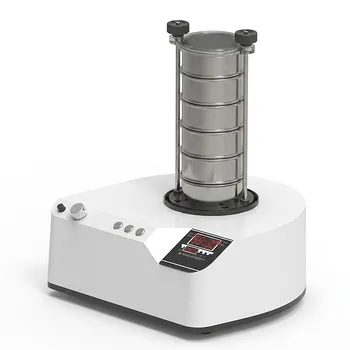
三维电磁微量振动筛分仪
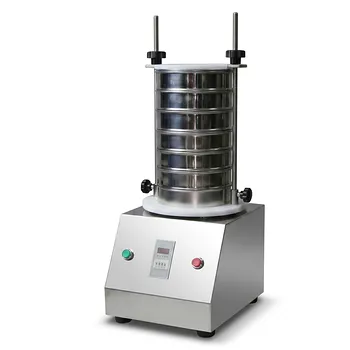
Small Laboratory Vibratory Sieve Shaker for Powder Gradation and Particle Size Analysis
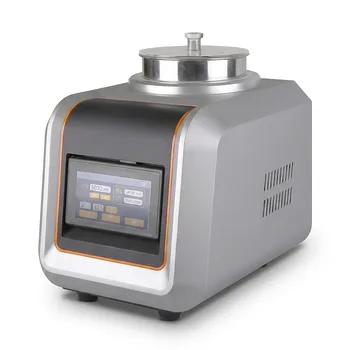
Laboratory Air Jet Sieving Machine for Fine Powder Particle Size Analysis and Deagglomeration
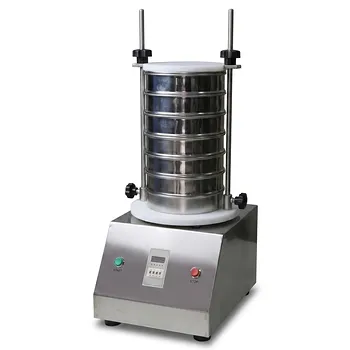
Laboratory Vibratory Test Sieve Shaker for Precision Particle Size Analysis and Powder Grading
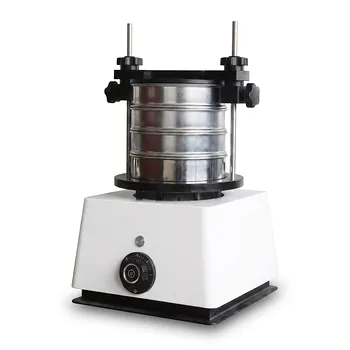
Small Laboratory Vibrating Sieve Shaker for Precise Particle Size Analysis
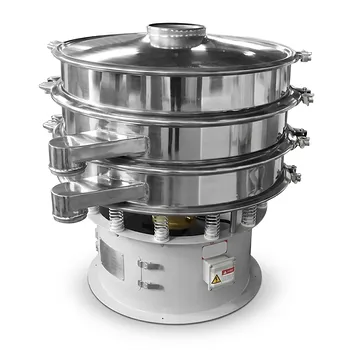
Three Dimensional Rotary Vibrating Sieve
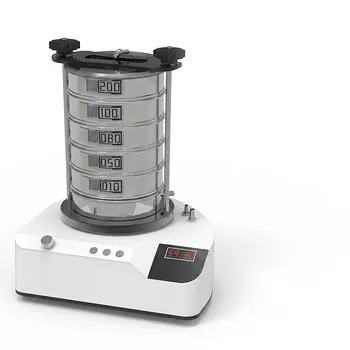
Heavy Duty Dry Three Dimensional Vibratory Sieve Shaker for Particle Separation