Why are zirconia grinding balls selected for ball milling WSe2? The Key to High-Purity 2D Material Exfoliation
Updated 4 months ago
Zirconia grinding balls are the industry standard for Tungsten Diselenide (WSe2) milling because they provide the ideal balance of high-energy impact and chemical purity. Their exceptional hardness and high density generate the kinetic energy necessary to exfoliate the layered structure of WSe2 effectively. Furthermore, their superior wear resistance ensures that the final powder remains free from the media-based contaminants that often degrade the electronic performance of 2D semiconductors.
Zirconia (ZrO2) is selected because it delivers high-density energy input for efficient mechanical exfoliation while maintaining the strict chemical purity required for advanced WSe2 applications.
The Mechanics of High-Energy Milling
Achieving Layered Exfoliation
Tungsten Diselenide is a transition metal dichalcogenide (TMDC) with a layered structure that requires significant shear and impact forces to thin down. Zirconia balls provide a high-density energy input during high-speed rotation, which is essential for overcoming the van der Waals forces between the WSe2 layers. This process is critical for producing high-quality, exfoliated powders, such as tannic acid-modified WSe2.
Hardness and Impact Durability
High-energy ball milling involves prolonged periods of high-frequency impacts that can cause lesser materials to fracture. Zirconia is utilized for its extreme hardness and toughness, allowing the media to withstand these impacts without breaking down. This durability ensures a consistent energy transfer throughout the entire milling cycle, which can often last for 12 hours or more.
Kinetic Energy and Refinement
The relatively high density of zirconium dioxide enables it to fracture and refine particles that possess high melting points and inherent hardness. This provides the necessary kinetic energy to ensure that the WSe2 reaches the desired sub-micron or nano-scale particle size. Without this energy, the milling process would be inefficient, leading to non-uniform particle distributions.
Protecting Material Integrity and Purity
Minimizing Impurity Contamination
One of the most critical factors in semiconductor processing is the prevention of cross-contamination from the grinding media. Zirconia’s superior wear resistance significantly reduces the amount of debris that enters the powder during processing. This is vital for maintaining the high purity of electronic ceramic materials and ensuring that impurities do not interfere with the material's conductivity or stability.
Chemical Stability and Inertness
Zirconia is chosen for its chemical stability, meaning it will not react with the WSe2 or any surfactants used during the process. This inertness prevents unwanted chemical shifts that could alter the "performance stability" of the material in extreme environments. It ensures that the final product remains chemically consistent with the source material.
Preventing Metallic Interference
Unlike stainless steel or other metallic media, zirconia prevents iron impurity contamination. Even when using stainless steel milling jars, the use of zirconia balls can help maintain the high phase purity of the powder. This is especially important for WSe2 intended for electronic or catalytic applications where metallic traces can cause catastrophic failure.
Understanding the Trade-offs
Zirconia vs. Tungsten Carbide
While Tungsten Carbide (WC) media offers even higher density and impact energy, it carries a higher risk of introducing metallic impurities. Zirconia is generally preferred for WSe2 because it offers "sufficient" energy while providing much higher chemical cleanliness. If your application can tolerate minimal tungsten traces, WC might be faster, but zirconia remains the "purity-first" choice.
Cost and Media Wear
Although zirconia is highly wear-resistant, it is not invincible; over hundreds of hours of use, some microscopic wear is inevitable. However, because zirconia is often already present in many ceramic formulations or is chemically benign, this minor wear is far less detrimental than the heavy metal contamination associated with chrome steel or other alloy media.
Making the Right Choice for Your Project
When selecting grinding media for Tungsten Diselenide or similar 2D materials, your choice should be driven by the intended final application of the powder.
- If your primary focus is Electronic Purity: Use high-grade zirconia balls to eliminate the risk of metallic contamination that could disrupt ionic conductivity.
- If your primary focus is Rapid Exfoliation: Ensure you are using a high-energy planetary mill with zirconia media to maximize the shear forces required for layer separation.
- If your primary focus is Cost-Efficiency: Zirconia remains the best long-term investment due to its high reusability and low rate of replacement compared to softer ceramic media.
By leveraging the unique physical properties of zirconia, researchers can achieve the precise particle refinement necessary for high-performance Tungsten Diselenide applications.
Summary Table:
| Feature | Benefit for WSe2 High-Energy Milling |
|---|---|
| High Density | Provides the kinetic energy required to exfoliate layered 2D structures. |
| Extreme Hardness | Ensures durability during 12+ hour cycles without media fracturing. |
| Superior Wear Resistance | Minimizes debris to maintain the electronic purity of semiconductors. |
| Chemical Inertness | Prevents metallic interference (e.g., Iron) and unwanted chemical shifts. |
Optimize Your WSe2 Processing with Precision Laboratory Solutions
Achieving the perfect nano-scale exfoliation of Tungsten Diselenide requires more than just high energy—it requires absolute purity. At [Our Brand Name], we provide complete laboratory sample preparation solutions tailored for advanced material science.
Whether you are refining 2D semiconductors or processing electronic ceramics, our specialized equipment ensures industry-leading results:
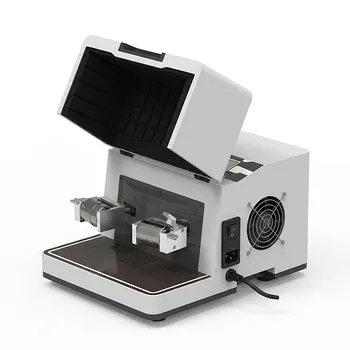
- High-Energy Milling: Advanced planetary ball mills, jet mills, and disc mills paired with premium zirconia media.
- Powder Processing: Sieve shakers, powder mixers, and defoaming mixers for uniform material distribution.
- Advanced Compaction: A full spectrum of hydraulic presses, including Cold/Warm Isostatic Presses (CIP/WIP), vacuum hot presses, and XRF pellet presses.
Ready to enhance your lab's efficiency and material integrity? Contact our technical experts today to find the ideal solution for your powder processing needs!
References
- F. -W. Tu, Qunchao Zhang. Synergistic Enhancement Effect of Polytetrafluoroethylene and WSe2 on the Tribological Performance of Polyetherimide Composites. DOI: 10.3390/lubricants13020044
Mentioned Products
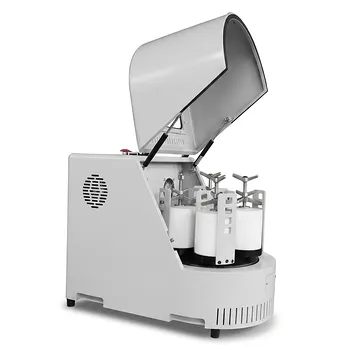
- Vertical Semi Circular Planetary Ball Mill for Laboratory Precision Grinding
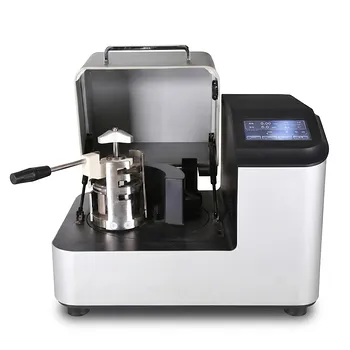
- High Energy Laboratory Planetary Ball Mill for Nano Grinding and Material Science Sample Preparation
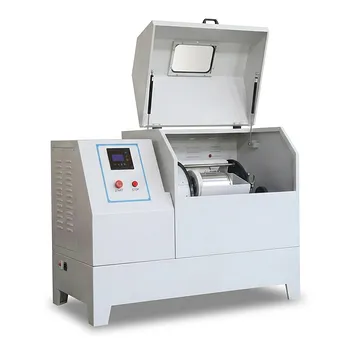
- Heavy Duty Horizontal Planetary Ball Mill for Efficient Industrial Grinding and Sample Preparation
- Vertical Square Planetary Ball Mill for Laboratory Sample Preparation and Nanoscale Grinding
- 8L Planetary Ball Mill for Laboratory Grinding and Sample Preparation
People Also Ask
- What role does a planetary ball mill play in the synthesis of Li6PS5Cl (LPSCl)? Unlock High Ionic Conductivity
- Why is a planetary ball mill essential for SiBCN-rGO wet-spinning? Achieve Superior Dispersion and Spinnability
- Why is an intermittent grinding process required for perovskites in a planetary ball mill? Ensure Stability & Purity
- Why is a planetary ball mill required for PET micronization? Ensure Accurate Chemical Analysis of Reprocessed PET
- How does mechanized planetary ball milling compare to manual agate grinding? Optimize sulfide standard material precision.

Tech Team · PowderPreparation
Last updated on Jun 03, 2026
Related Products
Vertical Semi Circular Planetary Ball Mill for Laboratory Precision Grinding
High Energy Laboratory Planetary Ball Mill for Nano Grinding and Material Science Sample Preparation
Heavy Duty Horizontal Planetary Ball Mill for Efficient Industrial Grinding and Sample Preparation
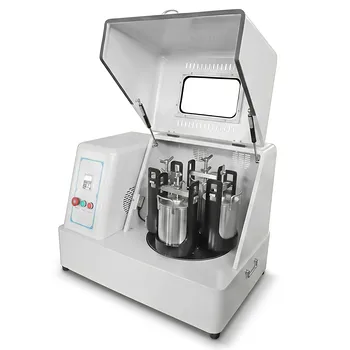
Vertical Square Planetary Ball Mill for Laboratory Sample Preparation and Nanoscale Grinding
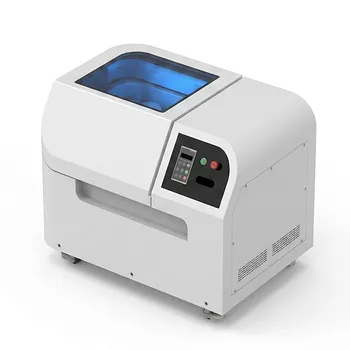
8L Planetary Ball Mill for Laboratory Grinding and Sample Preparation
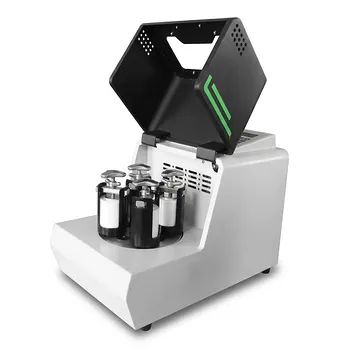
Miniature Planetary Ball Mill with Vacuum Grinding and High Efficiency for Laboratory Sample Preparation
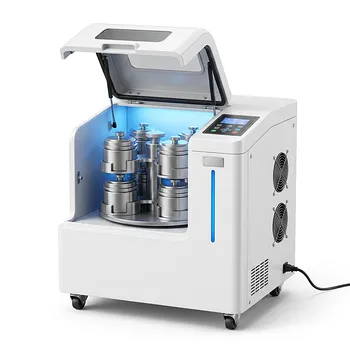
High Energy Omnidirectional Planetary Ball Mill 20L
High Energy Omnidirectional Planetary Ball Mill 16L
Dual Jar High Energy Vibratory Ball Mill

High Energy Planetary Ball Mill for Nano Scale Grinding and Mechanical Alloying
360° Rotating Omnidirectional Laboratory Planetary Ball Mill for Homogeneous Ultra-Fine Grinding and Mixing