Why are zirconia grinding balls preferred for milling (Mg,Co)(Ti,Sn)O3 ceramic powders? Boost Purity & Efficiency
Updated 4 months ago
Zirconia grinding balls are the industry standard for milling (Mg,Co)(Ti,Sn)O3 ceramic powders because they combine extreme hardness and high density with exceptional wear resistance. This unique combination allows for the high-energy impact required to refine powder particles to a sub-micron scale while preventing the introduction of metallic or chemical impurities that would degrade the material's sensitive microwave dielectric properties.
Zirconia media provide the necessary kinetic energy to effectively break down calcined agglomerates over long milling cycles. By minimizing media wear, they ensure the chemical purity and functional performance of the final electronic ceramic.
The Mechanics of High-Energy Refinement
High Density and Impact Force
Zirconia (specifically Yttria-stabilized Zirconia) possesses a high density that generates significant kinetic energy during the ball milling process. This energy is essential for providing the impact forces necessary to crush and refine tough, calcined ceramic agglomerates into a uniform powder.
Efficiency in Particle Size Reduction
Because of their high hardness, zirconia balls do not deform during high-speed collisions. This efficiency allows the milling process to reach the target particle size faster than softer media, such as alumina or glass, reducing overall processing time.
Uniform Particle Distribution
The stable impact energy provided by zirconia ensures a more homogeneous grinding environment. This results in a narrow particle size distribution, which is critical for the subsequent sintering and densification of (Mg,Co)(Ti,Sn)O3 ceramics.
Preserving Material Purity and Performance
Superior Wear Resistance
The primary advantage of zirconia is its low wear rate during repetitive milling cycles that often last between 10 and 24 hours. Minimal wear means that negligible amounts of the grinding media are shed into the powder, keeping the raw material's composition precise.
Protecting Microwave Dielectric Properties
(Mg,Co)(Ti,Sn)O3 is highly sensitive to foreign contaminants, which can drastically alter its dielectric constant and loss tangent. Using zirconia media ensures that the chemical purity of the powder remains intact, preserving the material's intended performance in high-frequency applications.
Chemical Stability and Inertness
Zirconia is chemically inert and does not react with the oxide components of the ceramic slurry. This stability prevents unwanted chemical phases from forming during the high-energy milling process, which could otherwise lead to unpredictable results after firing.
Understanding the Trade-offs
Initial Cost vs. Value
Zirconia grinding media have a higher upfront cost compared to alumina or steel balls. However, their longevity and the prevention of scrapped batches due to contamination typically provide a much higher return on investment for high-performance ceramics.
Density Matching
While high density is generally a benefit, it requires the milling slurry to have an appropriate viscosity. If the slurry is too thin, the high-density balls may cause excessive wear on the milling jar itself or lead to "dead zones" in the mill.
Optimizing Your Milling Process
How to Apply This to Your Project
- If your primary focus is high-frequency performance: Utilize high-purity zirconia media to ensure the dielectric loss remains within specification by eliminating foreign chemical impurities.
- If your primary focus is production throughput: Leverage the high density of zirconia to reduce milling times and achieve the desired particle surface area more rapidly.
- If your primary focus is long-term consistency: Choose yttria-stabilized zirconia for its superior fracture toughness, which prevents media breakage during extended 24-hour milling cycles.
By selecting zirconia media, you ensure that the physical refinement of your ceramic powder does not come at the expense of its vital electronic characteristics.
Summary Table:
| Feature | Benefit for (Mg,Co)(Ti,Sn)O3 | Impact on Final Product |
|---|---|---|
| High Density | Generates high kinetic energy | Rapid reduction to sub-micron scale |
| Extreme Hardness | Resists media deformation | More uniform particle size distribution |
| Low Wear Rate | Minimal media shedding | Preserves sensitive dielectric properties |
| Chemical Inertness | Prevents unwanted phase reactions | Maintains high chemical purity |
| Fracture Toughness | Resists breakage during long cycles | Ensures consistent, stable milling |
Optimize Your Material Preparation with Precision Equipment
Achieve uncompromising purity and consistency in your ceramic powders with [Brand Name]. We provide complete laboratory sample preparation solutions specifically designed for material science and high-performance powder processing.
Whether you are refining sensitive electronic ceramics or developing new alloys, our extensive range of equipment ensures your research stays on the cutting edge:
- Advanced Milling: Planetary ball mills, jet mills, and cryogenic grinders for sub-micron refinement.
- Precision Sizing: Sieve shakers (vibratory/air-jet) and high-quality test sieves.
- Superior Compaction: A full spectrum of hydraulic presses, including Cold/Warm Isostatic Presses (CIP/WIP), vacuum hot presses, and XRF pellet presses.
- Preparation Essentials: Jaw/roll crushers and high-efficiency powder mixers.
Don't let contamination or inconsistent particle size compromise your dielectric performance. Let our experts help you select the ideal tools for your specific application.
Contact Our Engineering Team Today
References
- Hameed Ullah. Effect of Calcium Titanate Addition on the Phase, Microstructure, and Microwave Dielectric Properties of (Mg0.95Co0.05) (Ti0.95 Sn0.05)O3 Ceramics Calcined at 1200 °C for 5h.. DOI: 10.52783/tjjpt.v46.i01.8873
Mentioned Products
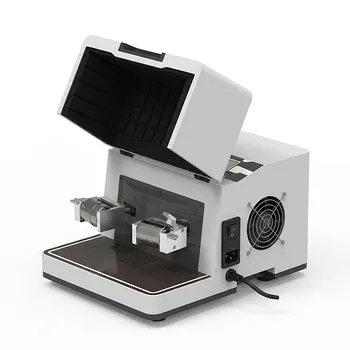
- Vertical Semi Circular Planetary Ball Mill for Laboratory Precision Grinding
- High Energy Laboratory Planetary Ball Mill for Nano Grinding and Material Science Sample Preparation
- Heavy Duty Horizontal Planetary Ball Mill for Efficient Industrial Grinding and Sample Preparation
- Vertical Square Planetary Ball Mill for Laboratory Sample Preparation and Nanoscale Grinding
- 8L Planetary Ball Mill for Laboratory Grinding and Sample Preparation
People Also Ask
- What role does a planetary ball mill play in the synthesis of Li6PS5Cl (LPSCl)? Unlock High Ionic Conductivity
- Why is a planetary ball mill essential for SiBCN-rGO wet-spinning? Achieve Superior Dispersion and Spinnability
- Why is an intermittent grinding process required for perovskites in a planetary ball mill? Ensure Stability & Purity
- Why is a planetary ball mill required for PET micronization? Ensure Accurate Chemical Analysis of Reprocessed PET
- How does mechanized planetary ball milling compare to manual agate grinding? Optimize sulfide standard material precision.

Tech Team · PowderPreparation
Last updated on May 14, 2026
Related Products
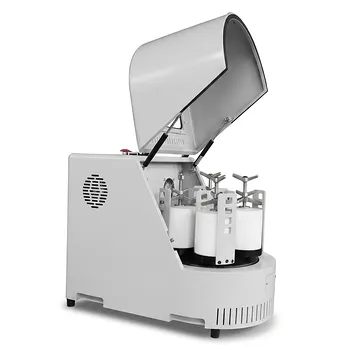
Vertical Semi Circular Planetary Ball Mill for Laboratory Precision Grinding
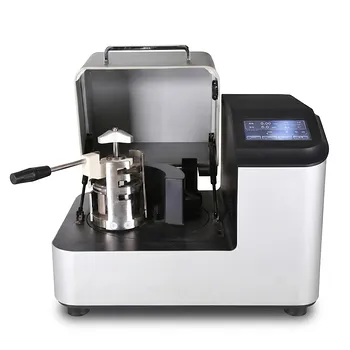
High Energy Laboratory Planetary Ball Mill for Nano Grinding and Material Science Sample Preparation

Heavy Duty Horizontal Planetary Ball Mill for Efficient Industrial Grinding and Sample Preparation

Vertical Square Planetary Ball Mill for Laboratory Sample Preparation and Nanoscale Grinding
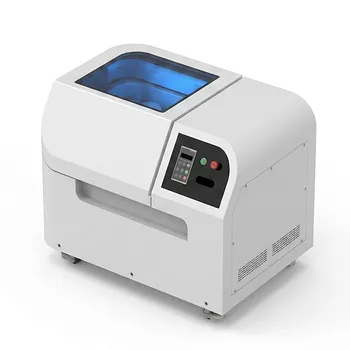
8L Planetary Ball Mill for Laboratory Grinding and Sample Preparation

Miniature Planetary Ball Mill with Vacuum Grinding and High Efficiency for Laboratory Sample Preparation
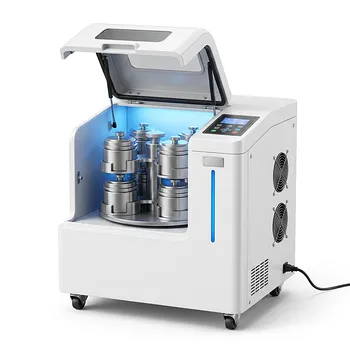
High Energy Omnidirectional Planetary Ball Mill 20L

High Energy Omnidirectional Planetary Ball Mill 16L
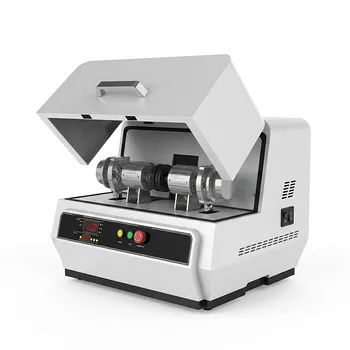
Dual Jar High Energy Vibratory Ball Mill

High Energy Planetary Ball Mill for Nano Scale Grinding and Mechanical Alloying
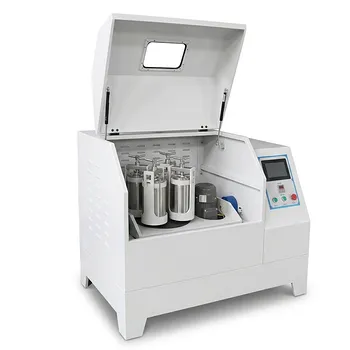
360° Rotating Omnidirectional Laboratory Planetary Ball Mill for Homogeneous Ultra-Fine Grinding and Mixing