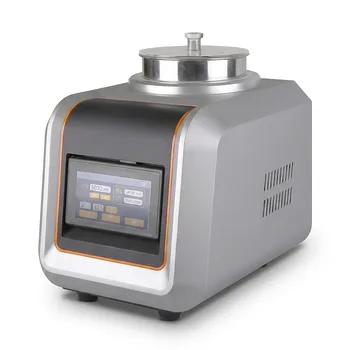
Why are vibratory sieve shakers essential for silicon carbide and coconut shell? Ensure Precision & Strength
Updated 4 months ago
Vibratory sieve shakers are the industry standard for ensuring the precise particle size distribution required to stabilize the physical and chemical properties of composite reinforcements. By utilizing controlled mechanical vibration, these machines isolate specific particle diameters—ranging from micron-grade silicon carbide to processed carbonized coconut shells—to eliminate inconsistencies that would otherwise lead to structural failure or unpredictable material behavior.
Core Takeaway: Vibratory sieve shakers transform raw, ball-milled powders into standardized engineering materials by ensuring particle size uniformity, which is the fundamental prerequisite for predictable mechanical strength, chemical reactivity, and mathematical modeling accuracy.
Achieving Structural Integrity Through Precision Classification
Eliminating Internal Stress Concentrations
In hybrid composites, particle size consistency is a prerequisite for minimizing internal stress concentrations that lead to premature fracturing. When silicon carbide or carbonized coconut shell reinforcements are non-uniform, larger "outlier" particles act as stress risers, while excessively fine particles can cluster and create weak points.
Optimizing Mechanical Interlocking
Precise grading through vibratory sieving ensures that reinforcements provide a high contact area for the matrix material to grip. Smaller, uniform particles facilitate stronger mechanical interlocking, which is essential for increasing the overall tensile strength and Young's modulus of the final component.
Guaranteeing Packing Density and Reactivity
For materials like silicon carbide used in ceramics, controlled particle size ensures optimal packing density during the formulation process. This uniformity reduces uneven shrinkage and deformation during sintering, ensuring that the final product maintains its intended dimensions and structural integrity.
Enhancing Chemical and Physical Stability
Controlling Pore Structure and Activation
When processing carbonized coconut shell for electrochemical applications, uniform particle size is required to achieve controllable chemical activation. A narrow size distribution allows for the formation of a uniform hierarchical pore structure, which directly improves the consistency of the final electrode’s performance.
Ensuring Resin and Kinetic Stability
In resin-based composites, isolating specific particle size ranges (such as -150 to +250 mesh) is critical for shelf life and performance. Research indicates that using improper or non-uniform particle sizes can result in unstable resin properties or significantly shortened shelf lives due to variations in adsorption kinetics.
Standardizing Mechanical Rearrangement
Vibratory shakers provide standardized mechanical impact that causes particles to continuously rearrange and "jump" on the mesh. This ensures that each particle attempts to pass through the opening in multiple orientations, allowing the particle width—the critical parameter for screening—to accurately match the sieve opening.
Validating Predictive Models and Research
Accuracy of Mathematical Predictions
The development of modern composites relies heavily on mathematical models to predict how reinforcements will behave under load. Vibratory sieving provides the high level of particle consistency required to validate these models, ensuring that experimental results match theoretical expectations.
Repeatability of Manufacturing Processes
By using standard test sieves, manufacturers can ensure that every batch of reinforcement powder is identical to the last. This standardization eliminates variations in data caused by particle size fluctuations, guaranteeing the repeatability of the manufacturing process across different production runs.
Understanding the Trade-offs
The Risk of Sieve Blinding
While vibratory shakers are highly effective, very fine or "sticky" powders can lead to sieve blinding, where particles lodge in the mesh and block further passage. This requires the use of anti-blinding aids or specific frequency adjustments to maintain the accuracy of the classification.
Limitations of Mechanical Separation
Mechanical sieving is highly dependent on the physical orientation of the particle; elongated particles may occasionally pass through the mesh "end-on," leading to slight variations in the volume of the isolated fraction. Additionally, excessive vibration over long periods can cause particle attrition, where the material itself breaks down into smaller pieces during the sieving process.
How to Apply This to Your Project
Selecting the right sieving protocol depends entirely on the intended application of your silicon carbide or coconut shell reinforcement.
- If your primary focus is mechanical reinforcement: Prioritize a narrow particle size distribution to maximize mechanical interlocking and minimize internal stress points.
- If your primary focus is electrochemical performance: Use precise mesh sizes (e.g., 150-micron) to ensure a uniform surface area for chemical activation and pore formation.
- If your primary focus is resin-based manufacturing: Isolate specific mesh fractions to prevent unstable adsorption kinetics and preserve the shelf life of your resin.
By mastering the classification of these reinforcement powders, you ensure that the resulting materials are not only strong but fundamentally predictable.
Summary Table:
| Key Factor | Impact on Reinforcements | Final Material Benefit |
|---|---|---|
| Particle Uniformity | Eliminates internal stress concentrations | Enhanced structural integrity & tensile strength |
| Mechanical Interlocking | Maximizes contact area with matrix material | Higher Young’s modulus & composite durability |
| Packing Density | Reduces uneven shrinkage during sintering | Predictable dimensions & chemical reactivity |
| Pore Structure | Standardizes hierarchical activation | Consistent electrochemical & resin performance |
| Process Repeatability | Eliminates batch-to-batch fluctuations | Validation of mathematical predictive models |
Elevate Your Material Research with Precision Sample Preparation
At [Company Name], we understand that the integrity of your composites depends on the precision of your powder processing. We provide complete laboratory sample preparation solutions for material science, specializing in advanced powder processing and compaction equipment.
Whether you are classifying micron-grade silicon carbide or processing carbonized coconut shells, our extensive lines include vibratory and air-jet sieve shakers, a variety of test sieves, and high-energy mills (planetary ball, jet, and disc). To complete your workflow, we manufacture a full spectrum of hydraulic presses, including Cold/Warm Isostatic Presses (CIP/WIP), vacuum hot presses, and XRF pellet presses.
Ready to optimize your particle size management and achieve predictable material performance?
Contact our experts today to find the perfect solution for your lab!
References
- Nwigbo M.N., Ukaru Y.N.. Comparative Study of Tensile Properties of Hybrid AA6061/SIC/Carbonized Coconut Shell Micro and Nano Composites. DOI: 10.52589/ijmce-yemppwep
Mentioned Products
- Vibratory Sieve Shaker Electromagnetic 3D Motion Powder Particle Size Analyzer for Dry and Wet Sieving
- Laboratory Dry and Wet Three Dimensional Vibratory Sieve Shaker for Particle Analysis
- Stainless Steel Laboratory Vibratory Test Sieve Shaker
- Heavy Duty Dry Three Dimensional Vibratory Sieve Shaker for Particle Separation
- Dry Three Dimensional Vibratory Sieve Shaker
People Also Ask
- How does a vibratory sieve shaker contribute to optimizing the performance of activated carbon? Enhance Adsorption Precision
- Why is a laboratory vibratory sieve shaker necessary for processing magnesium-based borate precursor powders? Boost Activity
- Why use a vibratory sieve shaker to verify coarse aggregate grading in rubberized concrete? Ensure Structural Integrity
- What function do vibratory sieve shakers and standard test sieves serve in the preparation of adsorbents? Key Guide
- What role does a vibratory sieve shaker play in the particle size analysis of ground corn products? Enhance QC Precision

Tech Team · PowderPreparation
Last updated on Jun 03, 2026
Related Products

Vibratory Sieve Shaker Electromagnetic 3D Motion Powder Particle Size Analyzer for Dry and Wet Sieving
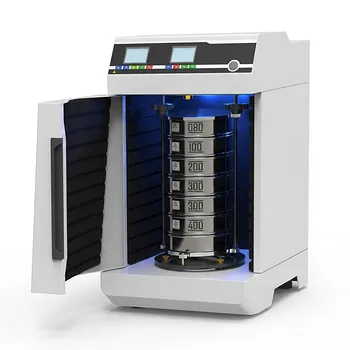
Laboratory Dry and Wet Three Dimensional Vibratory Sieve Shaker for Particle Analysis
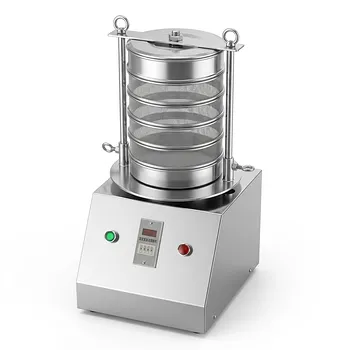
Stainless Steel Laboratory Vibratory Test Sieve Shaker

Heavy Duty Dry Three Dimensional Vibratory Sieve Shaker for Particle Separation

Dry Three Dimensional Vibratory Sieve Shaker

Small Laboratory Vibratory Sieve Shaker for Powder Gradation and Particle Size Analysis
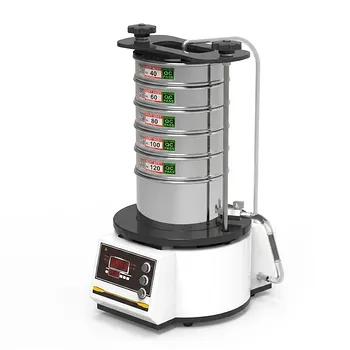
High Frequency Wet Three-Dimensional Vibrating Sieve Shaker for Dry and Wet Particle Size Analysis

Small Laboratory Vibrating Sieve Shaker for Precise Particle Size Analysis
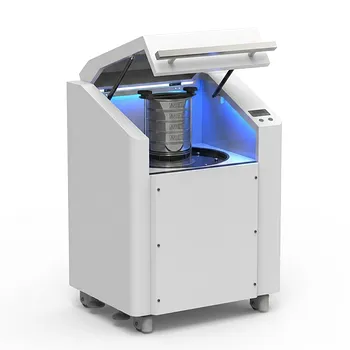
High Frequency Cabinet Type Three-Dimensional Rotary Vibrating Sieve Shaker for Dry Sieving and Particle Classification

Laboratory Vibratory Test Sieve Shaker for Precision Particle Size Analysis and Powder Grading

三维电磁微量振动筛分仪

Tapping Oscillating Sieve Shaker for Dry and Wet Particle Size Analysis

Stainless Steel Rotary Vibrating Sieve High Precision Circular Vibratory Separator Industrial Powder Grading Machine Multi Layer Sifting Equipment

Three Dimensional Rotary Vibrating Sieve
Small Vibrating Ultrafine Grinder for Traditional Chinese Medicine
Automatic Vibrating Powder Feeder for Laboratory Material Processing Precision Vibratory Hopper Feeder for Granular and Powder Material Handling Industrial Grade Vibrating Tray Feeder for Consistent Material Sample Preparation
Vibratory Superfine Grinder for Ultra Fine Laboratory Powder Milling
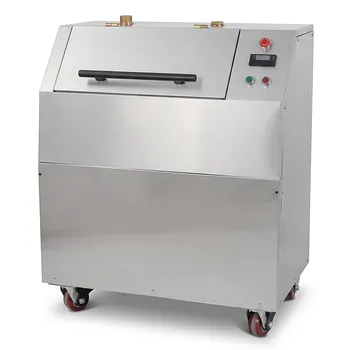
Vibratory Disc Mill for Rapid Fine Grinding and High Throughput Sample Preparation of Hard and Brittle Materials