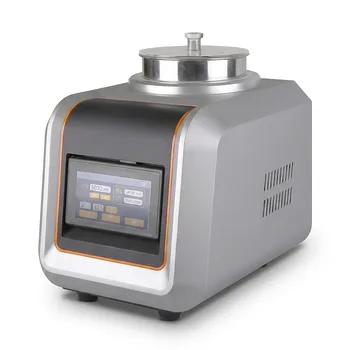
Why are vibratory sieve shakers and standard test sieves used following the fertilizer granulation process? Quality Control
Updated 4 months ago
Vibratory sieve shakers and standard test sieves are used following fertilizer granulation to classify dried granules into specific size fractions while removing undesirable residues. This process ensures a uniform particle size distribution, which is critical for the flowability, bulk density, and compatibility of the fertilizer during mechanical agricultural application.
The primary role of post-granulation sieving is to standardize product quality by isolating ideal granules from fine powders and oversized lumps. Beyond simple classification, this data allows technical personnel to optimize granulation parameters and ensure the physical stability of the final product.
Ensuring Product Uniformity and Marketability
Classification of Finished Granules
A vibratory shaker equipped with multi-layered sieves allows for the rapid separation of granules into distinct categories. This typically involves isolating finished granules (often between 2-4 mm) from the rest of the batch.
Removal of Fines and Oversized Lumps
The mechanical vibration effectively strips away unformed fine powders (less than 2 mm) and broken residues. Simultaneously, it identifies oversized lumps (greater than 4 mm) that could otherwise clog agricultural machinery or unevenly distribute nutrients.
Optimization of Flowability
Uniform particle size is the primary driver of flowability in the field. When particles are consistent in size, they move predictably through mechanical spreaders, preventing the blockages or "surges" that occur with uneven material.
Technical Process Optimization
Quantifying Granulation Performance
By measuring key metrics such as d10, d50, and d90, technicians can evaluate exactly how process parameters affect granule growth. This quantitative data is essential for adjusting granulation formulas and equipment settings to maximize high-quality yield.
Monitoring Physical Integrity
The ratio of fine powder to coarse particles significantly influences the bulk density and structural integrity of the fertilizer. Sieve analysis ensures that the final pellets have the necessary mechanical stability to resist crushing during storage and transport.
Feedback for the Crushing Process
High-precision sieving allows for the targeted adjustment of the initial crushing and grinding phases. By analyzing the fractional composition, operators can determine if raw materials are being ground to the correct fineness modulus required for successful granulation.
Understanding the Trade-offs
Equipment Wear and Abrasive Materials
Fertilizer granules can be highly abrasive, which leads to the gradual wear of sieve meshes. Over time, this wear alters the aperture size, leading to inaccurate grading if sieves are not regularly calibrated or replaced.
Moisture Sensitivity and Blinding
Vibratory sieving is most effective on dried granules; however, if the material retains residual moisture, it can cause "blinding" (clogging) of the sieve openings. This reduces separation efficiency and can lead to the false identification of oversized particles.
Sampling Bias
The data provided by a sieve shaker is only as accurate as the sample provided. If the sample is not representative of the entire production lot, the resulting process adjustments may inadvertently decrease the overall quality of the batch.
Applying Sieve Analysis to Your Production Goal
To achieve the best results from your sieving process, align your methodology with your specific production requirements:
- If your primary focus is mechanical application consistency: Prioritize the removal of all fines below 2mm to ensure that spreaders maintain a constant flow rate without dust interference.
- If your primary focus is process efficiency and yield: Use frequent d50 distribution checks to fine-tune your liquid-to-solid ratios in the granulator, minimizing the volume of material that must be recycled.
- If your primary focus is storage and transport stability: Focus on the cumulative distribution percentage to ensure bulk density remains within the range required to prevent granule deformation under pressure.
By integrating precise sieve analysis into your workflow, you transform a raw chemical output into a high-performance agricultural tool.
Summary Table:
| Process Stage | Goal | Key Particle Metric | Impact on Final Product |
|---|---|---|---|
| Classification | Isolate 2-4 mm granules | d50 (Median diameter) | Ensures uniform nutrient distribution |
| Fines Removal | Extract < 2 mm particles | d10 (Fine fraction) | Reduces dust and prevents material surging |
| Scalping | Remove > 4 mm lumps | d90 (Oversize limit) | Prevents clogging of agricultural machinery |
| Quality Check | Monitor physical integrity | Bulk density | Improves stability during storage & transport |
Elevate Your Material Preparation Standards
Precise particle size control is the backbone of high-quality fertilizer production and material science research. At [Your Brand Name], we provide complete laboratory sample preparation solutions tailored to your specific powder processing and compaction needs.
Whether you are refining raw materials or perfecting finished granules, our extensive equipment line ensures accuracy and reliability:
- Sizing & Analysis: Vibratory and air-jet sieve shakers with a full range of high-precision test sieves.
- Crushing & Grinding: Jaw/roll crushers, liquid nitrogen cryogenic grinders, and advanced mills (planetary ball, jet, sand/bead, disc, and rotor).
- Mixing & Homogenization: High-efficiency powder mixers and vacuum defoaming mixers.
- Compaction & Pressing: A full spectrum of hydraulic presses, including Cold/Warm Isostatic Presses (CIP/WIP), XRF pellet presses, and vacuum hot presses.
Ready to optimize your granulation workflow? Contact our technical experts today to find the perfect equipment configuration for your lab or production line.
References
- Erizal Erizal, Halim Zaini. Production of Granular Potassium Fertilizer from Oil Palm Empty Fruit Bunch (EFB) Incineration Ash. DOI: 10.30811/teknologi.v25i3.7527
Mentioned Products
- Vibratory Sieve Shaker Electromagnetic 3D Motion Powder Particle Size Analyzer for Dry and Wet Sieving
- Laboratory Dry and Wet Three Dimensional Vibratory Sieve Shaker for Particle Analysis
- Stainless Steel Laboratory Vibratory Test Sieve Shaker
- Heavy Duty Dry Three Dimensional Vibratory Sieve Shaker for Particle Separation
- Dry Three Dimensional Vibratory Sieve Shaker
People Also Ask
- How does a vibratory sieve shaker contribute to optimizing the performance of activated carbon? Enhance Adsorption Precision
- Why is a laboratory vibratory sieve shaker necessary for processing magnesium-based borate precursor powders? Boost Activity
- Why use a vibratory sieve shaker to verify coarse aggregate grading in rubberized concrete? Ensure Structural Integrity
- What function do vibratory sieve shakers and standard test sieves serve in the preparation of adsorbents? Key Guide
- What role does a vibratory sieve shaker play in the particle size analysis of ground corn products? Enhance QC Precision

Tech Team · PowderPreparation
Last updated on Jun 03, 2026
Related Products
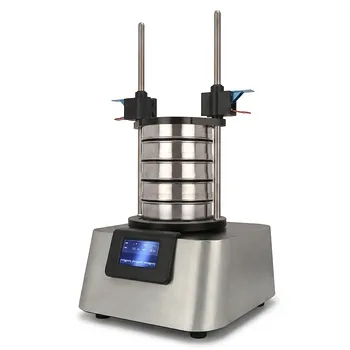
Vibratory Sieve Shaker Electromagnetic 3D Motion Powder Particle Size Analyzer for Dry and Wet Sieving
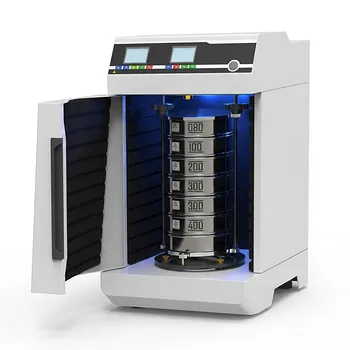
Laboratory Dry and Wet Three Dimensional Vibratory Sieve Shaker for Particle Analysis
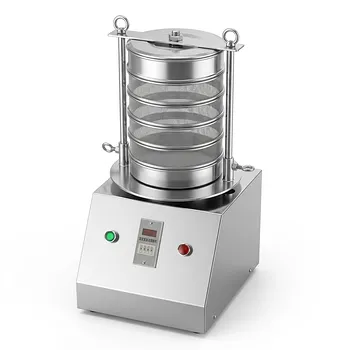
Stainless Steel Laboratory Vibratory Test Sieve Shaker
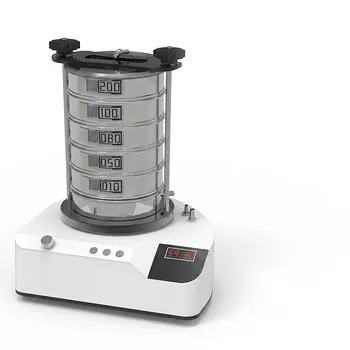
Heavy Duty Dry Three Dimensional Vibratory Sieve Shaker for Particle Separation

Dry Three Dimensional Vibratory Sieve Shaker

Small Laboratory Vibratory Sieve Shaker for Powder Gradation and Particle Size Analysis
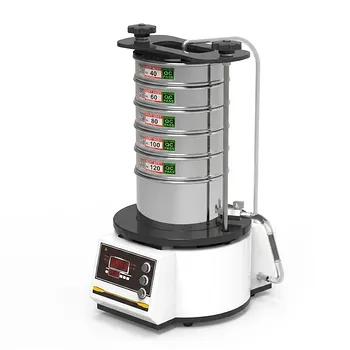
High Frequency Wet Three-Dimensional Vibrating Sieve Shaker for Dry and Wet Particle Size Analysis

Small Laboratory Vibrating Sieve Shaker for Precise Particle Size Analysis
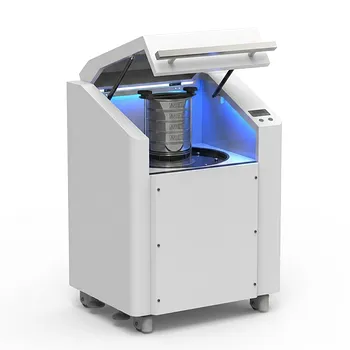
High Frequency Cabinet Type Three-Dimensional Rotary Vibrating Sieve Shaker for Dry Sieving and Particle Classification

Laboratory Vibratory Test Sieve Shaker for Precision Particle Size Analysis and Powder Grading
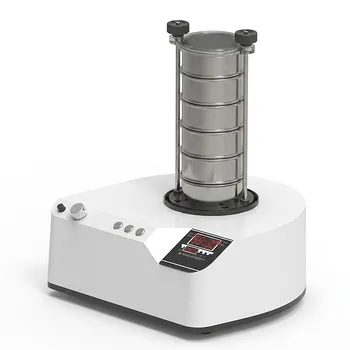
三维电磁微量振动筛分仪
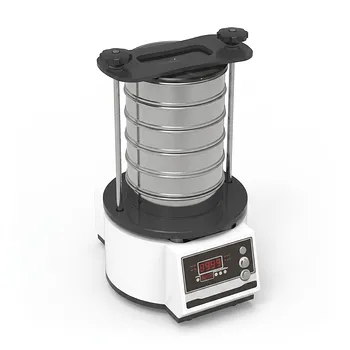
Tapping Oscillating Sieve Shaker for Dry and Wet Particle Size Analysis
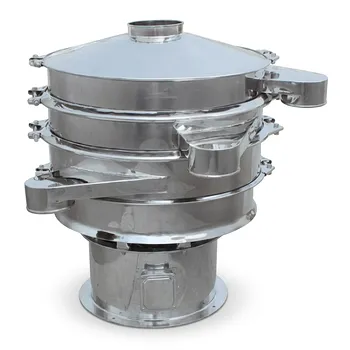
Stainless Steel Rotary Vibrating Sieve High Precision Circular Vibratory Separator Industrial Powder Grading Machine Multi Layer Sifting Equipment
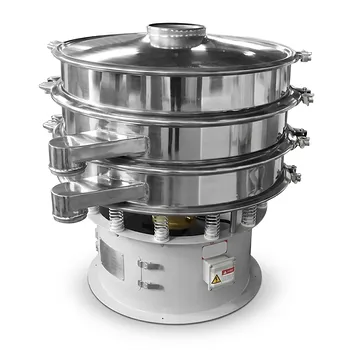
Three Dimensional Rotary Vibrating Sieve
Small Vibrating Ultrafine Grinder for Traditional Chinese Medicine
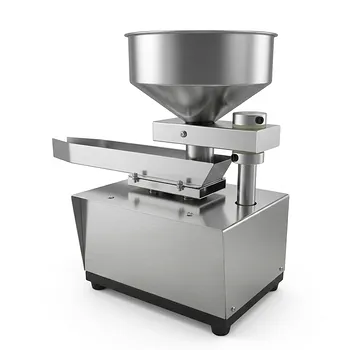
Automatic Vibrating Powder Feeder for Laboratory Material Processing Precision Vibratory Hopper Feeder for Granular and Powder Material Handling Industrial Grade Vibrating Tray Feeder for Consistent Material Sample Preparation
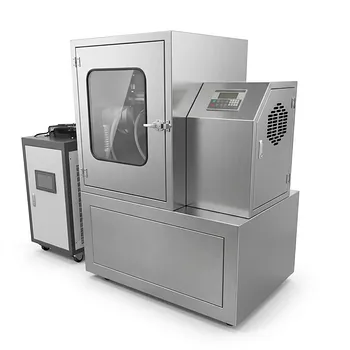
Vibratory Superfine Grinder for Ultra Fine Laboratory Powder Milling
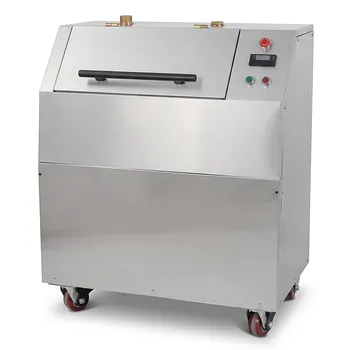
Vibratory Disc Mill for Rapid Fine Grinding and High Throughput Sample Preparation of Hard and Brittle Materials