Why are vibratory sieve shakers and standard test sieves necessary for pellet PSD? Ensure Accurate Quality Control
Updated 5 months ago
The precise characterization of pellet dimensions is fundamental to technical quality control. Vibratory sieve shakers and standard test sieves are necessary because they provide a repeatable, mechanical method to separate pellets into specific size fractions. This process allows for the accurate quantification of particle size distribution (PSD), enabling engineers to calculate product yield and assess the impact of processing parameters on size uniformity.
Sieve analysis serves as the empirical foundation for evaluating process stability and product durability by physically partitioning materials into standardized size ranges. It transforms raw material into actionable data regarding uniformity, coating effectiveness, and compliance with international standards.
Quantifying Particle Size Distribution (PSD)
Mechanical Grading for Precise Fractions
Vibratory sieve shakers provide the consistent mechanical force required to drive pellets through a stack of sieves with decreasing apertures. This physical separation is more reliable than manual methods, ensuring that particles are sorted based on their actual dimensions relative to precise mesh openings, such as 1180μm or 850μm.
Calculating Yield and Span Value
By weighing the material retained on each sieve, operators can calculate the percentage of qualified pellets within a target range. This data is used to determine the Span value, a critical metric for evaluating how tightly the particle sizes are distributed around the mean diameter.
Analyzing Oversize and Fines
This equipment identifies the ratio of oversize particles to fines, which is essential for assessing grinding efficiency or pelletizing success. Quantifying debris—such as particles smaller than 3.15 mm—is a key requirement for assessing mechanical durability in finished products.
Validating Process and Material Integrity
Assessing Coating and Carrier Ratios
In specialized applications, sieve analysis quantifies how the ratio between carrier and coating materials impacts the final dimensions. This ensures that the coating process is uniform and that the pellets meet the specific size requirements necessary for their intended functional use.
Evaluating Process Stability
Regular sieve testing allows engineers to monitor the stability and reproducibility of a production line. Shifts in the particle size distribution curve often serve as an early warning sign of equipment wear or changes in raw material quality, such as variations in paper sludge or wood chip moisture and size.
Optimizing Physical Properties
For materials like refractory clay or soil, PSD directly influences density, air permeability, and volume stability. Using vibratory shakers to achieve a specific grading curve ensures the final product—whether a refractory brick or a compacted soil layer—reaches its maximum theoretical strength and performance.
Understanding the Trade-offs and Pitfalls
Material Attrition During Testing
The mechanical energy required for separation can sometimes cause pellet breakage or "attrition," especially with fragile materials. If the vibration amplitude is set too high or the test duration is too long, the resulting data may falsely report a higher percentage of fines than actually exists in the production batch.
Sieve Blinding and Maintenance
Fine particles can become lodged in the mesh, a phenomenon known as blinding, which reduces the effective aperture size and skews results. Regular cleaning and calibration of standard test sieves are mandatory to maintain the accuracy of the grading process and ensure compliance with ISO 17830 and other international standards.
How to Apply This to Your Project
Making the Right Choice for Your Goal
- If your primary focus is Regulatory Compliance: Ensure your sieve stack and shaker settings align strictly with the apertures and durations specified in ISO 17830 or relevant industry standards.
- If your primary focus is Process Optimization: Use the Span value and PSD curves to adjust your pelletizing parameters, such as binder ratio or disk speed, to maximize the yield of "qualified" particles.
- If your primary focus is Material Performance: Analyze the fine powder proportion to predict the final density and mechanical strength of the finished product.
Consistent sieve analysis transforms physical pellets into the data-driven insights necessary for manufacturing excellence.
Summary Table:
| Key Feature | Functional Benefit | Impact on Quality Control |
|---|---|---|
| Mechanical Grading | Precise separation of size fractions | Ensures repeatable and objective PSD data. |
| Yield Calculation | Determines Span value & qualified % | Optimizes production efficiency and output. |
| Fines Analysis | Quantifies debris (e.g., <3.15 mm) | Assesses mechanical durability and stability. |
| Standard Compliance | Meets ISO 17830 requirements | Guarantees international regulatory alignment. |
| Process Validation | Monitors coating and carrier ratios | Early detection of equipment wear or material shifts. |
Optimize Your Material Analysis with Precision Equipment
Is your laboratory equipped to achieve the highest accuracy in particle size characterization? At [Company Name], we provide complete laboratory sample preparation solutions for material science, specializing in advanced powder processing and compaction equipment.
Whether you are grading technical pellets or preparing complex powders, our extensive product line ensures your success:
- Sieving & Separation: Vibratory and air-jet sieve shakers with a full range of high-precision test sieves.
- Grinding & Milling: Planetary ball mills, jet mills, liquid nitrogen cryogenic grinders, and jaw/roll crushers.
- Mixing: High-efficiency powder mixers and vacuum defoaming mixers.
- Compaction: A full spectrum of hydraulic presses, including Cold/Warm Isostatic Presses (CIP/WIP), XRF pellet presses, and vacuum hot presses.
Ready to elevate your research and production standards? Our experts are here to help you select the right tools for your specific material challenges.
Contact us today to request a quote or technical consultation!
References
- Matthew Lam, Ali Nokhodchi. Factors affecting performance and manufacturability of naproxen Liqui-Pellet. DOI: 10.1007/s40199-020-00362-9
Mentioned Products
- Vibratory Sieve Shaker Electromagnetic 3D Motion Powder Particle Size Analyzer for Dry and Wet Sieving
- Laboratory Dry and Wet Three Dimensional Vibratory Sieve Shaker for Particle Analysis
- Heavy Duty Dry Three Dimensional Vibratory Sieve Shaker for Particle Separation
- Dry Three Dimensional Vibratory Sieve Shaker
- Stainless Steel Laboratory Vibratory Test Sieve Shaker
People Also Ask
- How does a vibratory sieve shaker contribute to optimizing the performance of activated carbon? Enhance Adsorption Precision
- Why is a laboratory vibratory sieve shaker necessary for processing magnesium-based borate precursor powders? Boost Activity
- Why use a vibratory sieve shaker to verify coarse aggregate grading in rubberized concrete? Ensure Structural Integrity
- What function do vibratory sieve shakers and standard test sieves serve in the preparation of adsorbents? Key Guide
- What role does a vibratory sieve shaker play in the particle size analysis of ground corn products? Enhance QC Precision

Tech Team · PowderPreparation
Last updated on May 14, 2026
Related Products
Vibratory Sieve Shaker Electromagnetic 3D Motion Powder Particle Size Analyzer for Dry and Wet Sieving
Laboratory Dry and Wet Three Dimensional Vibratory Sieve Shaker for Particle Analysis
Heavy Duty Dry Three Dimensional Vibratory Sieve Shaker for Particle Separation
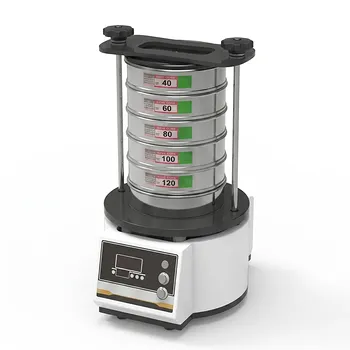
Dry Three Dimensional Vibratory Sieve Shaker
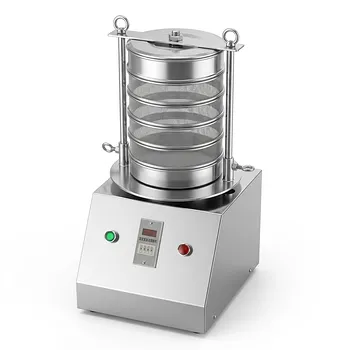
Stainless Steel Laboratory Vibratory Test Sieve Shaker
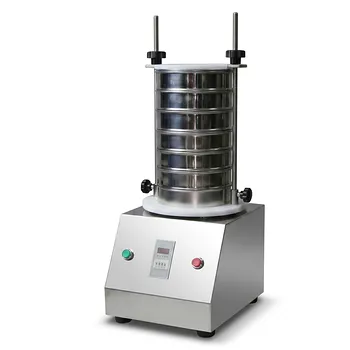
Small Laboratory Vibratory Sieve Shaker for Powder Gradation and Particle Size Analysis
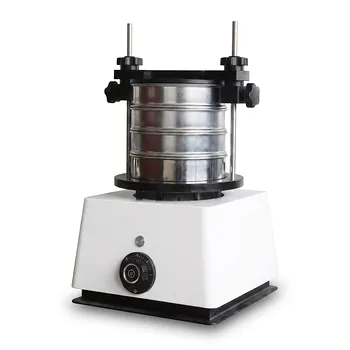
Small Laboratory Vibrating Sieve Shaker for Precise Particle Size Analysis
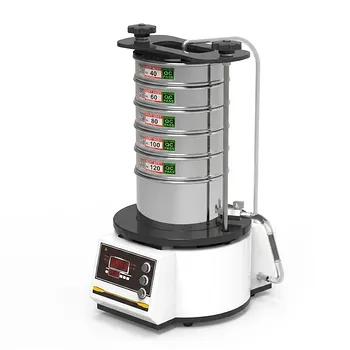
High Frequency Wet Three-Dimensional Vibrating Sieve Shaker for Dry and Wet Particle Size Analysis
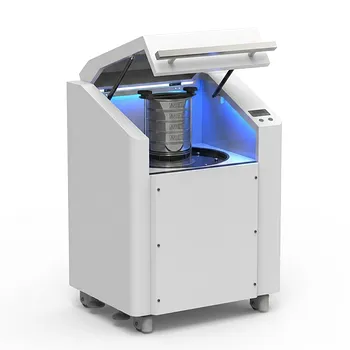
High Frequency Cabinet Type Three-Dimensional Rotary Vibrating Sieve Shaker for Dry Sieving and Particle Classification
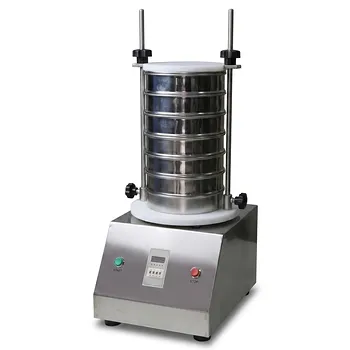
Laboratory Vibratory Test Sieve Shaker for Precision Particle Size Analysis and Powder Grading
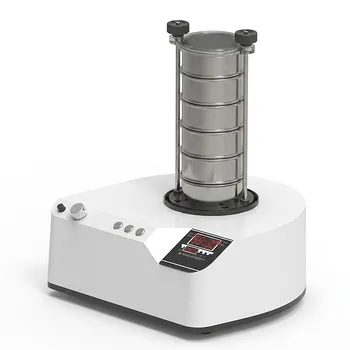
三维电磁微量振动筛分仪
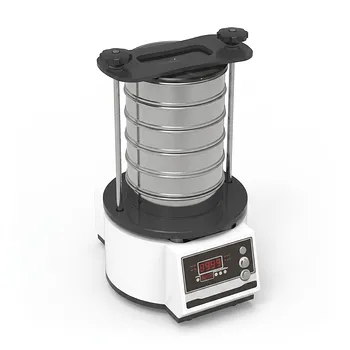
Tapping Oscillating Sieve Shaker for Dry and Wet Particle Size Analysis
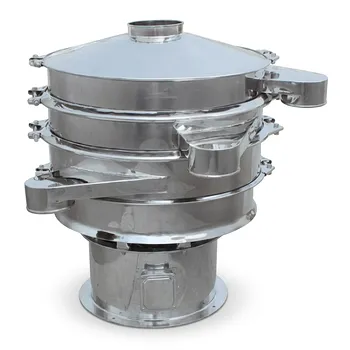
Stainless Steel Rotary Vibrating Sieve High Precision Circular Vibratory Separator Industrial Powder Grading Machine Multi Layer Sifting Equipment
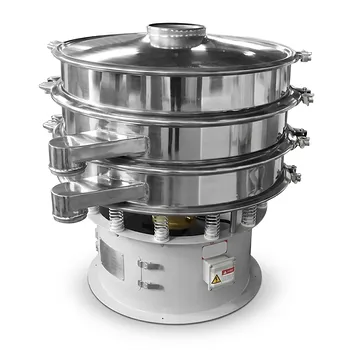
Three Dimensional Rotary Vibrating Sieve
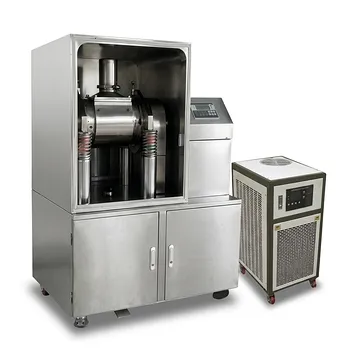
Small Vibrating Ultrafine Grinder for Traditional Chinese Medicine

Automatic Vibrating Powder Feeder for Laboratory Material Processing Precision Vibratory Hopper Feeder for Granular and Powder Material Handling Industrial Grade Vibrating Tray Feeder for Consistent Material Sample Preparation
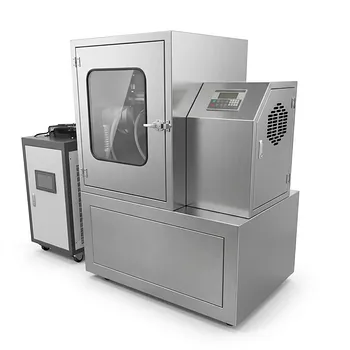
Vibratory Superfine Grinder for Ultra Fine Laboratory Powder Milling
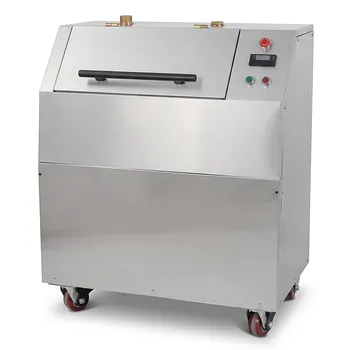
Vibratory Disc Mill for Rapid Fine Grinding and High Throughput Sample Preparation of Hard and Brittle Materials