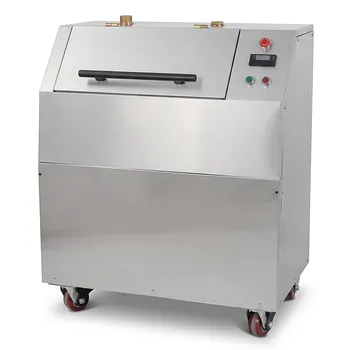
Why are vibratory sieve shakers and standard test sieves essential? Ensure Accurate TGA & Reliable Biomass Analysis
Updated 5 months ago
Standardizing particle size is the foundation of reliable thermogravimetric analysis (TGA). Vibratory sieve shakers and standard test sieves are essential because they ensure powdered biomass fuel falls within a precise, uniform range—typically 45 to 200 µm. This strict control eliminates experimental errors caused by non-uniform particles, such as heat transfer lag and inconsistent reaction rates, ensuring that combustion parameters remain scientifically representative.
Accuracy in TGA requires the elimination of physical variables that interfere with chemical data. By utilizing vibratory sieving to reach a uniform particle size, researchers can ensure that measured thermal behaviors reflect the material's intrinsic properties rather than the size of the sample grains.
Ensuring Thermal and Kinetic Consistency
Eliminating Heat Transfer Lag
During TGA, heat must penetrate the biomass particles evenly to trigger reactions. If particles are too large or varied in size, a heat transfer lag occurs, where the core of the particle is significantly cooler than the surface. This discrepancy creates false readings in the timing of volatile matter release and carbon combustion.
Standardizing Reaction Rates
Uniform particle size ensures that the Ignition Temperature of Volatile Matter (ITVM) and the Ignition Temperature of Fixed Carbon (ITFC) are comparable across different samples. When particle size is strictly controlled, the reaction rates become predictable. This allows researchers to attribute changes in thermal behavior to the chemical composition of the biomass rather than physical dimensions.
Maximizing Surface Area Consistency
Vibratory shakers help achieve a consistent surface area-to-volume ratio for all particles in a test batch. This ratio is critical for simultaneous thermal analysis, as it dictates how the sample interacts with the surrounding atmosphere. Consistent surface area ensures that oxygen diffusion and heat absorption occur at a uniform rate.
Overcoming Physical and Diffusion Limitations
Preventing Internal Diffusion Issues
Oversized particles often suffer from internal diffusion limitations, where gases produced during pyrolysis or combustion cannot escape the particle efficiently. This can lead to incomplete reactions and skewed kinetic data. Using sieves with apertures like 100 to 200 µm ensures that particles are small enough to allow for rapid mass transfer.
Mitigating Fiber Entanglement
Biomass is naturally fibrous, which often leads to fiber entanglement during manual sieving, causing particles to clump and give false size readings. A vibratory sieve shaker uses controlled mechanical vibration and amplitude to move particles rhythmically across the sieve surface. This standardized action breaks up clusters and ensures that every particle makes thorough contact with the mesh.
Enhancing Repeatability and Reliability
Standardized mechanical sieving provides a level of repeatability that manual methods cannot match. By maintaining a constant vibration frequency, the shaker produces a statistically accurate particle size distribution. This precision is vital for the accuracy of physicochemical characterization, including the analysis of cellulose and lignin content.
Understanding the Trade-offs and Pitfalls
The Risk of Sieve Blinding
While vibratory shakers are efficient, fine biomass powders can cause sieve blinding, where particles become wedged in the mesh openings. This reduces the effective sieving area and can lead to an inaccurate distribution of sizes. Regular cleaning and the use of de-blinding aids (like tapping balls) are often necessary to maintain accuracy.
Sample Degradation from Over-Sieving
Extended sieving times can lead to mechanical degradation of the biomass particles. The constant vibration may cause brittle biomass to break down into even smaller fines during the process itself. It is critical to establish a standardized sieving duration to prevent the sample from changing its physical properties during classification.
Potential for Material Loss
During the transfer between the grinder, the sieve stack, and the TGA crucible, there is a risk of losing volatile components or fine dust. Because biomass TGA often requires small sample masses, even a minor loss of the finest particles can slightly alter the representative nature of the bulk sample.
How to Apply This to Your Project
Making the Right Choice for Your Goal
- If your primary focus is TGA kinetic modeling: Use a vibratory shaker with sieves between 75–90 μm to eliminate heat transfer lag and ensure the highest precision for pyrolysis kinetic data.
- If your primary focus is industrial pellet production: Focus on achieving a wider particle size distribution (e.g., up to 60 mesh) to optimize feeding rates and improve the mechanical stability and energy density of the finished fuel.
- If your primary focus is hydrothermal carbonization (HTC): Prioritize sieving to approximately 0.25 mm to maintain mass transfer efficiency and prevent the incomplete reactions associated with oversized particles.
By strictly controlling particle size through standardized vibratory sieving, you transform raw biomass into a scientifically viable fuel sample capable of yielding precise, repeatable thermal data.
Summary Table:
| Key Benefit | Impact on Thermogravimetric Analysis (TGA) | Recommended Specifications |
|---|---|---|
| Uniform Heat Transfer | Eliminates thermal lag; ensures core and surface heat evenly. | Particle size: 45 to 200 µm |
| Kinetic Precision | Standardizes ITVM and ITFC for comparable reaction rates. | Precision mesh sieves |
| Mass Transfer | Prevents internal diffusion issues and incomplete reactions. | 100 to 200 µm apertures |
| Fiber Management | Mechanical vibration breaks up biomass fiber entanglement. | Vibratory shaker with amplitude control |
| Repeatability | Ensures statistically accurate and repeatable size distribution. | Standardized sieving duration |
Optimize Your Biomass Research with Precision Lab Equipment
Achieving scientific accuracy in thermogravimetric analysis (TGA) starts with flawless sample preparation. We provide complete laboratory solutions for material science, specializing in high-performance powder processing and compaction equipment.
Whether you are characterizing fibrous biomass or developing advanced materials, our extensive product line ensures your samples meet the strictest standards:
- Sieve Analysis: Vibratory and air-jet sieve shakers with a full range of test sieves and meshes.
- Milling & Grinding: Planetary ball mills, jet mills, rotor mills, and liquid nitrogen cryogenic grinders.
- Compaction & Processing: Standard lab presses, Cold/Warm Isostatic Presses (CIP/WIP), and vacuum hot presses.
- Mixing: High-efficiency powder and defoaming mixers.
Ready to elevate your data reliability? Contact our experts today to find the perfect equipment configuration for your specific research goals.
References
- Nurkholis Hamidi, Naufal Muhammad Faiz. THERMOGRAVIMETRIC ANALYSIS OF PULVERIZED RICE HUSK WASTE CATALYTIC COMBUSTION WITH NATURAL ZEOLIT. DOI: 10.21776/mechta.2024.005.02.7
Mentioned Products
- Vibratory Sieve Shaker Electromagnetic 3D Motion Powder Particle Size Analyzer for Dry and Wet Sieving
- Laboratory Dry and Wet Three Dimensional Vibratory Sieve Shaker for Particle Analysis
- Dry Three Dimensional Vibratory Sieve Shaker
- Stainless Steel Laboratory Vibratory Test Sieve Shaker
- Heavy Duty Dry Three Dimensional Vibratory Sieve Shaker for Particle Separation
People Also Ask
- How does a vibratory sieve shaker contribute to optimizing the performance of activated carbon? Enhance Adsorption Precision
- Why is a laboratory vibratory sieve shaker necessary for processing magnesium-based borate precursor powders? Boost Activity
- Why use a vibratory sieve shaker to verify coarse aggregate grading in rubberized concrete? Ensure Structural Integrity
- What function do vibratory sieve shakers and standard test sieves serve in the preparation of adsorbents? Key Guide
- What role does a vibratory sieve shaker play in the particle size analysis of ground corn products? Enhance QC Precision

Tech Team · PowderPreparation
Last updated on May 14, 2026
Related Products
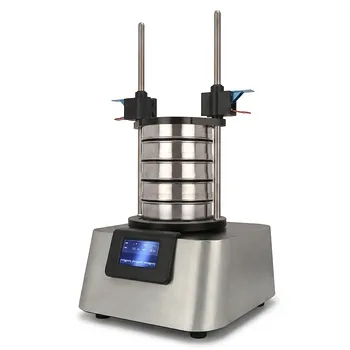
Vibratory Sieve Shaker Electromagnetic 3D Motion Powder Particle Size Analyzer for Dry and Wet Sieving
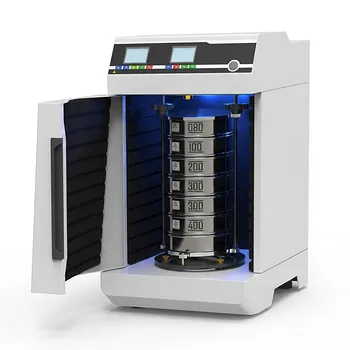
Laboratory Dry and Wet Three Dimensional Vibratory Sieve Shaker for Particle Analysis
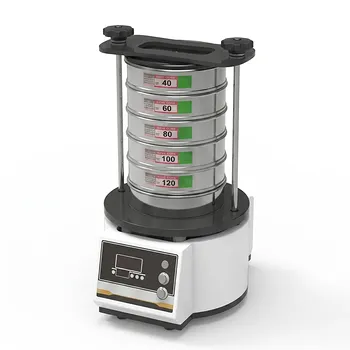
Dry Three Dimensional Vibratory Sieve Shaker
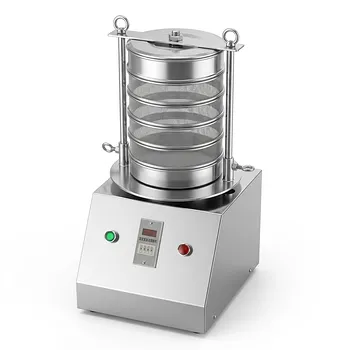
Stainless Steel Laboratory Vibratory Test Sieve Shaker
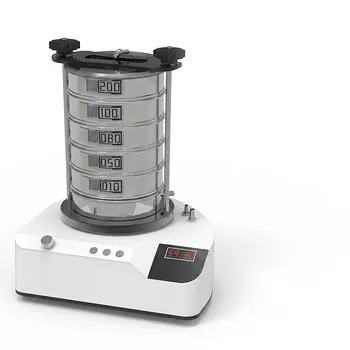
Heavy Duty Dry Three Dimensional Vibratory Sieve Shaker for Particle Separation
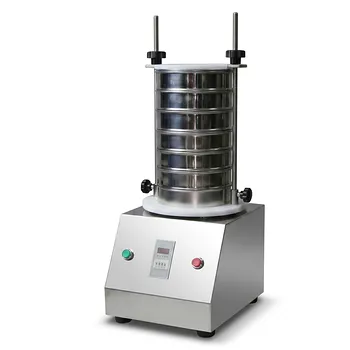
Small Laboratory Vibratory Sieve Shaker for Powder Gradation and Particle Size Analysis
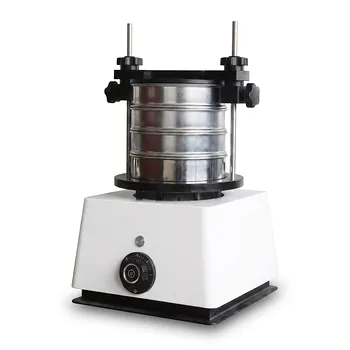
Small Laboratory Vibrating Sieve Shaker for Precise Particle Size Analysis
High Frequency Wet Three-Dimensional Vibrating Sieve Shaker for Dry and Wet Particle Size Analysis
High Frequency Cabinet Type Three-Dimensional Rotary Vibrating Sieve Shaker for Dry Sieving and Particle Classification
Laboratory Vibratory Test Sieve Shaker for Precision Particle Size Analysis and Powder Grading
三维电磁微量振动筛分仪
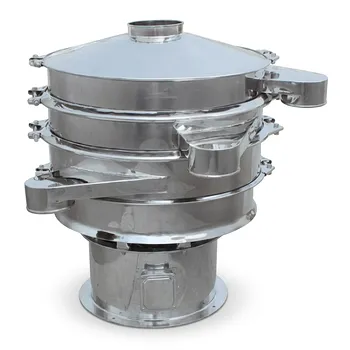
Stainless Steel Rotary Vibrating Sieve High Precision Circular Vibratory Separator Industrial Powder Grading Machine Multi Layer Sifting Equipment
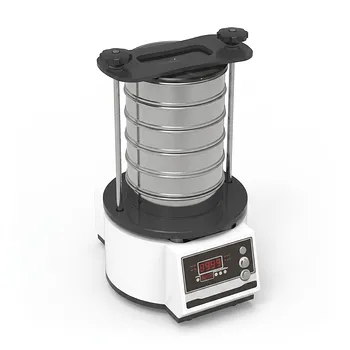
Tapping Oscillating Sieve Shaker for Dry and Wet Particle Size Analysis
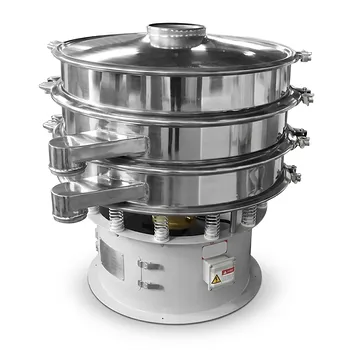
Three Dimensional Rotary Vibrating Sieve
Vibratory Superfine Grinder for Ultra Fine Laboratory Powder Milling
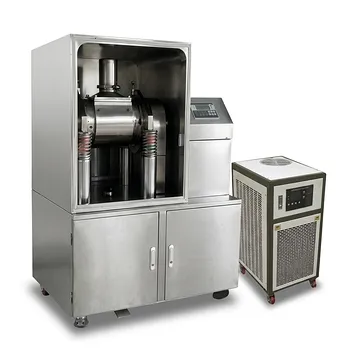
Small Vibrating Ultrafine Grinder for Traditional Chinese Medicine
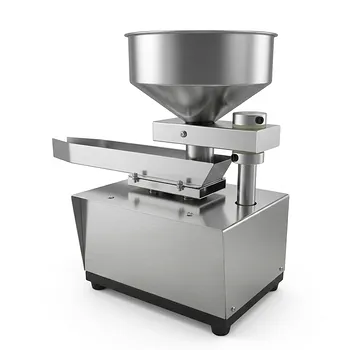
Automatic Vibrating Powder Feeder for Laboratory Material Processing Precision Vibratory Hopper Feeder for Granular and Powder Material Handling Industrial Grade Vibrating Tray Feeder for Consistent Material Sample Preparation