Why are vibratory sieve shakers and standard test sieves essential for the physical characterization of modified glutinous rice starch? Guide
Updated 4 months ago
Precision in particle size distribution is the cornerstone of modified starch performance.
Vibratory sieve shakers and standard test sieves are essential because they provide a definitive method for measuring the particle size distribution (PSD) of modified glutinous rice starch. This measurement is a critical physical indicator because the fineness of the starch directly dictates its powder flowability, mixing uniformity, and the functional characteristics of the end product, such as the mechanical hardness of tablets or the expansion rate of food products.
Particle size governs both the processing behavior and the final functional quality of modified starch. Utilizing vibratory sieving ensures a uniform distribution that eliminates physical variables, guaranteeing predictable chemical reactivity and mechanical performance.
The Impact of Particle Size on Functional Performance
Influence on Powder Flow and Mixing
The size of starch particles determines how easily the powder moves through industrial equipment. Uniform particle size prevents material segregation during the mixing process, which is vital for ensuring that modified starch is evenly distributed when used as an additive or excipient.
Effects on Tablet and Material Hardness
In pharmaceutical and industrial applications, the PSD of modified starch directly affects the mechanical hardness and drug release kinetics of compressed tablets. Precisely graded starch ensures that the internal structure of the compressed material is consistent, preventing structural failures or unpredictable dissolution rates.
Texture and Expansion in Food Science
For food applications, such as rice flakes or snacks, particle fineness determines texture uniformity, crispness, and expansion rates. Sieve analysis allows manufacturers to verify if milling processes have achieved the necessary "pass rate" (e.g., through a 120-mesh sieve) to ensure a high-quality mouthfeel and consistent product volume.
Ensuring Process Consistency and Chemical Reactivity
Synchronizing Reaction Rates
Establishing a uniform particle size distribution is critical for chemical processes like hydrolysis. When particles are uniform, they experience synchronized heating and reaction rates, which increases the conversion rate of sugars and ensures the repeatability of experimental results.
Monitoring Pre-Gelatinization Quality
Vibratory shakers are used to quantitatively analyze the impact of the pre-gelatinization process on starch granules. By monitoring the fine powder content and ensuring it remains within specific limits (such as below 10%), producers can guarantee consistent granule mixing and prevent flow fluctuations during manufacturing.
Enhancing Composite Material Properties
In applications where starch or rice derivatives are used as fillers in composites, precise grading via 250-micrometer sieves ensures filler consistency. This reduction in size variance enhances the mechanical properties of the final composite by reducing internal stress points caused by uneven particles.
Understanding the Trade-offs
Vibration Intensity vs. Particle Integrity
While high-frequency vibration is necessary to move fine starch particles through the mesh, excessive energy can cause particle attrition. If the vibration is too aggressive, fragile modified starch granules may break, leading to "false positives" in the fine powder data.
Static Electricity and Mesh Blinding
Modified glutinous rice starch is often prone to static buildup, which can cause fine particles to adhere to the sieve wires or clump together. This "blinding" of the mesh can lead to inaccurate grading, requiring the use of anti-static agents or specialized cleaning balls within the sieve stack.
Optimizing Your Characterization Strategy
Successful physical characterization requires matching your sieving protocol to your specific end-use requirements.
- If your primary focus is pharmaceutical tableting: Prioritize a multi-layer stack of 40 to 100 mesh sieves to ensure the PSD aligns with required drug release kinetics and tablet density.
- If your primary focus is chemical modification/hydrolysis: Focus on achieving a narrow distribution range to ensure all particles react at the same rate, maximizing your monomeric sugar yield.
- If your primary focus is food manufacturing texture: Use a broad range of sieves (up to 120 mesh) to verify the pass rate of fine powders, which directly correlates to product crispness and expansion.
Implementing a rigorous sieving protocol transforms modified starch from an inconsistent raw material into a predictable technical component.
Summary Table:
| Application Category | Key Impact of Particle Size | Recommended Sieve Range |
|---|---|---|
| Pharmaceuticals | Influences tablet hardness & drug release kinetics | 40 to 100 Mesh |
| Food Science | Determines texture, expansion, and mouthfeel | Up to 120 Mesh |
| Chemical Processing | Ensures uniform reaction rates & sugar conversion | Narrow distribution range |
| Composite Materials | Enhances mechanical properties & filler consistency | 250-micrometer sieves |
| Quality Control | Monitors pre-gelatinization & prevents clumping | Fine powder limit < 10% |
Elevate Your Material Characterization Precision
Achieving consistent results in modified starch production requires high-precision equipment designed for rigorous laboratory standards. At [Company Name], we provide complete laboratory sample preparation solutions for material science, specializing in advanced powder processing and compaction equipment.
Whether you are analyzing particle size distribution or preparing samples for chemical modification, our extensive product line supports your entire workflow:
- Sieving & Grading: High-efficiency vibratory and air-jet sieve shakers with a full range of test sieves and meshes.
- Milling & Grinding: Planetary ball mills, jet mills, and liquid nitrogen cryogenic grinders for ultra-fine powder preparation.
- Crushing: Robust jaw and roll crushers for initial material reduction.
- Mixing: Precision powder mixers and defoaming mixers for uniform blending.
- Pressing & Compaction: A full spectrum of hydraulic presses, including Cold/Warm Isostatic Presses (CIP/WIP), XRF pellet presses, and vacuum hot presses.
Ready to optimize your lab's efficiency and ensure superior product quality? Contact our experts today to find the perfect equipment configuration for your specific material science applications!
References
- Jomjai Peerapattana, Voranuch Srijesdaruk. Modified Glutinous Starch as a Hydrophilic Matrix Substance(แปงขาวเหนยวดดแปรเพอใชเปนสารเมทรกซชนดชอบนำ). DOI: 10.56808/3027-7922.2246
Mentioned Products
- Vibratory Sieve Shaker Electromagnetic 3D Motion Powder Particle Size Analyzer for Dry and Wet Sieving
- Laboratory Dry and Wet Three Dimensional Vibratory Sieve Shaker for Particle Analysis
- Dry Three Dimensional Vibratory Sieve Shaker
- Stainless Steel Laboratory Vibratory Test Sieve Shaker
- Heavy Duty Dry Three Dimensional Vibratory Sieve Shaker for Particle Separation
People Also Ask
- How does a vibratory sieve shaker contribute to optimizing the performance of activated carbon? Enhance Adsorption Precision
- Why is a laboratory vibratory sieve shaker necessary for processing magnesium-based borate precursor powders? Boost Activity
- Why use a vibratory sieve shaker to verify coarse aggregate grading in rubberized concrete? Ensure Structural Integrity
- What function do vibratory sieve shakers and standard test sieves serve in the preparation of adsorbents? Key Guide
- What role does a vibratory sieve shaker play in the particle size analysis of ground corn products? Enhance QC Precision

Tech Team · PowderPreparation
Last updated on Jun 03, 2026
Related Products
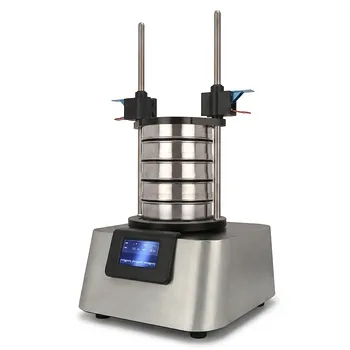
Vibratory Sieve Shaker Electromagnetic 3D Motion Powder Particle Size Analyzer for Dry and Wet Sieving
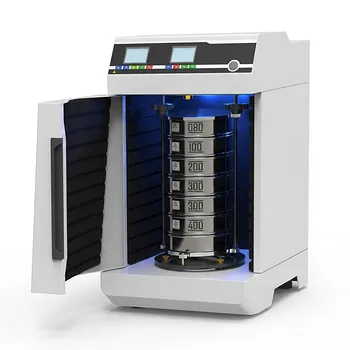
Laboratory Dry and Wet Three Dimensional Vibratory Sieve Shaker for Particle Analysis
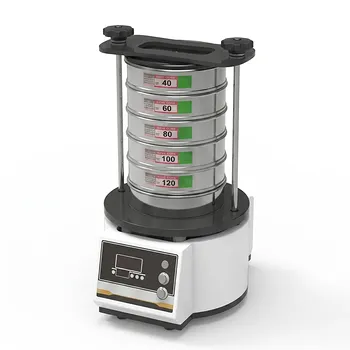
Dry Three Dimensional Vibratory Sieve Shaker
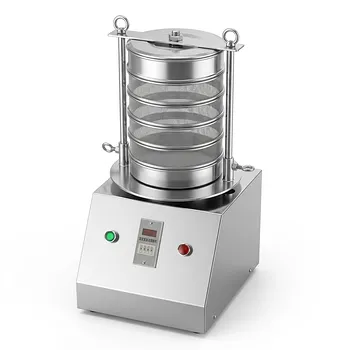
Stainless Steel Laboratory Vibratory Test Sieve Shaker
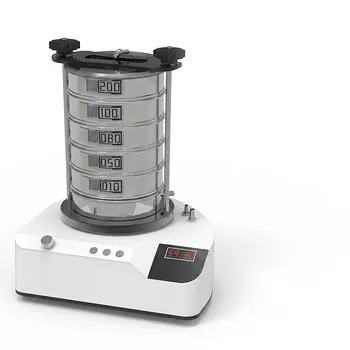
Heavy Duty Dry Three Dimensional Vibratory Sieve Shaker for Particle Separation
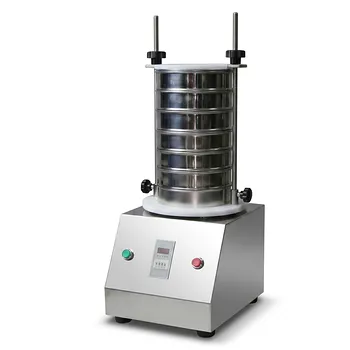
Small Laboratory Vibratory Sieve Shaker for Powder Gradation and Particle Size Analysis
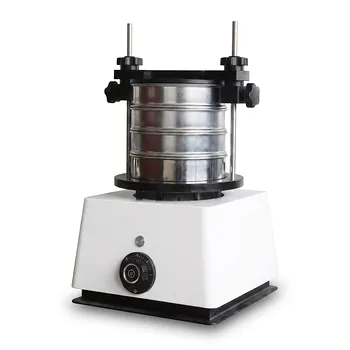
Small Laboratory Vibrating Sieve Shaker for Precise Particle Size Analysis
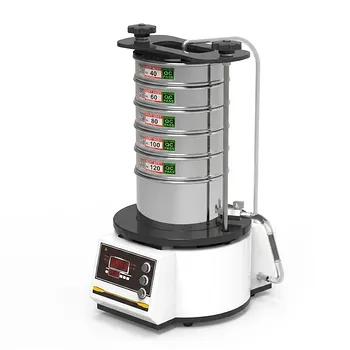
High Frequency Wet Three-Dimensional Vibrating Sieve Shaker for Dry and Wet Particle Size Analysis
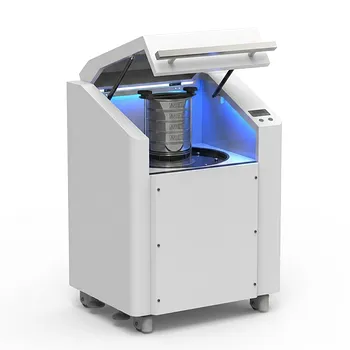
High Frequency Cabinet Type Three-Dimensional Rotary Vibrating Sieve Shaker for Dry Sieving and Particle Classification
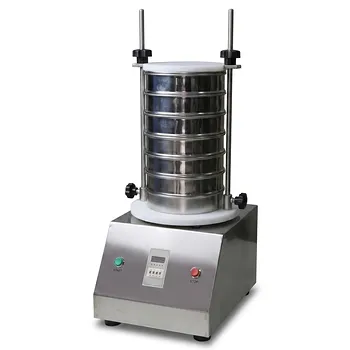
Laboratory Vibratory Test Sieve Shaker for Precision Particle Size Analysis and Powder Grading
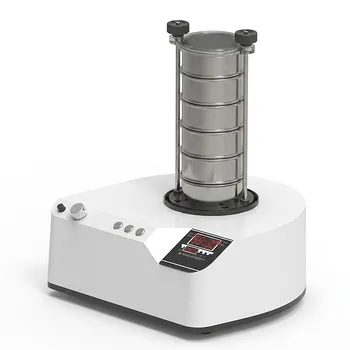
三维电磁微量振动筛分仪
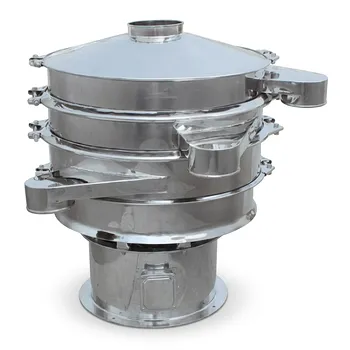
Stainless Steel Rotary Vibrating Sieve High Precision Circular Vibratory Separator Industrial Powder Grading Machine Multi Layer Sifting Equipment
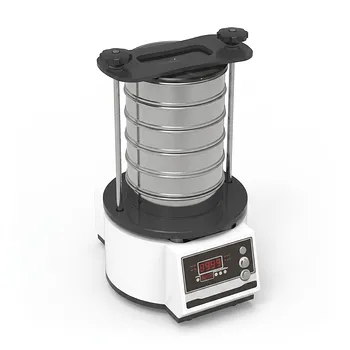
Tapping Oscillating Sieve Shaker for Dry and Wet Particle Size Analysis
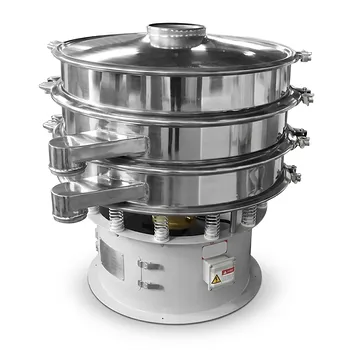
Three Dimensional Rotary Vibrating Sieve
Vibratory Superfine Grinder for Ultra Fine Laboratory Powder Milling
Small Vibrating Ultrafine Grinder for Traditional Chinese Medicine
Automatic Vibrating Powder Feeder for Laboratory Material Processing Precision Vibratory Hopper Feeder for Granular and Powder Material Handling Industrial Grade Vibrating Tray Feeder for Consistent Material Sample Preparation