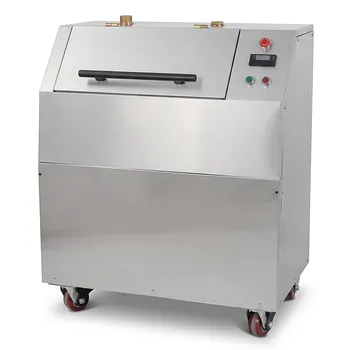
Why are vibratory sieve shakers and standard test sieves essential for processing eggshell and orange peel powders?
Updated 4 months ago
Precision particle size control is the foundation of turning biological waste into high-performance industrial materials. Vibratory sieve shakers and standard test sieves are essential because they ensure particle size uniformity, which directly dictates the chemical reactivity, mechanical strength, and structural integrity of products derived from eggshell and orange peel powders.
Core Takeaway: By eliminating oversized particles and agglomerates, vibratory sieving ensures a narrow particle size distribution that is critical for predictable mass transfer, structural stability, and maximum surface area exposure in bio-adsorbent and composite applications.
Enhancing Material Performance and Structural Integrity
Preventing Structural Defects and Cracking
Achieving a uniform and fine particle size is critical for improving the physical uniformity of bio-adsorptive films. When particles are consistent, the resulting material is less likely to develop macroscopic cracks that compromise the product's integrity.
Ensuring Mechanical Consistency in Composites
For orange peel fillers used in composite materials, maintaining a specific particle size distribution (ranging from 1 µm to 212 µm) is decisive. This consistency ensures that the mechanical properties and erosive wear behavior of the final composite remain predictable across different batches.
Eliminating Internal Stress Concentrations
In applications like modified bitumen, eggshell powder must be strictly controlled (often below 150μm). This prevents internal stress concentration and particle settlement, ensuring the modified material remains stable and performs reliably under environmental stress.
Optimizing Chemical and Biological Interactions
Maximizing Bio-Adsorption Efficiency
Fine, uniform particles increase the available surface area, which significantly enhances contact efficiency for the adsorption of heavy metal ions. This makes vibratory sieving a non-negotiable step for producing effective bio-adsorbent materials from eggshells.
Standardizing Mass Transfer for Extraction
When processing plant powders like orange peel for hydrothermal extraction, precise grading ensures consistent mass transfer rates. This prevents fluctuations in the concentration of active ingredients and ensures the batch-to-batch stability of processes like silver nanoparticle synthesis.
Regulating Microscopic Pore Structures
For advanced applications such as breathable ceramic scaffolds, using specific mesh sizes (like 325 mesh) allows for the precise regulation of the microscopic pore structure. This control is essential for achieving the specific porosity levels required for biological or industrial filtration.
Understanding the Trade-offs
Precision vs. Throughput
While finer sieving improves material performance, it significantly increases processing time. Technicians must balance the need for ultra-fine classification (such as 0.1 μm) with the practical volume requirements of the production cycle.
The Challenge of Sieve Blinding
Fine biological powders, particularly those with residual moisture or high surface energy, can cause sieve blinding, where particles clog the mesh openings. This requires the use of advanced vibratory shakers with adjustable amplitudes or ultrasonic cleaners to maintain accuracy.
Mechanical Limitations of Dry Sieving
Dry sieving is highly effective for many applications, but as particle sizes move into the sub-micron range, air resistance and static electricity can interfere with grading. In these cases, the "standard" process may need to be modified to wet sieving to maintain technical validity.
How to Apply This to Your Powder Processing
Making the Right Choice for Your Goal
- If your primary focus is heavy metal adsorption: Utilize a 125-micron sieve to maximize surface area and ensure the uniformity of bio-adsorptive films.
- If your primary focus is mechanical reinforcement in polymers: Stick to a narrow distribution between 1 µm and 212 µm to prevent stress points and ensure consistent wear resistance.
- If your primary focus is chemical extraction or synthesis: Use a 250 µm aperture to standardize mass transfer and ensure repeatable concentrations of active ingredients.
- If your primary focus is structural stability in binders: Ensure all eggshell powder passes through a 150μm sieve to prevent particle settlement and internal stress.
Mastering particle size through vibratory sieving transforms raw biological waste into a high-value, engineered raw material.
Summary Table:
| Application | Target Particle Size | Key Performance Benefit |
|---|---|---|
| Bio-Adsorption | 125 µm | Maximizes surface area for heavy metal ion capture |
| Polymer Composites | 1 µm - 212 µm | Ensures mechanical consistency and wear resistance |
| Chemical Extraction | 250 µm | Standardizes mass transfer for repeatable synthesis |
| Modified Binders | < 150 µm | Prevents internal stress and particle settlement |
| Ceramic Scaffolds | 325 Mesh | Enables precise regulation of microscopic pore structures |
Elevate Your Material Research with Precision Powder Solutions
Transforming biological waste into high-performance industrial materials requires absolute control over particle morphology and size distribution. We provide complete laboratory sample preparation solutions tailored for material science and advanced powder processing.
From initial reduction using our jaw and roll crushers to ultra-fine particle engineering in our planetary ball mills, jet mills, and cryogenic grinders, we offer the tools necessary to achieve superior material properties. Ensure perfect classification with our vibratory and air-jet sieve shakers, and finalize your samples with our full spectrum of hydraulic presses, including Cold/Warm Isostatic Presses (CIP/WIP), vacuum hot presses, and XRF pellet presses.
Ready to optimize your powder processing workflow? Contact our experts today to find the ideal equipment for your specific application requirements.
References
- Joseph Merillyn Vonnie, Xia Wen Ling Felicia. Development and Characterization of Biosorbent Film from Eggshell/Orange Waste Enriched with Banana Starch. DOI: 10.3390/polym15112414
Mentioned Products
- Vibratory Sieve Shaker Electromagnetic 3D Motion Powder Particle Size Analyzer for Dry and Wet Sieving
- Laboratory Dry and Wet Three Dimensional Vibratory Sieve Shaker for Particle Analysis
- Dry Three Dimensional Vibratory Sieve Shaker
- Stainless Steel Laboratory Vibratory Test Sieve Shaker
- Heavy Duty Dry Three Dimensional Vibratory Sieve Shaker for Particle Separation
People Also Ask
- How does a vibratory sieve shaker contribute to optimizing the performance of activated carbon? Enhance Adsorption Precision
- Why is a laboratory vibratory sieve shaker necessary for processing magnesium-based borate precursor powders? Boost Activity
- Why use a vibratory sieve shaker to verify coarse aggregate grading in rubberized concrete? Ensure Structural Integrity
- What function do vibratory sieve shakers and standard test sieves serve in the preparation of adsorbents? Key Guide
- What role does a vibratory sieve shaker play in the particle size analysis of ground corn products? Enhance QC Precision

Tech Team · PowderPreparation
Last updated on Jun 03, 2026
Related Products
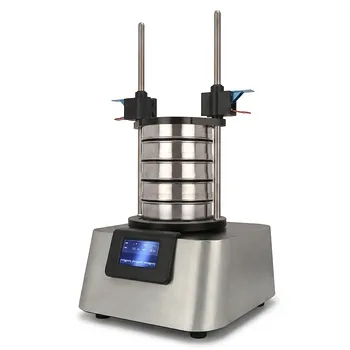
Vibratory Sieve Shaker Electromagnetic 3D Motion Powder Particle Size Analyzer for Dry and Wet Sieving
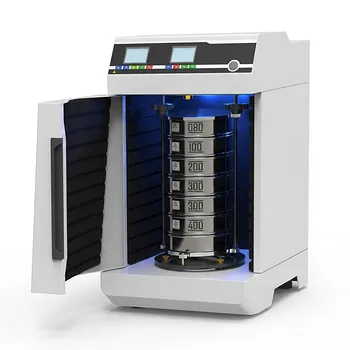
Laboratory Dry and Wet Three Dimensional Vibratory Sieve Shaker for Particle Analysis
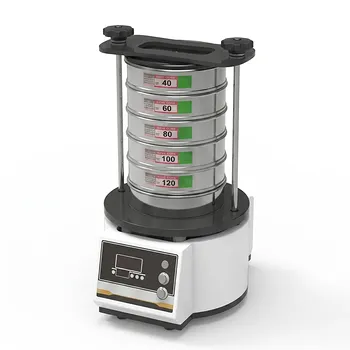
Dry Three Dimensional Vibratory Sieve Shaker
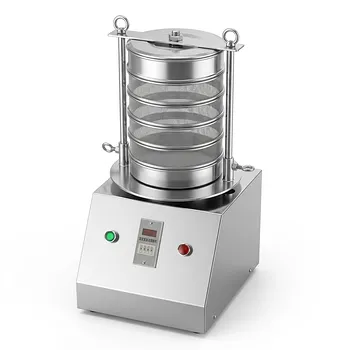
Stainless Steel Laboratory Vibratory Test Sieve Shaker
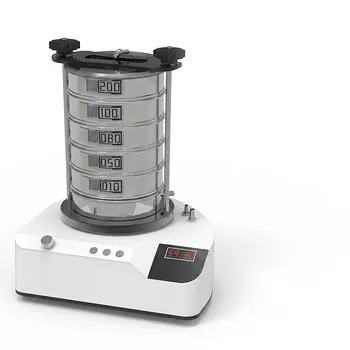
Heavy Duty Dry Three Dimensional Vibratory Sieve Shaker for Particle Separation
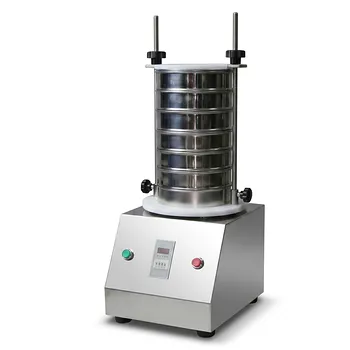
Small Laboratory Vibratory Sieve Shaker for Powder Gradation and Particle Size Analysis
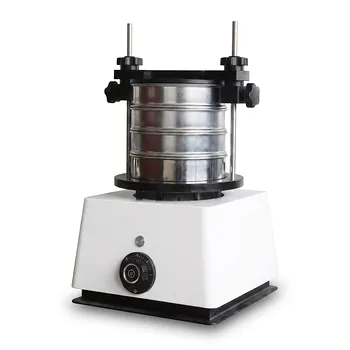
Small Laboratory Vibrating Sieve Shaker for Precise Particle Size Analysis
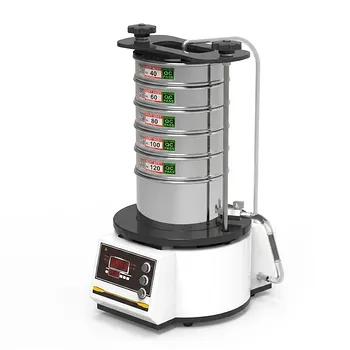
High Frequency Wet Three-Dimensional Vibrating Sieve Shaker for Dry and Wet Particle Size Analysis
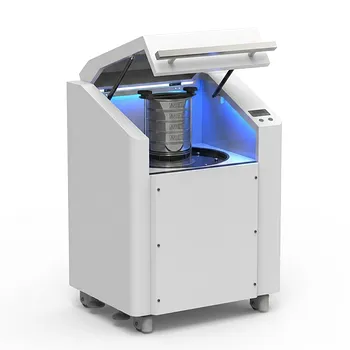
High Frequency Cabinet Type Three-Dimensional Rotary Vibrating Sieve Shaker for Dry Sieving and Particle Classification
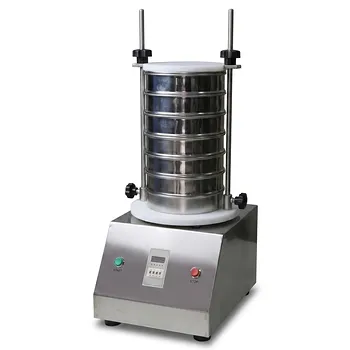
Laboratory Vibratory Test Sieve Shaker for Precision Particle Size Analysis and Powder Grading
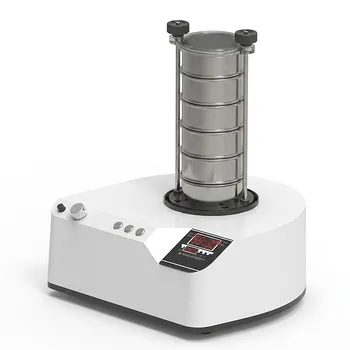
三维电磁微量振动筛分仪
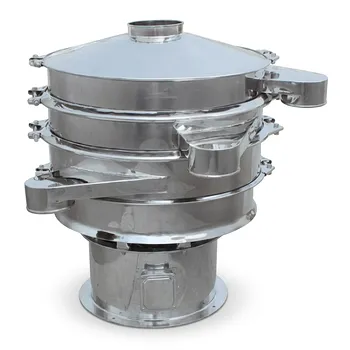
Stainless Steel Rotary Vibrating Sieve High Precision Circular Vibratory Separator Industrial Powder Grading Machine Multi Layer Sifting Equipment
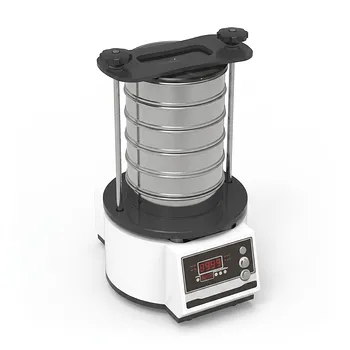
Tapping Oscillating Sieve Shaker for Dry and Wet Particle Size Analysis
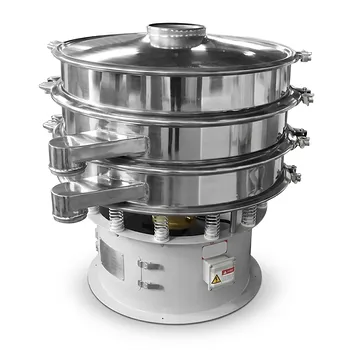
Three Dimensional Rotary Vibrating Sieve
Vibratory Superfine Grinder for Ultra Fine Laboratory Powder Milling
Small Vibrating Ultrafine Grinder for Traditional Chinese Medicine
Automatic Vibrating Powder Feeder for Laboratory Material Processing Precision Vibratory Hopper Feeder for Granular and Powder Material Handling Industrial Grade Vibrating Tray Feeder for Consistent Material Sample Preparation