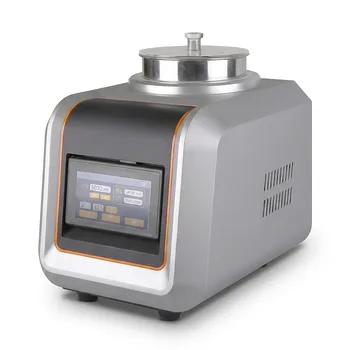
Why are vibratory sieve shakers and standard test sieves essential for bioretention media preparation? Optimize PSD.
Updated 5 months ago
Vibratory sieve shakers and standard test sieves are the primary tools for achieving the precise Particle Size Distribution (PSD) required for bioretention media. They allow engineers to accurately measure and categorize media components, ensuring that specific ratios—such as 85–88% sand and 8–12% fines—are met. This level of control is essential because the particle size directly dictates the system's hydraulic permeability and filtration efficiency.
The central takeaway is that mechanical sieving provides the technical validation needed to ensure bioretention media performs its dual role: allowing water to pass through at a controlled rate while effectively filtering out pollutants. Without precise PSD analysis, systems risk either premature clogging or insufficient treatment.
Ensuring Hydraulic Performance through PSD
Defining Permeability and Porosity
The particle size of the media determines the size of the voids between those particles. Vibratory sieve shakers allow for the extraction of specific filter media grading, which in turn determines the porosity and hydraulic conductivity of the filter bed.
Meeting Strict Design Specifications
Bioretention systems are engineered to very specific tolerances. Using standard test sieves like the 1/4 inch sieve and the #270 sieve, researchers can confirm if a mix meets the required 85-88% sand content.
Controlling the Fines Content
Managing the "fines"—particles that pass through the finest meshes—is critical for preventing system failure. A fines content of 8-12% is typically targeted to ensure filtration precision without causing the media to become impermeable over time.
The Role of Controlled Vibration
Efficient Material Stratification
A vibratory shaker uses high-frequency vibration to ensure that particles flow and stratify effectively through a stack of sieves. This mechanical action ensures that every particle has the opportunity to pass through the mesh, preventing "blinding" where larger particles block smaller ones.
Ensuring Uniformity and Reproducibility
Consistency is the hallmark of technical testing. By using a controlled mechanical process rather than manual sieving, operators ensure that particle size uniformity is maintained across different batches of media.
Optimizing Mass and Heat Transfer
In broader filtration and biomass contexts, uniformity prevents incomplete reactions and stabilizes chemical compositions. In bioretention, this uniformity ensures that filtration precision is consistent across the entire surface area of the installation.
Understanding the Trade-offs
The Risk of Over-Sieving
Leaving a vibratory shaker running for too long can lead to particle degradation. Mechanical friction can break down friable materials, resulting in an artificially high "fines" count that does not reflect the actual state of the raw material.
Limitations of Mesh Selection
Choosing the wrong sieve stack can lead to data gaps. If the gaps between mesh sizes are too large, the resulting PSD curve will be inaccurate, potentially leading to a media mix that drains too fast or too slow despite appearing to meet "average" specifications.
Equipment Calibration and Maintenance
Standard test sieves are precision instruments that can warp or clog over time. Without regular calibration and cleaning, the accuracy of the grading decreases, which can lead to the installation of sub-standard media that fails to meet local environmental regulations.
Applying Sieving Standards to Your Project
Recommendations for Media Selection
The following guidelines help ensure your bioretention media meets engineering benchmarks:
- If your primary focus is maximum drainage (Hydraulic Conductivity): Prioritize the removal of particles smaller than the #270 sieve to maintain a high sand-to-fines ratio.
- If your primary focus is pollutant removal (Filtration Precision): Use a tighter stack of fine-mesh sieves to ensure the fines content stays strictly within the 8-12% range for optimal surface area contact.
- If your primary focus is long-term durability: Use the vibratory shaker to perform abrasion tests, measuring mass loss to ensure the media will not break down into silt during heavy rain events.
By mastering the use of vibratory shakers and standard sieves, you ensure that bioretention systems remain functional, permeable, and environmentally effective for their intended lifespan.
Summary Table:
| Parameter | Target Specification / Benefit |
|---|---|
| Optimal Sand Content | 85–88% for superior drainage |
| Target Fines Content | 8–12% for effective pollutant filtration |
| Key Equipment | Vibratory Sieve Shakers & Standard Test Sieves |
| Core Process | Mechanical stratification & high-frequency vibration |
| Primary Goal | Precise Particle Size Distribution (PSD) control |
| Critical Risks | Particle degradation (over-sieving) & mesh blinding |
Elevate Your Material Analysis with Precision Equipment
Achieving the perfect Particle Size Distribution (PSD) is critical for the success of your bioretention media and material science research. We provide complete laboratory sample preparation solutions tailored to meet the strictest engineering standards.
Whether you are focusing on filtration precision or structural durability, our extensive product line supports every stage of your workflow:
- Sieving & Characterization: Vibratory and air-jet sieve shakers with a full range of high-precision test sieves and meshes.
- Powder Processing: Advanced crushers (jaw/roll), liquid nitrogen cryogenic grinders, and high-energy mills (planetary ball, jet, sand, disc, and rotor).
- Mixing Solutions: Professional powder mixers and defoaming mixers for homogeneous results.
- Compaction Equipment: A full spectrum of hydraulic presses, including Cold/Warm Isostatic Presses (CIP/WIP), XRF pellet presses, and vacuum hot presses.
Ready to optimize your laboratory efficiency? Contact our experts today to find the ideal equipment for your specific application requirements.
References
- Abtin Shahrokh Hamedani, Marcio H. Giacomoni. Improving the Treatment Performance of Low Impact Development Practices—Comparison of Sand and Bioretention Soil Mixtures Using Column Experiments. DOI: 10.3390/w13091210
Mentioned Products
- Vibratory Sieve Shaker Electromagnetic 3D Motion Powder Particle Size Analyzer for Dry and Wet Sieving
- Laboratory Dry and Wet Three Dimensional Vibratory Sieve Shaker for Particle Analysis
- Stainless Steel Laboratory Vibratory Test Sieve Shaker
- Heavy Duty Dry Three Dimensional Vibratory Sieve Shaker for Particle Separation
- Dry Three Dimensional Vibratory Sieve Shaker
People Also Ask
- How does a vibratory sieve shaker contribute to optimizing the performance of activated carbon? Enhance Adsorption Precision
- Why is a laboratory vibratory sieve shaker necessary for processing magnesium-based borate precursor powders? Boost Activity
- Why use a vibratory sieve shaker to verify coarse aggregate grading in rubberized concrete? Ensure Structural Integrity
- What function do vibratory sieve shakers and standard test sieves serve in the preparation of adsorbents? Key Guide
- What role does a vibratory sieve shaker play in the particle size analysis of ground corn products? Enhance QC Precision

Tech Team · PowderPreparation
Last updated on May 14, 2026
Related Products
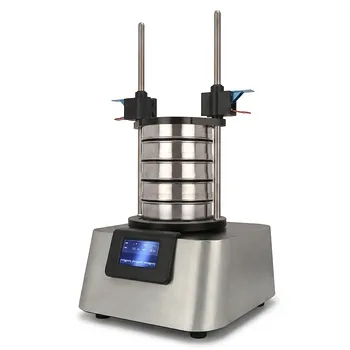
Vibratory Sieve Shaker Electromagnetic 3D Motion Powder Particle Size Analyzer for Dry and Wet Sieving
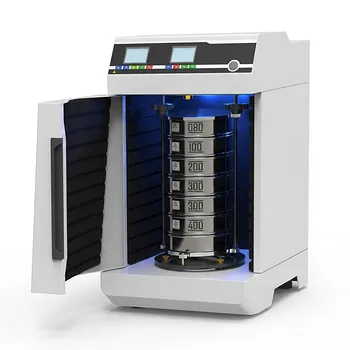
Laboratory Dry and Wet Three Dimensional Vibratory Sieve Shaker for Particle Analysis
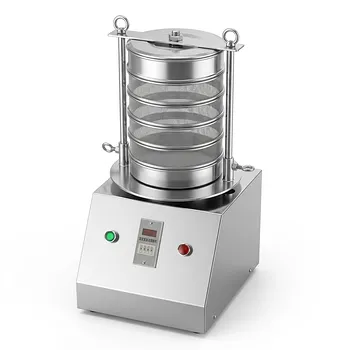
Stainless Steel Laboratory Vibratory Test Sieve Shaker

Heavy Duty Dry Three Dimensional Vibratory Sieve Shaker for Particle Separation
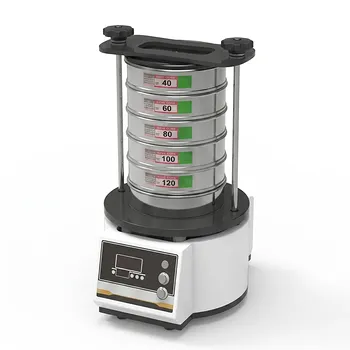
Dry Three Dimensional Vibratory Sieve Shaker
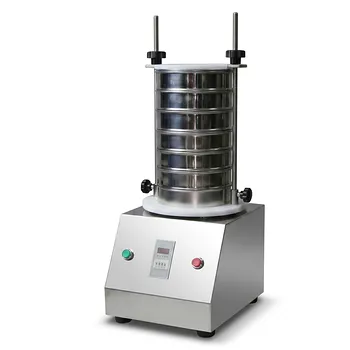
Small Laboratory Vibratory Sieve Shaker for Powder Gradation and Particle Size Analysis
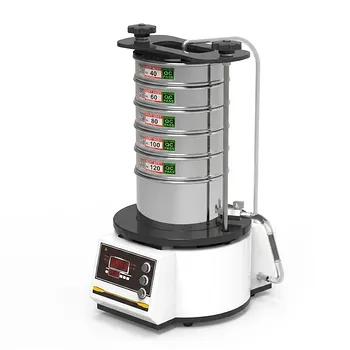
High Frequency Wet Three-Dimensional Vibrating Sieve Shaker for Dry and Wet Particle Size Analysis

Small Laboratory Vibrating Sieve Shaker for Precise Particle Size Analysis
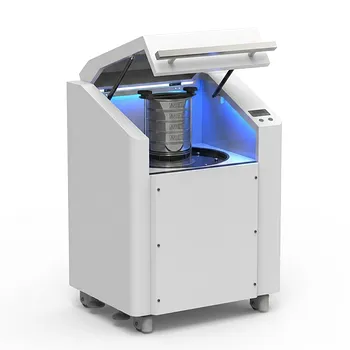
High Frequency Cabinet Type Three-Dimensional Rotary Vibrating Sieve Shaker for Dry Sieving and Particle Classification

Laboratory Vibratory Test Sieve Shaker for Precision Particle Size Analysis and Powder Grading
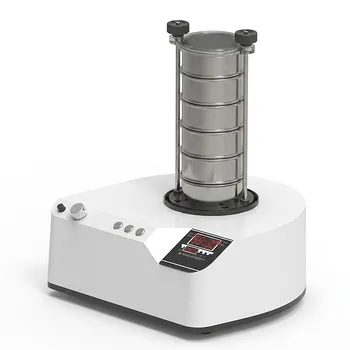
三维电磁微量振动筛分仪
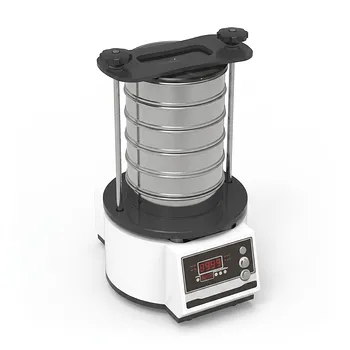
Tapping Oscillating Sieve Shaker for Dry and Wet Particle Size Analysis

Stainless Steel Rotary Vibrating Sieve High Precision Circular Vibratory Separator Industrial Powder Grading Machine Multi Layer Sifting Equipment

Three Dimensional Rotary Vibrating Sieve
Small Vibrating Ultrafine Grinder for Traditional Chinese Medicine
Automatic Vibrating Powder Feeder for Laboratory Material Processing Precision Vibratory Hopper Feeder for Granular and Powder Material Handling Industrial Grade Vibrating Tray Feeder for Consistent Material Sample Preparation
Vibratory Superfine Grinder for Ultra Fine Laboratory Powder Milling
Vibratory Disc Mill for Rapid Fine Grinding and High Throughput Sample Preparation of Hard and Brittle Materials