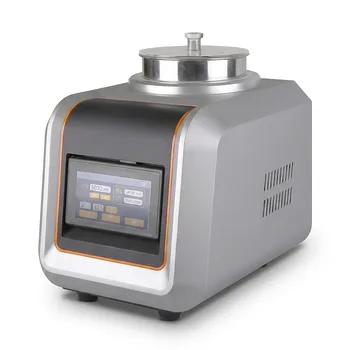
Why are vibratory sieve shakers and laboratory test sieves necessary for recycled aggregates? Master Precise PSD Control
Updated 4 months ago
The necessity of vibratory sieve shakers and laboratory test sieves stems from the requirement for precise particle size distribution (PSD) analysis. These tools allow technicians to accurately determine the mass percentage of material passing through apertures ranging from 53 mm to 0.075 mm. By establishing an accurate grading curve and fineness modulus, engineers can verify if recycled aggregates meet the mechanical and structural requirements for reuse in pavement, concrete, or mortar applications.
Precise grading is the fundamental prerequisite for recycled aggregate performance. By utilizing standardized sieving equipment, professionals can ensure that recycled materials provide the structural density and workability required to replace natural aggregates safely and effectively.
Optimizing Structural Integrity through Grading Analysis
The Importance of Gradation Curves
Aggregates must fall within specific grading zones to ensure a dense, stable matrix. Laboratory test sieves allow for the calculation of the fineness modulus, which indicates the overall coarseness or fineness of the recycled material.
Impact on Mechanical Performance
A well-graded aggregate mix minimizes the voids between particles. This directly influences the compressive strength, structural density, and long-term durability of the final recycled concrete or mortar.
Ensuring Workability and Flow
The distribution of fine and coarse particles determines how well a mixture can be handled and placed. Sieve analysis identifies if the recycled aggregate requires the addition of natural sand to achieve the correct grading for optimal workability.
Compliance and Quality Control Standards
Meeting Pavement and Sub-Base Specifications
Recycled aggregates are frequently used in pavement base and sub-base layers. Vibratory sieving confirms whether these materials meet the strict gradation specifications required to support heavy traffic loads without failing.
Verification of Recycled Asphalt Pavement (RAP)
In the Reclaimed Asphalt Concrete process, accurate gradation data is critical. It allows engineers to determine the exact amount of new aggregate required to create a final mixture that maintains its integrity and density.
Establishing Parity in Research
Sieving ensures that Recycled Coarse Aggregate (RCA) and Natural Coarse Aggregate (NCA) share the same gradation curve during testing. This allows researchers to isolate the recycled material's properties as a single variable, ensuring scientific accuracy.
The Advantages of Mechanical Vibratory Action
Elimination of Manual Operation Errors
Manual sieving is inherently inconsistent and prone to human error. Vibratory sieve shakers provide mechanized cyclic vibration that ensures recycled aggregates are fully and rapidly stratified according to particle size.
High-Frequency Stratification Efficiency
High-frequency vibration causes particles to bounce and re-orient themselves against the mesh. This ensures that every particle has the maximum opportunity to penetrate the sieve apertures, leading to highly repeatable results.
Increased Classification Throughput
Mechanical shakers can process multiple layers of standard sieves simultaneously. This efficiency is vital for high-volume quality control in industrial recycling facilities and large-scale infrastructure projects.
Understanding the Trade-offs and Limitations
Limitations Regarding Particle Shape
While sieving measures the intermediate dimension of a particle, it cannot account for particle shape or angularity. Recycled aggregates can be more porous or irregular than natural ones, which may impact performance even if the grading curve is identical.
The Challenge of Sieve Blinding
Fine mesh sieves are susceptible to blinding, where particles become lodged in the openings. This is particularly common with recycled aggregates containing high moisture levels or soft brick fragments, necessitating careful pre-drying.
Mechanical Wear on Recycled Material
The intense vibration of a shaker can sometimes cause degradation of softer recycled materials like crushed ceramic or brick. If the material is too fragile, the sieving process itself might slightly alter the particle size distribution during the test.
How to Apply These Tools to Your Project
Depending on your specific engineering goals, the application of sieving technology will vary:
- If your primary focus is pavement construction: Use the shaker to verify that the recycled aggregate meets the 53 mm to 0.075 mm gradation range required for sub-base stability.
- If your primary focus is recycled concrete production: Prioritize the calculation of the fineness modulus to ensure the aggregate will result in a mix with high compressive strength and density.
- If your primary focus is research and development: Utilize vibratory shakers to precisely match the grading curves of recycled and natural aggregates to ensure valid experimental comparisons.
- If your primary focus is quality control for mortar: Focus on sieving crushed ceramic granules to ensure maximum aggregate sizes (such as 4mm or 8mm) are strictly maintained for workability.
By integrating vibratory sieve shakers into your workflow, you transform raw recycled waste into a predictable, high-performance engineering material.
Summary Table:
| Key Factor | Role of Sieve Analysis | Benefit to Recycled Aggregates |
|---|---|---|
| PSD Analysis | Measures material passing 53mm to 0.075mm | Ensures optimal grading for structural stability |
| Fineness Modulus | Determines coarseness/fineness | Maximizes compressive strength and mix density |
| Workability | Identifies particle distribution | Guarantees ease of handling and flow in concrete |
| Compliance | Verifies RAP and sub-base specs | Ensures materials meet strict infrastructure standards |
| Efficiency | Mechanized vibratory stratification | Eliminates manual error and increases lab throughput |
Optimize Your Material Analysis with Precision Solutions
To transform recycled waste into high-performance engineering materials, precision is non-negotiable. We provide complete laboratory sample preparation solutions for material science, specializing in professional-grade powder processing and compaction equipment designed to meet the most rigorous standards.
Our extensive product lines are engineered to support every stage of your workflow:
- Size Reduction & Milling: Jaw/roll crushers, liquid nitrogen cryogenic grinders, and advanced mills (planetary ball, jet, sand/bead, disc, and rotor).
- Classification & Mixing: High-frequency vibratory and air-jet sieve shakers with precision test sieves, alongside powder and defoaming mixers.
- Compaction & Pressing: A full spectrum of hydraulic presses, including Cold/Warm Isostatic Presses (CIP/WIP), standard lab presses, XRF pellet presses, and vacuum hot presses.
Whether you are a researcher establishing parity between materials or a quality control manager ensuring pavement durability, our equipment delivers the repeatability and accuracy you require.
Ready to upgrade your laboratory capabilities? Contact us today to discuss your specific requirements!
References
- Diyanti, Sri Indah Setiyaningsih. Performance Analysis of Recycled Asphalt Material Foundation Layer and Top Foundation Layer Reviewed from Primary Displacement. DOI: 10.29303/jppipa.v10i11.9182
Mentioned Products
- Vibratory Sieve Shaker Electromagnetic 3D Motion Powder Particle Size Analyzer for Dry and Wet Sieving
- Laboratory Dry and Wet Three Dimensional Vibratory Sieve Shaker for Particle Analysis
- Stainless Steel Laboratory Vibratory Test Sieve Shaker
- Heavy Duty Dry Three Dimensional Vibratory Sieve Shaker for Particle Separation
- Dry Three Dimensional Vibratory Sieve Shaker
People Also Ask
- How does a vibratory sieve shaker contribute to optimizing the performance of activated carbon? Enhance Adsorption Precision
- Why is a laboratory vibratory sieve shaker necessary for processing magnesium-based borate precursor powders? Boost Activity
- Why use a vibratory sieve shaker to verify coarse aggregate grading in rubberized concrete? Ensure Structural Integrity
- What function do vibratory sieve shakers and standard test sieves serve in the preparation of adsorbents? Key Guide
- What role does a vibratory sieve shaker play in the particle size analysis of ground corn products? Enhance QC Precision

Tech Team · PowderPreparation
Last updated on Jun 03, 2026
Related Products
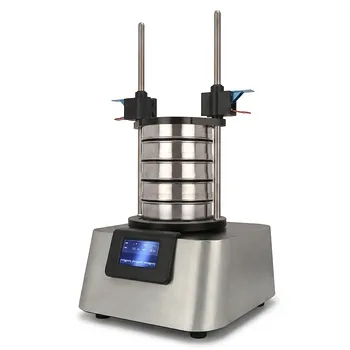
Vibratory Sieve Shaker Electromagnetic 3D Motion Powder Particle Size Analyzer for Dry and Wet Sieving
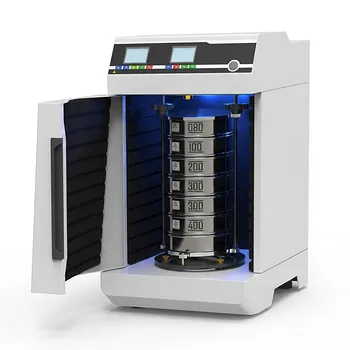
Laboratory Dry and Wet Three Dimensional Vibratory Sieve Shaker for Particle Analysis
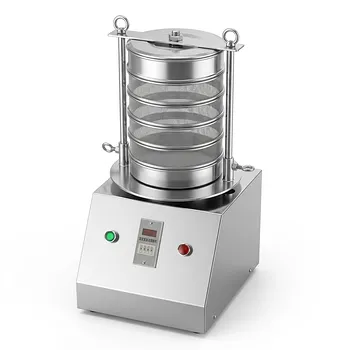
Stainless Steel Laboratory Vibratory Test Sieve Shaker

Heavy Duty Dry Three Dimensional Vibratory Sieve Shaker for Particle Separation

Dry Three Dimensional Vibratory Sieve Shaker
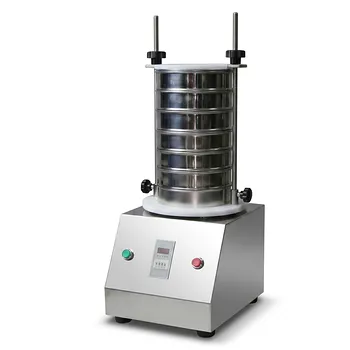
Small Laboratory Vibratory Sieve Shaker for Powder Gradation and Particle Size Analysis
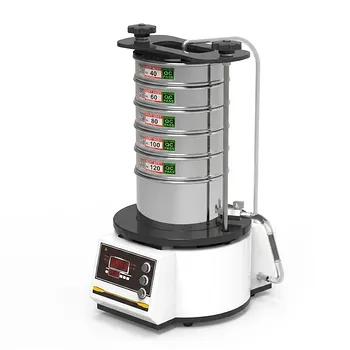
High Frequency Wet Three-Dimensional Vibrating Sieve Shaker for Dry and Wet Particle Size Analysis
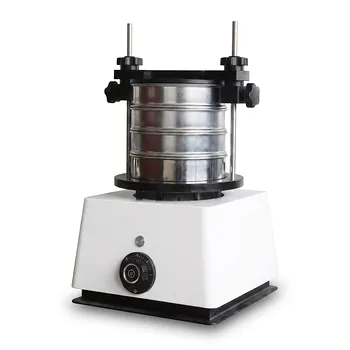
Small Laboratory Vibrating Sieve Shaker for Precise Particle Size Analysis
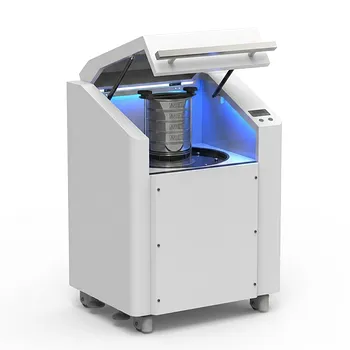
High Frequency Cabinet Type Three-Dimensional Rotary Vibrating Sieve Shaker for Dry Sieving and Particle Classification

Laboratory Vibratory Test Sieve Shaker for Precision Particle Size Analysis and Powder Grading
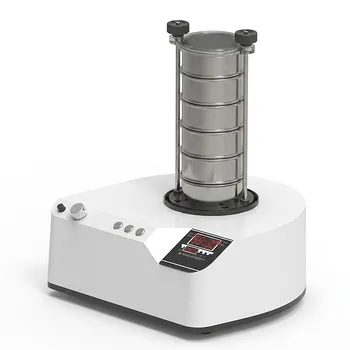
三维电磁微量振动筛分仪
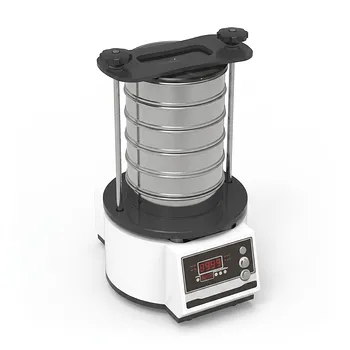
Tapping Oscillating Sieve Shaker for Dry and Wet Particle Size Analysis

Stainless Steel Rotary Vibrating Sieve High Precision Circular Vibratory Separator Industrial Powder Grading Machine Multi Layer Sifting Equipment
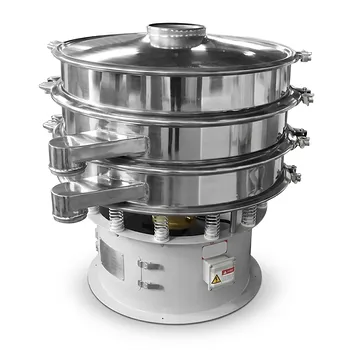
Three Dimensional Rotary Vibrating Sieve
Small Vibrating Ultrafine Grinder for Traditional Chinese Medicine
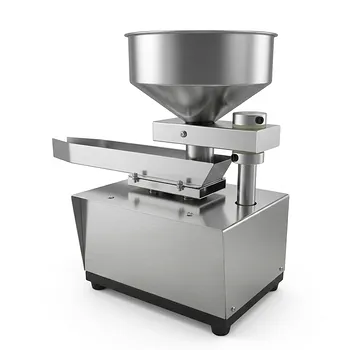
Automatic Vibrating Powder Feeder for Laboratory Material Processing Precision Vibratory Hopper Feeder for Granular and Powder Material Handling Industrial Grade Vibrating Tray Feeder for Consistent Material Sample Preparation
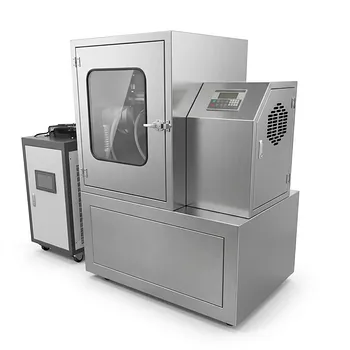
Vibratory Superfine Grinder for Ultra Fine Laboratory Powder Milling
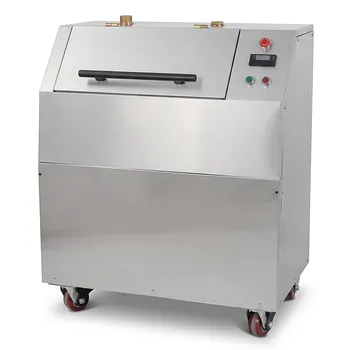
Vibratory Disc Mill for Rapid Fine Grinding and High Throughput Sample Preparation of Hard and Brittle Materials