Why are standard test sieves used to screen aggregates during the preparation of fly ash concrete? Optimize Mix Quality
Updated 4 months ago
The use of standard test sieves is a critical quality control measure in concrete production. These tools are primarily used to determine the exact particle size distribution (grading) of both coarse and fine aggregates. By ensuring these materials meet specific size requirements, engineers can optimize the concrete's skeletal structure, allowing fly ash to effectively fill microscopic voids and enhance the mixture's overall density, cohesion, and mechanical strength.
Standard test sieves provide the empirical data necessary to create a rational skeleton of aggregates. This optimization ensures that fly ash can maximize its role as a micro-filler, leading to a denser, more durable concrete structure with reduced cement requirements and improved compressive performance.
Achieving Structural Integrity through Particle Grading
Establishing a Rational Skeleton
Standard test sieves allow technicians to separate materials like river sand and crushed stone into specific size fractions. By arranging sieves in descending order of aperture size, you can calculate the fineness modulus, which dictates how well different sized particles fit together.
Facilitating the Fly Ash "Filling Effect"
Fly ash acts as a micro-filler that occupies the spaces between aggregate particles. If the aggregate grading is not strictly controlled via sieving, these gaps may be too large or irregular, preventing the fly ash from creating a dense, cohesive matrix.
Optimizing Mixture Density
Using sieves to ensure a proper distribution of sizes—such as identifying the proportion of fine aggregate passing through a 600-micrometer mesh—minimizes the "void ratio." A lower void ratio means less cement paste is required to bind the mixture, which improves the economy and sustainability of the project.
Compliance and Quality Standardization
Adhering to Engineering Standards
The use of precision sieves ensures that materials comply with international standards like ASTM C136, BS 882, or IS 383. These standards define the "grading zones" required for high-strength formulations, ensuring the concrete meets the specified compressive performance and durability.
Differentiating Material Classifications
Standardized sieving provides a clear boundary between material types, typically using a 4.75mm mesh to separate coarse aggregates from fine aggregates. This physical screening process is a fundamental prerequisite for calculating accurate mix proportions and ensuring the scientific grading of the concrete.
Removing Impurities and Contaminants
Beyond size classification, the screening process helps identify and remove oversized debris or unwanted impurities. This ensures that only hard-textured, well-graded materials enter the mix, preventing structural weak points in the final fly ash concrete structure.
Understanding the Trade-offs and Limitations
Sieve Wear and Calibration Errors
Standard sieves are precision instruments that degrade over time due to the abrasive nature of stone and sand. If sieves are not regularly calibrated or replaced, inaccurate grading data can lead to poor packing density and unexpected drops in concrete strength.
The Limitation of Particle Shape
Sieves measure the smallest cross-section of a particle but cannot account for its length or "flakiness." Elongated or flat particles may pass through a mesh intended for smaller cubes, which can negatively impact the workability and flow of the fly ash concrete despite a "correct" sieve analysis.
Manual vs. Mechanical Variability
Performing sieve analysis manually can lead to inconsistent results and incomplete separation of fines. Utilizing vibratory sieve shakers is highly recommended to ensure repeatable data and to prevent the clogging of fine meshes, particularly when screening particles below 2mm.
How to Apply This to Your Project
To get the most out of your aggregate screening process, tailor your sieving strategy to your specific structural goals.
- If your primary focus is maximum compressive strength: Prioritize a full sieve analysis (from 37.5mm down to 0.15mm) to create an optimal "grading curve" that maximizes packing density.
- If your primary focus is reducing material costs: Use sieving to minimize the void ratio in your aggregate skeleton, which directly reduces the volume of expensive cement paste needed.
- If your primary focus is improved workability: Strictly control the fineness modulus of your sand through a 4.75mm sieve to ensure the mix remains cohesive and easy to pump after adding fly ash.
By mastering the science of aggregate grading through standardized sieving, you ensure that fly ash transitions from a simple additive to a high-performance structural component.
Summary Table:
| Feature | Function in Concrete Preparation | Primary Benefit |
|---|---|---|
| Particle Grading | Establishes a rational aggregate skeleton | Enhances fly ash "filling effect" for higher density |
| Void Ratio Reduction | Minimizes gaps between coarse/fine particles | Reduces expensive cement requirements |
| Size Separation | Differentiates coarse and fine aggregates | Ensures accurate mix proportions and consistency |
| Quality Control | Removes impurities and oversized debris | Prevents structural weak points and failures |
| Compliance | Meets ASTM C136, BS 882, or IS 383 standards | Guarantees engineering and safety certification |
Elevate Your Material Analysis with Precision Solutions
Achieving the perfect aggregate grading for high-performance fly ash concrete requires accuracy, repeatability, and high-quality equipment. [Brand Name] provides complete laboratory sample preparation solutions for material science, specializing in advanced powder processing and compaction equipment tailored for researchers and engineering professionals.
Our extensive product lines are designed to optimize your workflow:
- Sieving & Particle Analysis: High-precision vibratory and air-jet sieve shakers with a wide range of test sieves and meshes.
- Size Reduction: Durable jaw and roll crushers, liquid nitrogen cryogenic grinders, and various mills (planetary ball, jet, sand, disc, and rotor).
- Mixing & Compaction: Advanced powder and defoaming mixers, plus a full spectrum of hydraulic presses, including Cold/Warm Isostatic Presses (CIP/WIP), XRF pellet presses, and vacuum hot presses.
Whether you are a commercial distributor looking for reliable OEM/ODM support or a laboratory head seeking to improve compressive performance and economy, we have the expertise to help.
Contact us today to find the right equipment for your lab and take the guesswork out of your material preparation.
References
- Masroor Ali Jatoi, Shabir Ahmed. Effect of Lakhra Fly Ash as Partial Replacement of Cement in Traditional Concrete. DOI: 10.22581/muet1982.1904.16
Mentioned Products
- Stainless Steel Laboratory Vibratory Test Sieve Shaker
- Laboratory Vibratory Test Sieve Shaker for Precision Particle Size Analysis and Powder Grading
- Small Laboratory Vibrating Sieve Shaker for Precise Particle Size Analysis
- Small Laboratory Vibratory Sieve Shaker for Powder Gradation and Particle Size Analysis
- 三维电磁微量振动筛分仪
People Also Ask
- What function does a laboratory vibratory sieve shaker serve in the production process of metakaolin? Optimize Reactivity
- Why is a precision laboratory vibratory sieve shaker necessary for particle size control? Optimize Biomass Carbonization
- What is the function of a laboratory vibratory sieve shaker? Enhance Coal Particle Size Distribution (PSD) Analysis
- What role do laboratory vibratory sieve shakers and test sieves play before the molding of Nb-Cu composite powders?
- What is the primary function of a laboratory vibratory sieve shaker in the evaluation of sand liquefaction potential?

Tech Team · PowderPreparation
Last updated on Jun 03, 2026
Related Products

Stainless Steel Laboratory Vibratory Test Sieve Shaker

Laboratory Vibratory Test Sieve Shaker for Precision Particle Size Analysis and Powder Grading

Small Laboratory Vibrating Sieve Shaker for Precise Particle Size Analysis

Small Laboratory Vibratory Sieve Shaker for Powder Gradation and Particle Size Analysis

三维电磁微量振动筛分仪
Laboratory Air Jet Sieving Machine for Fine Powder Particle Size Analysis and Deagglomeration

Stainless Steel Rotary Vibrating Sieve High Precision Circular Vibratory Separator Industrial Powder Grading Machine Multi Layer Sifting Equipment

Laboratory Dry and Wet Three Dimensional Vibratory Sieve Shaker for Particle Analysis

Three Dimensional Rotary Vibrating Sieve

High Frequency Cabinet Type Three-Dimensional Rotary Vibrating Sieve Shaker for Dry Sieving and Particle Classification

Vibratory Sieve Shaker Electromagnetic 3D Motion Powder Particle Size Analyzer for Dry and Wet Sieving

High Frequency Wet Three-Dimensional Vibrating Sieve Shaker for Dry and Wet Particle Size Analysis

Dry Three Dimensional Vibratory Sieve Shaker

Tapping Oscillating Sieve Shaker for Dry and Wet Particle Size Analysis

Heavy Duty Dry Three Dimensional Vibratory Sieve Shaker for Particle Separation
Small High-Speed Laboratory Grinder for Rapid Sample Preparation
Small High-Speed Grinder for Efficient Laboratory Sample Preparation
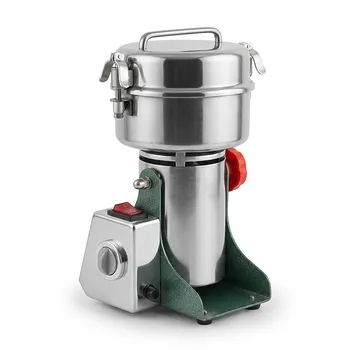
Small High-Speed Swing Grinder for Laboratory Sample Preparation
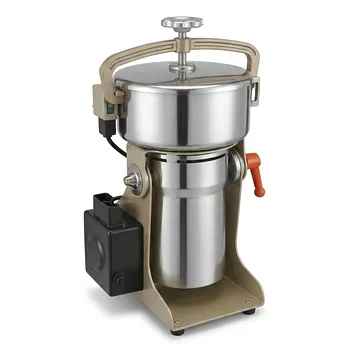
Multifunctional High Efficiency High Speed Laboratory Grinder