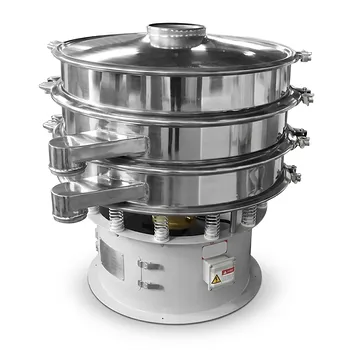
Why are standard metal sieves and sieve shakers necessary for 5-aminotetrazole mixtures? Optimize Thermal & Kinetic Data
Updated 5 months ago
Precision particle size control is the fundamental requirement for preparing 5-aminotetrazole and sodium periodate mixtures. These tools are necessary to isolate a specific particle size distribution—typically between 60 and 80 μm—which ensures the uniformity and consistency required for accurate thermal decomposition kinetic testing. Without this level of control, the data regarding decomposition activation energy and reaction rates would be unreliable and impossible to replicate.
Standard metal sieves and sieve shakers eliminate particle size variance, ensuring that the physical and chemical properties of the mixed powder remain uniform across all experimental samples. This standardization is critical for reducing experimental error and achieving repeatable results in energetic material analysis.
Achieving Uniformity in Thermal Analysis
Precision in Particle Diameter
Using high-mesh laboratory sieves, such as the 180 mesh, allows researchers to isolate 5-aminotetrazole (5AT) particles with exact diameters. This narrow range is essential for assessing how particle size specifically influences the decomposition activation energy of the mixture.
Repeatability in Kinetic Testing
Strict control over the particle size distribution ensures high consistency across parallel experimental samples. This uniformity is the only way to obtain repeatable data during thermal decomposition kinetic testing and combustion performance experiments.
Eliminating Reaction Rate Variance
In chemical reactions involving mixed powders, particle size directly impacts the chemical reaction rates. By using standardized sieving, you remove the uncertain effects of size variance, allowing for a clearer understanding of the material's intrinsic properties.
Optimizing Physical Processing and Mixing
Improving Powder Flowability
Standard test sieves are used to remove large aggregates and powder agglomerates that often form during grinding or storage. Removing these clusters ensures excellent flowability, which is vital for stable powder feeding and uniform mixing.
Preventing Component Segregation
When mixing 5-aminotetrazole and sodium periodate, mismatched particle sizes can lead to component segregation, where different materials separate based on weight and size. Uniformly sized particles stay integrated, maintaining the stability of the gas-generating agent.
Standardizing Initial Pre-treatment
Standardizing the initial particle size is a key physical pre-treatment step for any pulverized tablet or capsule content. Using specific apertures (such as 500 µm) to unify the powder before mixing prevents downstream inconsistencies in the final composite.
The Role of Mechanical Sieve Shakers
Consistency Through Mechanical Vibration
Vibratory sieve shakers provide precisely controlled mechanical vibrations that manual sieving cannot replicate. This ensures that every batch of powder is subjected to the same forces, leading to a highly predictable and strict particle size classification.
Reducing Human Experimental Error
By automating the sieving process, shakers remove human variables from the classification workflow. This is critical for reducing experimental error and improving the reproducibility of results in heavy metal speciation and energetic material analysis.
Understanding the Trade-offs and Pitfalls
Limitations of Sieve Wear and Calibration
Metal sieves are precision instruments that degrade over time; even minor wear in the mesh can lead to inaccurate size ranges. Regular calibration is required to ensure that a "60 μm" aperture actually remains 60 μm, as small deviations can compromise the integrity of kinetic data.
The Risk of Particle Attrition
While shakers are necessary for consistency, excessive vibration intensity or duration can cause particle attrition, where the particles themselves break down into smaller fragments during the process. Finding the balance between thorough sieving and maintaining particle integrity is a delicate technical requirement.
Applying Particle Control to Your Project
Recommendations for Success
- If your primary focus is thermal kinetic accuracy: Utilize a 180 mesh sieve and a mechanical shaker to strictly isolate the 60–80 μm range for all raw materials.
- If your primary focus is mixture homogeneity: Use a 120 mesh sieve for final grading after mixing to ensure that the composite powder is free of newly formed agglomerates.
- If your primary focus is process repeatability: Standardize your shaker’s vibration frequency and duration to eliminate human variables across different experimental batches.
Precise particle size control is the essential foundation for any reliable research involving the thermal behavior and stability of 5-aminotetrazole mixtures.
Summary Table:
| Key Requirement | Role of Sieve/Shaker | Scientific Impact |
|---|---|---|
| Size Control (60-80 μm) | 180 Mesh Metal Sieves | Ensures accurate decomposition activation energy |
| Consistency | Vibratory Sieve Shakers | Eliminates human error for repeatable kinetic data |
| Flowability | Removal of Agglomerates | Prevents clumping for stable powder feeding |
| Homogeneity | Standardized Grading | Prevents component segregation during mixing |
| Integrity | Controlled Vibration | Balances thorough sieving with minimal particle attrition |
Achieve Unmatched Precision in Energetic Material Preparation
Reliable thermal analysis and kinetic testing start with perfect sample preparation. At [Brand Name], we provide complete laboratory sample preparation solutions for material science, specializing in high-performance powder processing and compaction equipment.
Whether you are isolating specific particle ranges for 5-aminotetrazole or preparing complex composite powders, our extensive product line supports every stage of your workflow:
- Classification: High-precision vibratory and air-jet sieve shakers with a full range of standard test sieves.
- Processing: Advanced mills (planetary ball, jet, and rotor) and crushers (jaw/roll) for precise particle size reduction.
- Mixing & Compaction: Powder and defoaming mixers, plus a full spectrum of hydraulic presses including Cold/Warm Isostatic Presses (CIP/WIP), hot presses, and XRF pellet presses.
Eliminate experimental variance and ensure repeatable results. Contact our experts today to find the ideal solution for your laboratory needs!
References
- Chengkuan Shi, Hua Guan. Investigation on thermal kinetic behavior of 5 aminotetrazole/sodium periodate gas generator. DOI: 10.1038/s41598-025-00820-x
Mentioned Products
- Vibratory Sieve Shaker Electromagnetic 3D Motion Powder Particle Size Analyzer for Dry and Wet Sieving
- 三维电磁微量振动筛分仪
- Stainless Steel Laboratory Vibratory Test Sieve Shaker
- Small Laboratory Vibrating Sieve Shaker for Precise Particle Size Analysis
- Heavy Duty Dry Three Dimensional Vibratory Sieve Shaker for Particle Separation
People Also Ask
- How does a vibratory sieve shaker contribute to optimizing the performance of activated carbon? Enhance Adsorption Precision
- Why is a laboratory vibratory sieve shaker necessary for processing magnesium-based borate precursor powders? Boost Activity
- Why use a vibratory sieve shaker to verify coarse aggregate grading in rubberized concrete? Ensure Structural Integrity
- What function do vibratory sieve shakers and standard test sieves serve in the preparation of adsorbents? Key Guide
- What role does a vibratory sieve shaker play in the particle size analysis of ground corn products? Enhance QC Precision

Tech Team · PowderPreparation
Last updated on May 14, 2026
Related Products
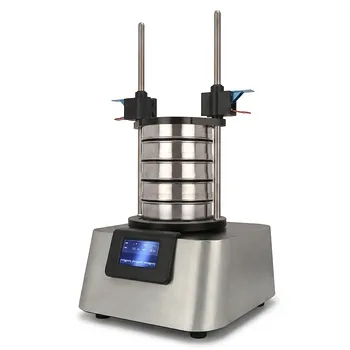
Vibratory Sieve Shaker Electromagnetic 3D Motion Powder Particle Size Analyzer for Dry and Wet Sieving
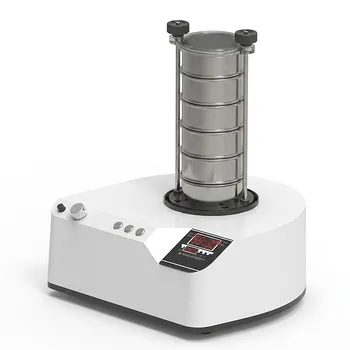
三维电磁微量振动筛分仪
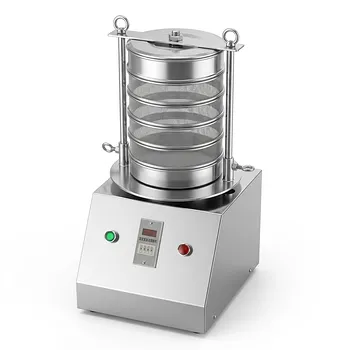
Stainless Steel Laboratory Vibratory Test Sieve Shaker
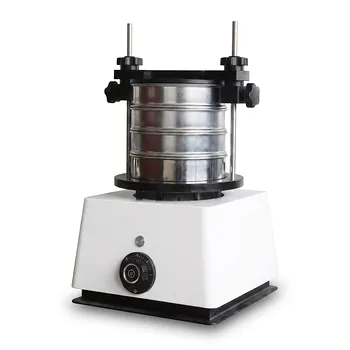
Small Laboratory Vibrating Sieve Shaker for Precise Particle Size Analysis
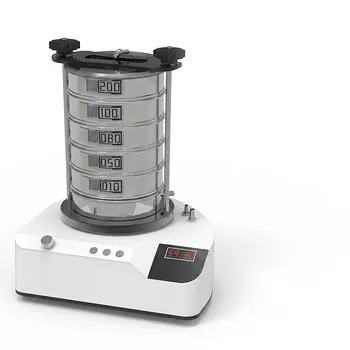
Heavy Duty Dry Three Dimensional Vibratory Sieve Shaker for Particle Separation
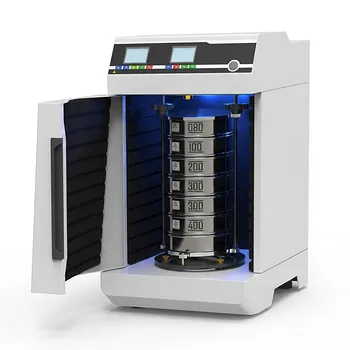
Laboratory Dry and Wet Three Dimensional Vibratory Sieve Shaker for Particle Analysis
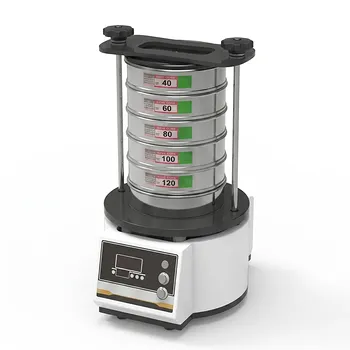
Dry Three Dimensional Vibratory Sieve Shaker
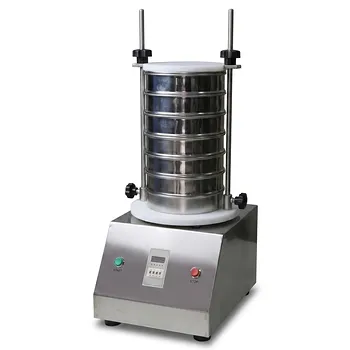
Laboratory Vibratory Test Sieve Shaker for Precision Particle Size Analysis and Powder Grading
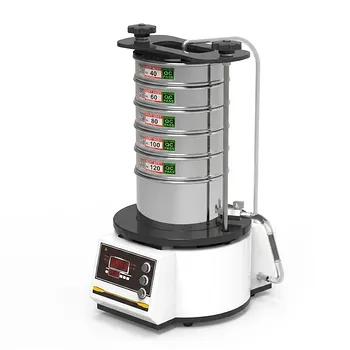
High Frequency Wet Three-Dimensional Vibrating Sieve Shaker for Dry and Wet Particle Size Analysis
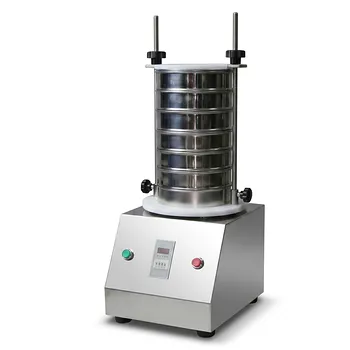
Small Laboratory Vibratory Sieve Shaker for Powder Gradation and Particle Size Analysis
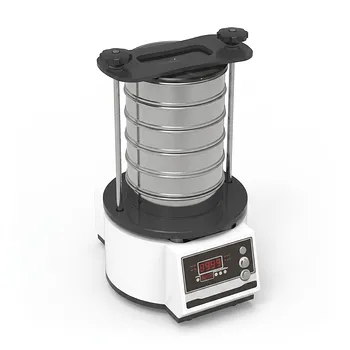
Tapping Oscillating Sieve Shaker for Dry and Wet Particle Size Analysis
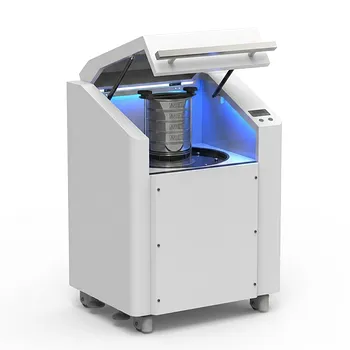
High Frequency Cabinet Type Three-Dimensional Rotary Vibrating Sieve Shaker for Dry Sieving and Particle Classification
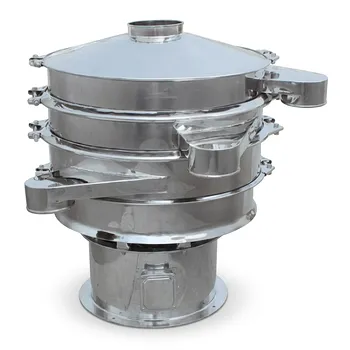
Stainless Steel Rotary Vibrating Sieve High Precision Circular Vibratory Separator Industrial Powder Grading Machine Multi Layer Sifting Equipment
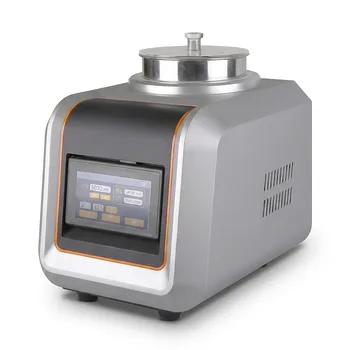
Laboratory Air Jet Sieving Machine for Fine Powder Particle Size Analysis and Deagglomeration