Why are standard laboratory test sieves used during the processing of geopolymer concrete raw materials? Ensure Purity.
Updated 4 months ago
Standard laboratory test sieves are the primary tools used to ensure material purity and precise particle size distribution (PSD) in geopolymer concrete production. By removing unburned impurities, large crystalline chunks, and clods from raw materials like ashes and soils, these sieves guarantee a uniform precursor powder. This level of control is essential for managing the geopolymerization reaction, optimizing the density of the mix, and ensuring the final mechanical strength meets engineering standards.
The use of standard test sieves transforms raw, non-uniform waste materials into predictable engineering precursors. This process is critical for achieving consistent chemical reactivity and structural integrity in the final geopolymer matrix.
Ensuring Precursor Quality and Reactivity
Removal of Deleterious Impurities
Raw materials such as Palm Kernel Shell Ash (PKSA) and Rice Husk Ash (RHA) often contain unburned carbon or large crystalline chunks. Standard sieves, such as those compliant with ASTM E11, physically intercept these impurities to prevent them from weakening the concrete matrix.
Precise Control of Powder Fineness
The reactivity of a geopolymer depends on the surface area of the precursor powder. Using fine meshes, such as the 74μm or 75μm (200 mesh), ensures the powder is sufficiently fine to facilitate a uniform geopolymerization reaction and control water demand.
Consistency in Geopolymerization
A standardized particle size leads to a predictable chemical reaction. By eliminating oversized particles, sieves ensure that the alkaline activator can react efficiently with the precursor, resulting in a stable and repeatable material performance.
Optimizing Structural Density and Workability
Precise Grading of Aggregates
Standard sieves are used to classify aggregates into specific categories, such as the 4.75mm threshold that separates coarse from fine aggregates. This classification is vital for adhering to engineering standards like IS 383 and ensuring a scientific grading of the concrete mix.
Managing Void Ratios and Porosity
By isolating specific grain size fractions, such as 0.063mm to 2mm, researchers can optimize how particles pack together. This granular control directly influences the density, pore structure, and even the thermal conductivity of geoconcrete bricks.
Impact on Rheological Properties
The size of the particles dictates how the wet mix flows. Sieve-controlled materials allow for better management of rheology and workability, ensuring the geopolymer concrete can be easily placed and compacted without excessive voids.
Scientific Repeatability and Research Validity
Standardizing Non-Uniform Waste
Materials like Construction and Demolition Waste (CDW) or crushed tire particles are highly non-uniform by nature. Standardized sieving allows researchers to separate these into specific ranges, such as 4.75–9.5 mm, to study their individual impacts on durability.
Ensuring Experimental Consistency
In a laboratory setting, the ability to replicate results is paramount. Using sieves conforming to ISO 565 or ASTM E11 ensures that batches made at different times or in different labs remain comparable and technically sound.
Understanding the Trade-offs
Material Waste and Processing Time
Strict sieving protocols can lead to significant material rejection, where a large portion of raw waste is discarded because it does not meet size specifications. This adds time to the preparation phase and can increase the overall cost of the raw material processing.
Maintenance and Mesh Wear
Fine laboratory sieves are delicate instruments. Over time, the abrasive nature of materials like crushed coal gangue or laterite can stretch or damage the mesh, leading to "oversize" leakage and compromising the accuracy of the particle distribution.
Limitations of Dry Sieving
Certain raw materials with high moisture content or clay particles may suffer from blinding, where particles clog the mesh openings. In these cases, dry sieving becomes inefficient, requiring more complex wet-sieving methods to achieve the same level of precision.
How to Apply This to Your Project
To maximize the effectiveness of your material preparation, select your sieving strategy based on your specific performance requirements.
- If your primary focus is Maximum Compressive Strength: Use a 75μm (200 mesh) sieve to ensure maximum precursor fineness and reactivity.
- If your primary focus is Thermal Insulation: Use specific mesh apertures like 5mm and 12.5mm to isolate aggregates that create a controlled, porous internal structure.
- If your primary focus is Research and Repeatability: Adhere strictly to ASTM E11 or ISO 565 standards to ensure your data can be validated by the wider scientific community.
- If your primary focus is Cost-Effective Production: Focus on a single "cut-off" sieve (e.g., 4.75mm) to remove the largest impurities without the labor-intensive process of full-scale grading.
By mastering particle size control through standardized sieving, you ensure that your geopolymer concrete is not just sustainable, but structurally superior.
Summary Table:
| Application | Purpose | Key Sieve Size | Main Benefit |
|---|---|---|---|
| Precursor Prep | Remove carbon & impurities | 75μm (200 mesh) | Higher chemical reactivity |
| Aggregate Grading | Separate coarse/fine grains | 4.75mm | Optimized density & flow |
| Research Quality | Ensure lab repeatability | ASTM E11 / ISO 565 | Validated scientific data |
| Structural Control | Manage void ratios | 0.063mm - 2mm | Improved thermal insulation |
Elevate Your Material Research with Precision Engineering
Achieving consistent geopolymer performance requires absolute control over particle size and purity. We provide complete laboratory sample preparation solutions for material science, specializing in the high-performance equipment needed to transform raw waste into predictable engineering precursors.
Our extensive product lines include:
- Sieving & Analysis: Vibratory and air-jet sieve shakers with a wide range of standard test sieves.
- Size Reduction: Jaw/roll crushers, liquid nitrogen cryogenic grinders, and advanced mills (planetary ball, jet, disc, and rotor).
- Mixing & Homogenization: Precision powder mixers and defoaming mixers.
- Compaction & Forming: A full spectrum of hydraulic presses, including Cold/Warm Isostatic Presses (CIP/WIP), XRF pellet presses, and vacuum hot presses.
Whether you are a researcher optimizing precursor reactivity or a distributor looking for reliable OEM/ODM support, our equipment ensures structural integrity and repeatable results.
Contact our technical team today to find your perfect lab solution!
References
- Mohd Na’im Abdullah, Tamer A. Sebaey. Thermal Properties and Drying Shrinkage Performance of Palm Kernel Shell Ash and Rice Husk Ash-Based Geopolymer Concrete. DOI: 10.3390/ma17061298
Mentioned Products
- Stainless Steel Laboratory Vibratory Test Sieve Shaker
- Laboratory Vibratory Test Sieve Shaker for Precision Particle Size Analysis and Powder Grading
- Small Laboratory Vibrating Sieve Shaker for Precise Particle Size Analysis
- Small Laboratory Vibratory Sieve Shaker for Powder Gradation and Particle Size Analysis
- Laboratory Dry and Wet Three Dimensional Vibratory Sieve Shaker for Particle Analysis
People Also Ask
- What function does a laboratory vibratory sieve shaker serve in the production process of metakaolin? Optimize Reactivity
- Why is a precision laboratory vibratory sieve shaker necessary for particle size control? Optimize Biomass Carbonization
- What is the function of a laboratory vibratory sieve shaker? Enhance Coal Particle Size Distribution (PSD) Analysis
- What role do laboratory vibratory sieve shakers and test sieves play before the molding of Nb-Cu composite powders?
- What is the primary function of a laboratory vibratory sieve shaker in the evaluation of sand liquefaction potential?

Tech Team · PowderPreparation
Last updated on Jun 03, 2026
Related Products

Stainless Steel Laboratory Vibratory Test Sieve Shaker

Laboratory Vibratory Test Sieve Shaker for Precision Particle Size Analysis and Powder Grading

Small Laboratory Vibrating Sieve Shaker for Precise Particle Size Analysis

Small Laboratory Vibratory Sieve Shaker for Powder Gradation and Particle Size Analysis
Laboratory Dry and Wet Three Dimensional Vibratory Sieve Shaker for Particle Analysis
Laboratory Air Jet Sieving Machine for Fine Powder Particle Size Analysis and Deagglomeration

Vibratory Sieve Shaker Electromagnetic 3D Motion Powder Particle Size Analyzer for Dry and Wet Sieving

High Frequency Wet Three-Dimensional Vibrating Sieve Shaker for Dry and Wet Particle Size Analysis

三维电磁微量振动筛分仪
Small High Speed Grinder for Laboratory Sample Preparation
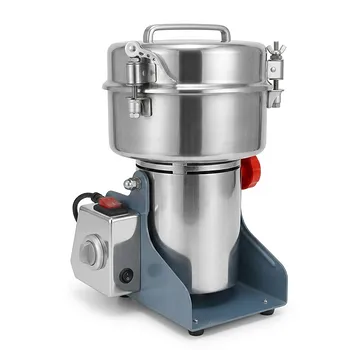
Small High-Speed Grinder for Efficient Laboratory Sample Preparation
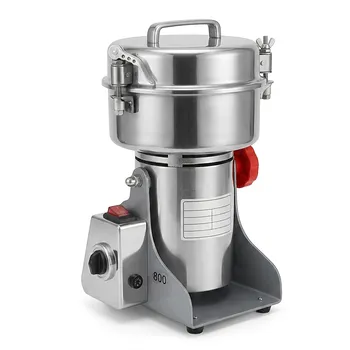
Small High-Speed Laboratory Grinder for Rapid Sample Preparation
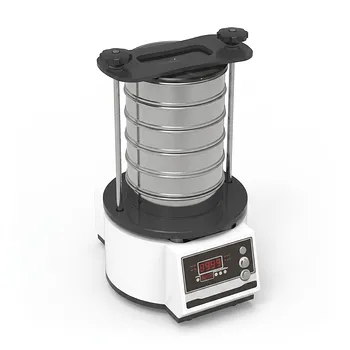
Tapping Oscillating Sieve Shaker for Dry and Wet Particle Size Analysis
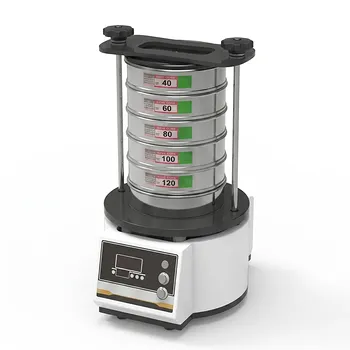
Dry Three Dimensional Vibratory Sieve Shaker
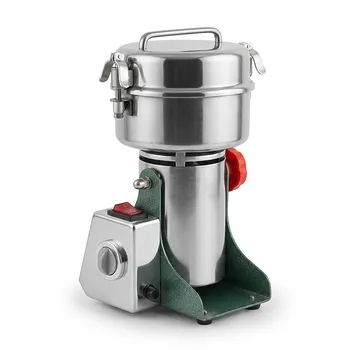
Small High-Speed Swing Grinder for Laboratory Sample Preparation

Heavy Duty Dry Three Dimensional Vibratory Sieve Shaker for Particle Separation

Stainless Steel Rotary Vibrating Sieve High Precision Circular Vibratory Separator Industrial Powder Grading Machine Multi Layer Sifting Equipment
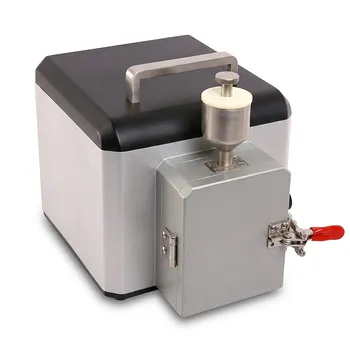
Portable Cutting Mill for Laboratory Sample Preparation and RoHS WEEE Compliance Testing
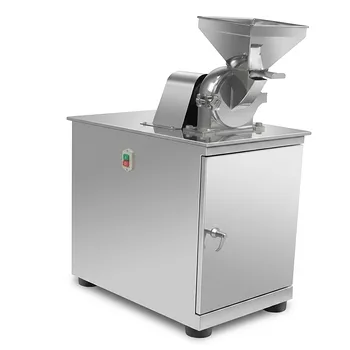
Universal Laboratory Pulverizer Grinder for Small Batch Powder Processing and Material Science Research