Why use Si3N4 jars for milling high-entropy ceramics? Ensure Purity & Phase Stability
Updated 5 months ago
Silicon nitride (Si3N4) is the preferred material for milling high-entropy ceramics because its extreme hardness and chemical inertness prevent material contamination. High-entropy ceramics are inherently hard and require high-energy, long-duration milling to achieve uniform powder distribution; silicon nitride resists the resulting wear that would otherwise introduce impurities from softer media, such as alumina or steel.
The primary reason for selecting silicon nitride is to ensure chemical purity and phase stability. By minimizing wear debris, researchers can guarantee that the final ceramic maintains the precise atomic ratios required for entropy stabilization without interference from foreign metallic or oxide contaminants.
The Challenge of Processing Ultra-Hard Materials
Matching Hardness for Effective Reduction
High-entropy ceramics (HECs) are characterized by their extreme hardness and mechanical strength. Using conventional grinding media often results in the media wearing down faster than the sample itself, leading to inefficient particle size reduction. Silicon nitride possesses the superior hardness necessary to effectively grind these materials into sub-micron powders without significant degradation of the media.
Resilience Under High-Energy Impact
High-energy ball milling utilizes intense impact, grinding, and shear forces to activate powder surfaces. Lower-grade materials may fracture or "spall" under these high-frequency impacts, introducing macroscopic fragments into the mix. Si3N4 media are engineered to withstand these mechanical stresses, maintaining structural integrity during planetary or high-energy milling cycles.
Preserving Chemical Purity and Phase Stability
Preventing "Doping" from Wear Debris
In high-entropy systems, the stability of the final phase depends on the precise balance of multiple elements. Debris from stainless steel jars (iron, chromium) or zirconia media (zirconium) acts as unintended "dopants" that can prevent the formation of a single-phase structure. Silicon nitride's high wear resistance ensures that the synthesized powder remains chemically "clean," preserving the integrity of the research.
Chemical Inertness in High-Temperature Reactions
Many milling processes involve heat generation or the use of specific chemical additives. Silicon nitride is chemically stable and does not react with most ceramic precursors or sintering additives like alumina and yttria. This inertness ensures that no secondary phases are formed during the mixing stage that could negatively impact the subsequent sintering process.
Understanding the Trade-offs
The Cost of Performance
Silicon nitride is significantly more expensive than alumina or hardened steel consumables. The manufacturing process for high-purity Si3N4 involves complex sintering and finishing, which increases the initial capital investment for laboratory hardware.
Density and Kinetic Energy
Silicon nitride has a lower density (approx. 3.2 g/cm³) compared to zirconia (6.0 g/cm³) or tungsten carbide (15.0 g/cm³). This lower mass means that for a given RPM, the kinetic energy per impact is lower. While it excels at maintaining purity, it may require longer milling times or higher rotational speeds to achieve the same particle size reduction as heavier media.
Selecting the Right Media for Your Objective
How to Apply This to Your Project
Choosing the correct milling environment depends on the specific requirements of your ceramic system and your tolerance for impurities.
- If your primary focus is phase stability research: Use silicon nitride jars and media to eliminate foreign ion contamination that could compromise your entropy-stabilized lattice.
- If your primary focus is maximum particle size reduction speed: Consider tungsten carbide media, provided your system can tolerate the introduction of cobalt or tungsten impurities.
- If your primary focus is cost-effective bulk processing: Alumina media may suffice if the material being ground is significantly softer than the media and purity requirements are low.
The technical superiority of silicon nitride ensures that the structural and chemical goals of high-entropy ceramic synthesis are met without the interference of media-induced defects.
Summary Table:
| Feature | Benefit for High-Entropy Ceramics | Impact on Process |
|---|---|---|
| Extreme Hardness | Effectively grinds ultra-hard HEC powders | Prevents media wear and debris |
| Chemical Inertness | Maintains precise atomic ratios and phase stability | No unintended "doping" or reactions |
| High Impact Resistance | Withstands high-energy planetary milling | Ensures structural integrity of media |
| Low Density (~3.2g/cm³) | Requires higher RPM for kinetic energy | Longer milling times for sub-micron sizes |
Optimize Your Material Synthesis with Precision Equipment
Achieving the perfect phase stability in high-entropy ceramics requires high-purity processing without compromise. Our brand provides complete laboratory sample preparation solutions tailored for advanced material science.
We specialize in high-performance powder processing and compaction equipment, including:
- Advanced Mills: Planetary ball mills, jet mills, and cryogenic grinders optimized for Si3N4 media.
- Sieving & Mixing: Vibratory sieve shakers and high-efficiency powder mixers.
- Compaction Solutions: A full spectrum of hydraulic presses, including Cold/Warm Isostatic Presses (CIP/WIP), hot presses, and vacuum hot presses for superior density.
Ensure your research maintains chemical purity from powder to pellet. Contact our technical team today to discuss the right Si3N4 solutions and compaction systems for your laboratory.
References
- Muhammad Waqas Qureshi, Izabela Szlufarska. Predictive screening of phase stability in high-entropy ceramics. DOI: 10.1039/d5ma00079c
Mentioned Products
- High Energy Omnidirectional Planetary Ball Mill 16L
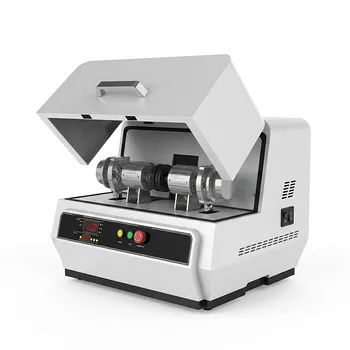
- Dual Jar High Energy Vibratory Ball Mill
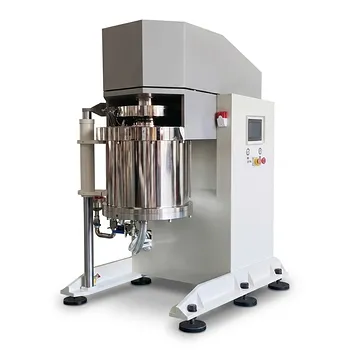
- Vertical Nano Bead Mill for Ceramic Materials with Permanent Magnet Motor and High Efficiency Grinding
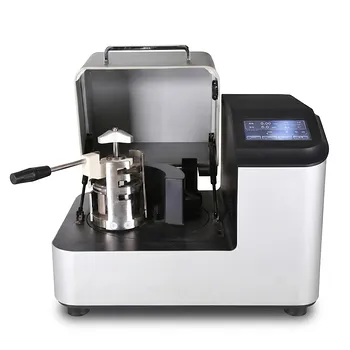
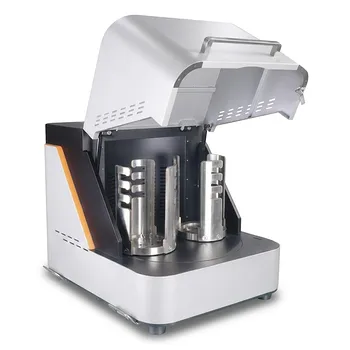
- High Energy Laboratory Planetary Ball Mill for Nano Grinding and Material Science Sample Preparation
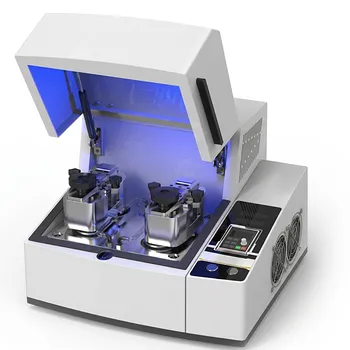
- Laboratory Nano High Energy Ball Mill Ultrafine Grinding Mechanical Alloying
People Also Ask
- What role does an omni-directional planetary ball mill play in brass/cobalt antimonide pretreatment? Achieve Nano-Scale Homogeneity.
- What is the role of a high-energy planetary ball mill in Li2ZrO3 and LBS prep? Achieve Superior Electrolyte Density
- What role does a high-energy planetary ball mill play in processing quenched bioactive glass? Achieve Nano-Scale Precision
- What role does a planetary ball mill play in nano-mineral filler prep? Achieve Sub-100nm Precision & Performance
- What role does a high-energy planetary ball mill play in magnesium-based hydrogen storage alloy preparation?

Tech Team · PowderPreparation
Last updated on May 14, 2026
Related Products

High Energy Omnidirectional Planetary Ball Mill 16L
Dual Jar High Energy Vibratory Ball Mill
Vertical Nano Bead Mill for Ceramic Materials with Permanent Magnet Motor and High Efficiency Grinding
High Energy Laboratory Planetary Ball Mill for Nano Grinding and Material Science Sample Preparation
Laboratory Nano High Energy Ball Mill Ultrafine Grinding Mechanical Alloying
High Energy Laboratory Planetary Ball Mill for Nano Grinding and Colloidal Mixing of Hard and Brittle Materials

Vertical Square Planetary Ball Mill for Laboratory Sample Preparation and Nanoscale Grinding
High Energy Planetary Ball Mill for Nano Scale Grinding and Mechanical Alloying
High Throughput Micro Ball Mill for Cryogenic Grinding and Laboratory Cell Disruption
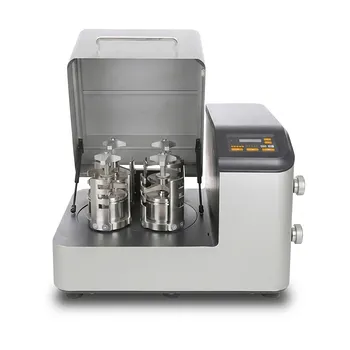
High Energy Planetary Ball Mill for Nano Scale Grinding and Colloidal Mixing in Material Science Research
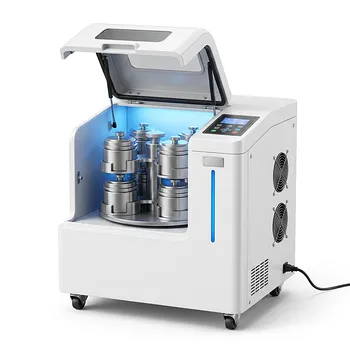
High Energy Omnidirectional Planetary Ball Mill 20L

Miniature Planetary Ball Mill with Vacuum Grinding and High Efficiency for Laboratory Sample Preparation
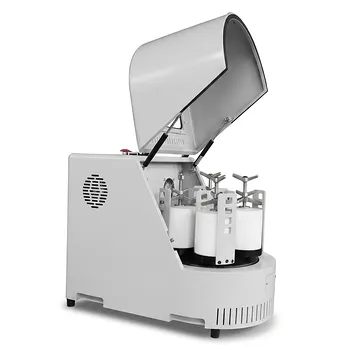
Vertical Semi Circular Planetary Ball Mill for Laboratory Precision Grinding
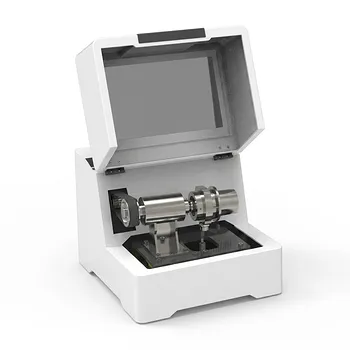
Single Tank High Energy Vibratory Ball Mill for Laboratory Grinding and Mixing

Vertical Production Planetary Ball Mill for High Throughput Powder Processing
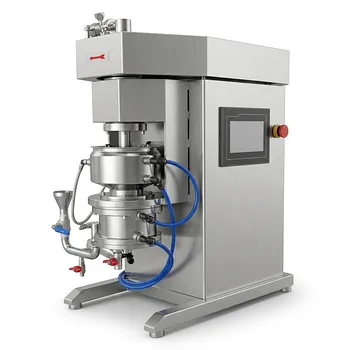
Small Ceramic Structure Laboratory Sand Mill Nanoscale Grinding Dispersion Equipment Seal-less Screen-less Design
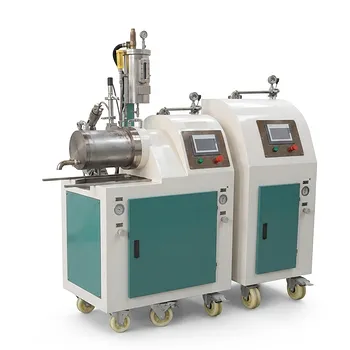
Mass Production Nano Sand Mill for Industrial Nanomaterial Grinding and Dispersion
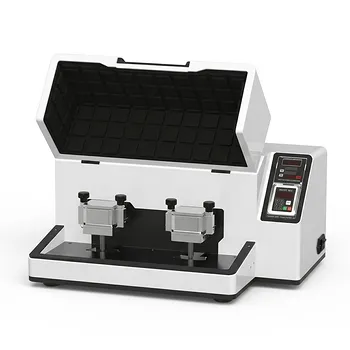
Nanoscale High Energy Vibratory Ball Mill Low Temperature
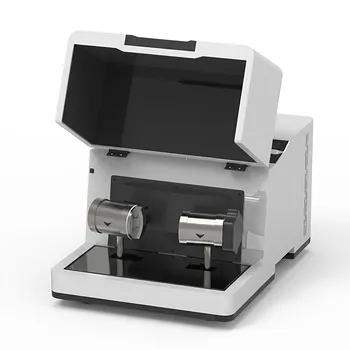
Ultra-Low Temperature Cryogenic High-Energy Vibratory Ball Mill