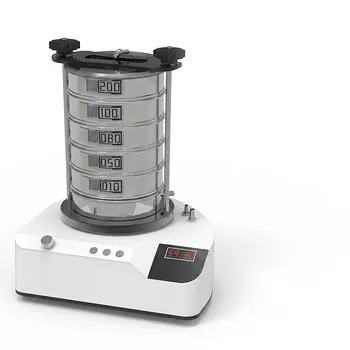
Why are precision stainless steel test sieves used in the pretreatment of snail shell ash? Optimize CO2 Sequestration
Updated 5 months ago
Precision stainless steel test sieves are the gatekeepers of chemical reactivity in synthetic aggregate production. By strictly limiting snail shell ash (SSA) to a 212 μm aperture, these sieves ensure the powder reaches a critical specific surface area. This physical refinement is the primary driver for high reactivity during carbonation, enabling $CO_2$ absorption efficiencies as high as 91.6 wt %.
To produce high-performance Carbonated Paste-based Synthetic Aggregate, the raw snail shell ash must be processed into a highly reactive state. Precision sieving is the technical bridge that converts raw waste into a uniform precursor capable of maximum carbon sequestration and structural integrity.
The Role of Particle Size in Carbonation Efficiency
Maximizing Reactive Surface Area
Precision sieves with a 212 μm aperture are utilized to strictly control the grain size of snail shell ash. By ensuring the particles remain below this threshold, the material maintains a large specific surface area.
This increased surface area is vital because carbonation is a surface-dependent chemical reaction. The more area available for contact, the more effectively the ash can react with carbon dioxide.
Achieving High Carbon Sequestration Benchmarks
The ultimate goal of using SSA in synthetic aggregates is to sequester carbon dioxide. Controlled sieving is the direct cause of achieving an absorption efficiency of 91.6 wt %.
Without this precise sizing, larger particles would remain unreacted at their core. This would result in lower sequestration rates and a weaker final aggregate structure.
Enhancing Material Consistency and Quality
Removing Debris and Interfering Substances
Snail shell waste often contains large debris and unreacted by-products from the initial processing stages. Using high-precision stainless steel sieves allows for the physical separation of these contaminants from the desired ash.
This purification process ensures that the resulting powder is highly representative of the required chemical composition. This step is critical for ensuring the reproducibility of the aggregate's strength and chemical properties.
Integration with Cementitious Matrices
For SSA to function effectively in a paste-based aggregate, it must mimic the fineness of traditional binders. Achieving a particle distribution similar to ordinary Portland cement ensures the material distributes uniformly throughout the matrix.
A uniform distribution prevents "weak spots" within the aggregate. This leads to better pozzolanic reactivity and a more consistent bond between the ash and the carbonated paste.
Understanding the Trade-offs
Equipment Wear and Maintenance
Precision stainless steel sieves are durable, but the abrasive nature of calcium-rich ashes can lead to mesh deformation over time. Even slight changes in aperture size can compromise the 212 μm standard and reduce carbonation efficiency.
Material Yield vs. Reactivity
Stricter sieving (using smaller apertures) increases reactivity but may decrease the total volume of usable ash from a raw batch. Finding the balance between the 212 μm threshold and the available raw material is essential for cost-effective production.
Risk of Sieve Blinding
Fine powders, especially those with residual moisture, can cause sieve blinding, where particles clog the mesh openings. This requires specialized cleaning or ultrasonic assistance to maintain the "precision" required for the 91.6 wt % absorption target.
How to Apply This to Your Project
Making the Right Choice for Your Goal
- If your primary focus is maximum $CO_2$ sequestration: Use a 212 μm precision sieve to ensure the specific surface area is optimized for the highest possible carbonation reaction rates.
- If your primary focus is structural uniformity: Prioritize high-precision stainless steel mesh to eliminate large debris and ensure the ash integrates seamlessly into the cementitious matrix.
- If your primary focus is meeting cement industry standards: Consider using smaller apertures, such as 75 μm, to match or exceed the fineness of ordinary Portland cement for superior pozzolanic performance.
By treating precision sieving as a critical chemical preparation step rather than a simple filtration task, you ensure the technical viability and environmental impact of your synthetic aggregates.
Summary Table:
| Feature | Technical Requirement | Benefit for Synthetic Aggregate |
|---|---|---|
| Aperture Size | 212 μm | Maximizes specific surface area for high reactivity |
| Material | Precision Stainless Steel | Prevents contamination and ensures mesh integrity |
| CO2 Absorption | Target: 91.6 wt % | Achieved through precise particle size control |
| Matrix Uniformity | Cement-like Fineness | Eliminates weak spots and improves pozzolanic bond |
Elevate Your Material Research with Precision Sample Preparation
Achieving 91.6% carbonation efficiency starts with the right particle size. At [Company Name], we provide complete laboratory sample preparation solutions for material science, specializing in high-performance powder processing and compaction equipment.
Whether you are refining snail shell ash or developing next-generation synthetic aggregates, our extensive product line supports your entire workflow:
- Sieving & Analysis: Vibratory and air-jet sieve shakers with a full range of precision stainless steel test sieves.
- Milling & Grinding: Planetary ball mills, jet mills, and cryogenic grinders for reaching sub-micron fineness.
- Crushing: Heavy-duty jaw and roll crushers for initial waste processing.
- Compaction: A full spectrum of hydraulic presses, including Cold/Warm Isostatic Presses (CIP/WIP), vacuum hot presses, and XRF pellet presses.
- Mixing: Advanced powder and defoaming mixers for uniform cementitious pastes.
Ready to optimize your carbon sequestration results? Contact our technical experts today to find the perfect equipment configuration for your laboratory's needs.
References
- Ebtisam Saeed, Jorge S. Dolado. Supplementary Cementitious Materials Based on CO <sub>2</sub> –Capturing Periwinkle Shell. DOI: 10.1021/acssusresmgt.5c00313
Mentioned Products
- Stainless Steel Rotary Vibrating Sieve High Precision Circular Vibratory Separator Industrial Powder Grading Machine Multi Layer Sifting Equipment
- Stainless Steel Laboratory Vibratory Test Sieve Shaker
- Laboratory Vibratory Test Sieve Shaker for Precision Particle Size Analysis and Powder Grading
- Small Laboratory Vibrating Sieve Shaker for Precise Particle Size Analysis
- Small High-Speed Laboratory Grinder for Powder Processing
People Also Ask
- What is the significance of high-precision vibratory sieve machines for SMA? Optimize Aggregate Gradation & Durability
- What is the role of a laboratory-grade high-precision sieve in CPC-PCL? Ensure uniform powder distribution and stability.
- Why is high-precision sieving equipment necessary for aviation-grade composites? Optimize Fiber Strength & Consistency
- What is the function of high-precision vibratory sieve shakers in the analysis of brown rice particle size distribution?
- Why is a high-precision vibratory sieve shaker necessary for wood-polystyrene particles? Maximize composite strength.

Tech Team · PowderPreparation
Last updated on May 14, 2026
Related Products
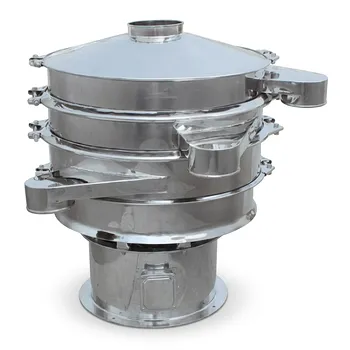
Stainless Steel Rotary Vibrating Sieve High Precision Circular Vibratory Separator Industrial Powder Grading Machine Multi Layer Sifting Equipment
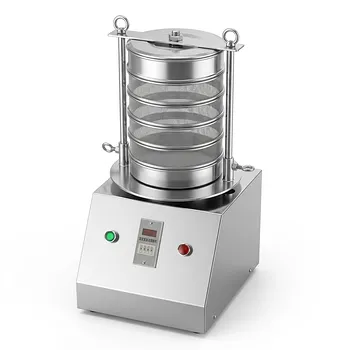
Stainless Steel Laboratory Vibratory Test Sieve Shaker
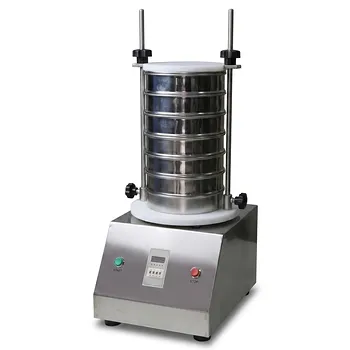
Laboratory Vibratory Test Sieve Shaker for Precision Particle Size Analysis and Powder Grading
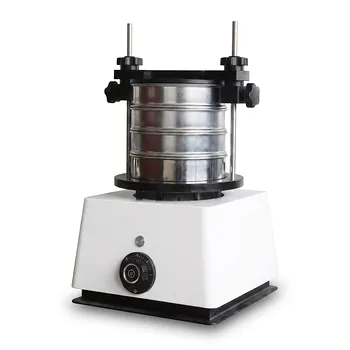
Small Laboratory Vibrating Sieve Shaker for Precise Particle Size Analysis
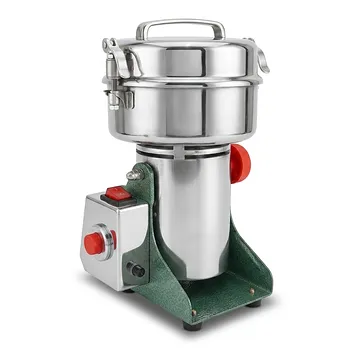
Small High-Speed Laboratory Grinder for Powder Processing
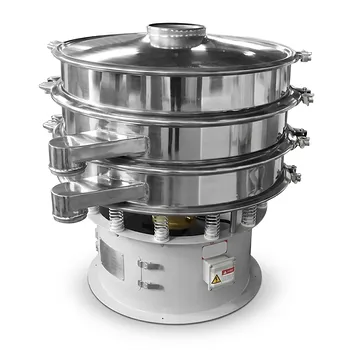
Three Dimensional Rotary Vibrating Sieve
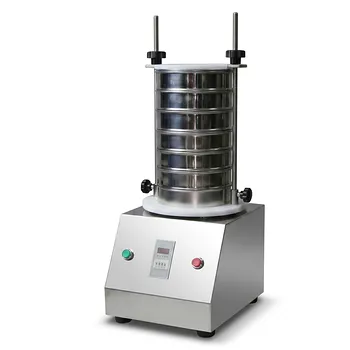
Small Laboratory Vibratory Sieve Shaker for Powder Gradation and Particle Size Analysis
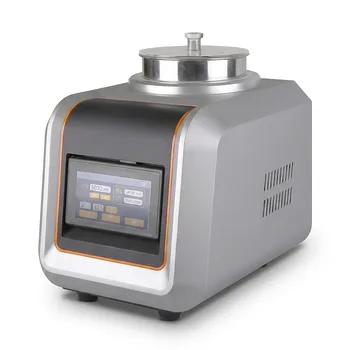
Laboratory Air Jet Sieving Machine for Fine Powder Particle Size Analysis and Deagglomeration
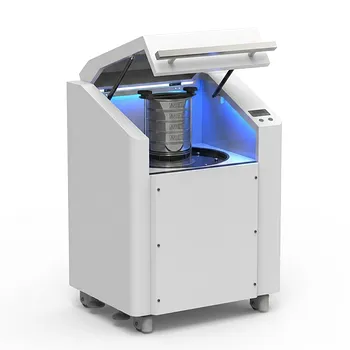
High Frequency Cabinet Type Three-Dimensional Rotary Vibrating Sieve Shaker for Dry Sieving and Particle Classification
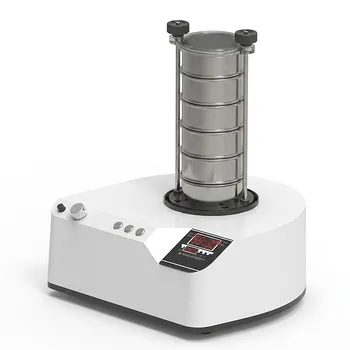
三维电磁微量振动筛分仪
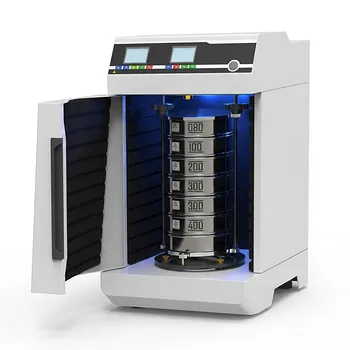
Laboratory Dry and Wet Three Dimensional Vibratory Sieve Shaker for Particle Analysis