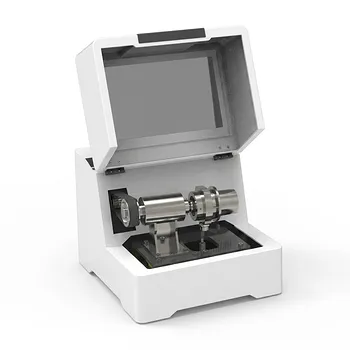
Why are planetary ball mills used for the fine grinding of Limestone Calcined Clay Cement materials? — Boost LC3 Strength
Updated 4 months ago
Planetary ball mills are utilized for Limestone Calcined Clay Cement (LC3) materials because they deliver the high-energy impact and shear forces necessary to reach micron-level fineness while inducing mechanochemical activation. By refining limestone, calcined clay, and gypsum to a D50 particle size of approximately 11–58 µm, these mills significantly increase the material's specific surface area. This process is essential for triggering the pozzolanic reaction between the calcined clay and limestone, which is the foundation of LC3’s structural performance.
The primary value of a planetary ball mill in LC3 production lies in its ability to combine rapid particle size reduction with intensive microscopic mixing. This dual action ensures that the chemical components are not only fine enough to react but are also physically distributed to maximize chemical bonding and early hydration strength.
The Mechanics of High-Energy Grinding
Utilizing Multi-Directional Forces
Planetary ball mills operate through the simultaneous rotation and revolution of grinding jars, creating high centrifugal forces. These forces accelerate the grinding media, resulting in high-intensity impact and shear on the raw materials.
Rapid Refinement to Micron Levels
This high-energy environment allows for the rapid reduction of coarse limestone and clay into fine powders. The ability to consistently reach micron-level particle sizes (often exceeding 200 or 325 mesh) is critical for the consistency of the final cement product.
Enhancing Chemical Reactivity
Increasing Specific Surface Area
As the mill breaks down particles, it exponentially increases the Brunauer-Emmett-Teller (BET) specific surface area. A higher surface area provides more contact points for water during the hydration process, which accelerates the initial setting time and improves early-age strength.
Facilitating Mechanochemical Activation
Beyond simple size reduction, the high-energy input induces lattice distortions and phase transformations in the minerals. For example, it can facilitate the conversion of calcite to aragonite, providing a mechanochemical boost that enhances the solid-state reaction activity during processing.
Achieving Microscopic Homogenization
Promoting Intimate Component Mixing
For LC3 to be effective, the calcined clay and limestone must be in constant, close contact at the molecular level. The planetary ball mill ensures a highly uniform mixture of heterogeneous components, including limestone, clay, sandstone, and iron tailings.
Ensuring Microstructural Density
Uniformity at the microscopic level leads to a dense microstructure in the final hardened cement paste. By eliminating "pockets" of unreacted material through thorough mixing, the mill helps produce a more durable and stable ceramic-like matrix.
Understanding the Trade-offs and Pitfalls
Energy Consumption and Heat Generation
The primary drawback of planetary ball milling is its high energy demand compared to traditional horizontal ball mills. The intense friction also generates significant internal heat, which can lead to the unwanted dehydration of certain minerals if not carefully monitored.
Scaling Limitations
While planetary mills are unparalleled for laboratory research and small-batch production, scaling this exact high-energy environment to industrial-sized cement plants remains a technical challenge. Results achieved in a planetary mill must be carefully calibrated when transitioning to larger vertical roller mills or industrial ball mills.
How to Apply This to Your Project
Making the Right Choice for Your Goal
To achieve the best results with LC3 materials, consider your specific processing objectives:
- If your primary focus is rapid material screening: Use a planetary ball mill to quickly produce small batches of varied LC3 formulations with precise control over fineness.
- If your primary focus is maximum chemical activation: Prioritize longer milling times at moderate speeds to induce lattice distortions without over-heating the clay components.
- If your primary focus is improving early strength: Focus on achieving a D50 towards the lower end of the 11–58 µm range to maximize the specific surface area available for hydration.
By mastering the high-energy mechanics of the planetary ball mill, researchers and engineers can unlock the full reactive potential of limestone and calcined clay.
Summary Table:
| Key Parameter | Impact on LC3 Material | Performance Benefit |
|---|---|---|
| Particle Size (D50) | 11–58 µm micron-level fineness | Accelerates hydration & early strength |
| Energy Input | Mechanochemical activation | Triggers pozzolanic reaction & lattice distortion |
| Mixing Action | Microscopic homogenization | Ensures dense, stable ceramic-like matrix |
| Surface Area | Increased BET specific surface area | Enhances chemical bonding & setting time |
| Force Type | Multi-directional impact & shear | Rapid refinement of limestone and clay |
Optimize Your LC3 Research with Precision Laboratory Solutions
At our core, we provide complete laboratory sample preparation solutions for material science, specializing in high-performance powder processing and compaction equipment. Our extensive range of planetary ball mills is specifically designed to achieve the high-energy impact and microscopic homogenization required for Limestone Calcined Clay Cement (LC3) development.
Beyond milling, we offer a full spectrum of equipment to support your material lifecycle:
- Powder Processing: Jaw/roll crushers, jet mills, and vibratory sieve shakers for precise particle control.
- Advanced Mixing: High-uniformity powder mixers and vacuum defoaming mixers.
- Sample Compaction: A complete line of hydraulic presses, including Cold/Warm Isostatic Presses (CIP/WIP), hot presses, and XRF pellet presses for structural testing.
Ready to enhance your lab's efficiency and material reactivity? Contact us today to find the perfect equipment for your project!
References
- Munib Ul Rehman, Will P. Gates. Differences in hydration kinetics and phase development of Australian bentonite and kaolinite based limestone calcined clay cements. DOI: 10.1617/s11527-025-02743-5
Mentioned Products
- Vertical Semi Circular Planetary Ball Mill for Laboratory Precision Grinding
- High Energy Planetary Ball Mill for Nano Scale Grinding and Mechanical Alloying
- Vertical Production Planetary Ball Mill for High Throughput Powder Processing
- Heavy Duty Horizontal Planetary Ball Mill for Efficient Industrial Grinding and Sample Preparation
- 360° Rotating Omnidirectional Laboratory Planetary Ball Mill for Homogeneous Ultra-Fine Grinding and Mixing
People Also Ask
- What role does a planetary ball mill play in the synthesis of Li6PS5Cl (LPSCl)? Unlock High Ionic Conductivity
- Why is a planetary ball mill essential for SiBCN-rGO wet-spinning? Achieve Superior Dispersion and Spinnability
- Why is an intermittent grinding process required for perovskites in a planetary ball mill? Ensure Stability & Purity
- Why is a planetary ball mill required for PET micronization? Ensure Accurate Chemical Analysis of Reprocessed PET
- How does mechanized planetary ball milling compare to manual agate grinding? Optimize sulfide standard material precision.

Tech Team · PowderPreparation
Last updated on Jun 03, 2026
Related Products
Vertical Semi Circular Planetary Ball Mill for Laboratory Precision Grinding
High Energy Planetary Ball Mill for Nano Scale Grinding and Mechanical Alloying
Vertical Production Planetary Ball Mill for High Throughput Powder Processing
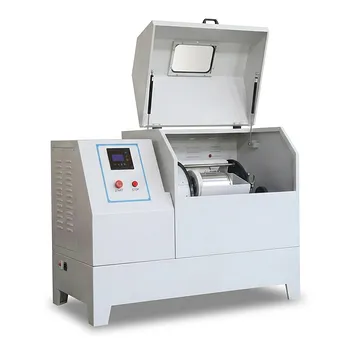
Heavy Duty Horizontal Planetary Ball Mill for Efficient Industrial Grinding and Sample Preparation
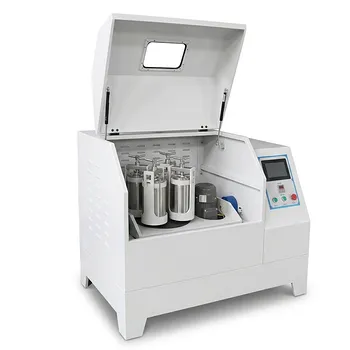
360° Rotating Omnidirectional Laboratory Planetary Ball Mill for Homogeneous Ultra-Fine Grinding and Mixing
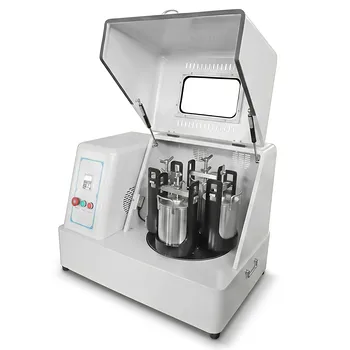
Vertical Square Planetary Ball Mill for Laboratory Sample Preparation and Nanoscale Grinding
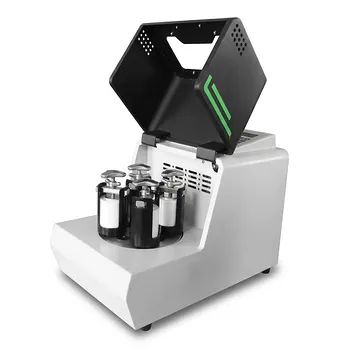
Miniature Planetary Ball Mill with Vacuum Grinding and High Efficiency for Laboratory Sample Preparation
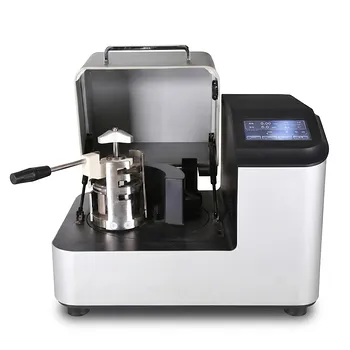
High Energy Laboratory Planetary Ball Mill for Nano Grinding and Material Science Sample Preparation
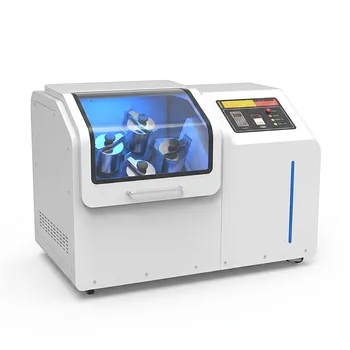
High Energy Omnidirectional Planetary Ball Mill 16L
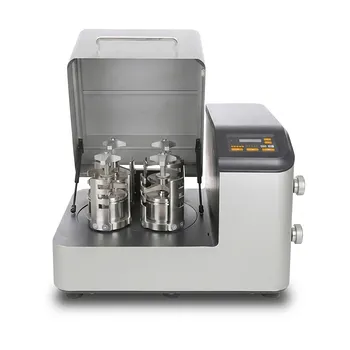
High Energy Planetary Ball Mill for Nano Scale Grinding and Colloidal Mixing in Material Science Research
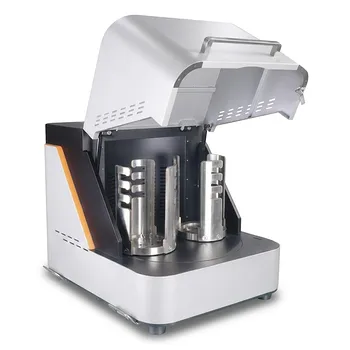
High Energy Laboratory Planetary Ball Mill for Nano Grinding and Colloidal Mixing of Hard and Brittle Materials
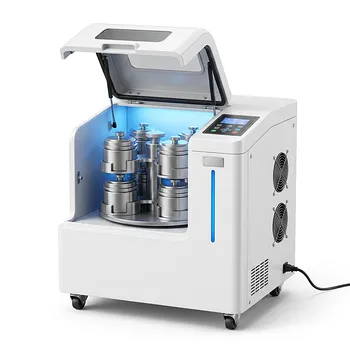
High Energy Omnidirectional Planetary Ball Mill 20L
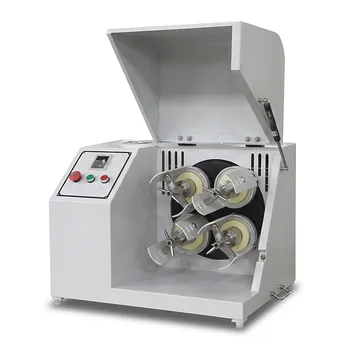
Horizontal Light Duty Planetary Ball Mill for Laboratory Sample Preparation

8L Planetary Ball Mill for Laboratory Grinding and Sample Preparation
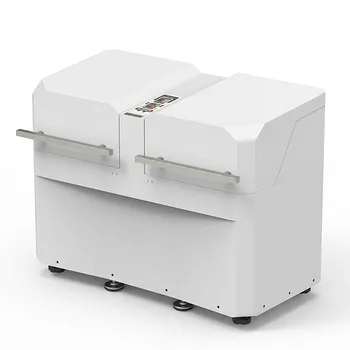
Dual Station Planetary Ball Mill 24L
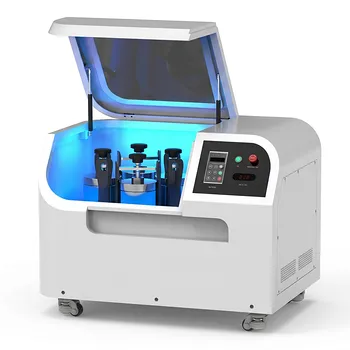
Planetary Ball Mill 12L

Nano High Energy Vibratory Ball Mill for Laboratory Sample Preparation
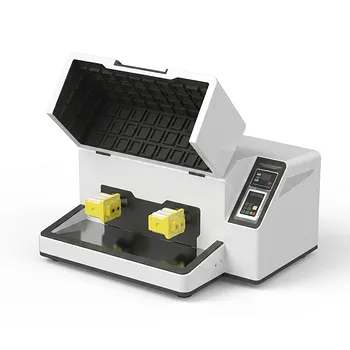
Multi-Platform Nanoscale High-Energy Vibratory Ball Mill
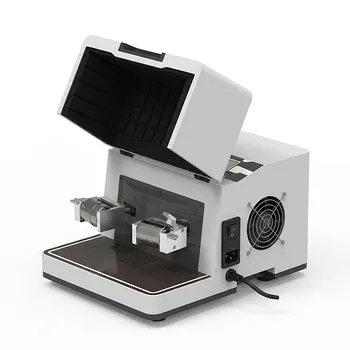
High Energy Hybrid Vibratory Ball Mill for Grinding Mixing and Cell Disruption