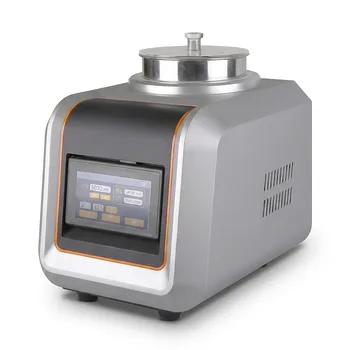
Why are motor-driven mechanical sieve shakers required for sandstone cuttings? Ensure Precise Grain Size Analysis
Updated 5 months ago
Motor-driven mechanical sieve shakers are required because they provide the standardized, continuous, and uniform vibrational energy necessary for precise particle fractionation. By automating the shaking process, these machines eliminate the inherent inconsistencies of manual operation, ensuring that sandstone cuttings are accurately sorted by size across a vertical stack of sieves. This level of precision is the technical prerequisite for generating the cumulative grain size distribution curves used to calculate critical hydrogeological parameters like permeability and hydraulic conductivity.
Grain size analysis for sandstone depends on the mechanical shaker’s ability to provide a constant and controllable power output, ensuring that every sample is treated with the same frequency and amplitude. This standardization transforms a manual task into a scientific process, allowing for repeatable data that is essential for geological modeling and engineering.
The Technical Necessity of Mechanical Motion
Standardizing Vibrational Energy
Mechanical shakers utilize high-frequency vibration and tapping actions to ensure that particles flow through a stack of analytical sieves. This standardized motion rearranges the sandstone cuttings constantly, allowing smaller particles to find openings in the mesh that they might otherwise miss during inconsistent manual shaking.
Eliminating Human Operational Variance
Manual sieving is prone to "data bias" because a human operator cannot maintain a perfectly consistent frequency or force for the required duration, typically 20 minutes. Motor-driven units provide a uniform mechanical oscillation that ensures the results are scientifically valid and repeatable across different laboratories and technicians.
Precise Fractionation of Sand Components
Sandstone cuttings must be classified into specific categories such as coarse, medium, and fine sand. The mechanical force ensures that sediment particles are fully dispersed and settled across sieve surfaces ranging from 2mm down to 63 micrometers, providing the exact weight distribution needed for statistical analysis.
Impact on Hydrogeological and Engineering Calculations
Building Accurate Distribution Curves
The primary output of this process is the cumulative grain size distribution curve. Because mechanical shakers ensure that nearly 100% of particles reach their appropriate sieve level, the resulting curve accurately represents the sample's physical makeup, which is vital for calculating the mean grain size, sorting, and skewness.
Determining Hydraulic Conductivity and Permeability
In hydrogeology, the movement of fluids through sandstone is determined by the size and distribution of its grains. Data from mechanical sieving is used to calculate permeability coefficients, which are essential for groundwater modeling and predicting how oil, gas, or water will flow through a formation.
Calculating the Fineness Modulus
For projects involving crushed stone or river sand, mechanical shakers allow for the calculation of the Fineness Modulus (FM). This ensures that the aggregate grading complies with technical specifications, optimizing the density and workability of concrete mixtures.
Understanding the Trade-offs
Mechanical Wear and Sieve Blinding
While motor-driven shakers are highly efficient, they can lead to sieve blinding, where near-sized particles become wedged in the mesh. Excessive vibrational amplitude can also cause particle degradation, where fragile sandstone cuttings break into smaller pieces, artificially skewing the results toward finer distributions.
Noise and Calibration Requirements
The high-frequency vibration and tapping mechanisms create significant acoustic noise, often requiring sound-dampening cabinets in a laboratory setting. Additionally, these machines require regular calibration to ensure the frequency and amplitude remain within the manufacturer's specified range for standardized testing.
How to Apply This to Your Project
Choosing the Right Approach for Your Goal
To achieve the most accurate grain size analysis for your specific application, consider the following recommendations:
- If your primary focus is hydrogeological modeling: Use a motor-driven shaker for at least 20 minutes to ensure the precision required for calculating hydraulic conductivity.
- If your primary focus is geological classification: Ensure your shaker uses half-phi intervals to provide the granular data needed for sorting and skewness calculations.
- If your primary focus is construction aggregate quality: Use standardized mechanical oscillation to calculate the Fineness Modulus and ensure compliance with building codes.
Reliable geological data begins with the elimination of human error through standardized mechanical sieving.
Summary Table:
| Feature | Benefit | Technical Impact |
|---|---|---|
| Automated Vibration | Eliminates human operational variance | Ensures repeatable and scientifically valid data |
| High-Frequency Motion | Efficient particle fractionation | Accurately sorts coarse, medium, and fine sand |
| Standardized Power | Continuous, uniform energy output | Prerequisite for accurate distribution curves |
| Precise Mesh Flow | Prevents improper particle settling | Essential for calculating permeability and conductivity |
Optimize Your Material Analysis with Precision Equipment
Reliable geological and material data starts with high-quality sample preparation. At [Your Brand Name], we provide complete laboratory sample preparation solutions for material science, specializing in advanced powder processing and compaction equipment.
Whether you need to classify sandstone cuttings with our vibratory or air-jet sieve shakers or require sample reduction via our crushers (jaw/roll) and planetary ball mills, our equipment is engineered for accuracy and durability. We also offer a full spectrum of hydraulic presses, including Cold/Warm Isostatic Presses (CIP/WIP) and vacuum hot presses, to meet your most demanding research requirements.
Ready to enhance your lab's efficiency and data precision? Contact our technical experts today to find the perfect solution for your material processing needs!
References
- Emmanuel O. Ezim, Mike I. Akaegbobi. The use of statistical grain-size method in analysing borehole and evaluating aquifer parameters. A case study of Ajali Sandstone formation, southeastern Nigeria. DOI: 10.4314/gjgs.v15i1.7
Mentioned Products
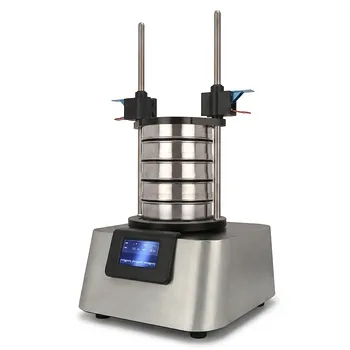
- Vibratory Sieve Shaker Electromagnetic 3D Motion Powder Particle Size Analyzer for Dry and Wet Sieving
- 三维电磁微量振动筛分仪
- Laboratory Dry and Wet Three Dimensional Vibratory Sieve Shaker for Particle Analysis
- Small Laboratory Vibrating Sieve Shaker for Precise Particle Size Analysis
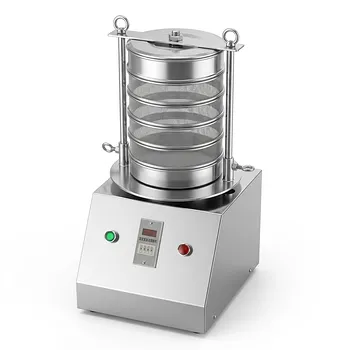
- Stainless Steel Laboratory Vibratory Test Sieve Shaker
People Also Ask
- How does a vibratory sieve shaker contribute to optimizing the performance of activated carbon? Enhance Adsorption Precision
- Why is a laboratory vibratory sieve shaker necessary for processing magnesium-based borate precursor powders? Boost Activity
- Why use a vibratory sieve shaker to verify coarse aggregate grading in rubberized concrete? Ensure Structural Integrity
- What function do vibratory sieve shakers and standard test sieves serve in the preparation of adsorbents? Key Guide
- What role does a vibratory sieve shaker play in the particle size analysis of ground corn products? Enhance QC Precision

Tech Team · PowderPreparation
Last updated on May 14, 2026
Related Products
Vibratory Sieve Shaker Electromagnetic 3D Motion Powder Particle Size Analyzer for Dry and Wet Sieving

三维电磁微量振动筛分仪

Laboratory Dry and Wet Three Dimensional Vibratory Sieve Shaker for Particle Analysis

Small Laboratory Vibrating Sieve Shaker for Precise Particle Size Analysis
Stainless Steel Laboratory Vibratory Test Sieve Shaker

Heavy Duty Dry Three Dimensional Vibratory Sieve Shaker for Particle Separation
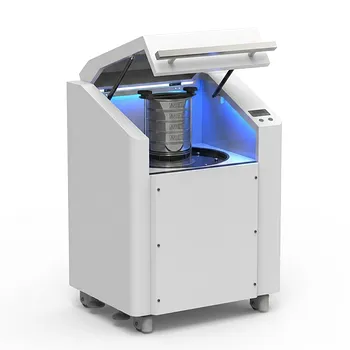
High Frequency Cabinet Type Three-Dimensional Rotary Vibrating Sieve Shaker for Dry Sieving and Particle Classification

Dry Three Dimensional Vibratory Sieve Shaker

Tapping Oscillating Sieve Shaker for Dry and Wet Particle Size Analysis

Laboratory Vibratory Test Sieve Shaker for Precision Particle Size Analysis and Powder Grading
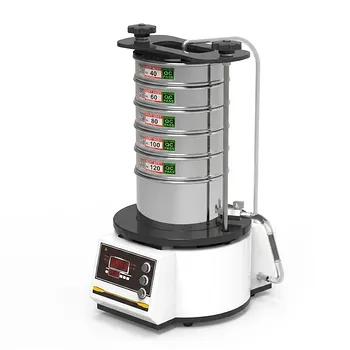
High Frequency Wet Three-Dimensional Vibrating Sieve Shaker for Dry and Wet Particle Size Analysis

Small Laboratory Vibratory Sieve Shaker for Powder Gradation and Particle Size Analysis

Stainless Steel Rotary Vibrating Sieve High Precision Circular Vibratory Separator Industrial Powder Grading Machine Multi Layer Sifting Equipment

Three Dimensional Rotary Vibrating Sieve