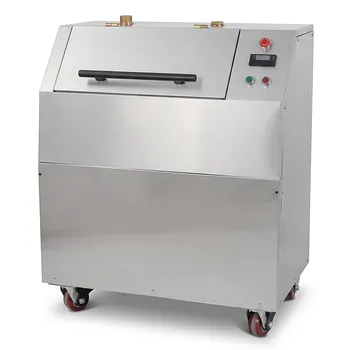
Why are vibratory sieve shakers essential for lignocellulosic acetylation? Achieve Precise Reaction & Data Accuracy
Updated 5 months ago
Achieving precision in acetylation reactions starts with the rigorous control of raw material morphology. Mechanical vibratory sieve shakers and standard test sieves are essential because they produce a uniform particle size distribution (typically in the 425–625 µm range), which standardizes diffusion resistance across the sample. By eliminating size-related variables, researchers ensure that the Weight Percent Gain (WPG) remains consistent, providing the accurate thermodynamic and kinetic data required for valid experimental results.
Core Takeaway: In lignocellulosic chemistry, particle size dictates the rate of solvent penetration and chemical interaction. Using mechanical sieving to isolate a specific size fraction is the only way to ensure reproducible mass transfer and prevent localized reaction imbalances that compromise data integrity.
Standardizing Mass Transfer and Diffusion Kinetics
The Relationship Between Particle Volume and Solvent Penetration
Lignocellulosic materials are porous and anisotropic, meaning chemical reagents like acetic anhydride do not penetrate them instantly or evenly.
If a sample contains a wide range of particle sizes, the smaller particles may reach full saturation while the cores of larger particles remain unreacted.
Mechanical vibratory shakers ensure that every particle in a batch has a similar surface-area-to-volume ratio, leading to uniform diffusion rates throughout the acetylation process.
Eliminating Fluctuations in Weight Percent Gain (WPG)
WPG is the primary metric used to quantify the success of an acetylation reaction.
When particle sizes vary, the resulting fluctuations in diffusion resistance cause inconsistent chemical uptake, leading to "noisy" data.
By utilizing standard test sieves to isolate a narrow range, such as 425–625 µm, researchers eliminate these fluctuations and can confidently attribute WPG changes to experimental variables rather than physical inconsistencies.
Ensuring Chemical and Thermal Stability
Preventing Localized Over-Reaction and Under-Reaction
Acetylation is often sensitive to localized concentrations of reagents and catalysts.
In a non-uniform mixture, "fines" (excessively small particles) can over-react or even degrade, while oversized particles may only be acetylated on their shell.
Mechanical sieving provides the kinetic stability necessary to ensure the entire biomass batch reacts at a synchronized rate, preserving the structural integrity of the lignocellulosic powder.
Optimizing Heat and Solvent Penetration
During hydrothermal or chemical treatments, heat transfer is just as critical as mass transfer.
Uniformly sized particles ensure that heat is distributed evenly through the reaction vessel, preventing "hot spots" that could lead to unintended thermal degradation.
This level of control is vital for maintaining the batch-to-batch stability required in advanced material synthesis, such as the production of silver nanoparticles or breathable ceramic scaffolds.
Understanding the Trade-offs and Technical Pitfalls
The Risk of Screen Blinding and Material Loss
While fine sieving improves accuracy, mechanical shakers can suffer from "blinding," where resinous lignocellulosic particles clog the sieve apertures.
Frequent cleaning and the use of anti-blinding aids (like sieve cleaners) are necessary, but they must be managed carefully to avoid contaminating the high-purity powder.
Balancing Precision with Yield
Narrowing the particle size distribution inevitably leads to lower material yield from the raw crushed biomass.
Researchers must find the "sweet spot" where the distribution is narrow enough for scientific rigor but wide enough to remain economically and practically viable for the required sample volume.
Applying Sieving Standards to Your Research
Efficient acetylation requires a strategic approach to particle classification based on your specific experimental endpoints.
- If your primary focus is Thermodynamic Accuracy: Use high-precision sieves to isolate a very narrow fraction (e.g., 425–625 µm) to eliminate diffusion resistance as a variable.
- If your primary focus is Scaling for Production: Prioritize mechanical shakers with higher throughput capabilities while maintaining a broader but still controlled range (e.g., 20–60 mesh) to balance speed with kinetic stability.
- If your primary focus is Preventing Processing Errors: Focus on removing "fines" and oversized particles to prevent filtration clogging and incomplete solvent penetration during the washing stages.
By treating particle size as a critical chemical variable rather than a mere physical characteristic, you secure the reproducibility and technical authority of your acetylation research.
Summary Table:
| Key Factor | Role in Acetylation Process | Benefit to Research |
|---|---|---|
| Particle Size (425–625 µm) | Standardizes surface-area-to-volume ratio | Ensures uniform solvent penetration & diffusion rates |
| Sieve Uniformity | Eliminates size-related physical variables | Stabilizes Weight Percent Gain (WPG) and kinetic data |
| Mechanical Vibration | Provides high-efficiency particle classification | Prevents localized over-reaction or thermal degradation |
| Fines Removal | Eliminates excessively small particles | Prevents filtration clogging and sample loss during washing |
Elevate Your Material Science Research with Precision Powder Solutions
Achieving reproducible results in lignocellulosic chemistry requires absolute control over particle morphology. At [Your Brand Name], we provide complete laboratory sample preparation solutions tailored for material science. Our expertise in powder processing and compaction equipment ensures your samples meet the rigorous standards required for advanced chemical reactions.
Our comprehensive equipment line includes:
- Sieving & Classification: High-performance mechanical vibratory and air-jet sieve shakers with a full range of precision test sieves.
- Size Reduction: Advanced crushers (jaw/roll) and diverse mills (planetary ball, jet, disc, and rotor) including liquid nitrogen cryogenic grinders.
- Mixing & Homogenization: Industrial-grade powder mixers and vacuum defoaming mixers for uniform sample preparation.
- Sample Compaction: A full spectrum of hydraulic presses, including Cold/Warm Isostatic Presses (CIP/WIP), XRF pellet presses, and vacuum hot presses.
Whether you are isolating specific fractions for acetylation or synthesizing advanced ceramics, our equipment delivers the batch-to-batch stability you need. Contact us today to discuss your specific application and find the perfect solution for your laboratory!
References
- Jude Chinedu Onwuka, Friday Godwin Okibe. Thermodynamic pathway of lignocellulosic acetylation process. DOI: 10.1186/s13065-019-0593-8
Mentioned Products
- Vibratory Sieve Shaker Electromagnetic 3D Motion Powder Particle Size Analyzer for Dry and Wet Sieving
- Laboratory Dry and Wet Three Dimensional Vibratory Sieve Shaker for Particle Analysis
- Dry Three Dimensional Vibratory Sieve Shaker
- Stainless Steel Laboratory Vibratory Test Sieve Shaker
- Heavy Duty Dry Three Dimensional Vibratory Sieve Shaker for Particle Separation
People Also Ask
- How does a vibratory sieve shaker contribute to optimizing the performance of activated carbon? Enhance Adsorption Precision
- Why is a laboratory vibratory sieve shaker necessary for processing magnesium-based borate precursor powders? Boost Activity
- Why use a vibratory sieve shaker to verify coarse aggregate grading in rubberized concrete? Ensure Structural Integrity
- What function do vibratory sieve shakers and standard test sieves serve in the preparation of adsorbents? Key Guide
- What role does a vibratory sieve shaker play in the particle size analysis of ground corn products? Enhance QC Precision

Tech Team · PowderPreparation
Last updated on May 14, 2026
Related Products
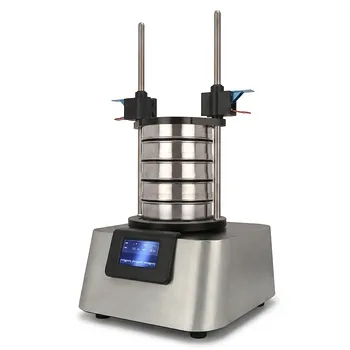
Vibratory Sieve Shaker Electromagnetic 3D Motion Powder Particle Size Analyzer for Dry and Wet Sieving
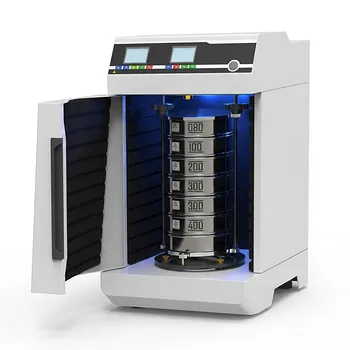
Laboratory Dry and Wet Three Dimensional Vibratory Sieve Shaker for Particle Analysis
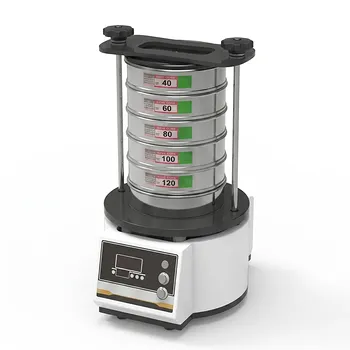
Dry Three Dimensional Vibratory Sieve Shaker
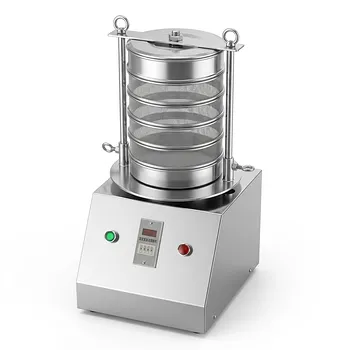
Stainless Steel Laboratory Vibratory Test Sieve Shaker
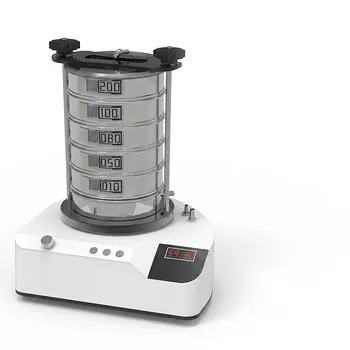
Heavy Duty Dry Three Dimensional Vibratory Sieve Shaker for Particle Separation
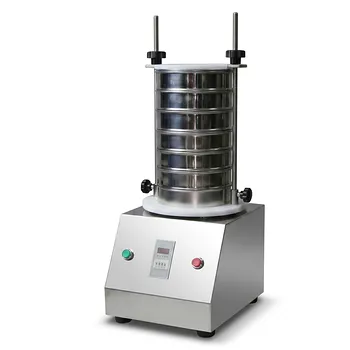
Small Laboratory Vibratory Sieve Shaker for Powder Gradation and Particle Size Analysis
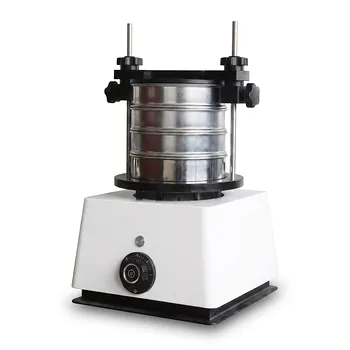
Small Laboratory Vibrating Sieve Shaker for Precise Particle Size Analysis
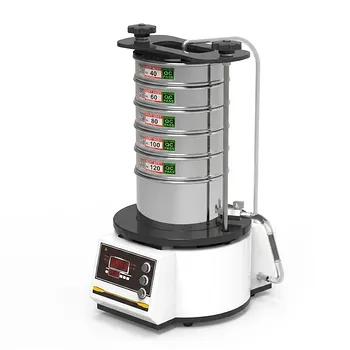
High Frequency Wet Three-Dimensional Vibrating Sieve Shaker for Dry and Wet Particle Size Analysis
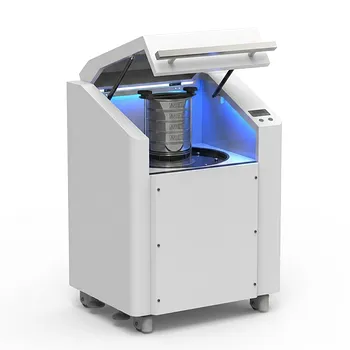
High Frequency Cabinet Type Three-Dimensional Rotary Vibrating Sieve Shaker for Dry Sieving and Particle Classification
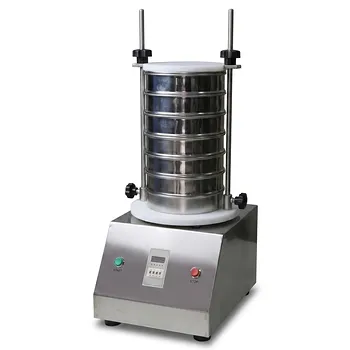
Laboratory Vibratory Test Sieve Shaker for Precision Particle Size Analysis and Powder Grading
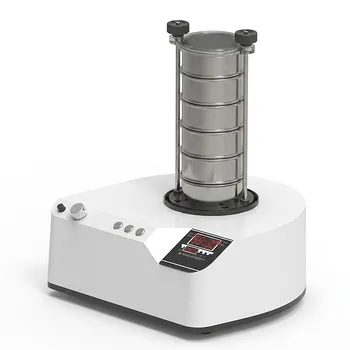
三维电磁微量振动筛分仪
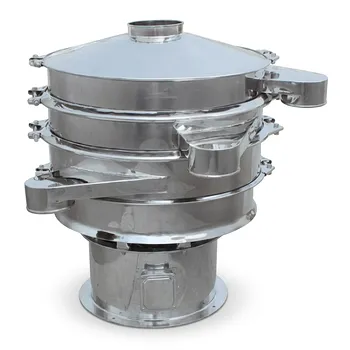
Stainless Steel Rotary Vibrating Sieve High Precision Circular Vibratory Separator Industrial Powder Grading Machine Multi Layer Sifting Equipment
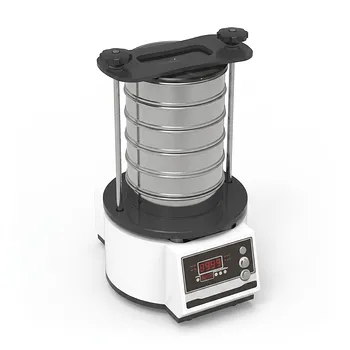
Tapping Oscillating Sieve Shaker for Dry and Wet Particle Size Analysis
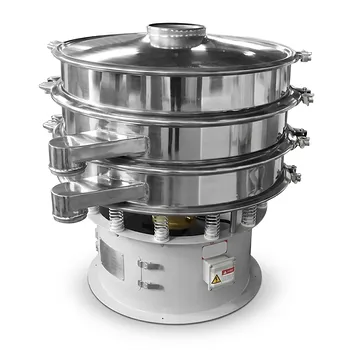
Three Dimensional Rotary Vibrating Sieve
Vibratory Superfine Grinder for Ultra Fine Laboratory Powder Milling
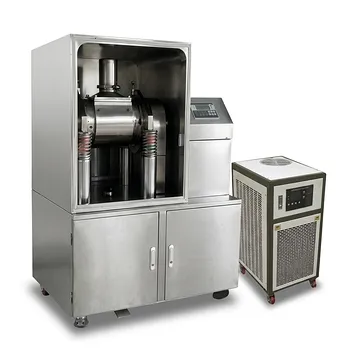
Small Vibrating Ultrafine Grinder for Traditional Chinese Medicine
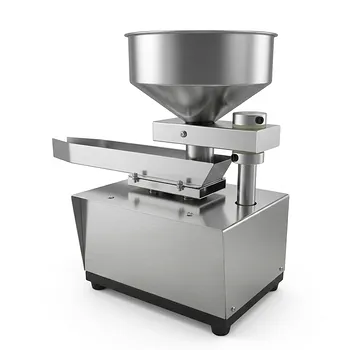
Automatic Vibrating Powder Feeder for Laboratory Material Processing Precision Vibratory Hopper Feeder for Granular and Powder Material Handling Industrial Grade Vibrating Tray Feeder for Consistent Material Sample Preparation