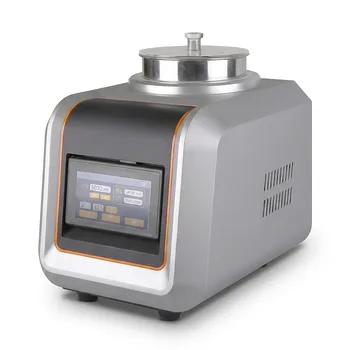
Why are mechanical vibrating sieve shakers and standard stainless steel test sieves used after the drying of matrix granules?
Updated 4 months ago
Mechanical vibrating sieve shakers and standard stainless steel test sieves are used to achieve precise particle size classification of dried matrix granules. This process physically screens the material to remove fine powders and oversized particles, ensuring a uniform particle size distribution (PSD). Consistency in size is critical for maintaining uniform coating thickness and ensuring predictable drug release rates in the final product.
The primary objective of post-drying sieving is to eliminate dimensional variability in granules, which directly dictates the efficiency of downstream manufacturing and the functional integrity of the final dosage form.
Achieving Precise Particle Size Distribution (PSD)
Removal of Non-Conforming Fractions
During the drying process, granules can either break down into fine dust or aggregate into oversized lumps. Mechanical sieve shakers utilize standardized mesh (typically ranging from 10 to 22 mesh) to isolate the target fraction while discarding these extremes. This ensures that only granules within the "goldilocks" range proceed to the next stage of production.
Optimization of Material Flowability
Uniform granules exhibit significantly better flow characteristics compared to unsorted mixtures. Consistent sizing reduces inter-particle friction and prevents "bridging" or blockages in hoppers and feeders. This is essential for maintaining high-speed production in processes like twin-screw extrusion or automated tableting.
Accuracy in Volumetric Filling
In tableting and capsule filling, the weight of the final product is determined by the volume of the die or shell. A uniform particle size ensures consistent powder packing and density. Without this uniformity, manufacturers face high variability in filling weights, which can lead to rejected batches and dosage inaccuracies.
Enhancing Product Performance and Quality
Ensuring Uniform Coating Thickness
For granules that require functional coatings (such as enteric or sustained-release films), a uniform surface area is mandatory. If granule sizes vary widely, the coating thickness will be inconsistent across the batch. This inconsistency can lead to premature drug release or failure of the protective barrier.
Predictable Drug Release Kinetics
The rate at which a drug dissolves is heavily influenced by the surface-area-to-volume ratio of the granules. By using vibratory sieving to lock in a specific Mean Granule Size (MGS), manufacturers can guarantee that the dissolution profile remains stable. This precision is vital for the safety and efficacy of the medication.
Impact on Structural Integrity
Achieving a uniform density distribution is critical during the subsequent pressing or compaction processes. Uniformly sized granules provide consistent mechanical strength to the "green body" or tablet. This reduces the risk of capping, lamination, or structural failure during handling and packaging.
Understanding the Trade-offs and Limitations
The Risk of Material Attrition
While mechanical vibration is necessary for separation, excessive amplitude or prolonged sieving times can damage fragile granules. This physical stress can lead to "attrition," where the granules break back down into the very fines the process was meant to remove. Operators must calibrate vibration settings to balance separation efficiency with material integrity.
Mesh Blinding and Maintenance
Standard stainless steel sieves are prone to "blinding," where particles become lodged in the mesh apertures. This reduces the effective screening area and compromises the accuracy of the classification. Regular cleaning and the use of de-blinding aids (such as balls or sliders) are often required to maintain process standards.
Environmental Sensitivities
The sieving process can generate significant dust, which may pose cross-contamination risks or health hazards depending on the matrix ingredients. Furthermore, if the dried granules are hygroscopic, they may pick up moisture from the air during the sieving process. This can lead to clumping and require a controlled-humidity environment for the screening stage.
How to Apply This to Your Process
Implementation Based on Production Goals
- If your primary focus is controlled drug release: Prioritize the use of 10 to 22 mesh sieves to ensure a narrow particle size distribution that guarantees uniform coating and dissolution.
- If your primary focus is high-speed tableting: Focus on achieving a consistent Mean Granule Size (MGS) to optimize flowability and minimize weight variation during die filling.
- If your primary focus is chemical reaction kinetics: Utilize high-precision sieves with smaller apertures (e.g., 0.25 mm) to ensure all particles react at the same rate and depth.
- If your primary focus is material density: Target the removal of all coarse agglomerates to ensure uniform filling and mechanical strength during the pressing phase.
By rigorously controlling granule dimensions through mechanical sieving, manufacturers transform a raw dried material into a calibrated industrial intermediate ready for high-precision applications.
Summary Table:
| Key Objective | Industrial Impact | Critical Parameter |
|---|---|---|
| Precise PSD | Removes fines and oversized aggregates | 10 to 22 Mesh range |
| Flowability | Prevents bridging in hoppers and feeders | Uniform particle shape/size |
| Filling Accuracy | Ensures consistent tablet weight and dose | Bulk density consistency |
| Coating Quality | Guarantees uniform film thickness | Surface-area-to-volume ratio |
| Dissolution Control | Predictable drug release kinetics | Mean Granule Size (MGS) |
Elevate Your Material Science Research with Precision Powder Solutions
Achieving the perfect particle size distribution is critical for the success of your final product. At our laboratory equipment center, we provide complete laboratory sample preparation solutions tailored for material science. Whether you are processing pharmaceutical granules or industrial powders, we specialize in high-performance powder processing and compaction equipment.
Our extensive product line includes:
- Sieving & Milling: Vibratory and air-jet sieve shakers, planetary ball mills, jet mills, and cryogenic grinders.
- Crushing & Mixing: Jaw/roll crushers and high-efficiency powder/defoaming mixers.
- Compaction & Pressing: A full spectrum of hydraulic presses, including Cold/Warm Isostatic Presses (CIP/WIP), vacuum hot presses, and XRF pellet presses.
Ready to optimize your workflow? Contact our technical experts today to find the ideal equipment for your laboratory or production needs. Let us help you ensure consistency, efficiency, and quality in every batch.
References
- Radha Rani Earle, Lakshmi Usha A. FORMULATION AND CHARACTERIZATION OF SUSTAINED RELEASE COATED MATRIX GRANULES OF METFORMIN HYDROCHLORIDE. DOI: 10.22159/ajpcr.2018.v11i7.24996
Mentioned Products
- Vibratory Sieve Shaker Electromagnetic 3D Motion Powder Particle Size Analyzer for Dry and Wet Sieving
- Laboratory Dry and Wet Three Dimensional Vibratory Sieve Shaker for Particle Analysis
- Stainless Steel Laboratory Vibratory Test Sieve Shaker
- Dry Three Dimensional Vibratory Sieve Shaker
- Small Laboratory Vibratory Sieve Shaker for Powder Gradation and Particle Size Analysis
People Also Ask
- How does a vibratory sieve shaker contribute to optimizing the performance of activated carbon? Enhance Adsorption Precision
- Why is a laboratory vibratory sieve shaker necessary for processing magnesium-based borate precursor powders? Boost Activity
- Why use a vibratory sieve shaker to verify coarse aggregate grading in rubberized concrete? Ensure Structural Integrity
- What function do vibratory sieve shakers and standard test sieves serve in the preparation of adsorbents? Key Guide
- What role does a vibratory sieve shaker play in the particle size analysis of ground corn products? Enhance QC Precision

Tech Team · PowderPreparation
Last updated on Jun 03, 2026
Related Products
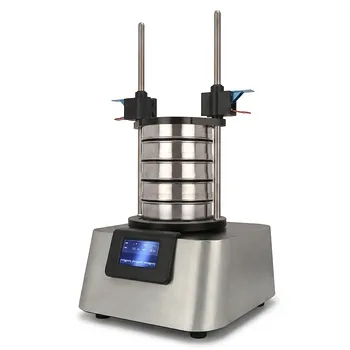
Vibratory Sieve Shaker Electromagnetic 3D Motion Powder Particle Size Analyzer for Dry and Wet Sieving
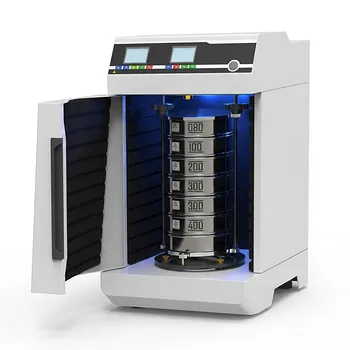
Laboratory Dry and Wet Three Dimensional Vibratory Sieve Shaker for Particle Analysis
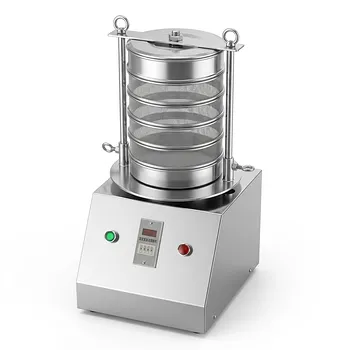
Stainless Steel Laboratory Vibratory Test Sieve Shaker
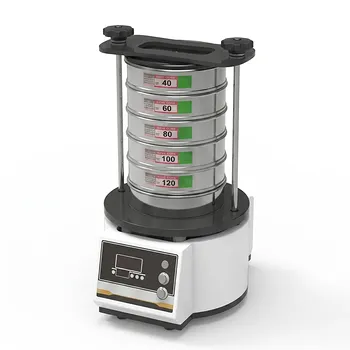
Dry Three Dimensional Vibratory Sieve Shaker
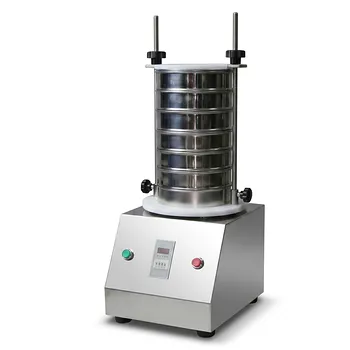
Small Laboratory Vibratory Sieve Shaker for Powder Gradation and Particle Size Analysis
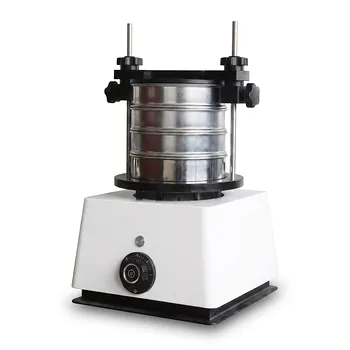
Small Laboratory Vibrating Sieve Shaker for Precise Particle Size Analysis
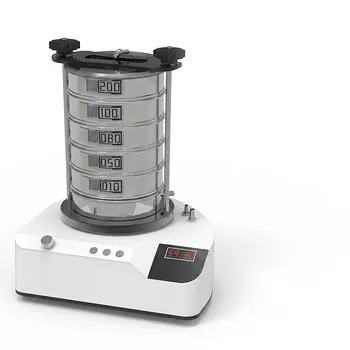
Heavy Duty Dry Three Dimensional Vibratory Sieve Shaker for Particle Separation
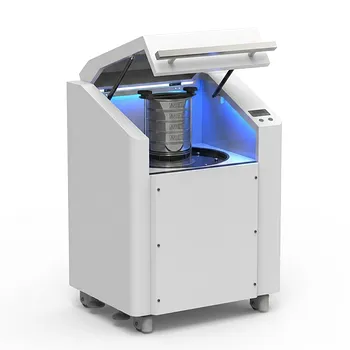
High Frequency Cabinet Type Three-Dimensional Rotary Vibrating Sieve Shaker for Dry Sieving and Particle Classification
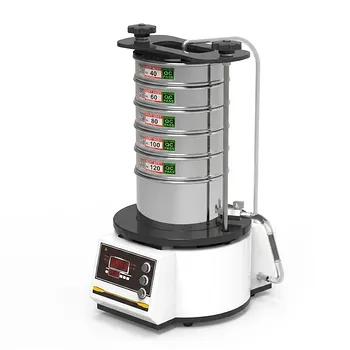
High Frequency Wet Three-Dimensional Vibrating Sieve Shaker for Dry and Wet Particle Size Analysis
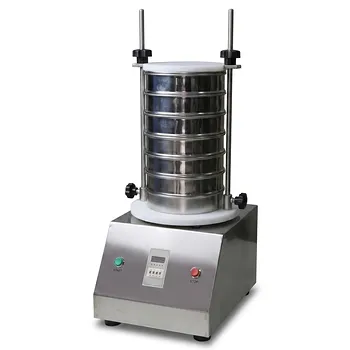
Laboratory Vibratory Test Sieve Shaker for Precision Particle Size Analysis and Powder Grading
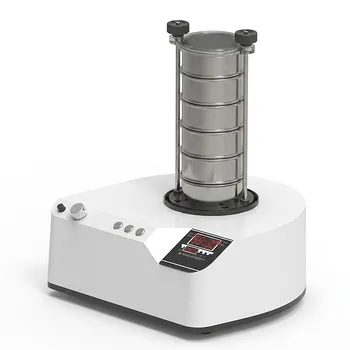
三维电磁微量振动筛分仪
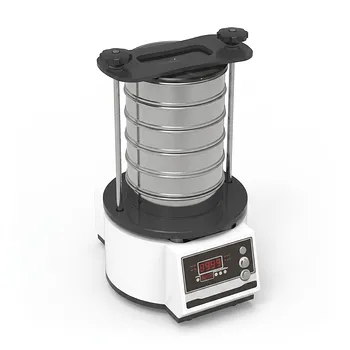
Tapping Oscillating Sieve Shaker for Dry and Wet Particle Size Analysis
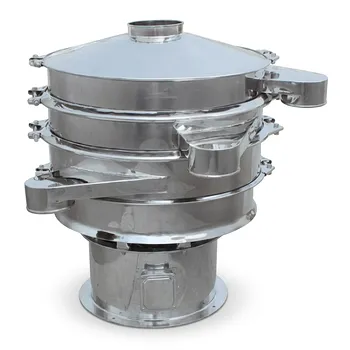
Stainless Steel Rotary Vibrating Sieve High Precision Circular Vibratory Separator Industrial Powder Grading Machine Multi Layer Sifting Equipment
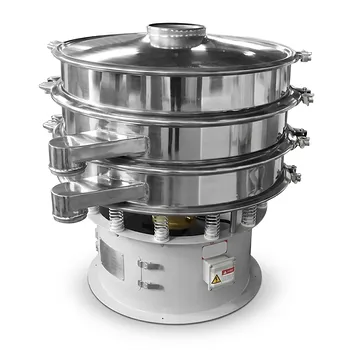
Three Dimensional Rotary Vibrating Sieve
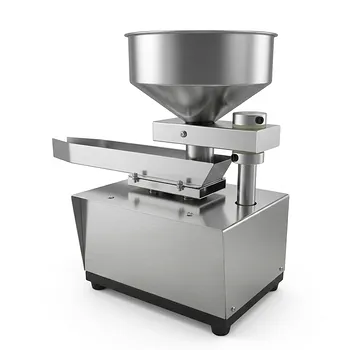
Automatic Vibrating Powder Feeder for Laboratory Material Processing Precision Vibratory Hopper Feeder for Granular and Powder Material Handling Industrial Grade Vibrating Tray Feeder for Consistent Material Sample Preparation
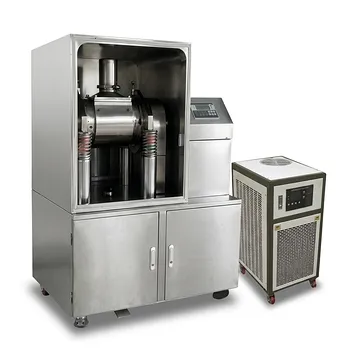
Small Vibrating Ultrafine Grinder for Traditional Chinese Medicine
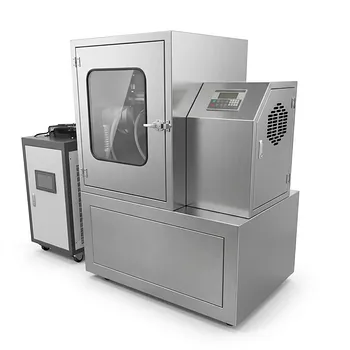
Vibratory Superfine Grinder for Ultra Fine Laboratory Powder Milling
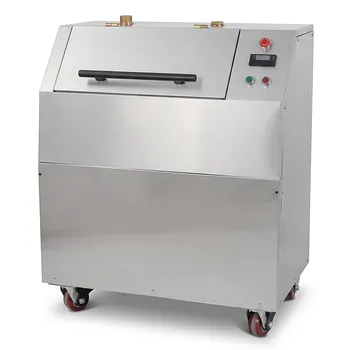
Vibratory Disc Mill for Rapid Fine Grinding and High Throughput Sample Preparation of Hard and Brittle Materials