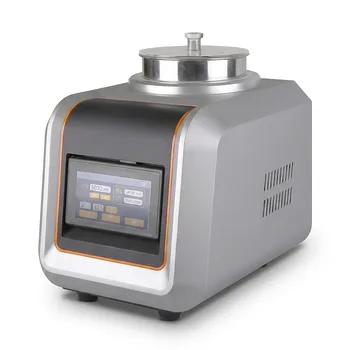
Why are mechanical sieve shakers and standard test sieves essential in Hot Mix Asphalt (HMA) design? Boost Durability
Updated 5 months ago
Mechanical sieve shakers and standard test sieves are the foundational tools for ensuring Hot Mix Asphalt (HMA) durability. By utilizing high-frequency vibration to separate aggregates into precise size fractions, these tools allow engineers to create a "continuous gradation" design. This specific distribution of particle sizes is required to achieve maximum compaction density and a minimum void ratio, which directly determines the road's load-bearing capacity and long-term resistance to wear.
Precise aggregate gradation is the primary factor in determining the structural integrity of an asphalt mixture. Mechanical sieve shakers provide the repeatable, scientific data necessary to design an aggregate skeleton that minimizes air voids and maximizes interlocking strength, ensuring the pavement can withstand heavy traffic loads.
Achieving Structural Integrity Through Gradation
The Role of Continuous Gradation
A continuous gradation ensures that smaller particles perfectly fill the gaps between larger aggregates. This process, facilitated by standard aperture test sieves, allows the asphalt mixture to reach its maximum compaction density. When density is optimized, the void ratio is minimized, preventing water infiltration and internal structural shifts.
Enhancing the Mineral Skeleton
Mechanical shakers help technicians define the particle size distribution of crushed stone, river sand, and even reclaimed asphalt pavement (RAPA). By accurately controlling these proportions, researchers ensure the "skeletal stability" of the mixture. This skeleton is what provides the interlocking force necessary for the pavement to remain stable under high pressure.
Impact on Load-Bearing Capacity
The ultimate mechanical strength of HMA is a direct result of how well the aggregates fit together. When the grading curve is plotted accurately using high-precision screening, the resulting asphalt possesses superior load-bearing capacity. This prevents the road from shifting or collapsing under the weight of heavy commercial vehicles.
Operational Precision and Standardization
Eliminating Human Error
Mechanical sieve shakers provide standardized, continuous, and uniform oscillation that manual shaking cannot replicate. This eliminates data bias caused by human fatigue or inconsistent technique, ensuring the results are scientifically valid. Repeatability is essential for quality control across different batches of asphalt.
Adherence to International Standards
The use of vibratory shakers and sieves ensures compliance with international standards such as EN 933-2. This level of standardization is vital for projects requiring specific mixture types, such as AC-13 or SMA-13. These standards guarantee that the aggregate skeleton creates an optimal environment for fillers and binders to form a cohesive bond.
Managing Additives and Fillers
In modern HMA design, additives like ground waste plastics or minerals must have a consistent particle size. Mechanical sieving ensures these solid-phase additives are free of oversized particles that could cause pumping difficulties or physical instability. Maintaining a uniform size distribution is vital for the overall chemical and physical stability of the mixture.
Understanding the Trade-offs
The Risk of Particle Degradation
While mechanical shakers are essential for precision, excessive shaking time can lead to aggregate attrition. This occurs when particles rub against each other and break down into smaller pieces, potentially skewing the gradation results. Technicians must carefully calibrate shaking intervals to avoid artificial increases in "fines."
Maintenance and Blinding
Standard test sieves are precision instruments that require regular calibration and cleaning. Over time, particles can become trapped in the mesh—a phenomenon known as "blinding"—which reduces the effective open area and leads to inaccurate results. Failure to maintain sieves can result in a poorly graded mix that is prone to early failure.
How to Apply This to Your Project
Making the Right Choice for Your Goal
To achieve the best results in HMA design, your approach to sieving should align with your specific project requirements.
- If your primary focus is Rutting Resistance: Utilize vibratory sieve shakers to optimize the interlocking effect of the mineral skeleton, which is the key to resisting surface deformation.
- If your primary focus is Laboratory Repeatability: Implement mechanical shakers to eliminate operator-induced bias and ensure your gradation curves remain consistent across multiple test cycles.
- If your primary focus is Cost Efficiency and Longevity: Prioritize achieving a minimum void ratio through precise gradation to prevent moisture damage and extend the lifespan of the pavement.
By mastering the use of mechanical sieve shakers and standard sieves, you transform raw aggregate into a high-performance engineering material capable of supporting modern infrastructure.
Summary Table:
| Feature | Benefit for HMA Design | Key Outcome |
|---|---|---|
| Continuous Gradation | Fills gaps between larger aggregates | Maximum compaction density |
| Mechanical Vibration | Eliminates human error and data bias | Scientific, repeatable results |
| Standardized Mesh | Ensures compliance with EN 933-2 | Guaranteed project quality |
| Void Ratio Control | Minimizes air gaps and water entry | Enhanced load-bearing capacity |
Optimize Your HMA Design with Precision Laboratory Solutions
Achieving the perfect aggregate skeleton requires more than just standard tools; it requires precision and reliability. At [Company Name], we provide complete laboratory sample preparation solutions tailored for material science and civil engineering.
Our extensive product line is designed to support every stage of your testing process:
- Gradation & Analysis: High-performance vibratory and air-jet sieve shakers with a full range of standard test sieves and meshes.
- Sample Preparation: Robust crushers (jaw/roll), liquid nitrogen cryogenic grinders, and advanced planetary ball or jet mills.
- Mixing & Compaction: Precision powder mixers, defoaming mixers, and a full spectrum of hydraulic presses, including Cold/Warm Isostatic Presses (CIP/WIP) and hot presses for advanced material testing.
Whether you are aiming for superior rutting resistance or laboratory repeatability, our equipment ensures your asphalt mixtures meet the most rigorous international standards.
Ready to enhance your lab’s efficiency and accuracy?
Contact our experts today to find the right solution for your project!
References
- Aveen Surdashy, Ahmed M. Aqrawi. Evaluation of Limestone from Cretaceous to Tertiary age in Kurdistan Region of Iraq for Heavy Duty Road Pavement. DOI: 10.46717/igj.55.2f.4ms-2022-12-19
Mentioned Products
- 三维电磁微量振动筛分仪
- Vibratory Sieve Shaker Electromagnetic 3D Motion Powder Particle Size Analyzer for Dry and Wet Sieving
- Laboratory Dry and Wet Three Dimensional Vibratory Sieve Shaker for Particle Analysis
- Small Laboratory Vibrating Sieve Shaker for Precise Particle Size Analysis
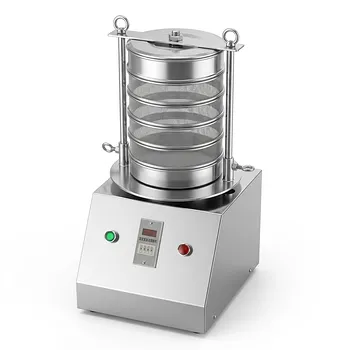
- Stainless Steel Laboratory Vibratory Test Sieve Shaker
People Also Ask
- Why is a standard sieve shaker essential for CBA powders in geopolymers? Enhance Reactivity & Material Strength
- Why are standard metal sieves and sieve shakers necessary for 5-aminotetrazole mixtures? Optimize Thermal & Kinetic Data
- Why Use Sieve Shakers for Gangue Slurry Experiments? Optimize Particle Grading for Superior Results
- What are the advantages of mechanical vs. manual sieving for road dust analysis? Achieve Superior Data Standardization.
- How do high-precision sieve shakers and powder mixers facilitate material circularity in metal PBF? Optimize AM Cycles

Tech Team · PowderPreparation
Last updated on May 14, 2026
Related Products
三维电磁微量振动筛分仪
Vibratory Sieve Shaker Electromagnetic 3D Motion Powder Particle Size Analyzer for Dry and Wet Sieving
Laboratory Dry and Wet Three Dimensional Vibratory Sieve Shaker for Particle Analysis

Small Laboratory Vibrating Sieve Shaker for Precise Particle Size Analysis
Stainless Steel Laboratory Vibratory Test Sieve Shaker
Heavy Duty Dry Three Dimensional Vibratory Sieve Shaker for Particle Separation

Dry Three Dimensional Vibratory Sieve Shaker

Small Laboratory Vibratory Sieve Shaker for Powder Gradation and Particle Size Analysis

Laboratory Vibratory Test Sieve Shaker for Precision Particle Size Analysis and Powder Grading
High Frequency Wet Three-Dimensional Vibrating Sieve Shaker for Dry and Wet Particle Size Analysis
Tapping Oscillating Sieve Shaker for Dry and Wet Particle Size Analysis
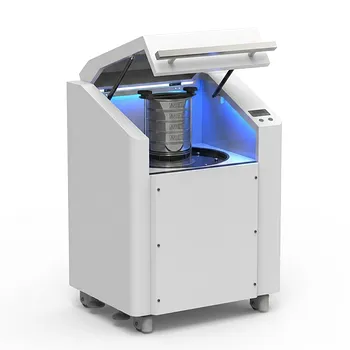
High Frequency Cabinet Type Three-Dimensional Rotary Vibrating Sieve Shaker for Dry Sieving and Particle Classification
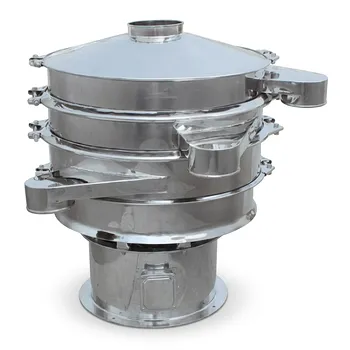
Stainless Steel Rotary Vibrating Sieve High Precision Circular Vibratory Separator Industrial Powder Grading Machine Multi Layer Sifting Equipment
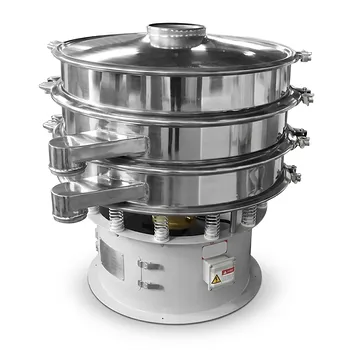
Three Dimensional Rotary Vibrating Sieve