Why are laboratory vibratory sieve shakers essential for fiber adsorbents? Ensure Precision & Kinetic Stability
Updated 4 months ago
The precision of fiber adsorbent preparation hinges on particle size uniformity. Vibratory sieve shakers and standard test sieves are essential because they provide the rigorous physical separation required to ensure particles fall within a specific, consistent range (such as 425–625 µm). This uniformity is the foundation for maintaining kinetic stability, reducing experimental error, and ensuring that adsorption performance is comparable across different material batches.
Core Takeaway: Mechanical sieving transforms raw, ground adsorbents into a standardized technical medium. By controlling particle diameter, researchers can isolate chemical performance from physical variables, ensuring reproducible data and optimized fluid dynamics in adsorption columns.
Achieving Kinetic Stability and Reproducibility
Eliminating Experimental Variance
Adsorption is a surface-dependent process where even minor variations in particle diameter can lead to massive discrepancies in data. Standard test sieves allow researchers to isolate specific mesh sizes (e.g., 100, 150, or 200 mesh) to ensure that the material being tested is physically identical across every trial.
Without this mechanical classification, experimental errors caused by inconsistent surface areas would make it impossible to determine the true effectiveness of the adsorbent.
Ensuring Accurate Kinetic Studies
In kinetic studies, the mass transfer path must remain constant to accurately measure how quickly an adsorbent captures a target molecule. Using a vibratory sieve shaker ensures that all particles have a uniform diameter, which standardizes the distance the adsorbate must travel to reach internal binding sites.
This level of control is a prerequisite for ensuring that results are reproducible and that the resulting kinetic models reflect the material's chemical properties rather than its physical size distribution.
Optimizing Physical Performance in Fixed-Bed Systems
Controlling Porosity and Tortuosity
In fixed-bed reactor experiments, the way particles pack together—defined by bed tortuosity and porosity—directly impacts how fluid flows through the system. By preparing specific particle size distributions (ranging from 0.124 mm to 1.19 mm), researchers can obtain accurate breakthrough curves that are not distorted by irregular packing.
High-precision sieving allows for a deliberate balance between maximizing the specific surface area for adsorption and minimizing the fluid resistance within the column.
Preventing Channeling and Diffusion Limitations
The use of a vibratory shaker is vital for removing fine powders that can cause "channeling," where fluid bypasses the adsorbent, and oversized particles that create diffusion limitations.
Ensuring the removal of these extremes prevents "dead zones" in the reactor and ensures that the entire volume of the adsorbent bed is utilized efficiently during cyclic stability testing.
Understanding the Trade-offs and Pitfalls
Mechanical Degradation of Fibers
While vibratory shakers are highly efficient, excessive sieving time or intensity can lead to mechanical attrition, where fragile fiber adsorbents break down into smaller fragments during the process. This creates a "shifting baseline" where the particle size distribution changes while you are trying to measure it.
The Challenge of Mesh Blinding
When working with ground powders or sticky fibers, particles can become wedged in the sieve openings, a phenomenon known as blinding. This reduces the effective open area of the sieve and can lead to inaccurate grading if the equipment is not maintained or if the proper sieving aids (such as balls or brushes) are not used.
How to Apply This to Your Research Goal
Proper equipment selection depends on whether you are prioritizing the fundamental chemistry of the material or its practical application in a large-scale system.
- If your primary focus is fundamental kinetic modeling: Use high-mesh-count sieves (300 µm or smaller) to maximize surface-to-volume ratios and ensure that mass transfer limitations are minimized.
- If your primary focus is fixed-bed column efficiency: Select a particle range (such as 425–850 µm) that balances high adsorption capacity with low pressure drop to prevent column clogging.
- If your primary focus is industrial scalability: Utilize a vibratory shaker to determine the "optimum fineness" (often around 54% for natural adsorbents) that maximizes heavy metal removal while maintaining high fluid flow rates.
By mastering the physical classification of fiber adsorbents, you ensure that your experimental results are driven by chemical innovation rather than physical inconsistency.
Summary Table:
| Key Aspect | Role in Adsorbent Preparation | Research Benefit |
|---|---|---|
| Kinetic Stability | Standardizes mass transfer paths | Ensures reproducible data and accurate modeling |
| Flow Dynamics | Eliminates fine powders and oversized particles | Prevents channeling and clogging in fixed-bed systems |
| Surface Area | Controls particle diameter and distribution | Isolates chemical performance from physical variables |
| Grading Precision | Mechanical classification via mesh sizes | Achieves optimum fineness for industrial scalability |
Elevate Your Material Research with Precision Sample Preparation
High-performance fiber adsorbents require rigorous particle size control to ensure reproducible kinetic data and optimized fluid dynamics. As experts in material science laboratory solutions, we provide the specialized equipment needed to transform raw ground materials into standardized technical media.
Our comprehensive range of powder processing and compaction equipment includes:
- Sieving Excellence: Vibratory and air-jet sieve shakers with high-precision test sieves for accurate classification.
- Advanced Milling: Planetary ball mills, jet mills, and cryogenic grinders for superior particle size reduction.
- Material Compaction: A full spectrum of hydraulic presses, including Cold/Warm Isostatic Presses (CIP/WIP), vacuum hot presses, and pellet presses for final material shaping.
Whether you are focusing on fundamental chemistry or industrial scalability, our tools help you eliminate experimental variance and maximize adsorption efficiency.
Contact our technical team today to find the perfect solution for your laboratory needs!
References
- Jude Chinedu Onwuka, Friday Godwin Okibe. Treatment of crude oil-contaminated water with chemically modified natural fiber. DOI: 10.1007/s13201-018-0727-5
Mentioned Products
- Vibratory Sieve Shaker Electromagnetic 3D Motion Powder Particle Size Analyzer for Dry and Wet Sieving
- Laboratory Dry and Wet Three Dimensional Vibratory Sieve Shaker for Particle Analysis
- Stainless Steel Laboratory Vibratory Test Sieve Shaker
- Heavy Duty Dry Three Dimensional Vibratory Sieve Shaker for Particle Separation
- Dry Three Dimensional Vibratory Sieve Shaker
People Also Ask
- How does a vibratory sieve shaker contribute to optimizing the performance of activated carbon? Enhance Adsorption Precision
- Why is a laboratory vibratory sieve shaker necessary for processing magnesium-based borate precursor powders? Boost Activity
- Why use a vibratory sieve shaker to verify coarse aggregate grading in rubberized concrete? Ensure Structural Integrity
- What function do vibratory sieve shakers and standard test sieves serve in the preparation of adsorbents? Key Guide
- What role does a vibratory sieve shaker play in the particle size analysis of ground corn products? Enhance QC Precision

Tech Team · PowderPreparation
Last updated on Jun 03, 2026
Related Products

Vibratory Sieve Shaker Electromagnetic 3D Motion Powder Particle Size Analyzer for Dry and Wet Sieving
Laboratory Dry and Wet Three Dimensional Vibratory Sieve Shaker for Particle Analysis

Stainless Steel Laboratory Vibratory Test Sieve Shaker

Heavy Duty Dry Three Dimensional Vibratory Sieve Shaker for Particle Separation
Dry Three Dimensional Vibratory Sieve Shaker

Small Laboratory Vibratory Sieve Shaker for Powder Gradation and Particle Size Analysis

High Frequency Wet Three-Dimensional Vibrating Sieve Shaker for Dry and Wet Particle Size Analysis

Small Laboratory Vibrating Sieve Shaker for Precise Particle Size Analysis
High Frequency Cabinet Type Three-Dimensional Rotary Vibrating Sieve Shaker for Dry Sieving and Particle Classification

Laboratory Vibratory Test Sieve Shaker for Precision Particle Size Analysis and Powder Grading

三维电磁微量振动筛分仪
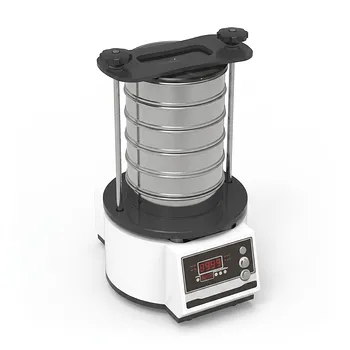
Tapping Oscillating Sieve Shaker for Dry and Wet Particle Size Analysis

Stainless Steel Rotary Vibrating Sieve High Precision Circular Vibratory Separator Industrial Powder Grading Machine Multi Layer Sifting Equipment

Three Dimensional Rotary Vibrating Sieve
Small Vibrating Ultrafine Grinder for Traditional Chinese Medicine
Automatic Vibrating Powder Feeder for Laboratory Material Processing Precision Vibratory Hopper Feeder for Granular and Powder Material Handling Industrial Grade Vibrating Tray Feeder for Consistent Material Sample Preparation
Vibratory Superfine Grinder for Ultra Fine Laboratory Powder Milling
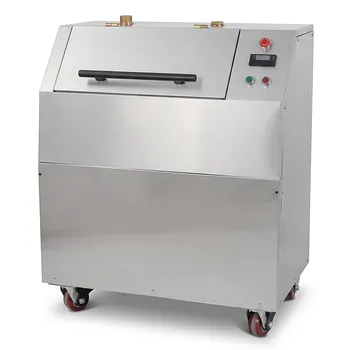
Vibratory Disc Mill for Rapid Fine Grinding and High Throughput Sample Preparation of Hard and Brittle Materials