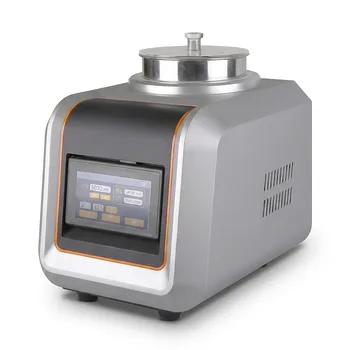
Why are high-precision vibratory sieve shakers required when preparing carbonized coconut shell ash (CSA) particles?
Updated 5 months ago
High-precision vibratory sieve shakers are indispensable for carbonized coconut shell ash (CSA) preparation because they ensure extreme dimensional consistency of reinforcement particles. By employing specific mesh sizes, such as 1.18mm, these machines eliminate the size variations that lead to component segregation and non-uniform microstructures in composite materials. This precise classification is the foundation for predictable mechanical performance, ensuring that the CSA integrates perfectly within a matrix, such as a brass melt or resin.
The requirement for high-precision sieving stems from the need to eliminate particle size variability, which otherwise causes internal stress concentrations and material defects. Strict classification ensures that CSA particles provide uniform reinforcement, directly dictating the final product's mechanical strength and microstructural stability.
Achieving Microstructural Uniformity
Preventing Component Segregation
When CSA particles are added to a medium like a brass melt, high dimensional consistency is required to prevent segregation. If particle sizes vary significantly, the reinforcement will not distribute evenly, leading to "clumping" or areas of the material that lack structural integrity.
Ensuring Interfacial Adhesion
Precise control over the upper limits of filler particle size, such as maintaining a strict 400 µm threshold, enhances the interfacial adhesion between the filler and the matrix. Consistent fineness allows the surrounding material to bond more effectively to each particle, creating a more stable and cohesive composite.
Stabilizing the Internal Microstructure
High-precision screening is a critical step in achieving a uniform internal microstructure. By isolating specific particle diameters, manufacturers can ensure that the internal lattice of the material remains predictable and free from the irregularities caused by oversized or undersized "unqualified" grains.
Optimizing Mechanical and Chemical Performance
Eliminating Stress Concentration Points
Oversized particles often act as "weak links" within a composite, creating points where internal stress concentrates. By using vibratory shakers to filter out these outliers, the resulting material gains significantly higher stability in its mechanical properties, such as tensile strength and Young's modulus.
Facilitating Uniform Chemical Activation
In applications where CSA is processed into activated carbon, precise size grading (often 100–500 μm) ensures uniform penetration of chemical activators. This consistency improves electrolyte accessibility and enhances the rate performance of the final electrode material.
Validating Mathematical Prediction Models
Engineers rely on mathematical models to predict how a composite will behave under load. High-precision sieving allows for the isolation of specific ranges (e.g., 38 micrometers) which is a prerequisite for validating the accuracy of these models and ensuring experimental repeatability.
Understanding the Trade-offs
Equipment Precision vs. Throughput
While high-precision vibratory shakers offer superior accuracy, they require careful calibration and may have lower throughput compared to coarse industrial separators. Attempting to speed up the process by overloading the sieves can lead to "blinded" or clogged meshes, which compromises the very precision the machine is intended to provide.
The Risk of Fine Particle Agglomeration
Extremely fine particles, particularly those in the micron or nano-grade range, have a tendency to stick together due to electrostatic forces. High-precision shakers must be operated correctly to ensure these agglomerates are broken down and accurately classified, rather than being incorrectly discarded as coarse material.
Maintenance and Mesh Wear
The accuracy of a high-precision shaker is only as good as the integrity of its mesh. Over time, abrasive materials like carbonized coconut shells can cause mesh deformation, meaning regular inspection and replacement of standard test sieves are mandatory to avoid drift in particle size consistency.
How to Apply This to Your Project
When preparing carbonized coconut shell ash, your choice of sieving parameters should align with your final material requirements.
- If your primary focus is Maximizing Tensile Strength: Use high-precision sieving to strictly eliminate all particles above your target threshold to prevent internal stress concentration points.
- If your primary focus is Chemical or Battery Performance: Prioritize a narrow particle size range (e.g., less than 100 μm) to ensure uniform chemical activation and optimal surface area for electrolyte interaction.
- If your primary focus is Metal Matrix Composites: Ensure the vibratory shaker is calibrated to prevent component segregation, focusing on high dimensional consistency to maintain a uniform melt.
- If your primary focus is Resin or Shelf-Life Stability: Isolate specific mesh fractions (such as -150 to +250 mesh), as specific size ranges are proven to produce more stable resin properties and longer storage life.
By mastering particle size classification, you transform raw agricultural waste into a high-performance technical reinforcement.
Summary Table:
Impact of High-Precision Sieving on CSA Properties
| Key Factor | Role of Precision Sieving | Benefit to Final Material |
|---|---|---|
| Dimensional Consistency | Eliminates size variations and outliers | Prevents component segregation and clumping |
| Interfacial Adhesion | Strictly controls upper size limits (e.g., 400 µm) | Enhances bonding between filler and matrix |
| Microstructure | Isolates specific particle diameters | Ensures a stable, predictable internal lattice |
| Stress Management | Filters out oversized "weak link" particles | Increases tensile strength and Young's modulus |
| Chemical Activation | Provides uniform surface area (100–500 μm) | Improves electrolyte accessibility and rate performance |
Elevate Your Material Research with Precision Powder Solutions
Achieving the perfect particle size distribution is critical for the success of your composite materials and carbon research. [Our Brand Name] provides complete laboratory sample preparation solutions tailored for material science, specializing in high-performance powder processing and compaction equipment.
Whether you are preparing carbonized coconut shell ash or advanced metal matrix composites, our extensive product line supports every stage of your workflow:
- Classification: High-precision vibratory and air-jet sieve shakers with various test sieves/meshes.
- Milling & Grinding: Planetary ball mills, jet mills, and liquid nitrogen cryogenic grinders for ultra-fine results.
- Sample Compaction: A full spectrum of hydraulic presses, including Cold/Warm Isostatic Presses (CIP/WIP), vacuum hot presses, and XRF pellet presses.
- Mixing: High-efficiency powder mixers and vacuum defoaming mixers for uniform dispersion.
Ready to ensure extreme dimensional consistency and superior mechanical performance?
Contact our technical experts today to find the right equipment for your lab!
References
- Olurotimi Adeoti Mathew, Adesola Adegbola Taoreed. Enhancing Mechanical and Corrosion Properties of Brass Composites with Carbonized Coconut Shell Ash. DOI: 10.5935/jetia.v10i49.1240
Mentioned Products
- Small Laboratory Vibrating Sieve Shaker for Precise Particle Size Analysis
- Laboratory Vibratory Test Sieve Shaker for Precision Particle Size Analysis and Powder Grading
- Heavy Duty Dry Three Dimensional Vibratory Sieve Shaker for Particle Separation
- Vibratory Sieve Shaker Electromagnetic 3D Motion Powder Particle Size Analyzer for Dry and Wet Sieving
- High Frequency Wet Three-Dimensional Vibrating Sieve Shaker for Dry and Wet Particle Size Analysis
People Also Ask
- What role does a laboratory sieve shaker play in determining PDI? Achieve Precision in Biomass Quality Testing
- What is the role of a laboratory sieve shaker in the preparation of plantain peel adsorbents? Standardize Particle Size
- What function does a laboratory sieve shaker perform in the PSD analysis of residual soil? Ensure Precise Grading
- What are the functions of sieve shakers for coconut shell powder? Achieve Precise Particle Size & Quality Control.
- Why is it necessary to use a laboratory sieve shaker for classifying eggshell powder? Ensure Precision & Homogeneity

Tech Team · PowderPreparation
Last updated on May 14, 2026
Related Products
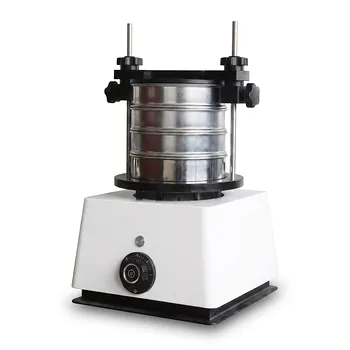
Small Laboratory Vibrating Sieve Shaker for Precise Particle Size Analysis
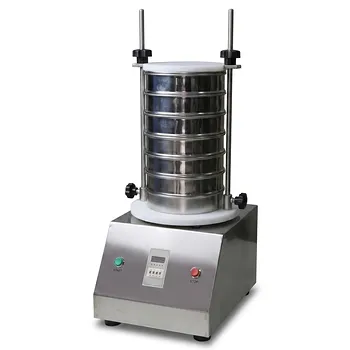
Laboratory Vibratory Test Sieve Shaker for Precision Particle Size Analysis and Powder Grading
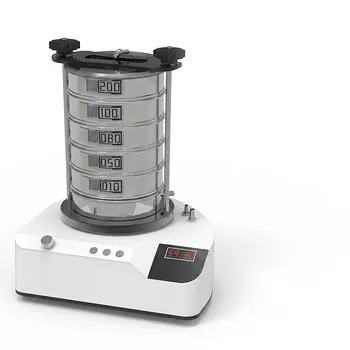
Heavy Duty Dry Three Dimensional Vibratory Sieve Shaker for Particle Separation
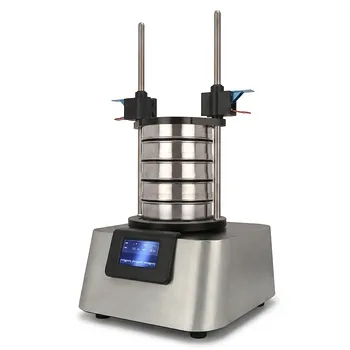
Vibratory Sieve Shaker Electromagnetic 3D Motion Powder Particle Size Analyzer for Dry and Wet Sieving
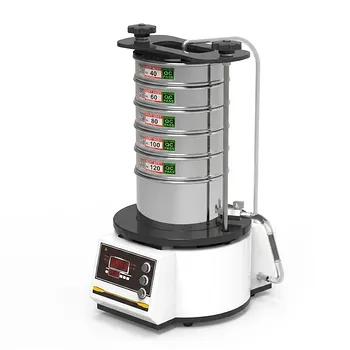
High Frequency Wet Three-Dimensional Vibrating Sieve Shaker for Dry and Wet Particle Size Analysis
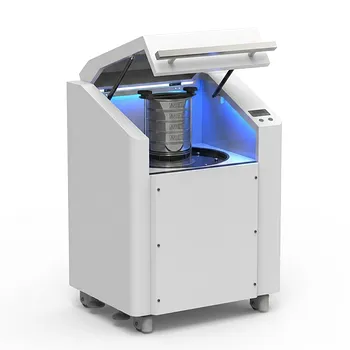
High Frequency Cabinet Type Three-Dimensional Rotary Vibrating Sieve Shaker for Dry Sieving and Particle Classification
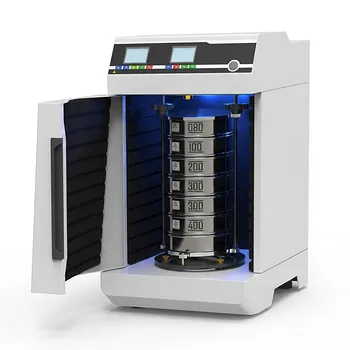
Laboratory Dry and Wet Three Dimensional Vibratory Sieve Shaker for Particle Analysis
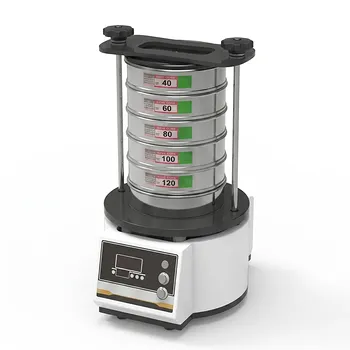
Dry Three Dimensional Vibratory Sieve Shaker
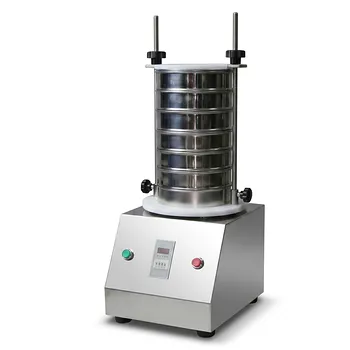
Small Laboratory Vibratory Sieve Shaker for Powder Gradation and Particle Size Analysis
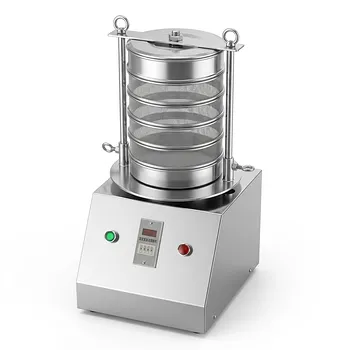
Stainless Steel Laboratory Vibratory Test Sieve Shaker
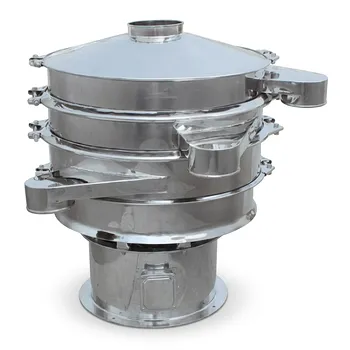
Stainless Steel Rotary Vibrating Sieve High Precision Circular Vibratory Separator Industrial Powder Grading Machine Multi Layer Sifting Equipment
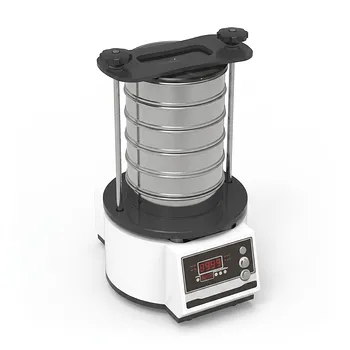
Tapping Oscillating Sieve Shaker for Dry and Wet Particle Size Analysis
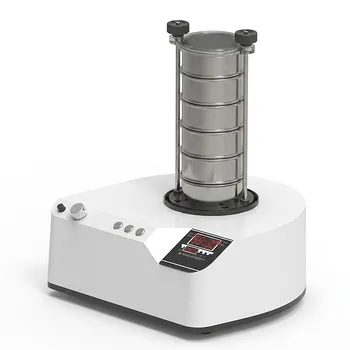
三维电磁微量振动筛分仪
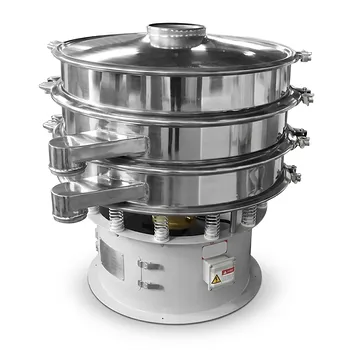
Three Dimensional Rotary Vibrating Sieve
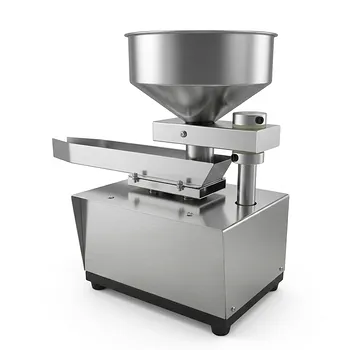
Automatic Vibrating Powder Feeder for Laboratory Material Processing Precision Vibratory Hopper Feeder for Granular and Powder Material Handling Industrial Grade Vibrating Tray Feeder for Consistent Material Sample Preparation